Waste and circular economyGuide
Waste processing permit for a biogas plant: the application, conditions and security for claims
Receiving waste for fermentation requires a waste processing permit or an integrated permit. We describe the authority, the application, annexes, inspections, security for claims and the period of validity.
Other language versions: polski.
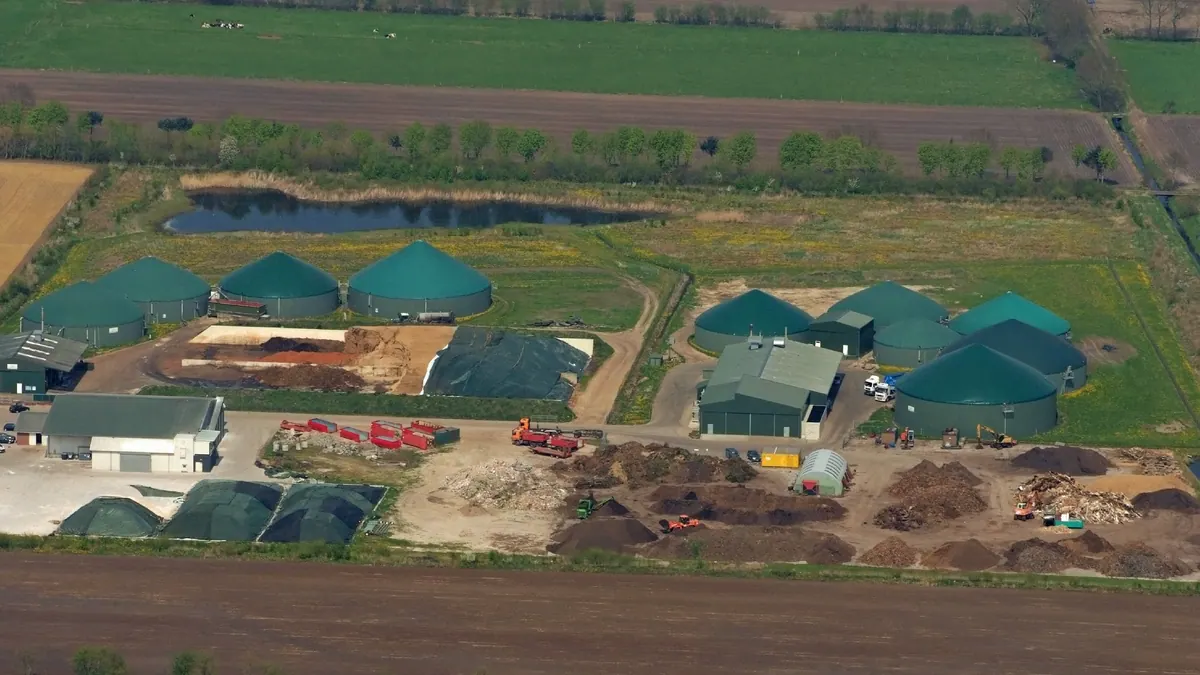

If a biogas plant receives waste for fermentation, it must have a waste processing permit (Article 41 of the Act on Waste, ustawa o odpadach) or an integrated permit, which replaces it in this respect. The permit is issued at the request of the waste holder by the voivodeship marshal or the starost, after inspection by the environmental protection inspector and the fire service, for a period not longer than 10 years, and the applicant must provide security for claims. An installation working exclusively on biomass excluded from the Act (e.g. slurry, straw) does not need this permit.
Does this permit apply to your biogas plant
- Biomass outside the Act (Article 2(6)). Excrement covered by Regulation (EC) No 1069/2009, straw and other natural non-hazardous substances from agriculture and forestry, used for energy from biomass — outside the Act on Waste.
- Waste. If you receive waste (e.g. from food processing, kitchen waste), you are a waste holder and need a processing permit.
- Integrated permit. An entity obliged to obtain an integrated permit is exempt from the obligation to obtain a processing permit (Article 45(1)(4)).
- Other exemptions. Article 45 also contains exemptions for producers processing their own waste under the conditions of regulations and for recovery in accordance with implementing regulations; always check that your situation fits them literally.
Which authority
- Voivodeship marshal: among others for projects that may always significantly affect the environment, for municipal installations, and for filling land adversely transformed above the thresholds.
- Starost: in other cases.
- Regional director for environmental protection: on closed areas.
The authority issues the permit after seeking the opinion of the wójt, mayor or city president; failure to give an opinion within the deadline under Article 106 § 3 of the Code of Administrative Procedure (KPA) (two weeks from delivery of the request) means a positive opinion is deemed given (Article 41(6b) of the Act on Waste).
The application: what is in it
An application for a processing permit contains, among other things:
- the waste holder’s NIP, the types of waste and the annual mass of waste processed and generated;
- the place of processing, the places and method of storage, the maximum masses stored;
- a description of the processing method with the process according to Annexes 1 and 2 (e.g. R3 for fermentation) and a description of the technology with the annual processing capacity;
- where loss of waste status is planned — an indication of the types of waste and of the meeting of the conditions;
- technical and organisational capabilities (staff qualifications, the number and quality of installations);
- the expected period of activity, a description of monitoring and control of the activity and of the actions after the activity ends;
- the proposed form and amount of security for claims.
Annexes and inspections
- certificates and statements of no criminal record (of the persons indicated in the Act) and statements of no revoked permits and large penalties in the last 10 years;
- a fire safety report with the agreement of the commander of the State Fire Service (a decision);
- documents on the right to the property (for some types of activity) and planning documents depending on the situation of the site — check the current Article 42(3c)–(3d), because the planning provisions have changed in stages.
Before the permit is issued, the voivodeship environmental protection inspector (with the participation of a representative of the authority) inspects the installation, facility or storage sites for compliance with environmental protection requirements, and the county (city) commander of the State Fire Service — for compliance with fire protection requirements and with the report.
Refusal, revocation, expiry
The authority refuses a permit, among other things, where the intended method of waste management could endanger life, health or the environment, is inconsistent with waste management plans or with the law (including local law), and also for reasons related to criminal records and permits revoked within 10 years. A permit can be revoked after a call to remedy the infringements; it expires, among other things, at the end of the period for which it was issued and at the request of the entity. The permit is issued for a fixed period, not longer than 10 years.
What to do when the authority calls for the infringements to be remedied
If the permit holder infringes the rules, materially infringes fire protection requirements or acts contrary to the permit, the authority calls on it to cease the infringements immediately and sets a deadline for remedying the irregularities (Article 47(1)). If the infringements continue despite the call, the authority revokes the permit without compensation, may make the decision immediately enforceable, and the holder must at its own expense remove the waste and the negative effects on the environment. For 10 years from the final revocation no new permit is issued within the same scope, and this also applies to persons linked by capital or management. That is why running the installation in accordance with the permit — including codes, masses and storage conditions — matters more than just obtaining the decision.
Security for claims (Article 48a)
- It applies to a waste holder obliged to obtain a permit (other than the manager of a landfill).
- It is to cover the costs of substitute performance: removing waste from a place not intended for it and removing negative effects or damage to the environment, including those related to fire.
- Amount = the largest mass of waste that could be stored in the installation, times the rate from the regulation.
- Form: a deposit, a bank guarantee, an insurance guarantee or a policy; the guarantor may be an EU institution authorised to guarantee customs debt.
- It does not apply to, among others, inert waste meeting the criteria for inert waste landfills, ashes, slags and gypsum, and uncontaminated soil.
Common mistakes
- an application without indicating the process according to the annexes, or with the wrong symbol (R3 vs R12/R13);
- overstated or inconsistent storage masses and low installation capacity;
- no fire safety report with agreement;
- security for claims calculated from the average and not from the largest mass of waste that can be stored;
- waste codes inconsistent with the catalogue.
What to do first
- Establish the status of the feedstock: outside the Act, waste, by-product.
- Determine the authority and whether an integrated permit is not sufficient.
- Commission the fire safety report and the agreement.
- Calculate the maximum storage mass and the security for claims.
- Collect the certificates and statements of the persons managing the plant.
This text is for information only and does not constitute legal advice; before an investment or formal decision, check the current wording of the regulations and consult a lawyer or the competent authority.
Sources
Questions and answers
Does an agricultural biogas plant running on slurry and silage need a waste processing permit?
If the installation processes only biomass excluded from the Act on Waste (Article 2(6): including excrement covered by Regulation 1069/2009, straw, natural substances from agriculture), a waste processing permit does not arise from that Act. When the installation accepts waste, a permit (or an integrated permit) is required.
For how long is a permit issued?
For a fixed period, not longer than 10 years (Article 44(1)). An application for extension is submitted before the permit expires.
Related articles