Waste and circular economyExplainer
Food industry waste as biogas substrates: potential and challenges
Fruit pulp, whey, pomace, fats and slaughterhouse waste have a high methane potential, but require control of loading, variability of composition, and compliance with sanitary rules and the Waste Database (BDO).
Other language versions: polski.
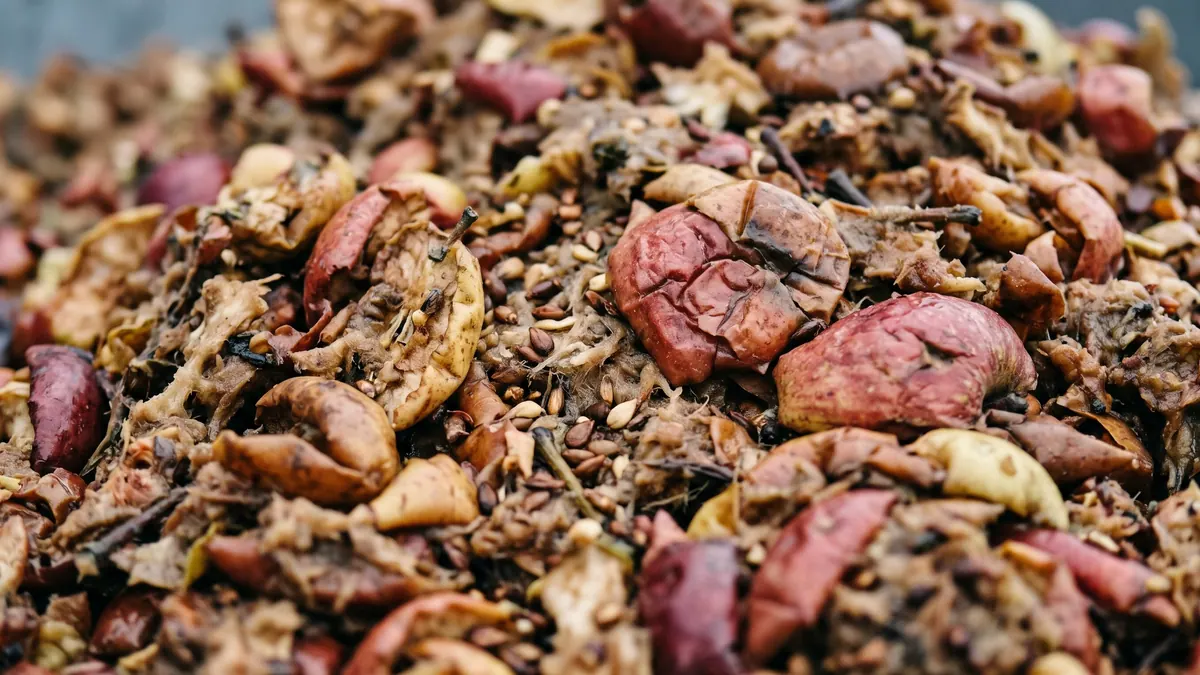
Waste from the food industry, such as fruit pulp, whey, pomace, fats, vegetable waste or slaughterhouse waste, is among the most valuable biogas substrates, because it degrades easily and has a high methane potential, but it requires careful process management. Below we discuss its advantages, the main risks and the legal requirements.
Why they are attractive
- High methane yield per volatile solids, higher than for slurry or manure.
- A high share of VS in dry matter, because the biodegradable fraction dominates.
- Fast degradation, and hence a shorter required retention time and higher throughput.
- Regularity of deliveries in the case of plants with constant production (subject to seasonality).
- A fee for accepting the waste (gate fee), which can be additional revenue and lowers the effective cost of the substrate. The structure of costs and revenue is described in the entry Operating costs (OPEX) of an agricultural biogas plant.
Specific BMP, TS and VS values depend on the batch; compilations from the literature, with sources, are collected in the BMP studies section. In a single summary table one should not present “typical” figures without a source, because the scatter for pulp, whey or pomace can be large.
Challenges and risks
Overloading and acidification
Readily degradable waste in excess causes rapid formation of acids, a drop in pH and inhibition of methanogens. Gradual dose increases and control of FOS/TAC are key (FOS/TAC: how to measure).
Variability of composition
The composition of waste from a single plant changes from day to day (product range, season, line washing). Regular tests and assessment of every delivery are the basis of safe dosing. With seasonal waste (fruit, vegetables), particular attention is paid to batches with low pH and a potential content of cleaning agents or preservatives.
Sanitary and legal rules
Waste of animal origin (e.g. slaughterhouse waste, some dairy waste) is subject to Regulation (EC) No 1069/2009 on animal by-products: an appropriate material category, a sanitisation process (including pasteurisation at 70 °C for 60 minutes for category 3 material with particles up to 12 mm, in accordance with Implementing Regulation 142/2011, which also provides for derogations) and documentation are required. Waste as such is subject to record-keeping obligations in the Waste Database (BDO), and registration does not replace the required permits. In addition, since 2023 Poland has had a list of substrates for agricultural biogas plants (regulation of 12 October 2023), which decides what can be counted as agricultural biogas (List of substrates for agricultural biogas plants). The entry on depackaging installations describes the legal background: Depackaging: packaged food waste.
Co-digestion as a way to stability
The most reliable strategy is to combine food waste with a substrate of high buffer capacity, e.g. cattle slurry or sewage sludge:
- pH is kept in the optimum range despite the rapid degradation of the waste,
- macro- and micronutrients are provided,
- seasonal fluctuations in the availability of one substrate do not upset the process,
- in some mixtures a higher yield than the sum of the components is observed, although this is not the rule and requires a BMP test of the mixture.
Broader rules: Co-digestion: planning the substrate mix.
How to find suppliers
It is worth looking for waste suppliers among food processing plants within an economical transport radius, because the costs of transporting waste with low dry matter rise quickly. Before signing a contract, quality, continuity of supply and responsibility for contaminants should be agreed (Planning substrate demand).
Practical tips when receiving deliveries
Before accepting a batch of waste it is worth checking the documents (waste transfer cards, codes, animal by-product category), visually assessing the presence of contaminants (packaging, metals, plastic) and taking a control sample. Waste with low pH or high fat content requires a separate dosing strategy. Short storage in closed tanks limits the risk of pre-fermentation and odours. A contract providing for the rejection of a batch that does not meet the parameters is also good practice.
Remember that the contract with the supplier should clearly define responsibility for quality and the procedure for handling a batch that does not meet the parameters.
Sources
Questions and answers
Do food industry wastes always increase biogas yield?
Usually yes, because they contain a lot of easily degradable organic matter. However, increasing the dose too quickly can acidify the digester and reduce production, so the load is raised gradually, with FOS/TAC monitoring.
Related articles