Digestate and fertilisersGuide
Ammonia emissions from digestate: application techniques and rapid incorporation
Why digestate emits ammonia, what the losses depend on and how to limit them: trailing hoses, soil injectors, rapid incorporation into soil, covering tanks.
Other language versions: polski.
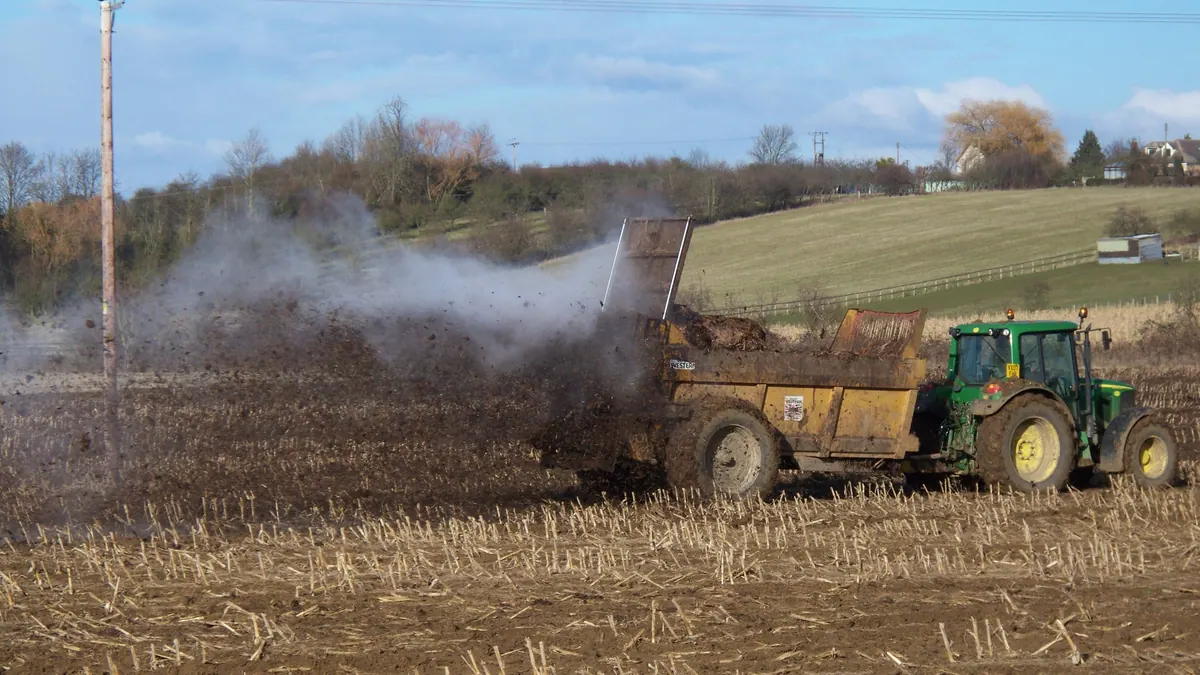

Ammonia (NH₃) escapes from digestate because the nitrogen in it is largely in the ammonium form, and the pH is elevated (usually 7.5–8.5), which increases the share of free NH₃. The greatest losses occur in the first hours after spreading onto the soil surface; soil-injection techniques and rapid incorporation can reduce them by several dozen per cent, and in favourable conditions even considerably more. Limiting emissions is not only an environmental requirement but also a saving of fertilisers.
Where emissions arise
| Stage | Scale of risk |
|---|---|
| Uncovered tank | moderate, depends on the surface and the crust |
| Solid fraction in a heap | moderate–high |
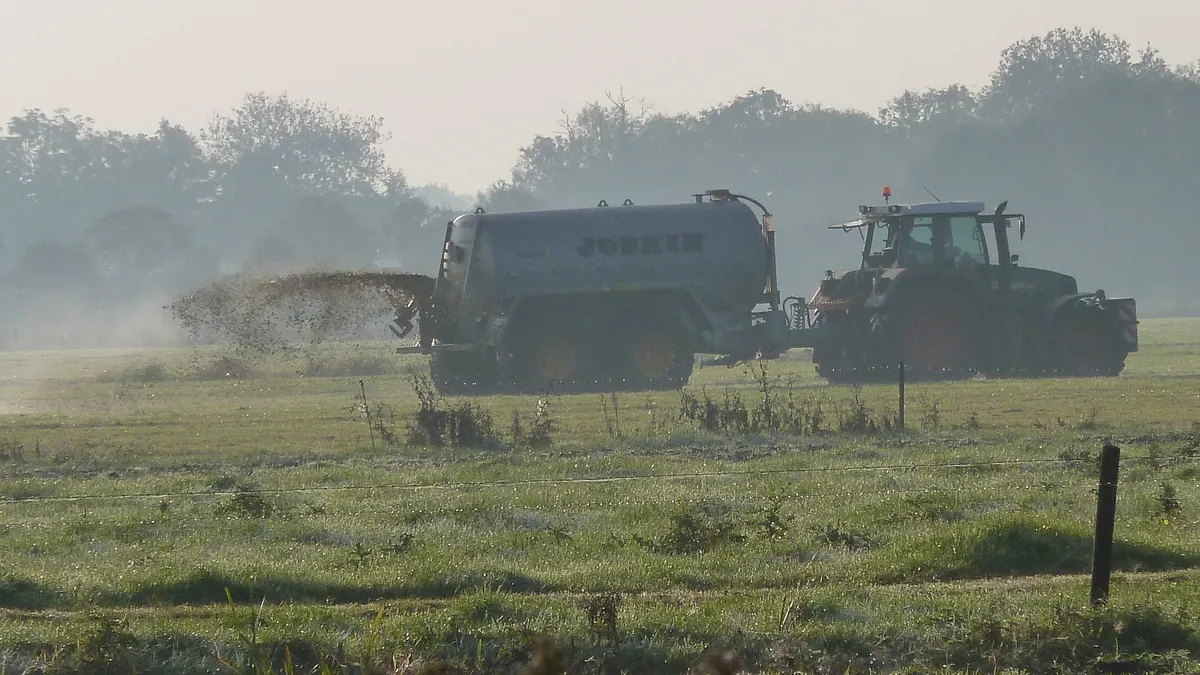
| Spreading in the field | usually the largest share of total emissions |
| After application on a growing crop | depends on infiltration time |
Factors affecting emissions during application
- Dry matter: lower dry matter = faster infiltration, lower losses.
- pH and TAN: higher values increase the emission potential.
- Weather: higher temperature, wind and insolation increase losses; cool, humid and windless weather reduces them.
- Vegetation and soil: a dense canopy and moist, permeable soil limit emissions.
- Technique: the closer to the soil and the smaller the surface of contact with air, the better.
Application techniques
| Technique | Principle | Typical reduction relative to broad spreading* |
|---|---|---|
| Splash plate/deflector spreader | wide spread | reference point (0%) |
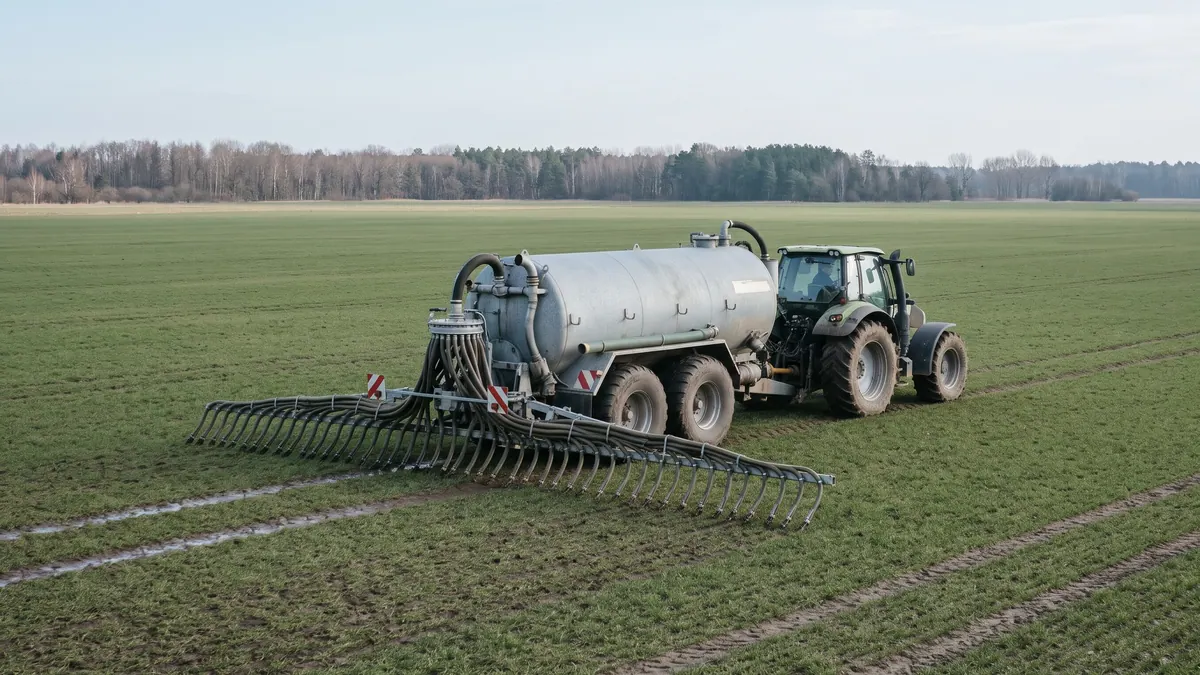
| Trailing hoses | bands on the surface, under the canopy | of the order of 30–40% |
| Trailing shoes/coulters | bands on the ground or in shallow furrows | of the order of 40–60% |
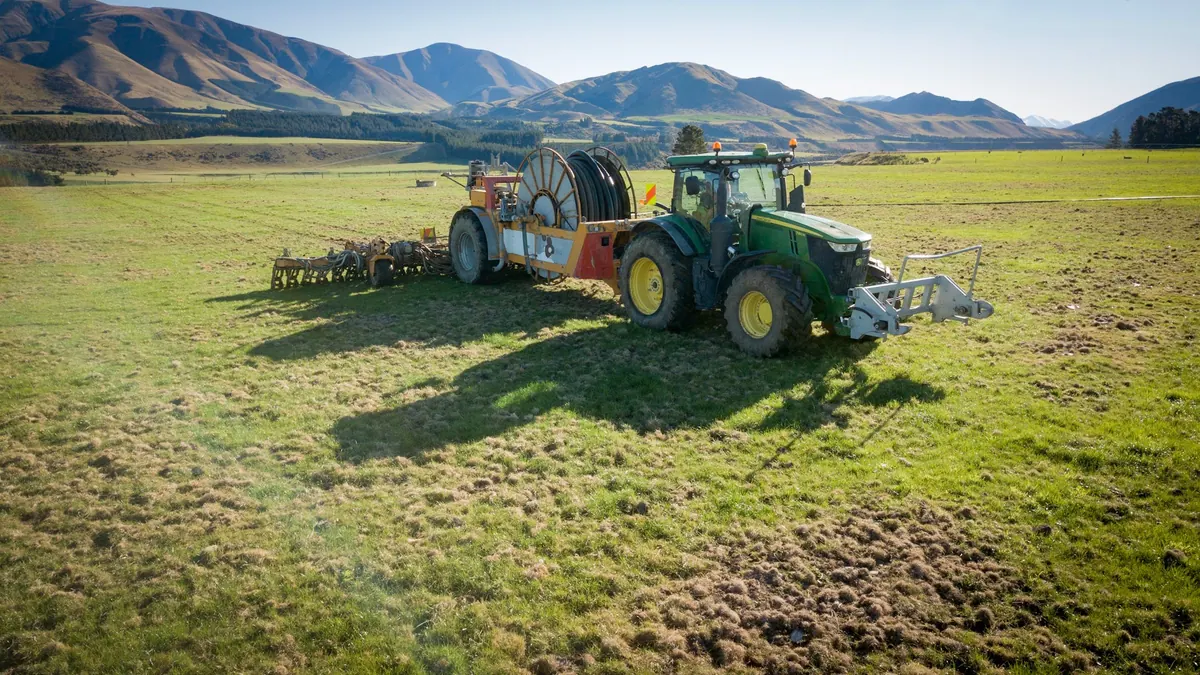
| Soil injector (open slot) | slots in the soil | of the order of 50–70% |
| Closed-slot injection | placement into the soil | high, often 70–80% and more |
| Rapid incorporation after spreading | mixing with the soil | depends on time: the faster, the better |
*Indicative ranges consistent in order of magnitude with the compilations used in guidance documents (e.g. UNECE) and in the literature; actual effectiveness depends on conditions. The values should be treated as examples.
Example of a loss calculation
Assumptions: digestate 2.6 kg N-NH₄/t, rate 30 t/ha → 78 kg N-NH₄/ha. With broad spreading we assume a loss of 40% of N-NH₄ (example) = 31 kg N/ha. Trailing hoses reduce it by e.g. 35% relative to spreading, i.e. losses of about 20 kg N/ha; a soil injector by 60% — about 12.5 kg N/ha. The difference between spreading and a soil injector is about 19 kg N/ha. With the price of fertiliser nitrogen of the order of a few PLN per kilogram of N, this means that the cost of buying better equipment pays back with the acreage, but the key is matching to farm size, most often through external services.
Additional measures
- Acidification of digestate (with sulphuric acid) in the tank or during application lowers the pH and reduces emissions; used in some countries, requires equipment and occupational safety rules.
- Covering tanks (roofs, floating covers, film) reduces emissions from the tank, odours and the inflow of rainwater.
- Separation and stripping — reducing the ammonium nitrogen content in the liquid.
- Planning timing for cool, humid days and avoiding application before heavy rain (runoff).
- Split rates and adjustment to the needs of the plants.
Policy context
Agriculture is the main source of ammonia emissions in the European Union, and the NEC Directive (2016/2284) sets national reduction commitments for NH₃. In Poland the requirements on the method of applying livestock manures, including liquid fertilisers, result from the Act on Fertilisers and Fertilisation and the nitrates action programme; the details and the dates of introducing new obligations may change, so check the current regulations and the ministry's announcements.
Checklist
- Choose the lowest-emission technique available on the farm or as a service.
- Plan application in good weather conditions.
- Incorporate digestate into the soil as quickly as possible (hours, not days).
- Cover the tanks.
- Record rates and dates.
- Consider separation and nitrogen recovery for large quantities.
Measuring and assessing effectiveness
Direct measurement of ammonia emissions in the field is complex (wind tunnels, micrometeorological methods), so in practice farms rely on emission and reduction factors from the literature and guidance. Comparing the nitrogen balance is helpful: if the yield and the nitrogen content of the plants rise after a change of technique at the same rate, this is indirect evidence of lower losses. It is also worth keeping a record of the weather on the day of application, because the same technique on a hot, windy day gives much greater losses than on a cool, humid one.
Costs and benefits
Soil application equipment is more expensive and heavier, and the labour intensity is greater, but the nitrogen saved, lower odours and better relations with neighbours offset part of the costs. External services or sharing machinery between several farms is often an advantageous option.
Sources
Questions and answers
Why does digestate emit more ammonia than raw slurry?
It has a higher pH and a larger share of ammonium nitrogen, and less organic matter, which binds ammonia and limits infiltration into the soil. This usually means a higher risk of losses after surface spreading.
Related articles