Digestate and fertilisersGuide
Applying digestate to fields: rates, timing and the 170 kg N/ha limit
How to plan fertilisation with digestate: calculating the rate from the analysis, the role of ammonium nitrogen, the 170 kg N/ha limit from the Nitrates Directive, and the rules on timing and good practice.
Other language versions: polski.
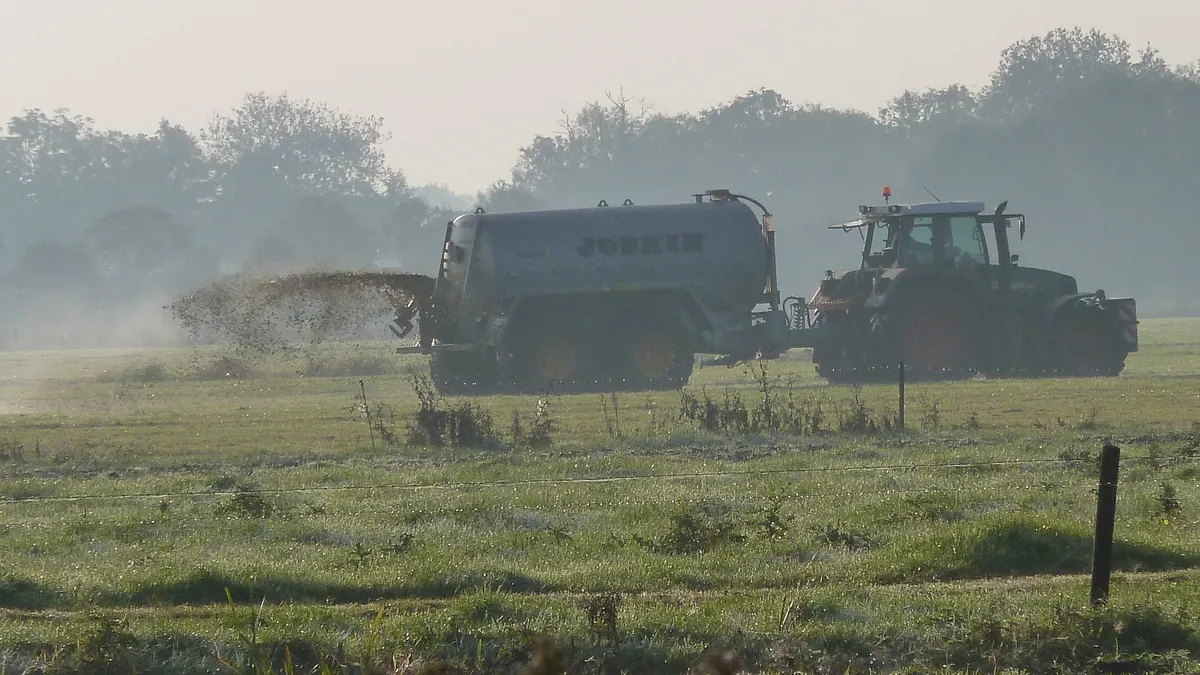

Digestate is a valuable fertiliser, but its use requires calculations and compliance with regulations. The rate is calculated from the digestate analysis (total and ammonium nitrogen, phosphorus, potassium) and the needs of the plants, bearing in mind that the Nitrates Directive limits the nitrogen rate from livestock manure to 170 kg N/ha per year; in Poland the rules are specified by the nitrates action programme (Regulation of the Council of Ministers of 31 January 2023, Journal of Laws (Dz.U.) 2023, item 244), which in its table of livestock manures also includes the digestate product from agricultural biogas plants. Added to this are timing, weather conditions and application technique, which determine losses.
Step 1: analysis
Before planning fertilisation, commission an analysis of the digestate: dry matter, total N, N-NH₄, P, K, Mg, S, pH. When digestate is sold or given to recipients, the analysis is also the basis of the documentation. The composition changes with the mix of substrates, so a single analysis is not enough for many years.
Step 2: balance of needs
The nitrogen requirement of plants depends on the species, the yield and soil nutrient status. From the required value the nitrogen from own sources (soil, preceding crop, digestate) is subtracted. The share of ammonium nitrogen is available in the year of application to a degree dependent on technique and conditions; organic nitrogen is released slowly, in subsequent years.
Calculation example
Assumptions: digestate 4.0 kg of total N/t, of which 2.6 kg N-NH₄; silage maize, N requirement about 180 kg/ha, after taking soil reserves into account 150 kg/ha remains to be supplied; programme limit 170 kg N/ha per year from livestock manures (including digestate derived from livestock manures).
- A rate of 35 t/ha supplies 140 kg of total N — below the limit of 170 kg N/ha.
- Of this, N-NH₄ = 91 kg. Assuming 65% use of ammonium nitrogen (example), the plant will receive about 59 kg N plus part of the organic nitrogen (e.g. 10–20% of 49 kg ≈ 5–10 kg).
- To cover the requirement (150 kg/ha), about 80–85 kg N remains, which must be supplemented with mineral fertiliser or by increasing the rate — but increasing the rate by about 8 t/ha would exceed the limit of 170 kg N/ha (35 + 8 = 43 t → 172 kg N). Conclusion: under these assumptions digestate will cover only part of the needs in the first year, and the rest must be supplemented. Each assumption (N use, limit) should be verified for your own farm.
Timing
The rules on the timing of application of livestock manures in Poland are set by the action programme and derived regulations: they restrict application in winter, on frozen, water-saturated or snow-covered soils and near water. From an agronomic point of view liquid digestate is applied:
- in early spring pre-sowing or as a top dressing in cereals,
- after harvest for following crops (catch crop, winter crop) in accordance with the timing limits,
- on grassland in several smaller rates after cuts. Autumn application on bare soil increases the risk of nitrate leaching and is restricted by regulations. The capacity of tanks for the period when application is not permitted is an element of planning (a separate article on storage).
Application techniques
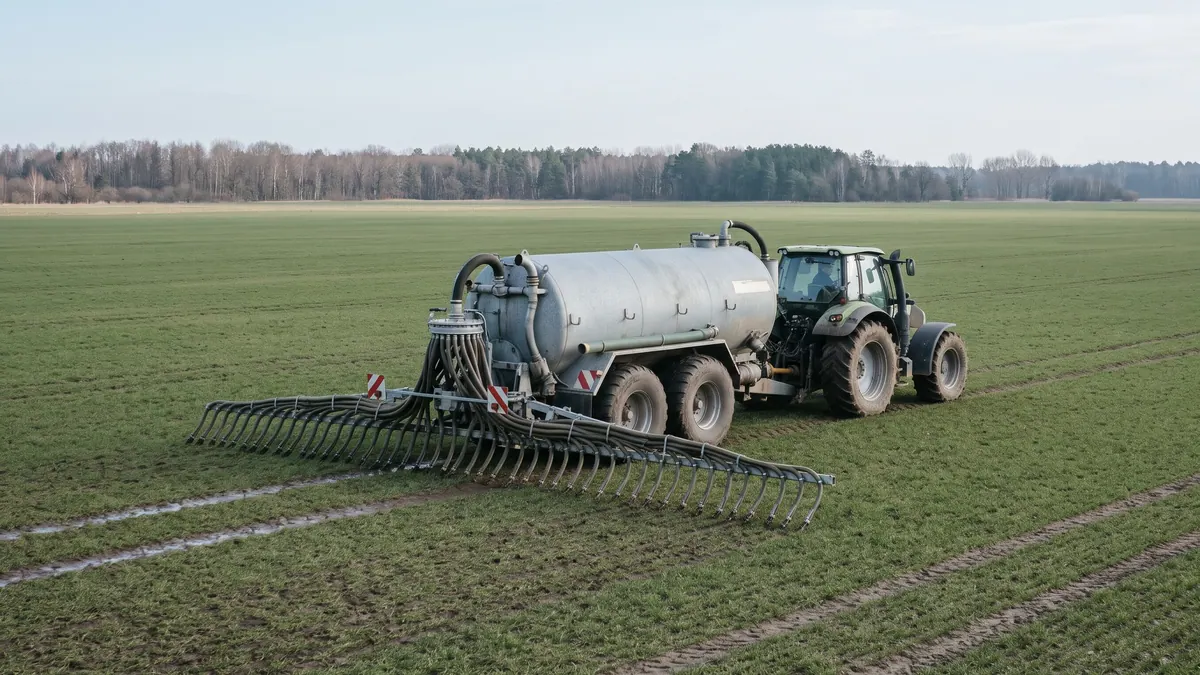
Techniques that limit ammonia emissions are recommended (trailing hoses, soil injectors, rapid incorporation) — details in a separate article. In practice lower emissions mean more nitrogen available to plants and lower consumption of mineral fertilisers.
Phosphorus and potassium
A rate calculated on nitrogen may supply more phosphorus than the plants need, which on soils with a high nutrient status leads to accumulation. Balance P and K; the solid fraction of digestate is mainly phosphorus and organic matter, the liquid — potassium and nitrogen.
Documentation
Keep records: date, field, quantity, digestate analysis, application technique, weather conditions. Documentation is required in inspections and makes planning easier.
Checklist
- A current digestate analysis.
- N, P, K balance for the field and the yield.
- The 170 kg N/ha limit and other restrictions of the action programme.
- Timing and soil conditions in line with the regulations.
- An application technique that limits emissions.
- Distances from water and buildings.
- A record of the operation.
Typical planning mistakes
- Adopting the composition from a table instead of from the analysis of your own plant.
- Ignoring ammonium nitrogen and treating all N as equally available.
- Dosing solely according to nitrogen, without a phosphorus balance.
- Application on compacted or water-saturated soil, which increases runoff.
- No reserve of storage capacity for the period when application is prohibited.
- No records, which makes it difficult to demonstrate compliance in an inspection.
Cooperation with recipients
If digestate goes to other farms, agree in writing: quality (analysis), quantities, collection dates, responsibility for transport and application, and the method of documentation. Clear rules protect both the biogas plant and the recipient from disputes and penalties for exceeding limits.
Sources
Questions and answers
Does the 170 kg N/ha limit apply to the whole country?
The Nitrates Directive introduces it for natural fertilisers in nitrate vulnerable zones; in Poland the nitrates action programme (Regulation of the Council of Ministers of 31 January 2023, Journal of Laws (Dz.U.) 2023, item 244) applies throughout the country. Always check the regulations and action programme in force.
Is digestate a natural fertiliser?
It depends on the substrates and the mode of placing on the market. Digestate from slurry and manure is usually treated, in the context of limits, as a natural fertiliser; for other substrates (e.g. biowaste) separate rules apply. Confirm the status in the plant documents and with the competent authority.
Related articles