Law and regulationExplainer
UPPZ: Regulation 1069/2009 and material categories 1, 2 and 3 in a biogas plant
Animal by-products fall into three risk categories. We explain what belongs to categories 1, 2 and 3 and what may be done with them in a biogas or composting plant.
Other language versions: polski.
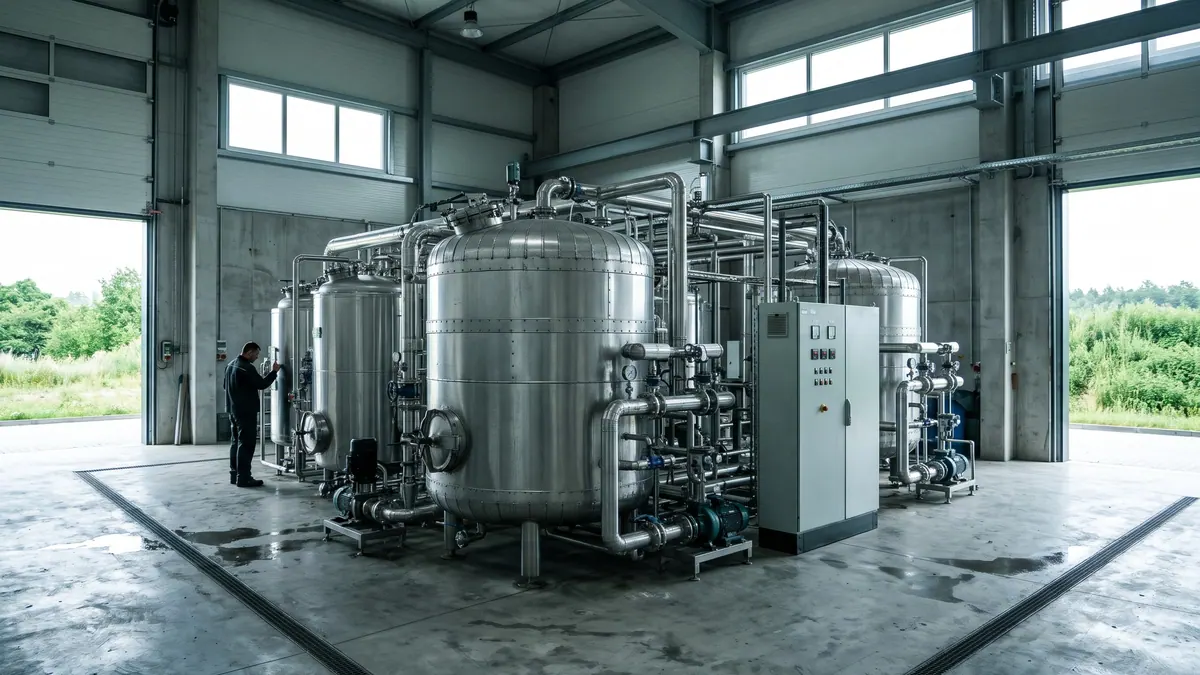
Animal by-products (UPPZ) are materials not intended for human consumption, and Regulation (EC) 1069/2009 divides them into three categories according to risk: category 1 — the highest, category 2 — intermediate (including manure and slurry), category 3 — the lowest (including former foodstuffs and kitchen waste). The category determines whether the material may go to a biogas or composting plant, with what treatment and with what documents. Regulation 1069/2009 is supplemented by Commission implementing Regulation (EU) 142/2011.
Categories: what belongs to them
| Category | Examples (selection) | Article |
|---|---|---|
| 1 | animals suspected of or infected with TSE, pet, circus and zoo animals, specified risk material, kitchen waste from international means of transport | Article 8 |
| 2 | manure, unmineralised guano and digestive tract content, animals that died other than by slaughter, material from treatment plants at category 2 slaughterhouses, products exceeding substance limits, mixtures of category 2 material with category 3 | Article 9 |
| 3 | parts of animals fit for consumption but not intended for it for commercial reasons, blood, wool, raw milk, former foodstuffs of animal origin, kitchen waste (except from international means of transport) | Article 10 |
Exceptions from the scope of application (Article 2(2)) include raw milk and colostrum used on the farm of origin and kitchen waste — with the proviso that the regulation applies to them when they are intended for processing into biogas or compost.
What is permitted with each category
- Category 1 — Article 12 provides for, among other things, incineration, co-incineration, landfilling after sterilisation and use as fuel and for producing derived products. Biogas and composting are not on the list, so this material is out of the question in a biogas plant.
- Category 2 — Article 13 permits biogas or compost after pressure sterilisation (method 1: particles up to 50 mm, above 133°C, at least 3 bar, minimum 20 minutes) and permanent marking. Treatment is not required for manure, digestive tract content, milk and colostrum and eggs, if the authority sees no serious risk of a communicable disease. Manure and digestive tract content may also be applied to land without processing.
- Category 3 — Article 14 permits, among other things, feed, organic fertilisers, composting and biogas. Kitchen waste of this category may be digested or composted after hygienisation under standard parameters or under alternative ones approved for kitchen waste.
The mixing rule
A mixture of category 2 material with category 3 is classified as category 2 (Article 9(g)), and with category 1 — as category 1. In a biogas plant this means that adding waste of a higher category "raises" the requirements for the whole batch, so substrates must be separated and documented.
What this means for a biogas plant
- A plant that converts UPPZ or derived products into biogas or compost must be approved by the competent authority (Article 24(1)(g)).
- As standard, category 3 material undergoes hygienisation at 70°C for at least 60 minutes, with particles up to 12 mm (annex V to Regulation 142/2011).
- The transport of UPPZ requires a commercial document (Article 21), and carriers and other operators whose establishment does not require approval are subject to registration (Article 23).
- The list of approved and registered plants is kept by the Chief Veterinary Inspectorate; biogas plants appear in it in a separate section.
Examples from biogas plant practice
| Substrate | Category | Notes |
|---|---|---|
| Slurry, manure | 2 (Article 9(a)) | often without pretreatment, if the authority sees no serious risk |
| Rumen and digestive tract content | 2 (Article 9(a)) | as above; requires a commercial document |
| Blood, animal fats from slaughterhouses | 3 | hygienisation 70°C/60 min or alternative parameters |
| Whey and dairy products | 3 | some dairy products may skip pasteurisation with the authority's consent |
| Kitchen and catering waste | 3 (Article 10(p)) | from international transport — category 1 |
| Dead farm animals | 2 | usually pressure sterilisation and requirements for rendering plants |
Documents and marking
UPPZ are transported with a commercial document containing, among other things, the origin, destination, quantity and description of the goods. The authority may exempt the transport of manure from it in strictly defined situations, e.g. between places within one farm. Category 2 material after pressure sterilisation intended for the production of fertilisers is permanently marked, and the consigning and receiving operator is responsible for the conformity of the documents.
How to establish the category in practice
- Ask the supplier for the commercial document — it should state the category of the material, its origin and its destination.
- Check whether the supplier operates on the basis of registration or approval and has a veterinary identification number (this applies to slaughterhouses, processing plants, collectors).
- Keep a register of receipts: date, quantity, category, supplier, document number.
- If in doubt about the category (e.g. mixtures, slaughter residues), ask the county veterinary officer before the material goes into the tank.
Remember that UPPZ and waste are two legal regimes operating in parallel. The same material may require a waste processing permit (Act on waste) and at the same time plant approval (Regulation 1069/2009).
Common mistakes
- Treating slurry as an ordinary fertiliser. It is category 2 UPPZ, so a biogas plant receiving it is subject to the regulation.
- Failing to separate streams. Substrates of different categories should have separate reception, storage and documentation.
- Overlooking kitchen waste. Kitchen waste from domestic catering is category 3, but that from international transport is category 1.
- Confusing "waste" with UPPZ. The same material may be both waste within the meaning of the Act on waste and UPPZ within the meaning of the regulation, so both regimes operate in parallel.
This text is for information purposes only and does not constitute legal advice; before an investment or formal decision, check the current wording of the provisions and consult a lawyer or the competent authority.
Sources
Questions and answers
Are slurry and manure UPPZ?
Yes. Manure, unmineralised guano and digestive tract content are Category 2 material (Article 9(a)). In a biogas plant, however, they can be processed without prior sterilisation if the competent authority sees no risk of the spread of a serious transmissible disease.
Related articles