

BMP testingEnergy crops and whole-crop plants (WCS)
Giant knotweed (incl. Igniscum) — BMP: 10 studies, weighted mean 192 m³ CH₄/t VS
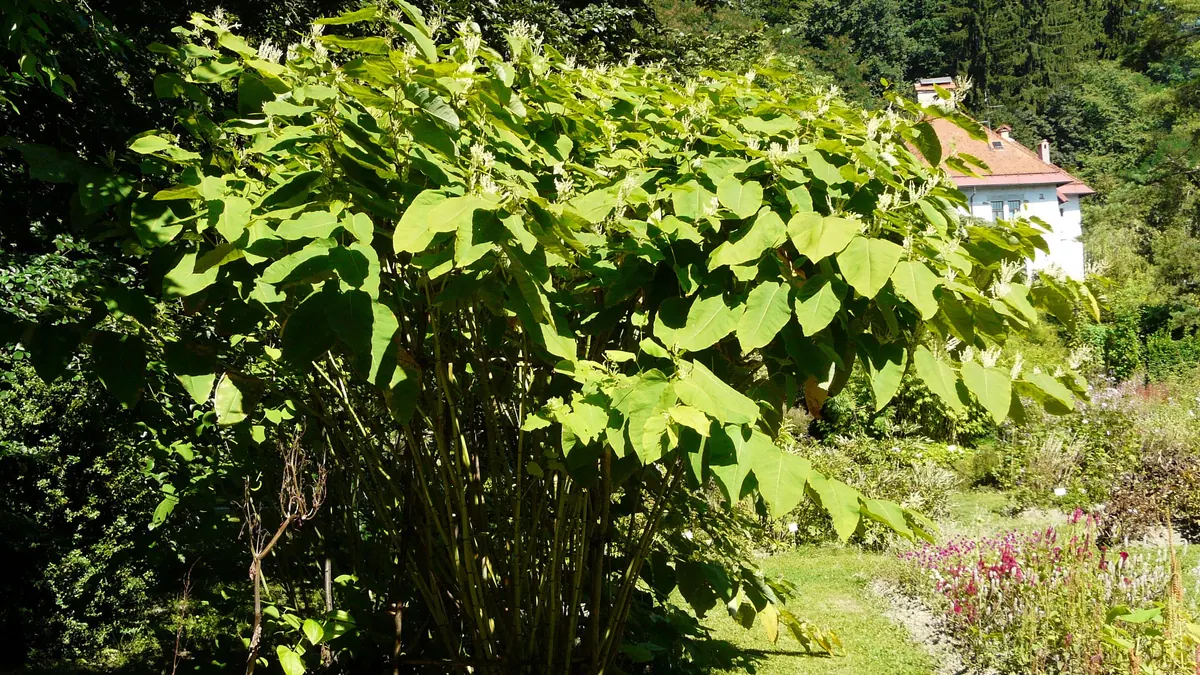
Sakhalin knotweed (including the Igniscum variety) is a tall perennial grown as an energy crop, but one that raises reservations because of the invasiveness of related knotweeds.
rating: neutralCH₄ ≈ 53 % (estimate)
Photo Andrea Moro, Comune di Padova, Orto Botanico, Veneto, Italia / Wikimedia Commons, licence CC BY-SA 4.0, source file; changes: cropping

- Weighted mean
- 192m³ CH₄/t VS
- Range
- 146–270m³ CH₄/t VS
- Records
- 10studies
- Publications
- 3sources
- Temperatures
- 35 °C, 37 °C, 38 °Cof the test
Methane in biogas
Medium methane content · ≈ 5.3 kWh/m³ of biogas
estimate from the substrate type The collected studies contain no measurement. The interval follows from the approximate composition (protein from total nitrogen (N 1.6 % DM × 6.25)) and the yields of compound groups according to FNR.
Rating for biogas plants
neutral — editorial rating for biogas plantsNo clear advantages — worth charging a fee for accepting it
Potential per tonne of fresh matter: moderate (34 m³ CH₄/t); no particular threats to stability. Handling costs: fibres, floating layer.
Why? Rating factors
Potential per tonne +1
- +1potential 34 m³ CH₄/t fresh matter (BMP 192 × DM 19.4 % × VS 91.6 %)
Process stability 0
- 0no factors
Handling and costs −0.5
- −0.5fibres, floating layer — shredding and intensive mixing
Total points: 0.5 · thresholds: ≥ 2.5 very good, ≥ 1 good, below — neutral; negative with cumulative process risk.
Add to the co-digestion calculator CSV data
BMP curves from 10 studies
Weighted mean Individual records
Dashed lines are a model curve (first-order kinetics, B(t) = B₀·(1 − e−kt)); the end point comes from the publication. All curves are model curves.
Cumulative methane production over the test [m³ CH₄/t VS]. The thick line is the weighted mean of all records (192); dots mark the end values given in the publications. Point at the chart to read values; click a legend item to hide or show a record.
Records and sources
Download CSV| Source | BMP m³ CH₄/t VS | Temperature | Sample | Curve |
|---|---|---|---|---|
| Lehtomaki (2006) · 1 | 170 | 35 °C · mesophilic | Giant knotweed | end point (model curve) |
| Lehtomaki (2006) · 2 | 270 | 35 °C · mesophilic | Giant knotweed | end point (model curve) |
| Mast et al. (2014) · 1 DOI | 146 | 37 °C · mesophilic | igniscum | end point (model curve) |
| Mast et al. (2014) · 2 DOI | 148 | 37 °C · mesophilic | igniscum | end point (model curve) |
| Mast et al. (2014) · 3 DOI | 150 | 37 °C · mesophilic | igniscum | end point (model curve) |
| Mast et al. (2014) · 4 DOI | 158 | 37 °C · mesophilic | igniscum | end point (model curve) |
| Ruf i Emmerling (2018) · 1 DOI | 190 | 38 °C · mesophilic | Giant knotweed · pretreatment: particle size reduction/sample preparation (MY-D: physical treatment) | end point (model curve) |
| Ruf i Emmerling (2018) · 2 DOI | 192 | 38 °C · mesophilic | Giant knotweed · pretreatment: particle size reduction/sample preparation (MY-D: physical treatment) | end point (model curve) |
| Ruf i Emmerling (2018) · 3 DOI | 220 | 38 °C · mesophilic | Giant knotweed · pretreatment: particle size reduction/sample preparation (MY-D: physical treatment) | end point (model curve) |
| Ruf i Emmerling (2018) · 4 DOI | 222 | 38 °C · mesophilic | Giant knotweed · pretreatment: particle size reduction/sample preparation (MY-D: physical treatment) | end point (model curve) |
| Weighted mean | 192 | arithmetic mean 187, SD 41 | ||
Typical composition
- Dry matter (DM)
- 19.4% (range 13–30.3)
- Volatile solids (VS)
- 91.6 % DM (range 30.3–94)
- Nitrogen
- 1.6 % DM
- C/N ratio
- 32
Median and range of the determinations reported in the publications behind this substrate's BMP records (read from: CROPGEN D4, MY-D); dry matter: 10 determinations, volatile solids: 4 determinations.
Sources: Lehtomaki (2006); Mast et al. (2014); Ruf et al. (2018).
The composition of the raw material varies between batches — for plant calculations use an analysis of your own sample. The calculator inserts typical values automatically.
Process properties
Advantages
- Methane potential in the database: weighted mean 192 m³ CH₄/t VS (median 180; range 146–270; 10 records from 3 sources).
Drawbacks and risks
- Yield falls with a late harvest (Mast 2014).
Co-digestion — what to combine it with, what to watch out for
- combines well
group: Animal excreta (slurry, manure, poultry litter)
Co-digestion with excreta (slurry/solid manure) is the standard arrangement for plant biomass: they supply alkalinity and microflora.[1][2]
Dosing
No source-based dose limits.
Sources of the process data
- Mast, B.; Lemmer, A.; Oechsner, H.; Reinhardt-Hanisch, A.; Claupein, W.; Graeff-Hönninger, S. (2014) Methane yield potential of novel perennial biogas crops influenced by harvest date. Industrial Crops and Products 58, 194–203
- Weiland, P. (2010) Biogas production: current state and perspectives. Applied Microbiology and Biotechnology
- Lehtomaki, A. Viinikainen, T.A. Rintala, J.A (2006) Screening boreal energy crops and crop residues for methane biofuel production. Submitted to Biomass and Bioenergy
- Hendriks, A.T.W.M.; Zeeman, G. (2009) Pretreatments to enhance the digestibility of lignocellulosic biomass. Bioresource Technology
- Ruf, T.; Emmerling, C. (2018) Site-adapted production of bioenergy feedstocks on poorly drained cropland through the cultivation of perennial crops. A feasibility study on biomass yield and biochemical methane potential. Biomass and Bioenergy 119, 429–435
The co-digestion calculator will assess a specific mixture containing this substrate.
What it is and where it comes from
Sakhalin knotweed (Reynoutria sachalinensis, formerly Fallopia sachalinensis) originates from East Asia and forms tall, dense stands. The Igniscum variety is known from energy cropping in Germany, where it is meant to provide a high biomass yield for biogas. The compilation covers records from a Finnish study of Sakhalin knotweed and from a study of the Igniscum variety, obtained from different harvest dates.
Properties relevant to digestion
Knotweed biomass is green and succulent at an early stage, and becomes woody with time. The composition therefore depends on the harvest date: biomass harvested earlier is better digestible, later fibre dominates. The plant contains phenolic compounds and oxalates, the effect of which on the process at typical shares is a subject of research and should not be prejudged. Ensiling is possible, but requires adequate dry matter. Size reduction is essential, and the fibre readily forms a floating crust.
How to read the spread of results
The results cover two different groups: Sakhalin knotweed in general and the Igniscum variety tested at several harvest dates. The harvest date, plantation age, fertilisation, site and year affect the composition. In addition the test protocols differ (inoculum, substrate-to-inoculum ratio, temperature from 35 to 37 °C). The spread is therefore the resultant of plant and methodological differences.
In biogas plant practice
Knotweeds, including Sakhalin knotweed, appear on the national list of invasive alien species posing a threat to Poland (Regulation of the Council of Ministers of 9 December 2022, issued under the Act of 11 August 2021 on alien species), so their cultivation and the movement of material are subject to restrictions arising from these regulations. Before any decision on growing or accepting the biomass, the current regulations on alien species and the requirements for protection against spread must be checked. Technically the material requires size reduction and ensiling, and in the ration it behaves like other perennial tall plants. Cost-effectiveness should be assessed against other raw materials, and the decision should be based on a BMP test. For completeness it must be added that perennial tall herbaceous plants form permanent plantations, difficult to remove once established. The decision to grow is therefore a long-term one and should take into account not only the regulations but also the scenario for ending use of the plantation and protection against spread of the plant.
Methodology in brief
BMP is the amount of methane obtained from volatile solids (VS) in a batch test, given in m³ CH₄ per tonne of VS (numerically the same as NmL CH₄/g VS in the publications) and converted to normal conditions (0 °C, 101.325 kPa). The weighted mean gives each publication a total weight of 1, split equally between its results for the substrate — a paper testing twenty varieties does not outweigh a paper with a single sample. In inter-laboratory programmes the unit is the laboratory (total weight 1), and within it the weight of a test grows with the number of bottles (replicates). Results after pretreatment (e.g. thermal, chemical, enzymatic) are shown separately and are not included in the mean.
Solid lines are curves measured in the tests. Where a publication gives only the final result, we draw a first-order kinetic model, B(t) = B₀·(1 − e−kt): only the end point comes from the publication, and the shape of the curve serves purely as visualisation — do not read the production on a particular day from it. For this substrate k = 0.085 d−1 was assumed (median of rate constants k reported in the sources and/or fitted to the mean measured curves).
The statistics describe the spread of published results — a descriptive compilation, not a meta-analysis or a guarantee of plant yield.
Bibliography
- Lehtomaki, A. Viinikainen, T.A. Rintala, J.A (2006). Screening boreal energy crops and crop residues for methane biofuel production. Submitted to Biomass and Bioenergy.
- Mast, B.; Lemmer, A.; Oechsner, H.; Reinhardt-Hanisch, A.; Claupein, W.; Graeff-Hönninger, S. (2014). Methane yield potential of novel perennial biogas crops influenced by harvest date. Industrial Crops and Products 58, 194–203. DOI: 10.1016/j.indcrop.2014.04.017 DOI
- Ruf, T.; Emmerling, C. (2018). Site-adapted production of bioenergy feedstocks on poorly drained cropland through the cultivation of perennial crops. A feasibility study on biomass yield and biochemical methane potential. Biomass and Bioenergy 119, 429–435. DOI: 10.1016/j.biombioe.2018.10.007 DOI
All sources of the site: bibliography.
Other substrates in the group “Energy crops and whole-crop plants (WCS)”

Reed canary grass — BMP: 12 studies, weighted mean 290 m³ CH₄/t VS
290 m³ CH₄/t VS weighted mean from 12 studies
good — editorial rating for biogas plants≈53 %
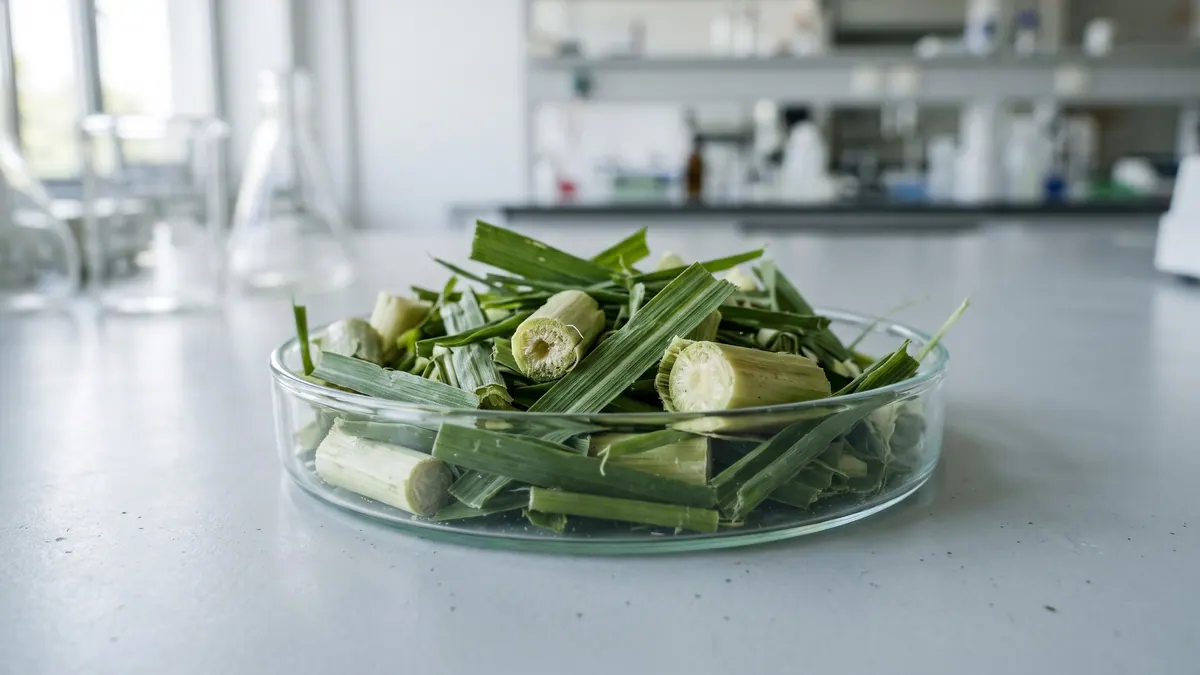
Pennisetum giganteum (Juncao grass) — BMP: 2 studies, weighted mean 246 m³ CH₄/t VS
246 m³ CH₄/t VS weighted mean from 2 studies
≈54 %
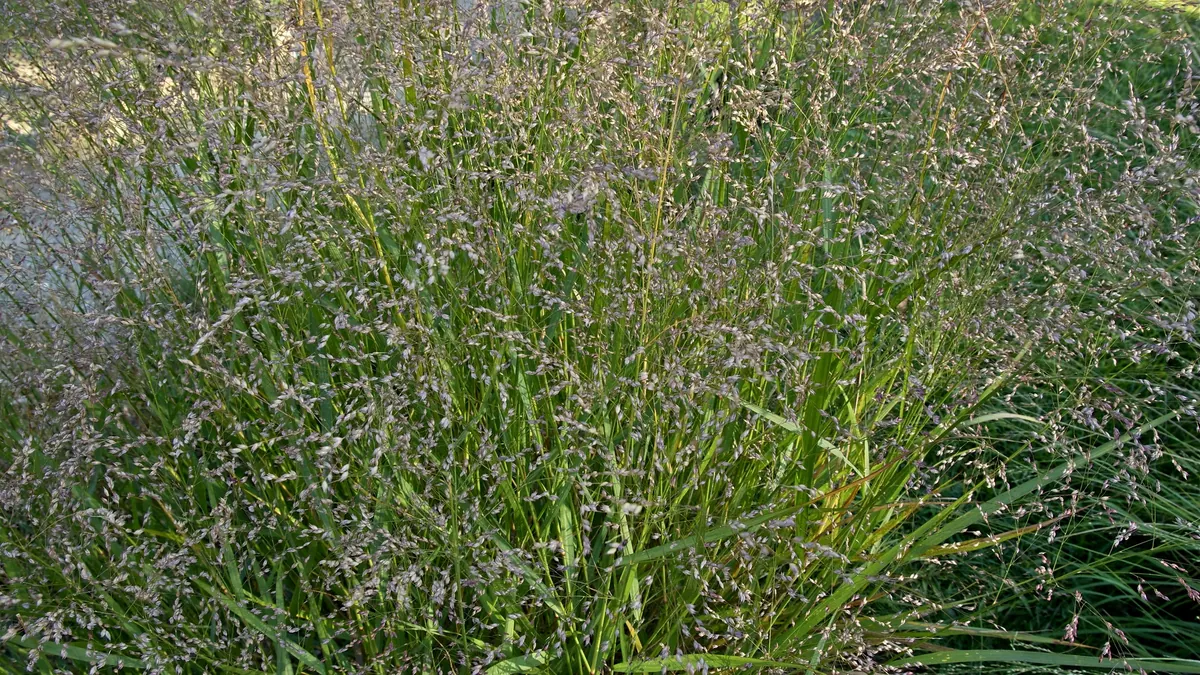
Switchgrass — BMP: 3 studies, weighted mean 180 m³ CH₄/t VS
180 m³ CH₄/t VS weighted mean from 3 studies
≈52 %
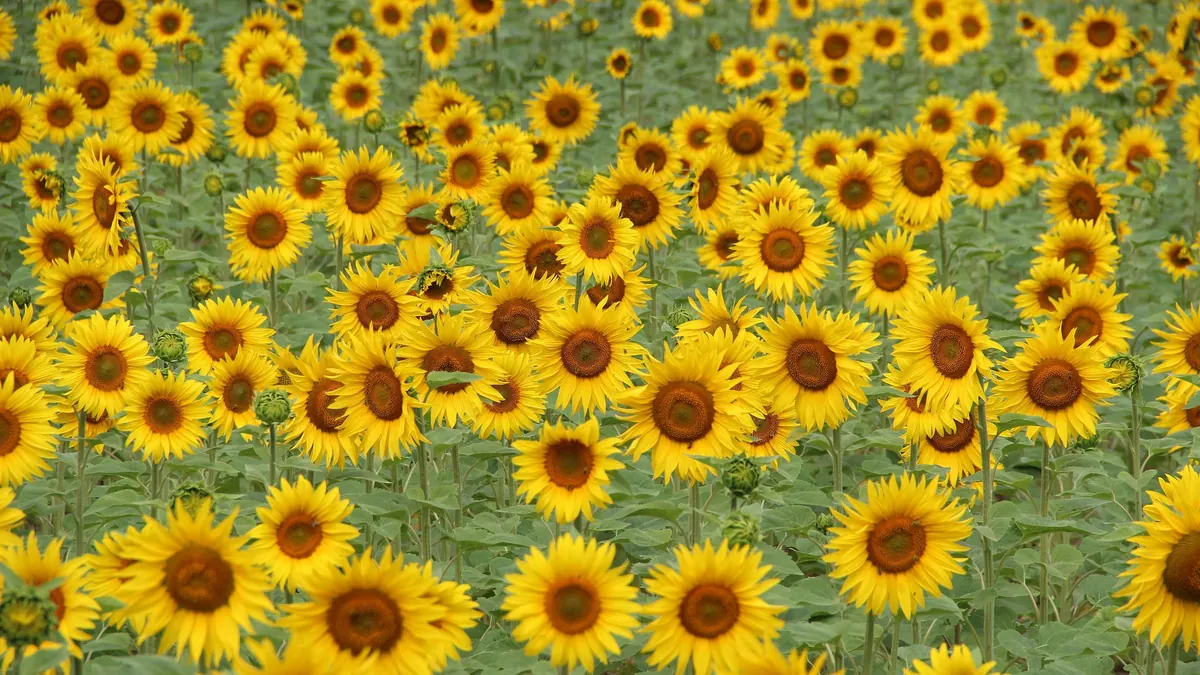
Sunflower, whole crop — BMP: 15 studies, weighted mean 287 m³ CH₄/t VS
287 m³ CH₄/t VS weighted mean from 15 studies
very good — editorial rating for biogas plants≈52 %