

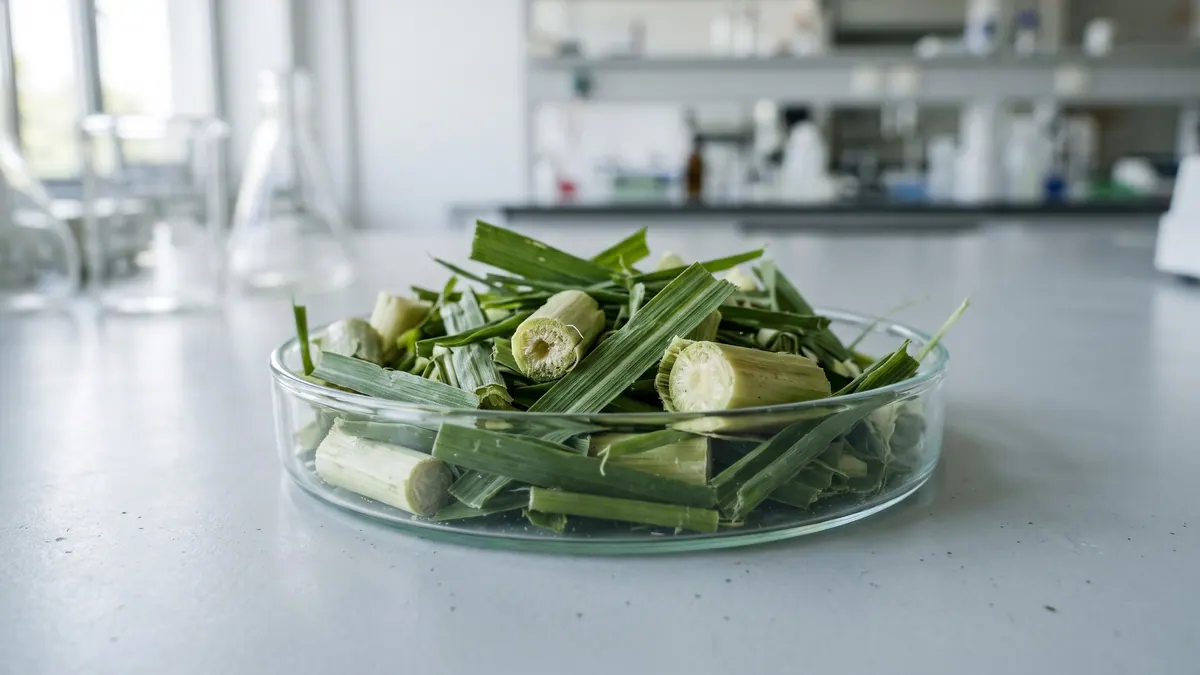
BMP testingEnergy crops and whole-crop plants (WCS)single study (2 samples)
Pennisetum giganteum (Juncao grass) — BMP: 2 studies, weighted mean 246 m³ CH₄/t VS
Pennisetum giganteum (juncao) is a tall tropical grass with a high yield, studied in China as an energy raw material. The compilation includes one study with two harvest dates.
Illustration: FeedstockData (AI, Google Gemini)
- Weighted mean
- 246m³ CH₄/t VS
- Range
- 224–268m³ CH₄/t VS
- Records
- 2single study (2 samples)
- Publications
- 1source
- Temperatures
- —of the test
Methane in biogas
Medium methane content · ≈ 5.4 kWh/m³ of biogas
estimate from the substrate type The collected studies contain no measurement. The interval follows from the approximate composition (protein from total nitrogen (N 2.3 % DM × 6.25)) and the yields of compound groups according to FNR.
Rating for biogas plants
not rated — editorial rating for biogas plants
Not rated: no dry matter or volatile solids in the data. We calculate the rating when the dry matter and volatile solids of the material are known.
Add to the co-digestion calculator CSV data
BMP curves from 2 studies
Weighted mean Individual records
Dashed lines are a model curve (first-order kinetics, B(t) = B₀·(1 − e−kt)); the end point comes from the publication. All curves are model curves.
Cumulative methane production over the test [m³ CH₄/t VS]. The thick line is the weighted mean of all records (246); dots mark the end values given in the publications. Point at the chart to read values; click a legend item to hide or show a record.
Records and sources
Download CSV| Source | BMP m³ CH₄/t VS | Temperature | Sample | Curve |
|---|---|---|---|---|
| Liu et al. (2020) · 1 DOI | 224 | — | Pennisetum giganteum (Pennisetum giganteum z.x.lin) – Collected in December | end point (model curve) |
| Liu et al. (2020) · 2 DOI | 268 | — | Pennisetum giganteum (Pennisetum giganteum z.x.lin) – Collected in July | end point (model curve) |
| Weighted mean | 246 | arithmetic mean 246, SD 31 | ||
Typical composition
- Volatile solids (VS)
- 89.5 % DM (range 85–94.1)
- Nitrogen
- 2.3 % DM
- C/N ratio
- 19
Median and range of the determinations reported in the publications behind this substrate's BMP records (read from: BCBPD); dry matter: 0 determinations, volatile solids: 2 determinations. C/N was calculated as the ratio of C and N content (% DM) from the same source. No DM in the sources – the calculator has to ask for a value.
Sources: Liu et al. (2020).
The composition of the raw material varies between batches — for plant calculations use an analysis of your own sample. The calculator inserts typical values automatically.
Process properties
Low confidence: the description is based on general characteristics of the substrate group, not on studies of this material. Treat it as a hint to be verified.
No published process studies
The literature we use does not describe the advantages or drawbacks of digesting this substrate beyond the BMP test results. Below are process characteristics assigned on the basis of the type of material — an editorial classification, not a study result.
- seasonal
- seasonal availability — requires storage
- fibrous
- lignocellulose, long fibres → floating layer, harder mixing, slow degradation
Co-digestion — what to combine it with, what to watch out for
- combines well
group: Animal excreta (slurry, manure, poultry litter)
Co-digestion with excreta (slurry/solid manure) is the standard arrangement for plant biomass: they supply alkalinity and microflora.[1][2]
Dosing
Practical requirements
- Shred: shredding increases the surface available for degradation and speeds it up, but does not necessarily raise the final gas yield (FNR 2010, Ch. 3 “Triturado”).
Sources of the process data
- Liu, C.; Wei, B.; Dai, Z.; Chen, C.; Liu, G. (2020) Methane Production from Pennisetum giganteum z.x.lin During Anaerobic Digestion. Journal of Biobased Materials and Bioenergy 14(2), 258–264
- Weiland, P. (2010) Biogas production: current state and perspectives. Applied Microbiology and Biotechnology
- Hendriks, A.T.W.M.; Zeeman, G. (2009) Pretreatments to enhance the digestibility of lignocellulosic biomass. Bioresource Technology
- FNR (2010). Guía sobre el Biogás – Desde la producción hasta el uso (hiszp. wydanie „Leitfaden Biogas”, GIZ 2013)
The co-digestion calculator will assess a specific mixture containing this substrate.
What it is and where it comes from
Pennisetum giganteum, called juncao in the Chinese literature, is a tall perennial grass of warm climates, similar to elephant grass. It is grown in southern China as a fodder plant, for soil reclamation and as a raw material for bioenergy. It produces very large amounts of green mass in a season, and harvesting can be repeated several times a year. The compilation contains several records from one publication: for material harvested in July and in December.
Properties relevant to digestion
Like other tropical C4 grasses, juncao accumulates biomass rapidly, and its composition changes with the age of the plant: young shoots are rich in readily available compounds and water, older ones woody and rich in lignin. The fibre causes slow hydrolysis and a tendency to form a floating crust, so the material must be size-reduced. Ensiling is possible, but more difficult at the low sugar content of young biomass. The ash and silica content can be significant, and sensitivity to low temperatures limits cultivation to regions without severe frosts.
How to read the spread of results
The records from one study describe material harvested at different times of year, so they are separated by differences in maturity, moisture and composition, not by measurement error. In practice the result also depends on the variety, fertilisation, cutting height and the form of the material. The test conditions (inoculum, substrate-to-inoculum ratio, length) are not directly comparable here with European studies, and the temperature is not given in the description of the records. Such a small sample does not show the full variability.
In biogas plant practice
For Polish biogas plants juncao is not a realistic substrate, because the plant does not overwinter in our climate and there is no regular cultivation. The description is of comparative significance above all, as an example of tropical energy grasses. In countries where it is grown it is considered for cyclical harvests with ensiling. Any use requires size reduction and an assessment of cost-effectiveness, and the basis should be a BMP test of your own with a description of the harvest date. It is worth noting that the high yields of tropical grasses in warm conditions do not carry over to Polish realities, because the growing season and temperatures decide whether cultivation is possible at all. The comparison with grassland grasses or maize silage must therefore be made at the level of the properties of the biomass itself, not of yields.
Methodology in brief
BMP is the amount of methane obtained from volatile solids (VS) in a batch test, given in m³ CH₄ per tonne of VS (numerically the same as NmL CH₄/g VS in the publications) and converted to normal conditions (0 °C, 101.325 kPa). The weighted mean gives each publication a total weight of 1, split equally between its results for the substrate — a paper testing twenty varieties does not outweigh a paper with a single sample. In inter-laboratory programmes the unit is the laboratory (total weight 1), and within it the weight of a test grows with the number of bottles (replicates). Results after pretreatment (e.g. thermal, chemical, enzymatic) are shown separately and are not included in the mean.
Solid lines are curves measured in the tests. Where a publication gives only the final result, we draw a first-order kinetic model, B(t) = B₀·(1 − e−kt): only the end point comes from the publication, and the shape of the curve serves purely as visualisation — do not read the production on a particular day from it. For this substrate k = 0.085 d−1 was assumed (median of rate constants k reported in the sources and/or fitted to the mean measured curves).
The statistics describe the spread of published results — a descriptive compilation, not a meta-analysis or a guarantee of plant yield.
Bibliography
- Liu, C.; Wei, B.; Dai, Z.; Chen, C.; Liu, G. (2020). Methane Production from Pennisetum giganteum z.x.lin During Anaerobic Digestion. Journal of Biobased Materials and Bioenergy 14(2), 258–264. DOI: 10.1166/jbmb.2020.1948 DOI
All sources of the site: bibliography.
Other substrates in the group “Energy crops and whole-crop plants (WCS)”
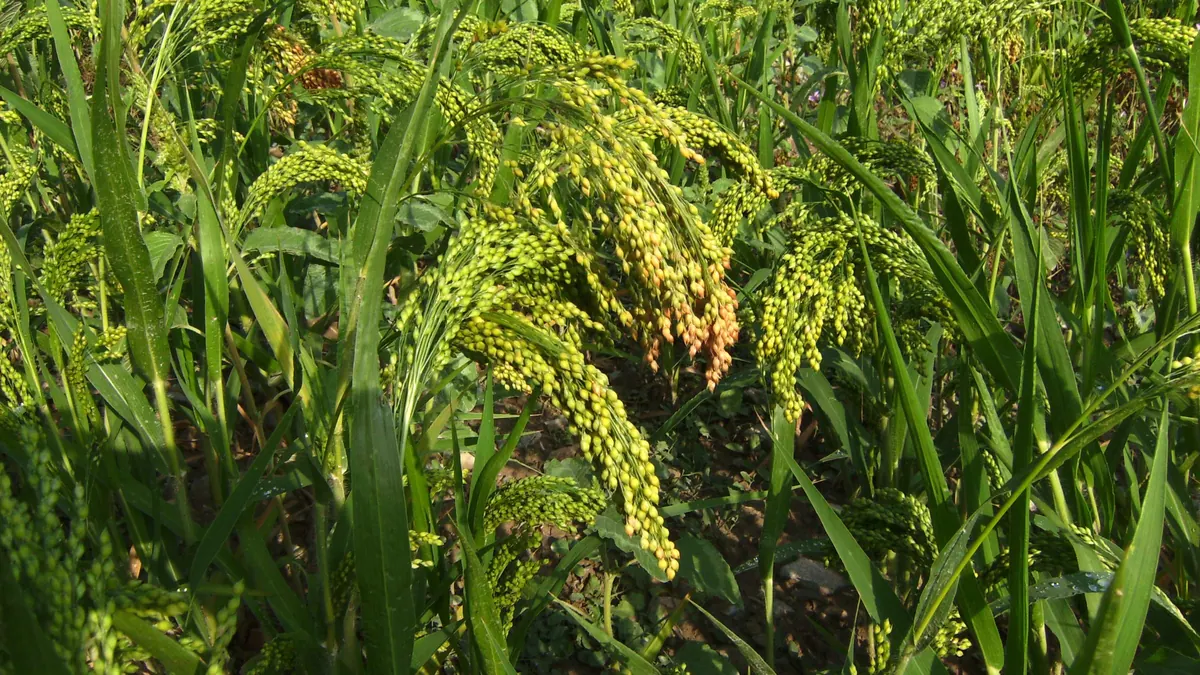
Sudan grass — BMP: 4 studies, weighted mean 250 m³ CH₄/t VS
250 m³ CH₄/t VS weighted mean from 4 studies
good — editorial rating for biogas plants≈52 %

Reed canary grass — BMP: 12 studies, weighted mean 290 m³ CH₄/t VS
290 m³ CH₄/t VS weighted mean from 12 studies
good — editorial rating for biogas plants≈53 %
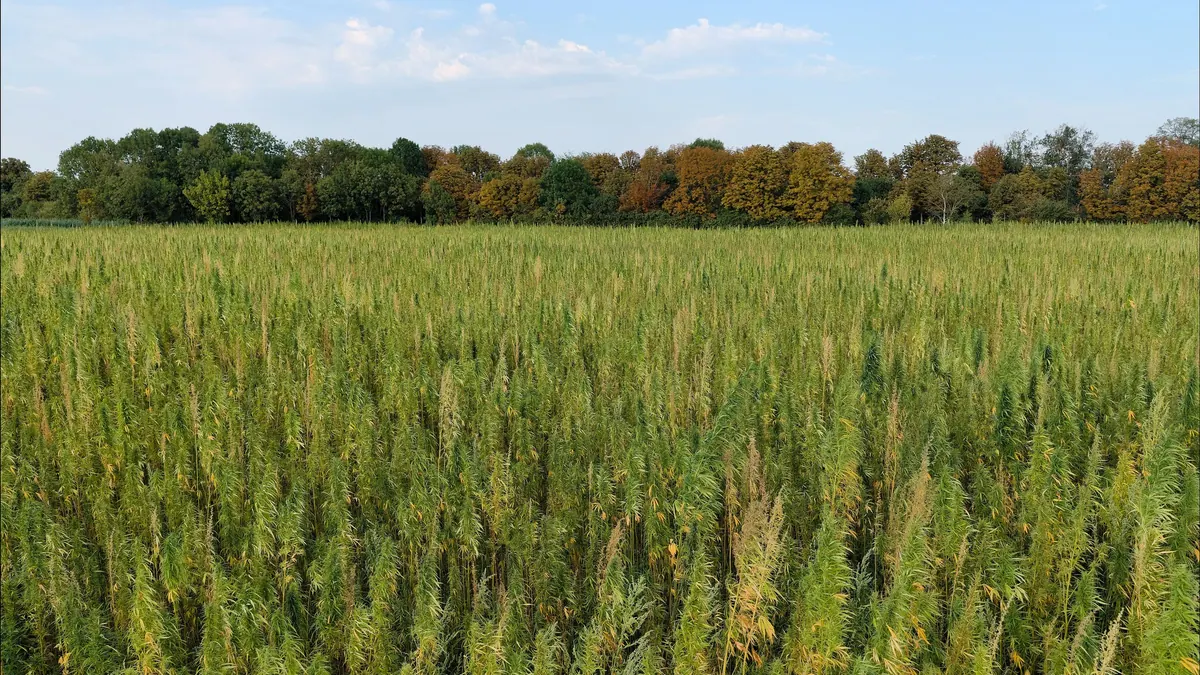
Hemp, stalks and whole plant — BMP: 3 studies, weighted mean 242 m³ CH₄/t VS
242 m³ CH₄/t VS weighted mean from 3 studies
≈52 %
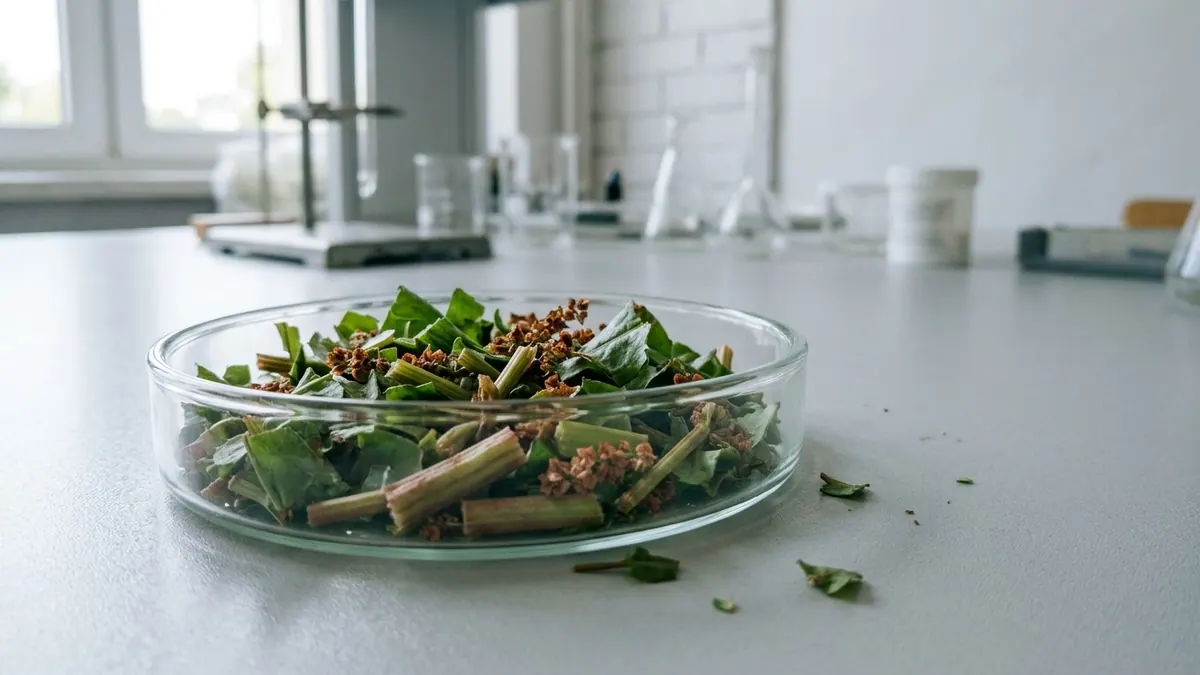
Energy dock — BMP: 5 studies, weighted mean 271 m³ CH₄/t VS
271 m³ CH₄/t VS weighted mean from 5 studies
≈52 %