

BMP testingWild, invasive and medicinal plantssingle study (4 samples)
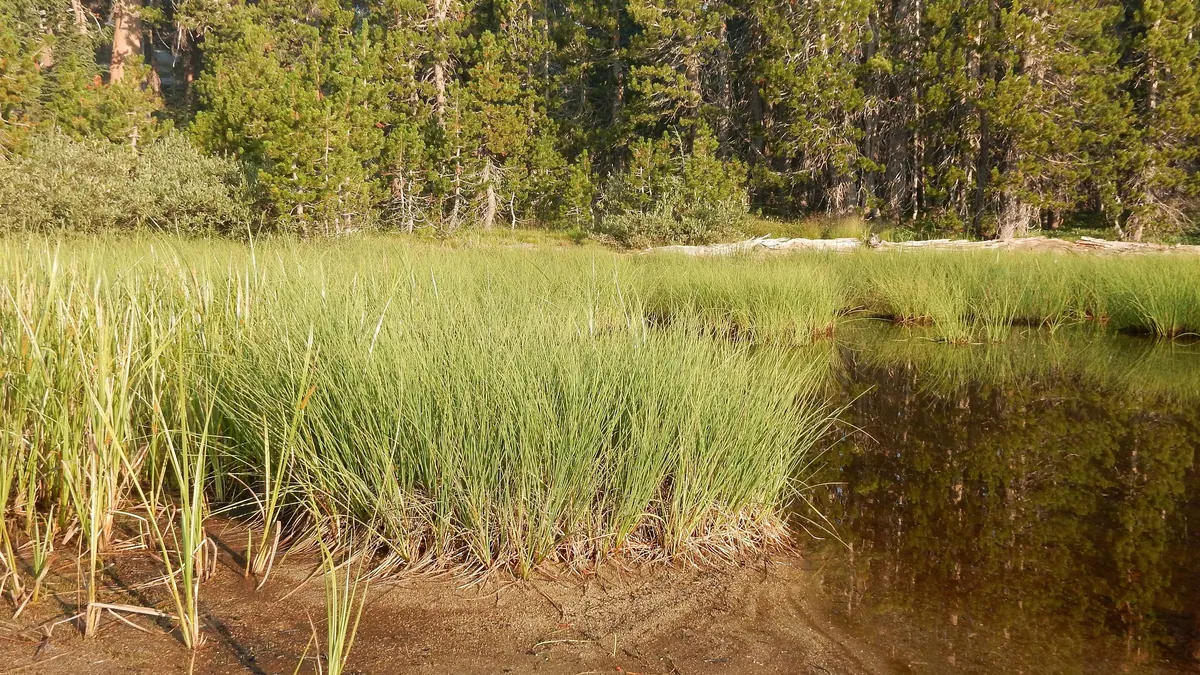
Sedges (Carex spp.) — BMP: 4 studies, weighted mean 204 m³ CH₄/t VS
Sedges (Carex spp.) from wetlands are paludiculture biomass with high lignocellulose content; dry and wet digestion were studied for tufted sedge and lesser pond sedge.
Photo Matt Lavin / Wikimedia Commons, licence CC BY-SA 2.0, source file; changes: cropping

- Weighted mean
- 204m³ CH₄/t VS
- Range
- 121–275m³ CH₄/t VS
- Records
- 4single study (4 samples)
- Publications
- 1source
- Temperatures
- —of the test
Methane in biogas
Medium methane content · ≈ 5.2 kWh/m³ of biogas
estimate from the substrate type The collected studies contain no measurement. The interval follows from the approximate composition (carbohydrate-dominated (no protein or fat characteristics)) and the yields of compound groups according to FNR.
Rating for biogas plants
not rated — editorial rating for biogas plants
Not rated: no dry matter or volatile solids in the data. We calculate the rating when the dry matter and volatile solids of the material are known.
Add to the co-digestion calculator CSV data
BMP curves from 4 studies
Weighted mean Individual records
Dashed lines are a model curve (first-order kinetics, B(t) = B₀·(1 − e−kt)); the end point comes from the publication. All curves are model curves.
Cumulative methane production over the test [m³ CH₄/t VS]. The thick line is the weighted mean of all records (204); dots mark the end values given in the publications. Point at the chart to read values; click a legend item to hide or show a record.
Records and sources
Download CSV| Source | BMP m³ CH₄/t VS | Temperature | Sample | Curve |
|---|---|---|---|---|
| Czubaszek et al. (2021) · 1 DOI | 121 | — | Carex elata (CE), dry fermentation | end point (model curve) |
| Czubaszek et al. (2021) · 2 DOI | 190 | — | Carex elata (CE), wet fermentation | end point (model curve) |
| Czubaszek et al. (2021) · 3 DOI | 228 | — | Carex acutiformis + Carex elata (CA), dry fermentation | end point (model curve) |
| Czubaszek et al. (2021) · 4 DOI | 275 | — | Carex acutiformis + Carex elata (CA), wet fermentation | end point (model curve) |
| Weighted mean | 204 | arithmetic mean 204, SD 65 | ||
Process properties
Advantages
- Methane potential in the database: weighted mean 204 m³ CH₄/t VS (median 209; range 121–275; 4 records from 1 sources).
Drawbacks and risks
- Results differ several-fold between species and technology (wet vs dry digestion, Czubaszek 2021).
Co-digestion — what to combine it with, what to watch out for
- combines well
Dosing
No source-based dose limits; in the Czubaszek 2021 study sedges were processed as a mono-substrate (wet and dry digestion).
Practical requirements
- Shred: shredding increases the surface available for degradation and speeds it up, but does not necessarily raise the final gas yield (FNR 2010, Ch. 3 “Triturado”).
- Provide for removal of sand and heavy contaminants: sand is often strongly bound to organic matter and is released only in the digester, and sediments reduce its usable capacity, so a scraper or bottom drain is needed (FNR 2010, Ch. 3).
Sources of the process data
- Czubaszek, R.; Wysocka-Czubaszek, A.; Wichtmann, W.; Banaszuk, P. (2021) Specific Methane Yield of Wetland Biomass in Dry and Wet Fermentation Technologies. Energies 14(24), 8373
- Weiland, P. (2010) Biogas production: current state and perspectives. Applied Microbiology and Biotechnology
- Dahunsi, S. (2019) Mechanical pretreatment of lignocelluloses for enhanced biogas production: Methane yield prediction from biomass structural components. Bioresource Technology 280, 18–26
- Hendriks, A.T.W.M.; Zeeman, G. (2009) Pretreatments to enhance the digestibility of lignocellulosic biomass. Bioresource Technology
- FNR (2010). Guía sobre el Biogás – Desde la producción hasta el uso (hiszp. wydanie „Leitfaden Biogas”, GIZ 2013)
The co-digestion calculator will assess a specific mixture containing this substrate.
What it is and where it comes from
Sedges (Carex spp.) are grass-like wetland plants growing in wet meadows, fens and on the banks of waters. Tufted sedge (Carex elata) and lesser pond sedge (Carex acutiformis) are sometimes dominant in waterlogged habitats. In Poland and other European countries, biomass from these areas is considered in the context of paludiculture and the management of rewetted peatlands, where mowing can be a form of use without drainage.
Properties relevant to digestion
Sedge biomass is fibrous: it contains a lot of cellulose and hemicellulose as well as lignin, and few soluble sugars. Its composition depends on the mowing date, and material from late harvests is tougher, drier and poorer in nitrogen. Sedge leaves contain silica, which increases tool wear and may affect shredding systems. The high C/N ratio favours combining with slurry. Wetland biomass may be contaminated with soil, peat and organic residues.
How to read the spread of results
The set contains several records from a single study: tufted sedge and a mixture of both species, each in dry and in wet digestion. The temperature is not stated. Differences may result from the digestion technology (dry and wet), the species proportion, the mowing date, particle size and inoculum. A single study does not allow the effect of the method to be separated from the effect of the material, nor inter-laboratory variability to be assessed.
In biogas plant practice
Sedge biomass is an additive for co-digestion or dry digestion, after shredding and usually ensiling. Availability depends on the rules for peatland management: mowing in protected areas is restricted by nature conservation legislation and may require the consent of the conservation authorities. Material from wetland mowing has environmental value, but logistics (harvesting with equipment on wet ground) raise the costs. As agricultural biomass or green waste it has a different status depending on its origin.
It is worth remembering that the result for dry digestion is not directly comparable with that for wet digestion, because the conditions of mass transfer and the ammonia concentration are different, and in a batch test differences in the way water is introduced modify the availability of the substrate to microorganisms.
An additional factor is the content of minerals and silica in sedge biomass, which increases ash and lowers the result expressed per dry matter. When assessing profitability, one must therefore look at the entire harvesting chain and not only at the BMP result.
Methodology in brief
BMP is the amount of methane obtained from volatile solids (VS) in a batch test, given in m³ CH₄ per tonne of VS (numerically the same as NmL CH₄/g VS in the publications) and converted to normal conditions (0 °C, 101.325 kPa). The weighted mean gives each publication a total weight of 1, split equally between its results for the substrate — a paper testing twenty varieties does not outweigh a paper with a single sample. In inter-laboratory programmes the unit is the laboratory (total weight 1), and within it the weight of a test grows with the number of bottles (replicates). Results after pretreatment (e.g. thermal, chemical, enzymatic) are shown separately and are not included in the mean.
Solid lines are curves measured in the tests. Where a publication gives only the final result, we draw a first-order kinetic model, B(t) = B₀·(1 − e−kt): only the end point comes from the publication, and the shape of the curve serves purely as visualisation — do not read the production on a particular day from it. For this substrate k = 0.134 d−1 was assumed (median of rate constants k reported in the sources and/or fitted to the mean measured curves).
The statistics describe the spread of published results — a descriptive compilation, not a meta-analysis or a guarantee of plant yield.
Bibliography
- Czubaszek, R.; Wysocka-Czubaszek, A.; Wichtmann, W.; Banaszuk, P. (2021). Specific Methane Yield of Wetland Biomass in Dry and Wet Fermentation Technologies. Energies 14(24), 8373. DOI: 10.3390/en14248373 DOI
All sources of the site: bibliography.
Other substrates in the group “Wild, invasive and medicinal plants”
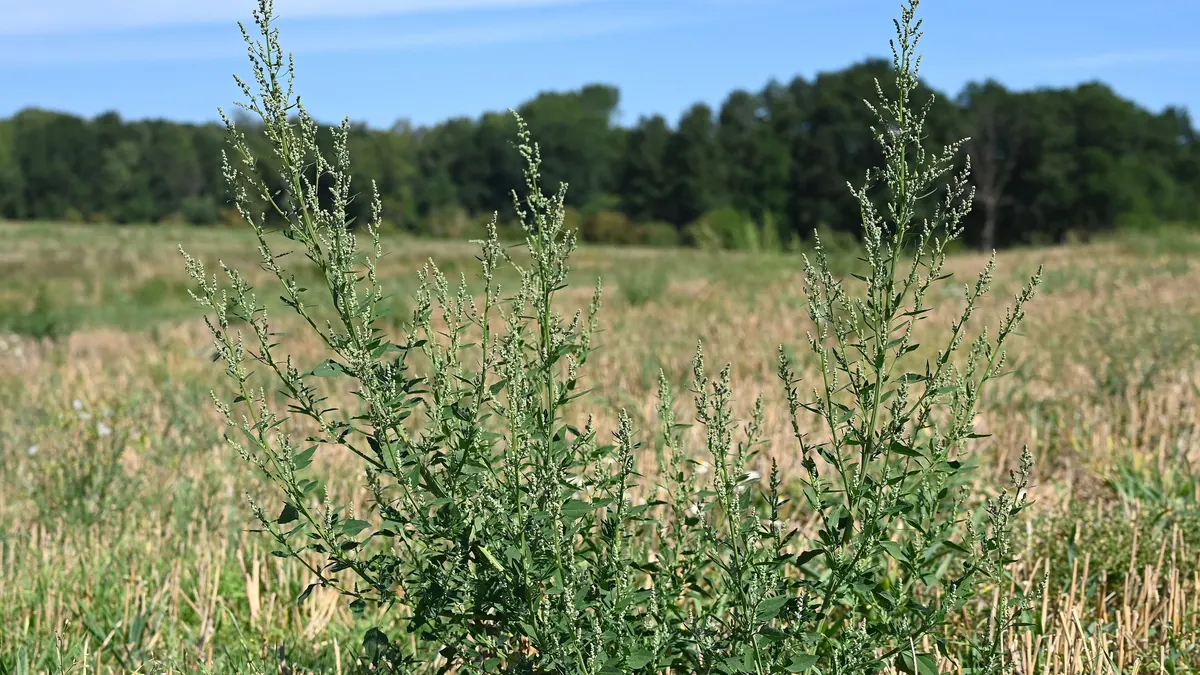
Fat hen (Chenopodium album) — BMP: 2 studies, weighted mean 216 m³ CH₄/t VS
216 m³ CH₄/t VS weighted mean from 2 studies
≈52 %
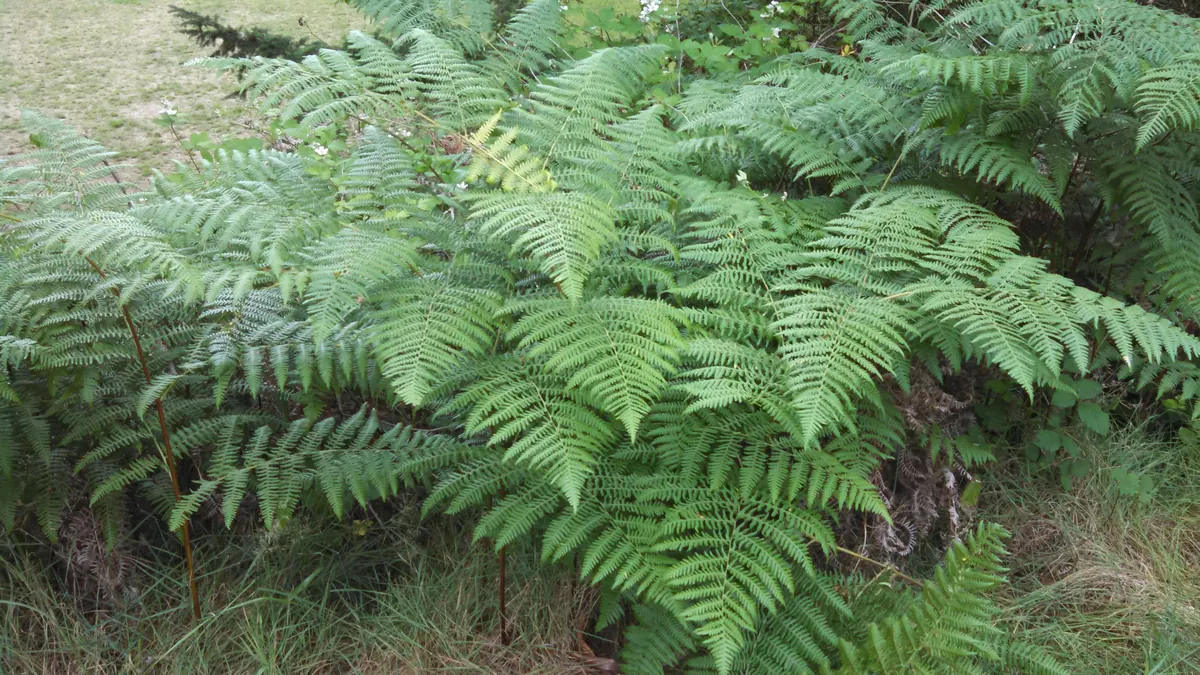
Forest underwood plants (ferns, thistles, wild raspberry) — BMP: 3 studies, weighted mean 169 m³ CH₄/t VS
169 m³ CH₄/t VS weighted mean from 3 studies
≈52 %
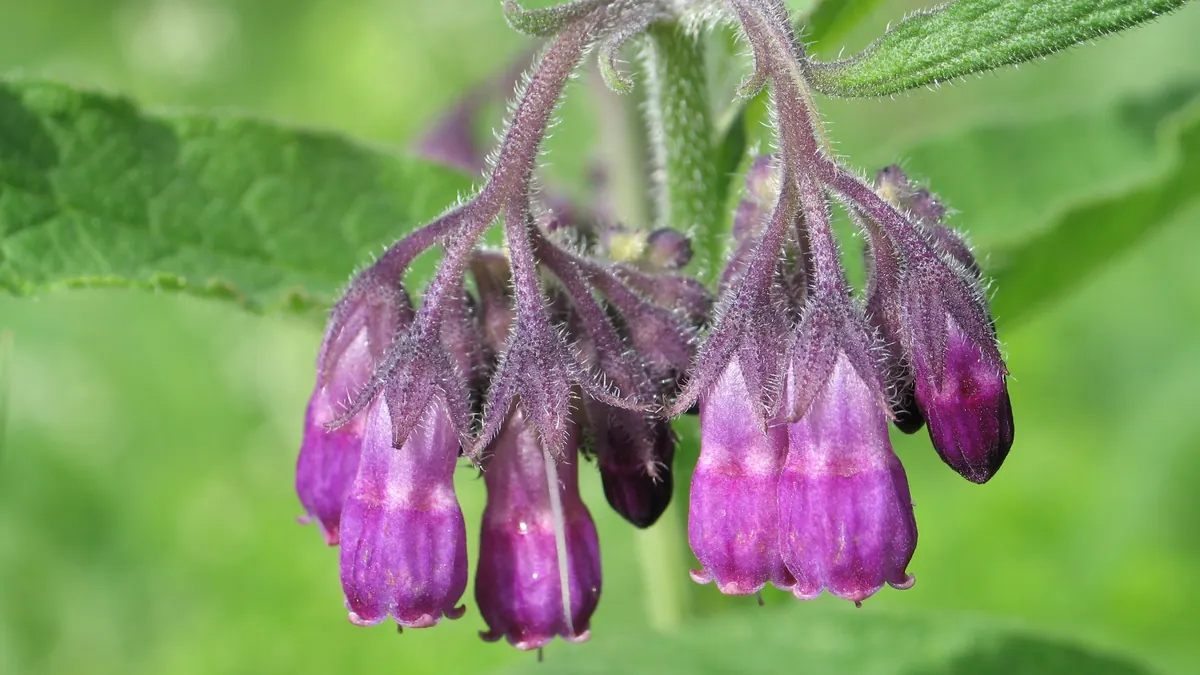
Comfrey — BMP: 2 studies, weighted mean 328 m³ CH₄/t VS
328 m³ CH₄/t VS weighted mean from 2 studies
good — editorial rating for biogas plants70 %
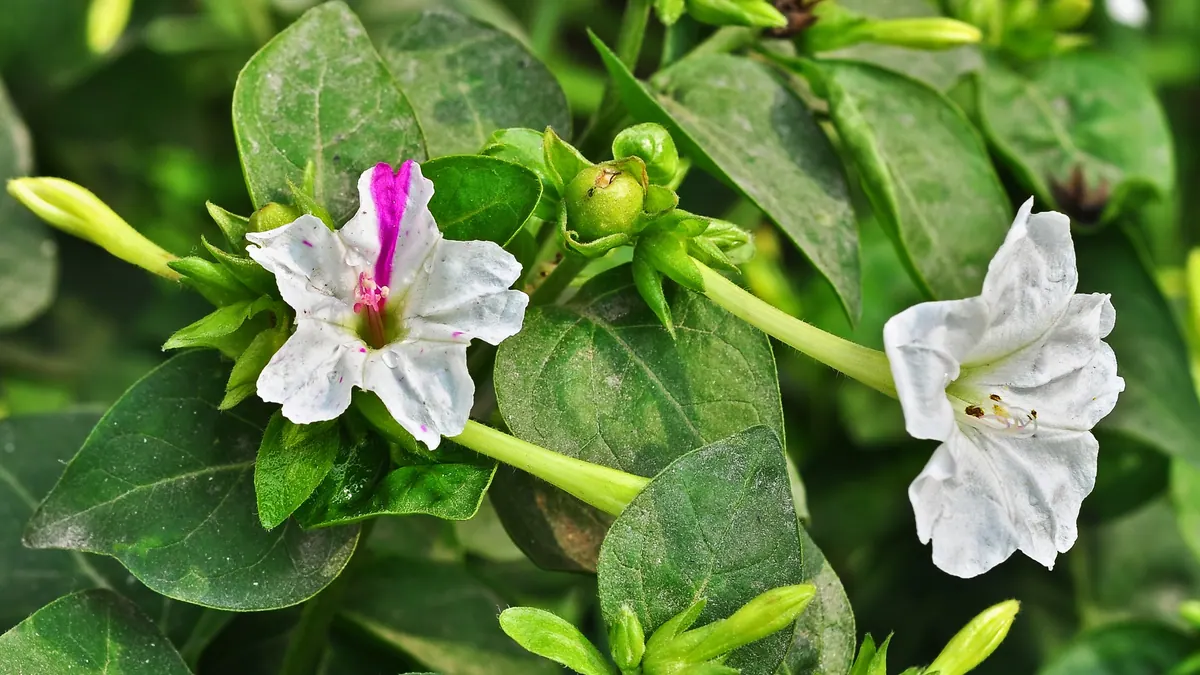
Four o'clock flower leaves — BMP: 5 studies, weighted mean 325 m³ CH₄/t VS
325 m³ CH₄/t VS weighted mean from 5 studies
good — editorial rating for biogas plants≈52 %