

BMP testingAlgae and aquatic plants
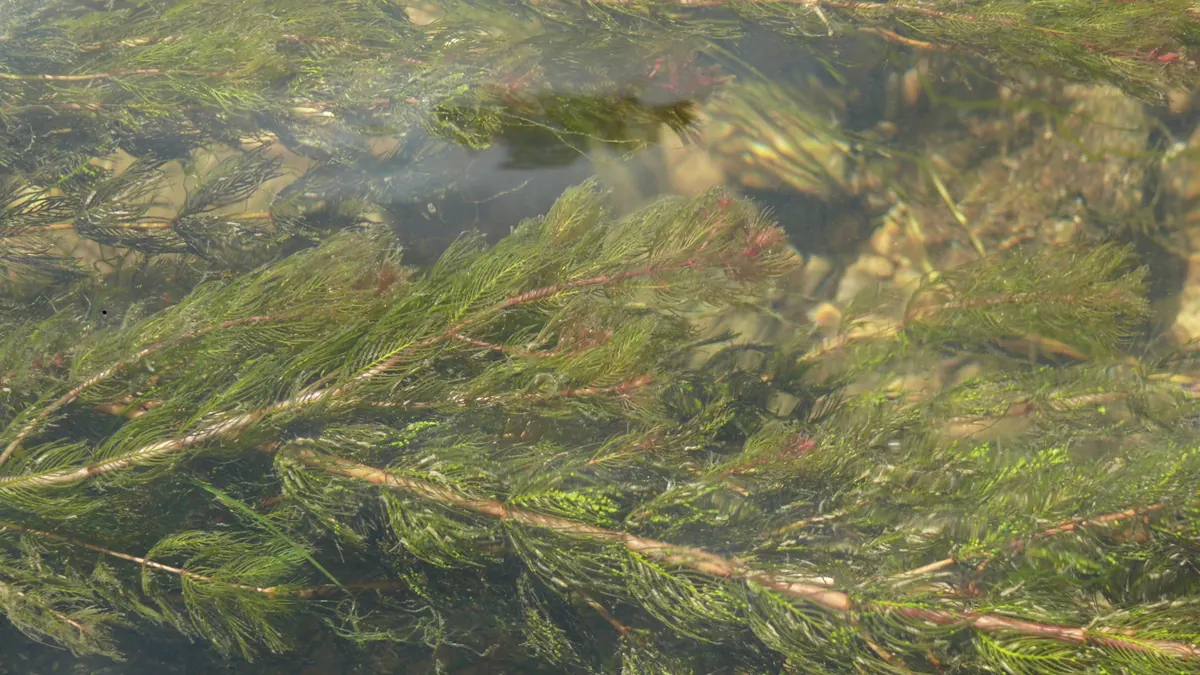
Watermilfoil — BMP: 2 studies, weighted mean 220 m³ CH₄/t VS
Milfoil (Myriophyllum) is a submerged aquatic plant removed from lakes and canals; the set contains spiked and variable-leaf milfoil from several studies.
Photo BerndH / Wikimedia Commons, licence CC BY-SA 3.0, source file; changes: cropping

- Weighted mean
- 220m³ CH₄/t VS
- Range
- 160–279m³ CH₄/t VS
- Records
- 2studies
- Publications
- 2sources
- Temperatures
- 35 °Cof the test
Methane in biogas
Medium methane content · ≈ 5.2 kWh/m³ of biogas
estimate from the substrate type The collected studies contain no measurement. The interval follows from the approximate composition (carbohydrate-dominated (no protein or fat characteristics)) and the yields of compound groups according to FNR.
Rating for biogas plants
not rated — editorial rating for biogas plants
Not rated: no dry matter or volatile solids in the data. We calculate the rating when the dry matter and volatile solids of the material are known.
Add to the co-digestion calculator CSV data
BMP curves from 2 studies
Weighted mean Individual records
Dashed lines are a model curve (first-order kinetics, B(t) = B₀·(1 − e−kt)); the end point comes from the publication. All curves are model curves.
Cumulative methane production over the test [m³ CH₄/t VS]. The thick line is the weighted mean of all records (220); dots mark the end values given in the publications. Point at the chart to read values; click a legend item to hide or show a record.
Records and sources
Download CSV| Source | BMP m³ CH₄/t VS | Temperature | Sample | Curve |
|---|---|---|---|---|
| Labatut et al. (2011) DOI | 279 | 35 °C · mesophilic | eurasian milfoil | end point (model curve) |
| Moeller et al. (2018) DOI | 160 | — | Watermilfoil (Myriophyllum heterophyllum) | end point (model curve) |
| Weighted mean | 220 | arithmetic mean 220, SD 84 | ||
Typical composition
- Volatile solids (VS)
- 63 % DM (range 63–63)
Median and range of the determinations reported in the publications behind this substrate's BMP records (read from: MY-D); dry matter: 0 determinations, volatile solids: 1 determination. No DM in the sources – the calculator has to ask for a value.
Sources: Labatut et al. (2011).
The composition of the raw material varies between batches — for plant calculations use an analysis of your own sample. The calculator inserts typical values automatically.
Process properties
Low confidence: the description is based on general characteristics of the substrate group, not on studies of this material. Treat it as a hint to be verified.
No published process studies
The literature we use does not describe the advantages or drawbacks of digesting this substrate beyond the BMP test results. Below are process characteristics assigned on the basis of the type of material — an editorial classification, not a study result.
- dilutes the feed (low DM)
- low dry matter, dilutes the feed
- seasonal
- seasonal availability — requires storage
- variable composition
- high variability of composition between batches
Dosing
The sources do not give a safe share of this substrate in the feed.
Sources of the process data
- Biochemical methane potential and biodegradability of complex organic substrates
- Crop Characteristics of Aquatic Macrophytes for Use as a Substrate in Anaerobic Digestion Plants—A Study from Germany
- Effects of size and thermophilic pre-hydrolysis of banana peel during anaerobic digestion, and biomethanation potential of key tropical fruit wastes
- Effect of particle size on biogas generation from biomass residues
The co-digestion calculator will assess a specific mixture containing this substrate.
What it is and where it comes from
Milfoil (Myriophyllum) is a genus of submerged aquatic plants. In Poland, spiked milfoil (Myriophyllum spicatum) grows, among others, and in other parts of the world it is an invasive species, while variable-leaf milfoil (M. heterophyllum) is a North American species listed on the EU list of invasive alien species (Regulation (EU) No 1143/2014). The set contains several samples: spiked milfoil from Oneida Lake (USA) and variable-leaf milfoil from the Karl-Heine Canal in Leipzig. The biomass is removed mechanically as part of water management.
Properties relevant to digestion
Submerged plants consist of more than 90% water, and their dry matter is rich in structural carbohydrates, has little lignin and a moderate amount of protein. Leaves and stems may be covered with a calcareous deposit and filamentous algae, which increases the share of minerals. Together with the biomass, sand and fine sediments enter the installation and must be removed. These plants may accumulate heavy metals from the water, so their content in the biomass depends on the cleanliness of the water body. Milfoil also contains polyphenols, which in large doses may have an inhibitory effect.
How to read the spread of results
The differences between the records arise because they come from different species, from different water bodies (a lake and an urban canal), and from different seasons and studies. The composition of the biomass depends on water quality, insolation, development stage and the share of epiphytes. In addition, the method of preparation (fresh, ground, dried), temperature, inoculum and test length have an effect. The small number of records does not allow a typical range for the genus to be determined.
In biogas plant practice
Milfoil can be a local supplement to the mix if the water body manager regularly removes vegetation. Before digestion, dewatering, shredding and sand removal are needed, and because of the low dry matter it is worth combining it with more concentrated substrates. The heavy metal content should be checked. The legal status of biomass harvested from waters depends on the purpose of harvesting and on permits, and for species recognised as invasive, restrictions on the movement of live material may apply.
By comparison with terrestrial plants, submerged biomass has a very low dry matter content, so collecting and transporting a tonne of fresh matter yields a negligible amount of energy. A biogas plant therefore usually uses such biomass only when it is located close to the place of harvest.
Methodology in brief
BMP is the amount of methane obtained from volatile solids (VS) in a batch test, given in m³ CH₄ per tonne of VS (numerically the same as NmL CH₄/g VS in the publications) and converted to normal conditions (0 °C, 101.325 kPa). The weighted mean gives each publication a total weight of 1, split equally between its results for the substrate — a paper testing twenty varieties does not outweigh a paper with a single sample. In inter-laboratory programmes the unit is the laboratory (total weight 1), and within it the weight of a test grows with the number of bottles (replicates). Results after pretreatment (e.g. thermal, chemical, enzymatic) are shown separately and are not included in the mean.
Solid lines are curves measured in the tests. Where a publication gives only the final result, we draw a first-order kinetic model, B(t) = B₀·(1 − e−kt): only the end point comes from the publication, and the shape of the curve serves purely as visualisation — do not read the production on a particular day from it. For this substrate k = 0.102 d−1 was assumed (median of rate constants k reported in the sources and/or fitted to the mean measured curves).
The statistics describe the spread of published results — a descriptive compilation, not a meta-analysis or a guarantee of plant yield.
Bibliography
- Labatut, R.A.; Angenent, L.T.; Scott, N.R. (2011). Biochemical methane potential and biodegradability of complex organic substrates. Bioresource Technology 102(3), 2255–2264. DOI: 10.1016/j.biortech.2010.10.035 DOI
- Moeller, L.; Bauer, A.; Wedwitschka, H.; Stinner, W.; Zehnsdorf, A. (2018). Crop Characteristics of Aquatic Macrophytes for Use as a Substrate in Anaerobic Digestion Plants—A Study from Germany. Energies 11(11), 3016. DOI: 10.3390/en11113016 DOI
All sources of the site: bibliography.
Other substrates in the group “Algae and aquatic plants”
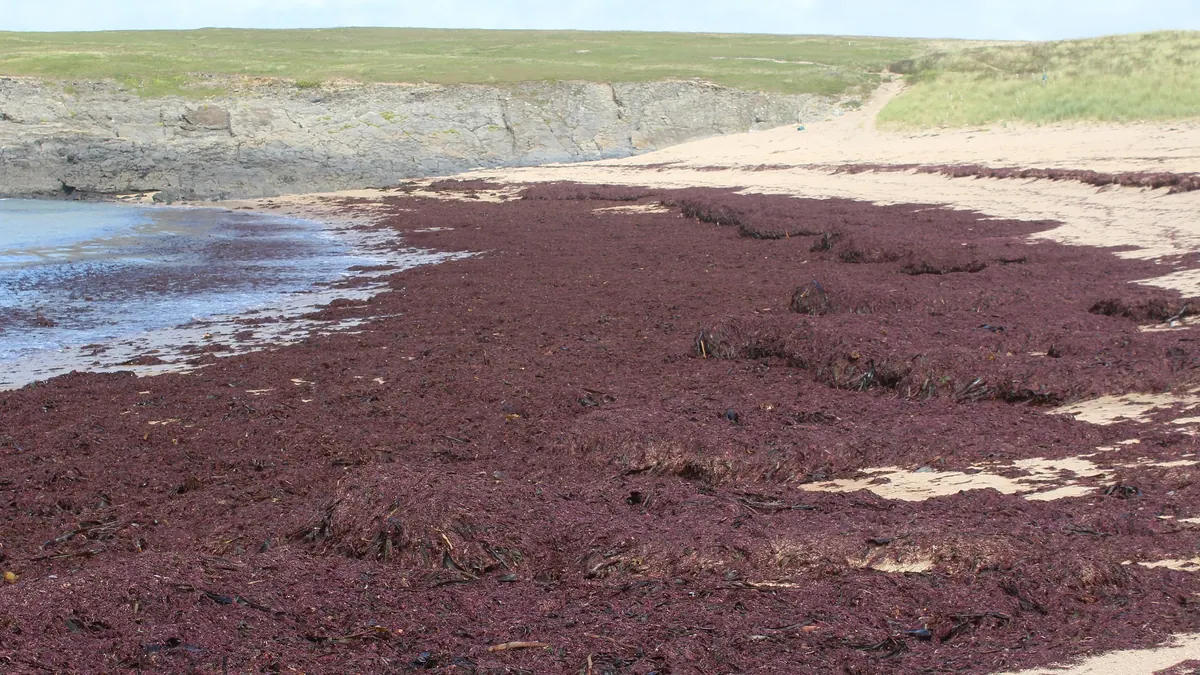
Beach-cast macroalgae (mix) — BMP: 5 studies, weighted mean 70 m³ CH₄/t VS
70 m³ CH₄/t VS weighted mean from 5 studies
≈56 %
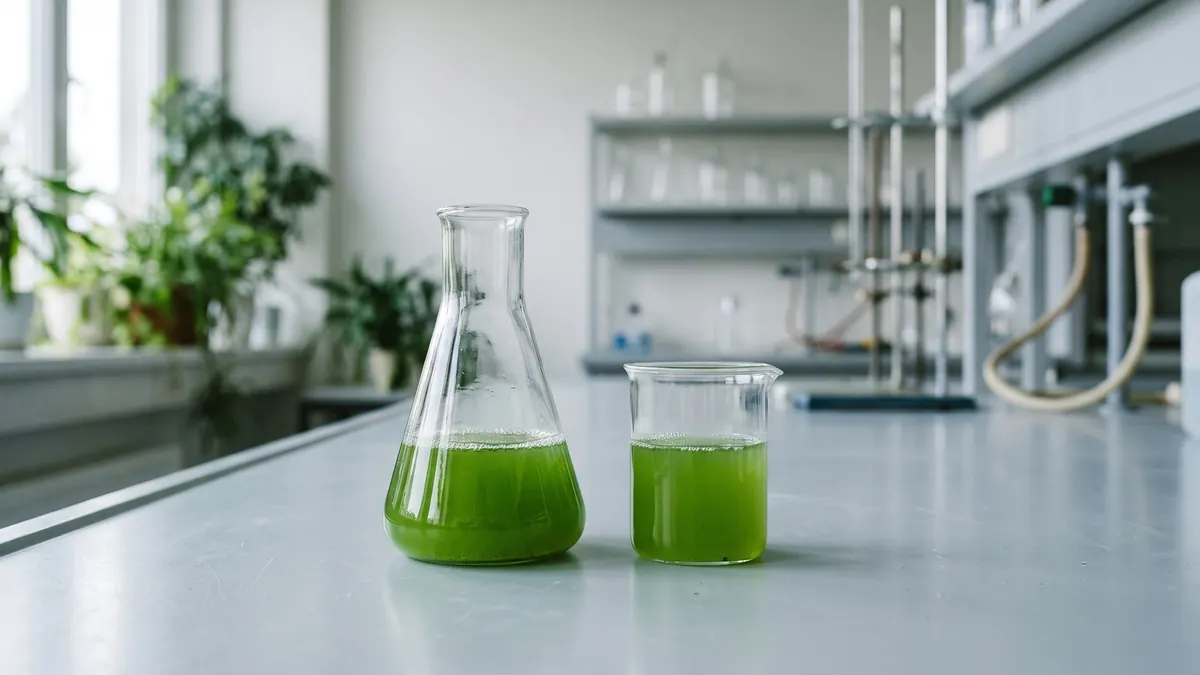
Chlamydomonas reinhardtii — BMP: 2 studies, weighted mean 346 m³ CH₄/t VS
346 m³ CH₄/t VS weighted mean from 2 studies
≈58 %
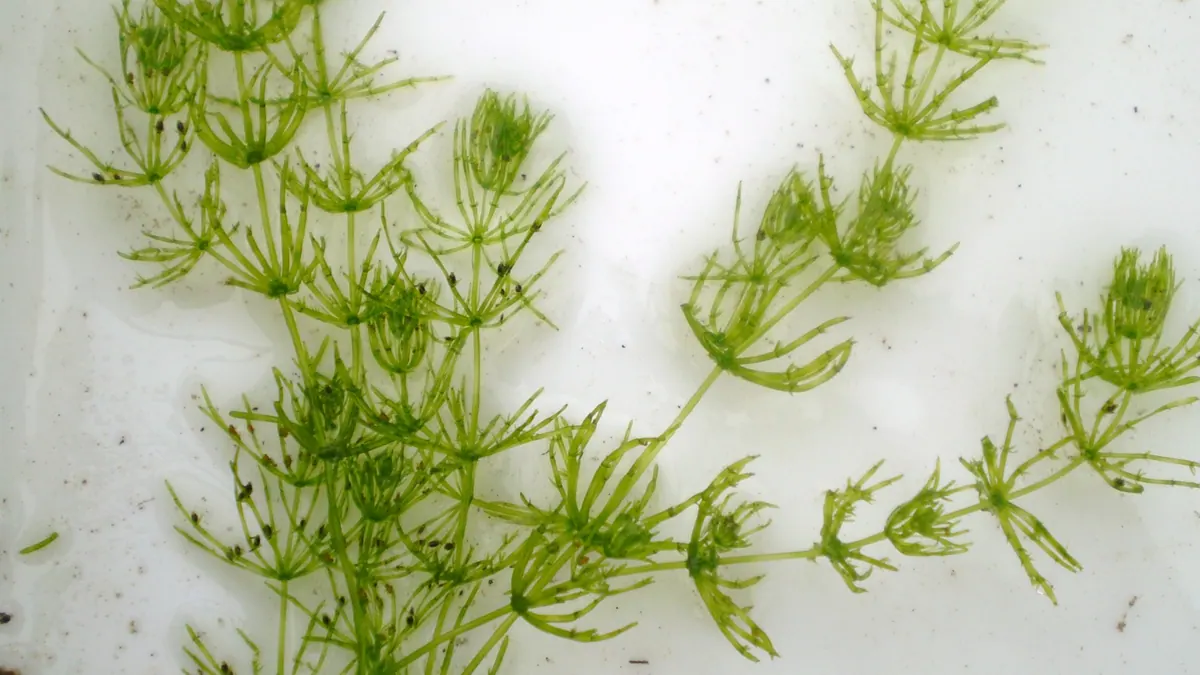
Submerged lake macrophytes (Chara, water celery) — BMP: 2 studies, weighted mean 385 m³ CH₄/t VS
385 m³ CH₄/t VS weighted mean from 2 studies
≈52 %
Microspora sp. — BMP: 2 studies, weighted mean 334 m³ CH₄/t VS
334 m³ CH₄/t VS weighted mean from 2 studies
≈52 %