Waste-to-energyExplainer
Co-incineration of waste in cement plants and heating plants: requirements, emissions, practice
Co-incineration is the use of waste as a fuel in an installation whose main purpose is producing energy or goods, e.g. clinker. We explain the rules, emission limits and the role of cement plants in Poland.
Other language versions: polski.
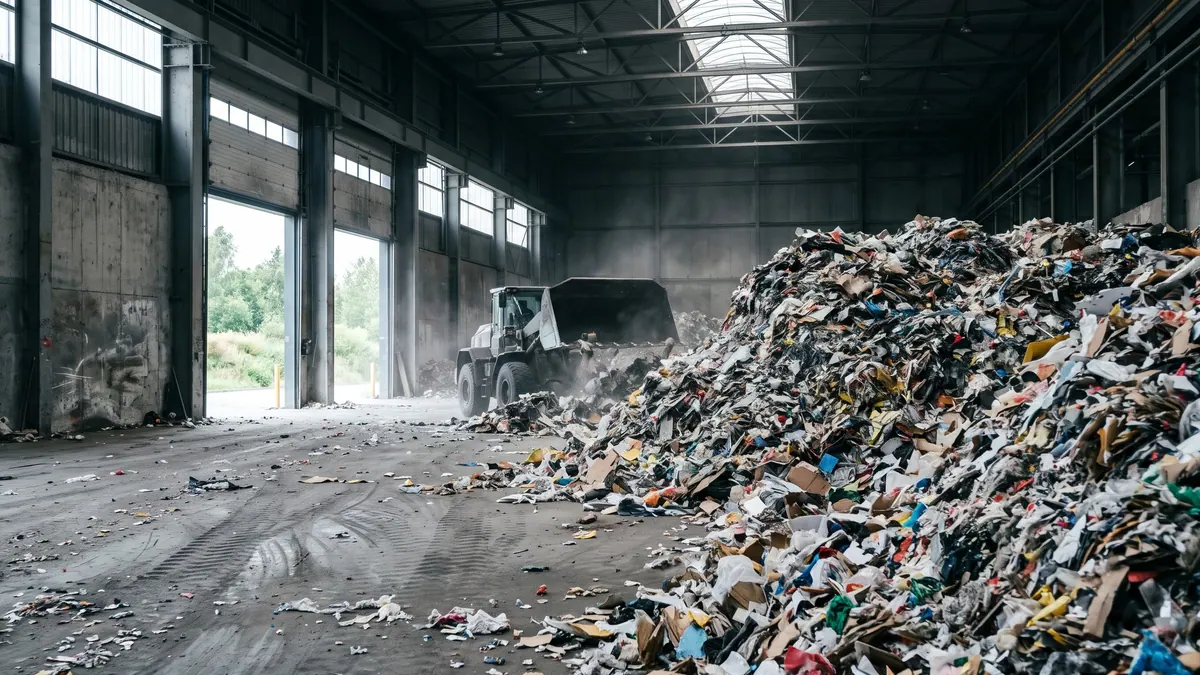
Co-incineration of waste is its use as a fuel (primary or supplementary) in an installation whose main task is to produce heat, electricity or a product such as cement clinker. In EU law it differs from incineration in an incinerator in that waste is not an end in itself but replaces part of the fossil fuel. The most important recipients in Poland are cement plants; combined heat and power plants and heating plants play a smaller role.
Incinerator or co-incineration plant: where the boundary lies
The Industrial Emissions Directive (IED) and the national Act of 14 December 2012 on waste distinguish two types of installation. A waste incineration plant serves primarily the thermal treatment of waste, and energy recovery is an addition. A co-incineration plant is an installation whose primary purpose is to generate energy or material products, and waste is used as a regular or supplementary fuel or is thermally treated in it for the purpose of disposal. This difference determines which emission limits, measurement requirements and permits apply. If co-incineration concerns such a large part of the fuel that the installation in fact works as an incinerator, the stricter incinerator rules apply.
Why a cement kiln is so useful
A cement plant has three features that are hard to replicate in an ordinary boiler house:
- A very high temperature. The material in a rotary kiln reaches in the order of 1450 °C, and the flame is hotter still; flue gases remain in the high-temperature zone clearly longer than the minimum required for incinerators (850 °C for 2 seconds).
- An alkaline environment. Limestone and cement raw materials bind a significant part of the hydrogen chloride and sulphur oxides.
- No separate combustion waste. The mineral part of the fuel (ash) is built into the clinker, so no separate slag is produced. This has its price, however: metals from the waste remain in the product, which is why their content in the fuel is controlled.
In combined heat and power plants and grate boilers co-incineration is harder. Chlorine in the fuel promotes corrosion of heating surfaces, and ash from waste can worsen the properties of ash from coal or biomass. Energy installations therefore require fuel of more tightly controlled quality or dedicated boilers.
What a co-incineration plant must ensure
An installation co-incinerating waste needs above all the appropriate permits: a waste processing permit, and for installations covered by the IED also an integrated permit, which indicates the types and masses of waste received. On top of this come technical and organisational requirements:
- Waste acceptance procedure — preliminary assessment of the supplier and the waste, sampling, inspection at the gate, the possibility of rejecting a batch.
- Feeding at a point ensuring combustion — waste is fed so that it passes through the high-temperature zone; during start-up and shutdown feeding is switched off.
- Continuous and periodic measurements — continuous measurement of dust, nitrogen oxides, sulphur oxides, hydrogen chloride, organic carbon and the basic process parameters; periodically heavy metals and dioxins.
- Handling of residues — if they arise, they are waste requiring separate records.
Emission limits and the mixing rule
The emission standards for co-incineration are set in Annex VI to the IED, and in Poland they were implemented by the regulation of the Minister of the Environment on emission standards for certain types of installations, fuel combustion sources and waste incineration or co-incineration equipment. The limit is not a single number: it is calculated by the mixing rule, that is, a weighted average by the volumes of flue gas originating from waste and from the primary fuel. Irrespective of this, for dioxins and furans the value of 0.1 ng/Nm³ (in toxic equivalent) applies, and for mercury in cement kilns 0.05 mg/Nm³ — these are values that are not “diluted” by the share of waste in the fuel.
For cement plants the technological requirements are supplemented by the BAT conclusions for the cement, lime and magnesium oxide industry (Decision 2013/163/EU). They concern, among other things, quality control of waste fuels and limiting mercury emissions.
The role of cement plants in the Polish system
The cement industry declares that alternative fuels supply it with several tens of per cent of its heat energy (in the order of 40%), and that each year in the order of 1.5–2 million tonnes of waste goes to cement plants, mainly in the form of fuel from municipal waste (RDF). A smaller part consists of, among others, used tyres or industrial waste. For municipalities and MBT installations this is an important recipient of the high-calorific fraction, but also a bottleneck: when cement plants limit intake (maintenance shutdowns, batch quality), waste-derived fuel quickly accumulates in stores, which in practice means storage problems and fire risk.
From a climate perspective it matters that part of the carbon in waste (e.g. biomass in paper, wood, organic waste) is of biogenic origin. Under Polish renewable energy rules the biodegradable part of waste may be treated as biomass, which matters when accounting for energy from renewable sources — this, however, requires determining the share of the biodegradable fraction in the fuel.
Common mistakes of suppliers and recipients
- Treating RDF as an “ordinary fuel” and overlooking the variability of composition between batches.
- No testing of chlorine and mercury in the fuel when the raw-material supplier changes.
- Excessive moisture and excessively large fractions, which hinder feeding.
- A waste code inconsistent between the contract, the transfer card and the recipient’s permit.
- Assuming that a contract with a cement plant “closes” the matter — with no backup route of management for the kiln’s shutdown periods.
What to look at before signing a contract
- Check whether the code and type of waste are listed in the recipient’s permits.
- Set the quality specification: calorific value, chlorine, mercury, sulphur content, moisture, particle size.
- Plan sampling and the way of resolving quality disputes.
- Agree the rules for shutdown periods and seasonal fluctuations in demand.
- Ensure consistent records in BDO on both sides of the transaction.
Climate and emission allowances
Cement plants are among the installations covered by the EU emissions trading system (EU ETS), so CO₂ emissions from fossil fuels cost money. Waste-derived fuel replaces part of the coal or petroleum coke, but it also contains carbon of fossil origin (plastics), which is accounted for like any fossil emission. The economics of co-incineration therefore depend on the allowance price, the price paid for taking waste and the costs of preparing the fuel. For a producer of waste-derived fuel this means that what counts is not only calorific value but also the share of the biogenic fraction and the stability of supplies.
This text is for information only and does not constitute legal advice; before an investment or formal decision, check the current wording of the regulations and consult a lawyer or the competent authority.
Sources
Questions and answers
Can any waste be burned in a cement plant?
No. Only the types and quantities of waste specified in the permits are allowed, after quality control. Parameters such as chlorine, mercury or calorific value decide whether a batch is accepted.
How does a co-incineration plant differ from a waste incineration plant?
In a waste incineration plant, the main purpose is the disposal or recovery of waste, and energy is a by-product. In a co-incineration plant, the main purpose is the production of energy or products (e.g. clinker), and waste is a fuel.
Related articles