Safety and ATEXExplainer
CO₂, ammonia and oxygen deficiency at a biogas plant: hazards beyond methane
Methane and H₂S are not the only hazards. CO₂ and oxygen deficiency can kill without warning, and ammonia from digestate irritates the airways and eyes.
Other language versions: Polski, Deutsch, Español, Français, Italiano, Nederlands.

When we think of "biogas plant safety", we think of explosion and hydrogen sulphide. Meanwhile, some accidents result from gases that have no smell, do not burn and do not seem dangerous. Carbon dioxide and oxygen deficiency can make a person lose consciousness within a few breaths, and ammonia causes burns to the airways even with small mistakes in work. This text describes the properties of these gases and the places where they accumulate; the procedures for entering a tank are a separate topic, and the hazards of hydrogen sulphide are described in the article on hydrogen sulphide (H₂S) at a biogas plant.
CO₂: an asphyxiant gas heavier than air
CO₂ makes up about 35–45 % of the volume of biogas and is also produced by the respiration of microorganisms in digestate and silage. Its density is about 1.5 times that of air, so it flows downwards and can persist in depressions long after a leak has ended, especially in windless weather.
Typical places where it collects:
- sumps, ducts and ditches near digesters and digestate tanks,
- spaces under covers, inspection chimneys, valve chambers,
- tower silos and the lower parts of clamps next to walls,
- tanks after emptying or not thoroughly ventilated.
CO₂ acts in two ways. At concentrations of a few percent it causes breathlessness, headache and faster breathing. At high concentrations, well above the permissible values, it leads to loss of consciousness within a short time. In addition, with a high share of CO₂ in the air the share of oxygen falls, which intensifies the effect.
Oxygen deficiency
Air contains about 20.9 % oxygen. The warning limit is taken to be 19.5 % by volume. Below it, concentration and coordination deteriorate; at a drop to about 16–17 % impaired judgement appears, and at lower values loss of consciousness follows quickly. The most dangerous aspect is that a person often feels no symptoms before losing the ability to escape unaided.
In a biogas installation oxygen deficiency has several causes: displacement by CO₂ or methane, inerting with nitrogen after repairs, oxidation processes in enclosed spaces (corrosion, decomposition of organic matter) and tanks kept closed for a long time. For this reason, oxygen is measured before entering a hazardous space, not just methane.
Ammonia from digestate and slurry
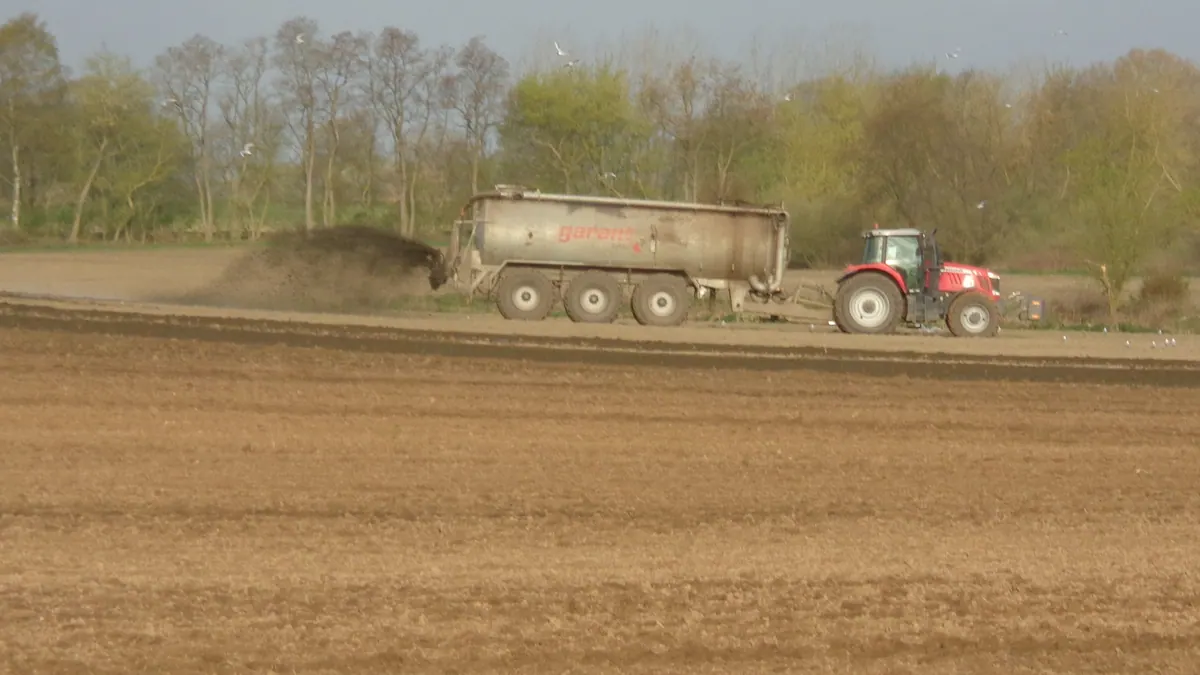
Ammonia (NH₃) is formed from the breakdown of proteins and urea, and its amount in digestate is usually greater than in raw slurry, because part of the organic nitrogen is converted into ammonium form. It is released during mixing, pumping, transfer and application to fields, especially at high pH and temperature.
Ammonia is a gas lighter than air with a sharp smell, which warns at concentrations far below dangerous ones, but after prolonged contact the sense of smell becomes accustomed. It irritates the eyes, mucous membranes and airways, and at higher concentrations causes chemical burns and pulmonary oedema. The risk occurs during work in the separation hall, at digestate pumps, when cleaning pipelines and when entering tanks in which digestate has been mixed.
It is worth remembering that ammonia is also an indicator of nitrogen losses, so limiting its emissions (covers, prompt management of digestate) also helps protect workers.
NDS, NDSCh and where to get the values
In Polish law, limit values for chemical agents in the working environment are set by the regulation on maximum permissible concentrations and intensities of agents harmful to health. It introduces NDS (the 8-hour time-weighted average), NDSCh (the short-term value) and NDSP (the ceiling value). The values for CO₂, NH₃ and other substances are updated from time to time as EU limit value directives are implemented, which is why we do not give them here. Suggested practice: put a reference to the current regulation in the safety instructions and set sensor alarm thresholds on its basis.
Multi-parameter measurement
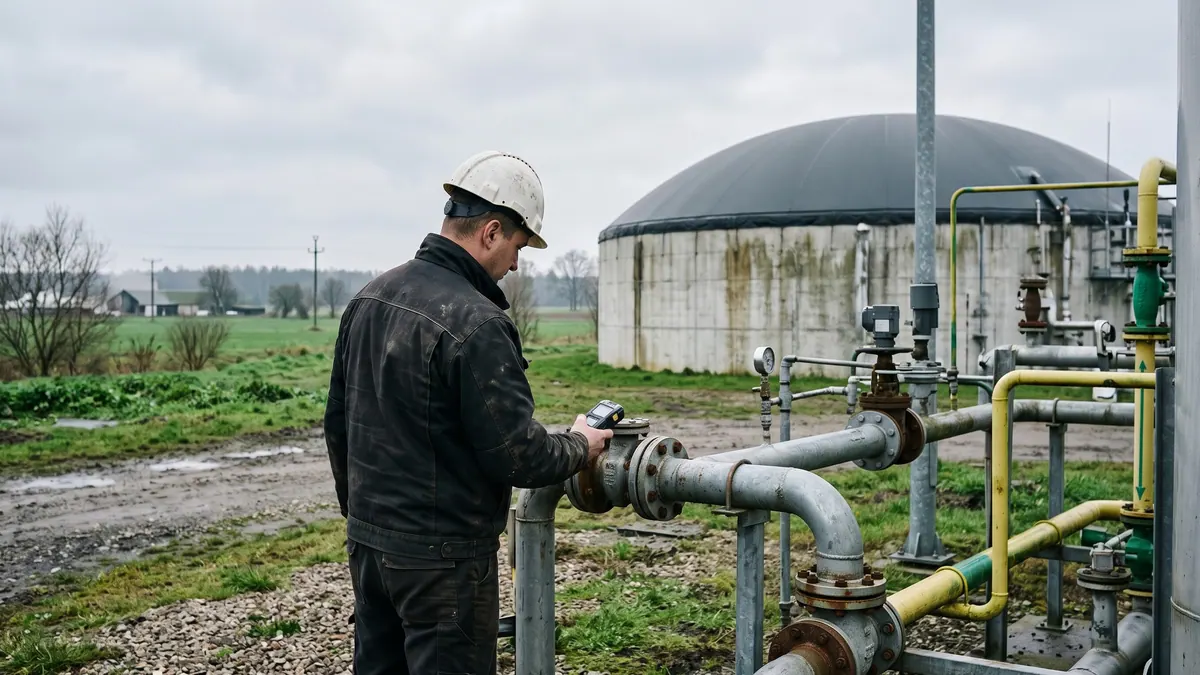
In work where hazards overlap, portable 4-gas meters are used: oxygen (O₂), flammable gases (% LEL), hydrogen sulphide (H₂S) and carbon monoxide (CO). A meter with a CO₂ or NH₃ sensor is used when the risk assessment document requires it. Basic rules:
- A functional test of the meter before each shift, according to the manufacturer's instructions.
- Measurement at different heights: near the bottom, in the middle and at face height.
- Continuous measurement during work, not only a single one before entry.
- A meter alarm always means leaving the space, not raising the threshold.
What this means in practice
- Mark the places where CO₂ collects and take them out of use without measurement and ventilation.
- Include ammonia in the risk assessment for work with digestate, including requirements for respiratory and eye protection.
- Train staff in the symptoms of poisoning and oxygen deficiency and in the rule that a rescuer without equipment does not enter a space in which someone has lost consciousness.
- Secure sumps and depressions with covers, and use forced ventilation in enclosed rooms.
Sources
Related articles