Waste and circular economyExplainer
Korea and food waste: a landfill ban, RFID containers and the road to biogas
How South Korea built a food waste collection system: a landfill ban since 2005, weight-based fees with RFID containers and a recycling rate above 95%.
Other language versions: polski.
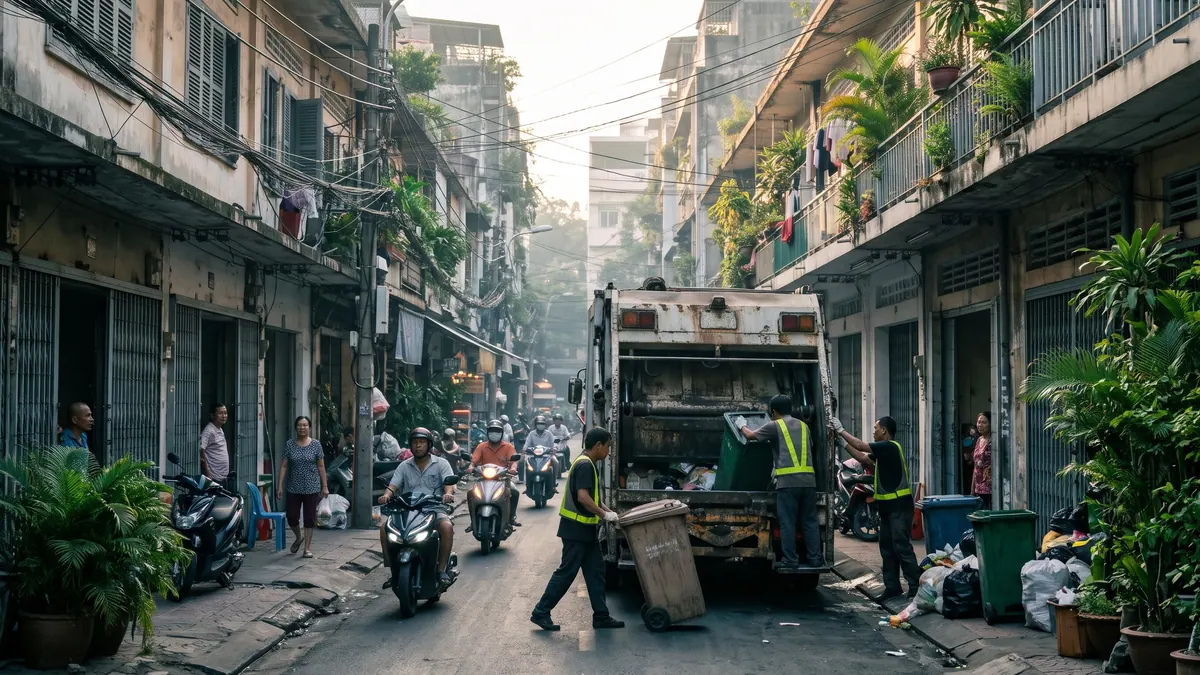
South Korea has one of the most extensive food waste collection systems in the world. Landfilling it has been banned since 2005, dumping of slurry and sewage sludge at sea since 2012 (of food waste leachate since 2013), and residents pay according to the weight of waste, most often via containers with RFID readers. According to Anadolu, citing an expert from the Global Alliance for Incinerator Alternatives, the food waste recycling rate rose from about 2% in 1995 to more than 95%.
From landfill to recycling
According to environment ministry data, in 2005 about 13,000 t of food waste was generated per day, which accounted for more than 27% of municipal waste. This waste has high moisture, salinity and low pH, which poses a threat to groundwater and soil at landfills. Since 2005 landfilling has been banned and a recycling system launched, in which the waste is processed into animal feed and fertilisers. In 2019, as Anadolu reports citing ministry data, an average of 14,314 t of food waste was generated per day, of which 13,773 t (96.2%) was recycled; in 2018 the rate was 97%, and in 2017 97.1%. Leachate remains a limitation: Wikipedia notes that it may affect marine waters, as wastewater treatment plants usually discharge effluent to the sea and their organic load is growing.
Beginnings: segregation since 1995
According to Wikipedia, since 1995 Korea has introduced separate collection of food waste from households to reduce the amount going to landfills; residents bought special bags for this purpose. At first the reaction was cool and the degree of segregation low. The amount of waste is affected by traditional cuisine — one of the biggest sources is the small side dishes banchan — and Korea generates more than 130 kg of food waste per person per year. Since 2013 the use of biodegradable bags has been mandatory, and the fees from them are reinvested in food waste recycling. The collected waste goes in turn to plants where it passes successively through a crusher and a sieve, a screw press, a dryer and a composting plant; the liquid fraction is processed separately.
Volume-based and weight-based fees
The basis was the Volume-Based Waste Fee introduced in the 1990s: residents were given bags for segregating waste, including separate ones for food waste, and pay different rates for each type. According to research cited by Anadolu, in less than a decade this reduced the amount of waste generated by 23%. The "pay-as-you-throw" system for food waste was introduced in 2014 (other sources indicate 2013), and biogas from food waste began to be produced in 2014. The next step was the RFID system, in which the fee depends on the weight of waste: according to Anadolu it operates in 166 municipalities, covering more than 6.5 million households and 65% of apartments in blocks. Wikipedia says that about 6,000 smart containers were set up in Seoul, and that within six years the amount of waste was reduced by 47,000 t (local, not government, data).
Leachate as a substrate
Studies show that leachate from food waste recycling plants can be a valuable substrate for methane production: in the work of Lee et al. (2009) 358 mL/g VS was obtained after 10 days and 478 mL/g VS after 28 days (more in a separate BMP entry).
Biogas and the obligation for generators
Anadolu notes that since 2014 Korea has been producing biogas from food waste. In December 2023 the act on biogas production from organic waste entered into force, which imposes an obligation on, among others, generators of food waste above 1,000 t per year (separate entries).
Conclusions for Poland
The Korean system rests on three elements: a hard ban (on landfilling and dumping), a price signal (a fee by volume or weight) and the availability of processing plants. The expert cited by Anadolu points out that at the start there were fears of illegal disposal of waste, but educational campaigns helped. Poland is building separate collection of biowaste and needs processing capacity; the Korean experience points to the importance of quantity-dependent fees and the need to manage leachate.
Sources
Questions and answers
In Korea, is food waste paid for by weight?
Yes, in many cities, including Seoul, bins with an RFID reader are in operation that weigh the waste and calculate a charge assigned to the household.
Related articles