Waste and circular economyGuide
Municipal sewage sludge: permitted uses, doses and testing under the regulations
Municipal sewage sludge may be applied to land only if the conditions of the 2015 regulation and Article 96 of the Act on waste are met. Doses, testing, bans and other routes: composting, digestion, incineration.
Other language versions: polski.
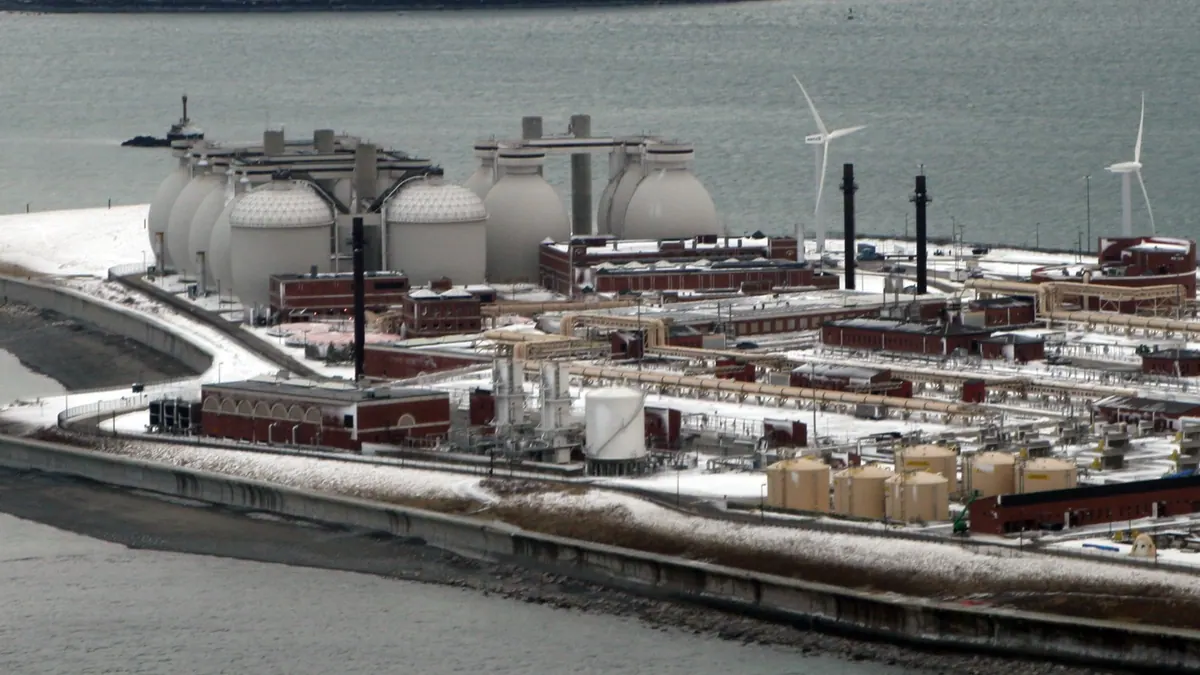

Municipal sewage sludge may be applied to land only if it is stabilised, tested and meets the limits in the Minister of Environment regulation of 6 February 2015 and Article 96 of the Act on waste — the other routes are composting, digestion, incineration and (practically excluded) landfilling. Below we recall what exactly is permitted, in what doses and who is responsible for testing.
Permitted routes of management
| Route | Notes |
|---|---|
| Agriculture (crops intended for market, including fodder) | the strictest requirements; sludge may be applied outside the growing period of plants intended for direct consumption |
| Growing plants intended for compost production | higher dose limits than in agriculture |
| Growing plants not intended for consumption or fodder | e.g. energy or ornamental crops |
| Land reclamation (agricultural and non-agricultural) | reclamation for agricultural purposes is subject to the same requirements as agriculture |
| Adapting land to needs arising from waste management plans, development plans or planning-permission decisions | limits as for non-agricultural routes |
| Composting and digestion | treated as waste processing; the product must still have its own legal status |
| Thermal treatment (mono-incineration, co-incineration) | growing importance after the landfill ban |
Application to land is recovery, so sludge goes to the user exclusively from the producer (the treatment plant). The producer is responsible for correct application in agricultural uses, and the land holder is exempt from the waste processing permit or entry in the register.
Conditions from the regulation
- Stabilisation — sludge must be stabilised biologically, chemically or thermally to a degree that reduces its susceptibility to putrefaction and eliminates hazards (including digestion at the treatment plant).
- Heavy metals — the content in the sludge (annex 1) and in the top soil layer of 0–25 cm (annexes 2 and 3) may not exceed the limits.
- Hygiene — in agriculture and in reclamation for agricultural purposes, no Salmonella is isolated in a representative 100 g sample, and the number of viable eggs of the parasites Ascaris, Trichuris and Toxocara per kg TS is 0; in the other routes there may be no more than 300 eggs per kg TS.
- Soil — pH on agriculturally used land of at least 5.6.
- Timing — outside the growing period of plants intended for direct consumption (from sowing to harvest).
Doses
| Route | Annual dose | Cumulative |
|---|---|---|
| Agriculture and reclamation for agricultural purposes | up to 3 Mg TS/ha/year | up to 6 Mg TS/ha over 2 years, 9 Mg TS/ha over 3 years |
| Other routes (reclamation of non-agricultural land, adapting land, crops for compost and crops not intended for consumption) | up to 15 Mg TS/ha/year | up to 30 Mg TS/ha over 2 years, 45 Mg TS/ha over 3 years |
The dose is set separately for each tested batch, on the basis of the results of tests of the sludge and the land, taking into account the nitrogen and phosphorus requirements of the plants and other fertilisers applied.
Application bans
Article 96(12) prohibits the application of sludge, among other places, in national parks and nature reserves, within a 50 m strip from lakes and watercourses, in flood risk areas, on frozen or snow-covered land, on agricultural land with a slope of more than 10%, at a distance of less than 100 m from a water intake, residential building or food plant, on meadows and pastures and in crops under cover. Application is also prohibited on land where fruit-growing plants and vegetables are grown (except fruit trees).
Obligations of the producer and the user
- Testing of the sludge and land before application — in accredited laboratories; the scope includes pH, dry matter, nitrogen, phosphorus, heavy metals, Salmonella and parasite eggs, among others.
- The frequency of sludge testing depends on the size of the treatment plant (in 2020: once every 6 months up to 10,000 PE, once every 4 months from 10,000 to 100,000 PE, once every 2 months above 100,000 PE).
- Notification of the WIOŚ of the intention to hand sludge over to land at least 7 days in advance (routes 1–3).
- Passing information on doses and test results to the land holder.
- Keeping the tests and information for 5 years from application.
Landfilling and alternative routes
Landfilling of sludge is restricted by the criteria for admitting waste to landfill: for sludge (including code 19 08 05) the limits are total organic carbon up to 5% TS, loss on ignition up to 8% TS and calorific value up to 6 MJ/kg TS. Many sludges do not meet these limits, so since 2016 landfilling has been in practice closed to them. What remains: use on land, thermal treatment and processing into compost or in co-digestion.
Composting and digestion of sludge: what to watch for
- Stabilisation is not the same as product status. Sludge stabilised in the treatment plant's digestion chambers still remains waste; it goes to agriculture as recovery and must meet the conditions of the regulation.
- Co-digestion with other waste increases biogas production but changes the nature of the stream: if, for example, kitchen waste goes into the chamber, UPPZ requirements and separate permits arise, and the digestate ceases to be ordinary sewage sludge.
- Composting of sludge requires structural material and hygiene control; compost with a share of sludge retains waste status or requires a separate fertiliser route with contaminant testing.
- The farmer does not choose alone. It is the producer that hands over the sludge and documents the dose — a recipient without test documents should not accept it.
What to do first
- Test the sludge and the land on which you want to apply it.
- Check that the location does not fall under the bans in Article 96(12).
- Calculate the dose by nitrogen and phosphorus, not only by the limit in the regulation.
- Plan a plan B (thermal treatment or compost) in case the standards are not met.
This text is for information purposes only and does not constitute legal advice; before an investment or formal decision, check the current wording of the provisions and consult a lawyer or the competent authority.
Sources
- Rozporządzenie Ministra Środowiska z 6 lutego 2015 r. w sprawie komunalnych osadów ściekowych (Dz.U. 2015 poz. 257)
- Ustawa z dnia 14 grudnia 2012 r. o odpadach — art. 96 (ISAP/ELI)
- Rozporządzenie Ministra Gospodarki z 16 lipca 2015 r. w sprawie dopuszczania odpadów do składowania na składowiskach (Dz.U. 2015 poz. 1277)
Questions and answers
Can sewage sludge be applied to meadows and pastures?
No. Article 96(12) of the Act on Waste prohibits the application of municipal sewage sludge, among other places, on land used as pasture and meadows, in crops grown under cover, on land with a slope above 10% and within a 50 m strip from lakes and watercourses.
Related articles