Law and regulationEvent
New Zealand scraps He Waka Eke Noa: agriculture outside the ETS and a new working group (2024)
On 11 June 2024 the New Zealand government dissolved the He Waka Eke Noa partnership and decided that agriculture would stay outside the ETS; pricing of agricultural emissions is to follow before 2030.
Other language versions: polski.

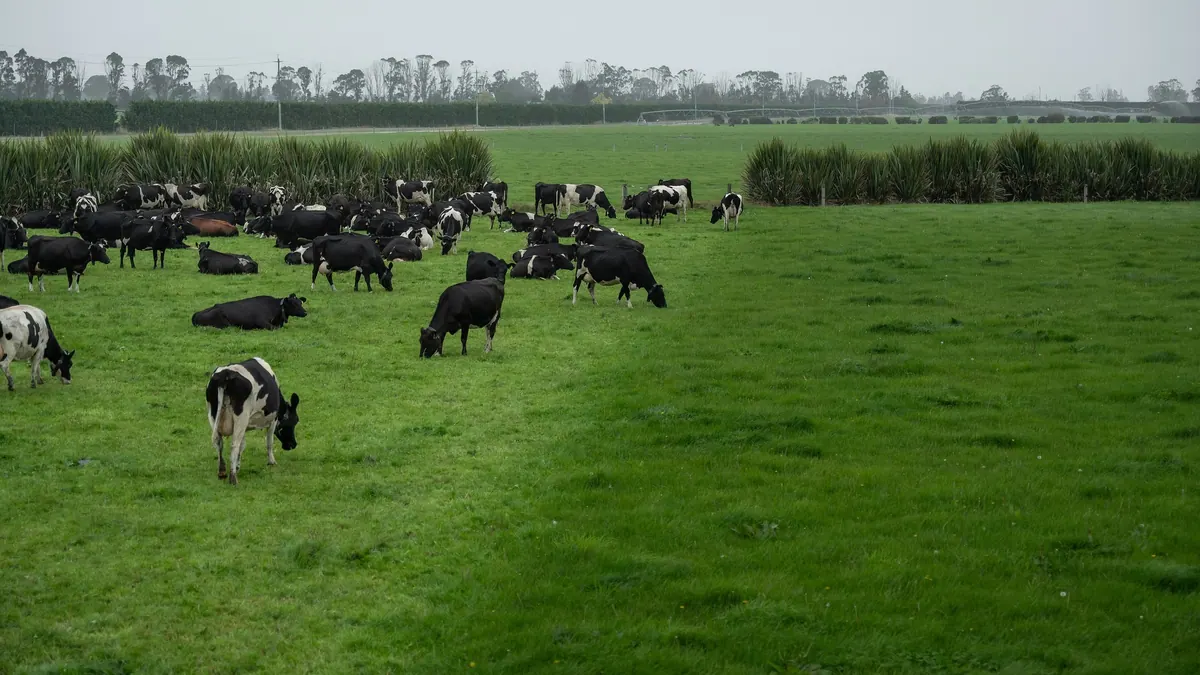
The New Zealand government announced on 11 June 2024 the dissolution of the He Waka Eke Noa partnership and decided that agriculture would remain outside the national Emissions Trading Scheme (ETS). At the same time a new working group (Pastoral Sector Group) was set up to deal with biogenic methane, and the government announced its intention to price agricultural emissions before 2030.
What He Waka Eke Noa was
The partnership was created in 2019 as an agreement between the government and agricultural sector organisations, which was to develop a system for reporting and pricing farm emissions. Instead of bringing agriculture into the ETS, a charge applied at farm level was proposed, taking different gases into account (the “split-gas” approach).
What the government decided
The Cabinet formally dissolved the partnership; Agriculture Minister Todd McClay judged that the process had failed and was no longer sustainable. The government announced an amendment to the Climate Change Response Act so that agriculture, animal processing plants and fertiliser producers would not enter the ETS in 2025. Instead, the working group is to look for solutions for methane from agriculture, and farmers were given more time before charges are introduced. The government maintained its declaration on pricing before 2030 but did not specify the mechanism.
Reactions
Federated Farmers judged that He Waka Eke Noa had failed, and Beef + Lamb NZ welcomed the decision. The Green Party accused the government of delaying climate action, and Greenpeace regarded the new group as another version of the previous one. The opposition also pointed out that the decision could endanger the position of exporters in foreign markets. The sources come in large part from politically engaged circles, so it is worth reading them together.
Significance for biogas and waste
The lack of pricing of agricultural emissions means no price signal for investment in methane reduction on farms, including agricultural biogas plants and covered lagoons. The alternatives remain contractual targets in supply chains (e.g. dairy processors) and incentive programmes. Emissions from waste (landfills) remain in the ETS.
What this means for Poland and Europe
New Zealand's experience is a reminder that pricing agricultural emissions is politically difficult even in a country where agriculture has a high share of emissions. The EU has not brought agriculture into the ETS, and the discussion on regulating methane from livestock farming is open. For agricultural biogas investors it is more prudent to assume that revenue from carbon credits will be an addition, not the foundation of a project.
Sources
Related articles