Waste and circular economyExplainer
R1, R3, R10 and D10: how the Waste Act classifies recovery and disposal
The R and D symbols from Annexes 1 and 2 to the Waste Act end up in the permit and in reports. We explain what R1, R3, R10 and D10 are, and where fermentation and the use of digestate fit in.
Other language versions: polski.
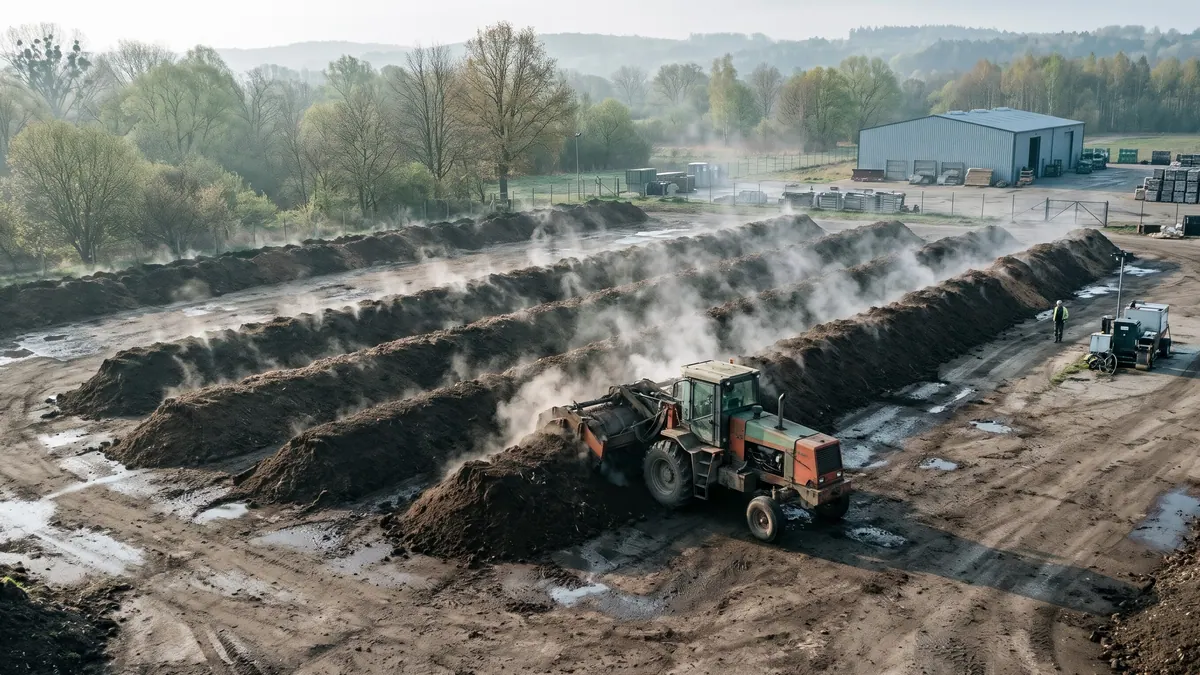
The R (recovery) and D (disposal) symbols are short designations of the processes in Annexes 1 and 2 to the Act on Waste (ustawa o odpadach), and they appear in the permit application, the decision and the reports. R3 means recycling and reclamation of organic substances (including composting), R10 means land treatment resulting in benefit to agriculture or ecological improvement, R1 means use principally as a fuel, and D10 means incineration on land. The correct symbol determines how the authority and the statistics treat your installation.
Where the symbols come from
The Act divides treatment methods into two lists. Annex 1 is a “non-exhaustive list of recovery operations” (R1–R13) and Annex 2 a “non-exhaustive list of disposal operations” (D1–D15). An application for a waste processing permit must indicate the processing operation in accordance with these annexes (Article 42(2)(6)), and the permit specifies the approved method together with the operation (Article 43(2)(3)). This follows from the waste hierarchy: recycling ranks “higher” than other recovery operations, and disposal ranks lowest.
The four symbols that most often appear in biogas and waste-to-energy
| Symbol | Name in the Act (abbreviated) | Typical example |
|---|---|---|
| R1 | use principally as a fuel or other means to generate energy | waste incineration with energy recovery, if the efficiency criterion is met |
| R3 | recycling or reclamation of organic substances which are not used as solvents, including composting and other biological transformation processes | composting of biowaste, methane fermentation of waste |
| R10 | land treatment resulting in benefit to agriculture or ecological improvement | application of selected wastes, including part of the digestate material, to land under the conditions of the regulation |
| D10 | incineration on land | incineration of waste in an installation that does not meet the R1 criteria |
There are also ancillary operations nearby: R12 (exchange of wastes for submission to any of the operations R1–R11, including pre-processing), R13 (storage preceding recovery), D8 (biological treatment resulting in compounds or mixtures which are disposed of by further operations), D5 (specially engineered landfill) and D15 (storage pending disposal).
Fermentation is R3
The Act states explicitly that recycling also includes organic recycling, that is, aerobic treatment (including composting) or anaerobic treatment of biodegradable waste under controlled conditions, producing organic matter or methane. Landfilling is not organic recycling. The conclusion: a biowaste fermentation installation falls under class R3, not the “energy” class R1. Burning biogas alone in a cogeneration engine is already the use of gas to generate energy — how it is classified in the installation’s documents is settled by the permit or the authorisation, so it is worth agreeing it with the authority before submitting the application.
R10 and digestate: recovery on land
When digestate material is a waste and goes to the field, we usually speak of the R10 process. The detailed conditions — the types of waste admitted to such recovery, the requirements for the waste and the soil, and the need for tests in an accredited laboratory — are laid down in the regulation of the Minister of the Environment of 20 January 2015. The regulation lists, among others, wastes with codes from group 19 06 (liquids and digestate from the anaerobic treatment of waste) and sets separate conditions for each. Typically required are documentation of the waste quality, soil tests, even spreading and mixing with the soil, compliance with the rules on fertilisers or on sewage sludge (depending on the type of feedstock) and sanitary requirements for material of animal origin.
R1 versus D10: the efficiency calculation
Municipal waste incinerators are classified as R1 only if their energy efficiency is equal to or higher than:
- 0.60 for existing installations permitted in accordance with Community legislation before 1 January 2009;
- 0.65 for installations that received a permit after 31 December 2008.
Efficiency is calculated using the formula from the annex, which takes into account the energy produced as heat and electricity (with factors of 2.6 for electricity and 1.1 for commercial heat), the energy from supplementary fuels, the energy contained in the waste (calorific value) and a loss factor of 0.97, and is then multiplied by a climate correction factor. An installation below the threshold carries out a D10 process.
Example: one installation, several symbols
A plant receives biowaste from catering and residues from food processing, ferments them, and sends the resulting digestate mass to fields. The main process in the digester is R3. Initial storage and preparation of the feedstock (e.g. unpacking, shredding) may require the designation R12 or R13 if it is a separate operation and not part of the R3 process. Taking digestate that is a waste to land is R10 — and it is subject to the most detailed conditions, because each waste code has its own requirements in the regulation. The burning of biogas in cogeneration is described in the documentation related to energy generation. This allocation of symbols is worth agreeing with the authority before submitting the application, because it is the authority that ultimately enters them in the permit.
Why classification matters
- Hierarchy and environmental assessments — R3 ranks higher in the hierarchy than R1, which matters when justifying the choice of technology.
- Permit — incorrect classification results in a request to correct the application or a decision with a different scope than you planned.
- Reporting — in annual reports, processors declare how the waste has been managed.
- Recycling levels — the levels calculated for municipalities count primarily what has actually been prepared for re-use or recycled.
Common mistakes
- entering R1 for waste fermentation instead of R3;
- using R12 or R13 for operations that are actual treatment;
- overlooking that R10 requires compliance with the detailed conditions of the regulation;
- applying D10 to an installation that, after a change of parameters, could meet the R1 criterion (and vice versa).
This text is for information only and does not constitute legal advice; before an investment or formal decision, check the current wording of the regulations and consult a lawyer or the competent authority.
Sources
Questions and answers
Is methane fermentation of waste R3 or R1?
Processing waste in a digester is organic recycling, which in the classification of recovery operations corresponds to R3; the Act explicitly recognises anaerobic treatment of biodegradable waste as recycling. Using the resulting biogas for energy is a separate activity, and its classification is determined in the permit or authorisation.
When is waste incineration energy recovery (R1) and when is it disposal (D10)?
Incineration of municipal waste is energy recovery (R1) when the installation reaches the required energy efficiency: at least 0.65 for installations permitted after 31 December 2008 (0.60 for earlier ones), otherwise it is disposal (D10).
Related articles