Waste-to-energyExplainer
Reppie in Addis Ababa: 50 MW from municipal waste at the former Koshe landfill
Reppie, next to the Koshe landfill, is a 50-megawatt thermal waste treatment plant opened in August 2018. We explain its parameters, the context and the place of digestion in African cities.
Other language versions: polski.
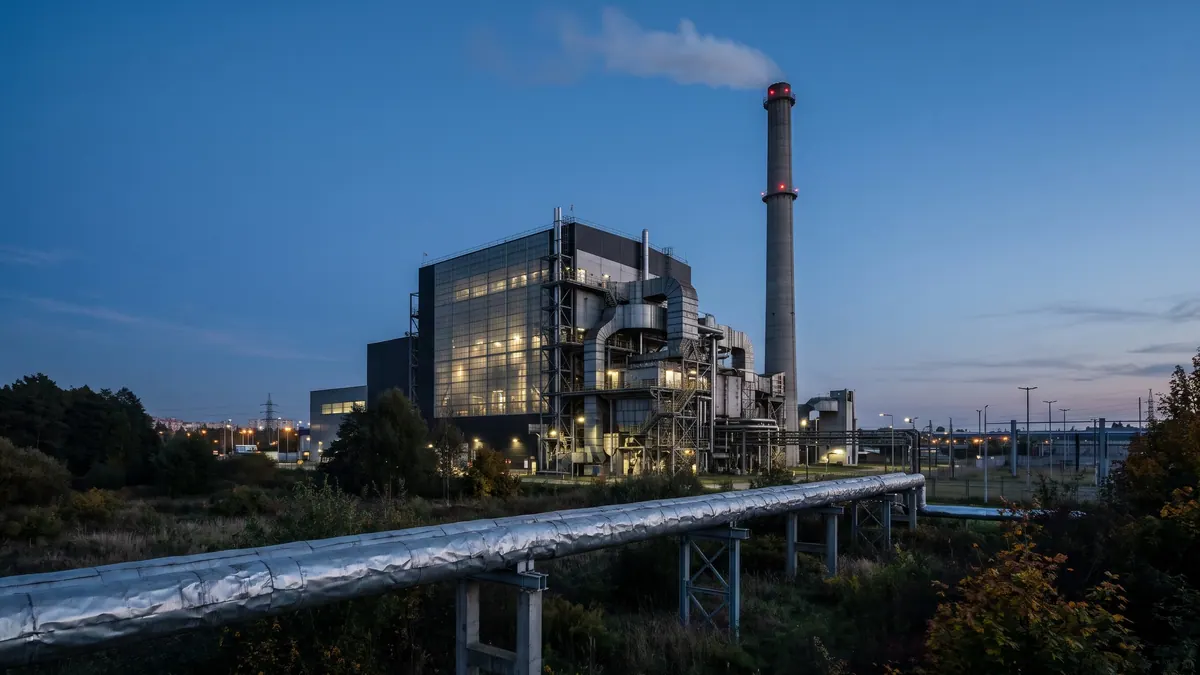
Reppie is a 50-megawatt municipal waste thermal treatment plant in Addis Ababa, built next to the Koshe landfill and opened in August 2018. According to design data (Waste Management World, 2017) it is meant to process about 1.4 thousand tonnes of waste a day and to supply about 185 GWh of electricity a year to the grid, which was supposed to correspond to roughly a quarter of the Ethiopian capital's electricity demand. Anadolu Agency called it the first large plant of this type in Africa, which is why it is sometimes a reference point for other cities in the region; in 2025, however, it was operating at only half of its capacity.
What is known about the plant
The plant was built on reclaimed land next to Koshe, the largest landfill in Addis Ababa. According to Waste Management World, construction had been under way since September 2014, and in 2017 the facility was "close to completion". Anadolu Agency described the start-up of the plant on Sunday 19 August 2018; at the time of publication it was generating 25 MW. Construction was carried out by a consortium of Cambridge Industries Limited and CNEEC, and once completed the facility was to pass into the ownership of the state-owned energy supplier Ethiopian Electric Power (EEP). The leachate treatment system with a membrane bioreactor (MBR) was to be supplied by China Everbright International.
The sources differ on cost: Waste Management World gave "more than USD 120 million" financed by the Ethiopian government, while AA indicated USD 96 million. The data on throughput (about 438 thousand tonnes of waste a year, i.e. about 1.4 thousand tonnes a day at about 300 operating days a year) and on production of about 185 GWh a year are design values from 2017, not operating results. The quoted "25% of the city's energy demand" (WMW) or "25% of residents" (AA) is likewise a projection, not a measurement. Deputy project manager Nicholas Halias estimated in 2017 that eliminating methane emissions from the landfill alone would have an effect equivalent to 46,494 t CO₂ a year, and the ash was to be sold as a construction material or used to cover the new Sendafa landfill.
Why African cities are looking for such solutions
The World Bank's "What a Waste 2.0" (2018), cited in a study by the African Clean Cities Platform, speaks of growth in municipal waste in Sub-Saharan Africa from about 174 million t in 2016 to about 516 million t in 2050. The Koshe landfill is an example of the consequences of uncontrolled landfilling: in March 2017 a collapse of the waste mass killed more than a hundred residents (AA speaks of about 140 people). The energy plant therefore had a dimension that was not only about energy but also about sanitation: it reduces the amount of waste landfilled in the city centre.
Incineration and digestion: different roles
An incineration plant and a biogas plant do not compete directly, because they receive different streams. Thermal treatment requires waste with a suitable calorific value; the high moisture typical of kitchen waste lowers it and makes stable boiler operation difficult. According to a commentary by Desta Mebratu (Phys.org, 2022), more than 60% of waste in African cities is biodegradable, so the natural route for the separately collected organic fraction is composting and anaerobic digestion. In Polish practice we describe a similar division in the article Energy from waste: digestion, incineration, pyrolysis and landfill gas.
What to look at when assessing such projects
- Waste composition and its calorific value, which varies seasonally (rainy seasons increase moisture).
- Flue gas and leachate treatment and emissions monitoring, because these decide public acceptance.
- The financial model: the electricity tariff, gate fees for receiving waste and state guarantees.
- The collection system: without regular delivery of waste to the plant, any installation operates below capacity.
- The fate of the waste pickers at the landfill, who lose their source of income when it is closed or reclaimed.
What this means for assessing the technology
In March 2025 the head of the city waste management agency, Eshetu Lemma, admitted that the plant is operating at about 50% of capacity and that the city pays EEP more than 240 million birr a year in compensation. He pointed to machinery faults, a lack of spare parts and the quality of the waste as causes; the plant has behind it a serious failure of the steam turbine and generator in January 2022. This is a practical warning for any waste-fired energy installation: the waste supply contract, servicing and spare parts stocks are just as important as the boiler.
Sources
- In depth: Ethiopia spearheading Africa's waste-to-energy future — Waste Management World (11.08.2017)
- Ethiopia launches 50-MW waste-to-energy plant — Anadolu Agency (19.08.2018)
- Operational hurdles at Reppi Waste-to-Energy plant cost City Admin — The Reporter Ethiopia (8.03.2025)
- Basics of Waste Management — African Clean Cities Platform (cytuje World Bank, What a Waste 2.0)
Questions and answers
Is Reppie a biogas plant?
No. Reppie is a waste-to-energy plant that burns municipal waste and produces electricity. Methane fermentation (anaerobic digestion) is a separate technology, better suited to separately collected biowaste.
Related articles