Waste-to-energyExplainer
Ghana: a hybrid waste-to-energy plant in Kumasi and the potential of biogas from food waste
At Gyankobaa near Kumasi, according to reports, Ghana's first hybrid waste-to-energy plant of 400 kW (solar, biogas and plastic pyrolysis) has been commissioned. A 2021 study estimates the biogas potential in Accra and Kumasi.
Other language versions: polski.
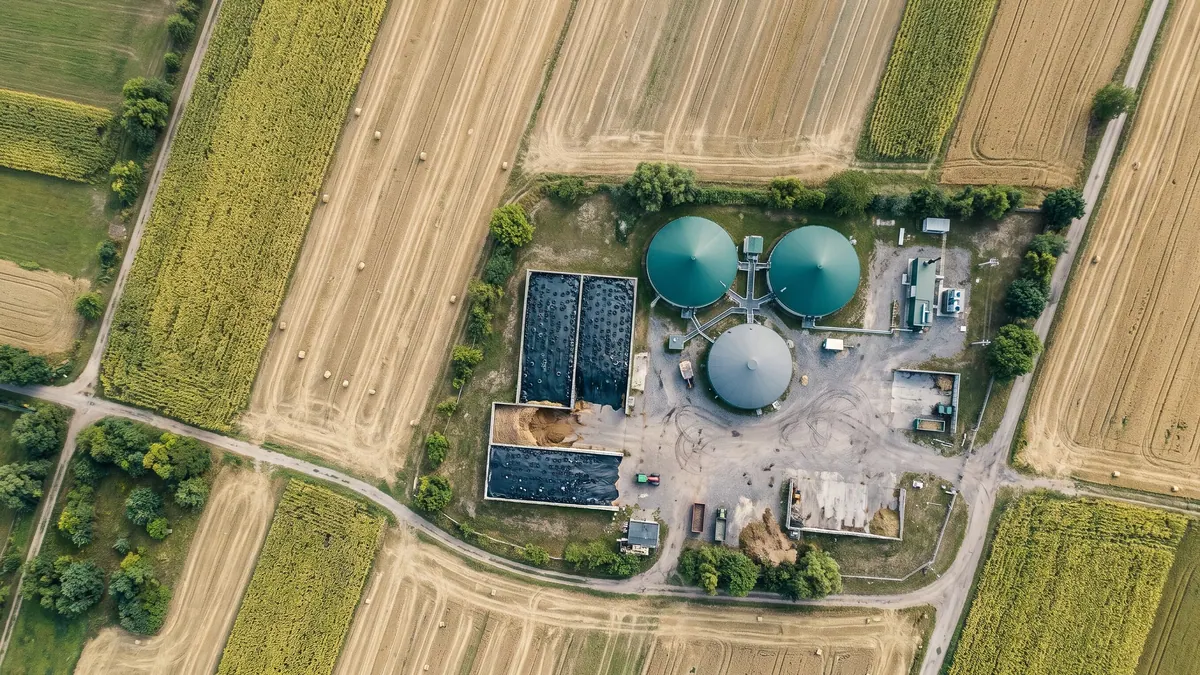
At Gyankobaa near Kumasi, Ghana's first waste-to-energy plant was commissioned in May 2022: a hybrid of 400 kW combining photovoltaics (200 kW), biogas (100 kW) and pyrolysis of plastic waste (100 kW). Alongside it, researchers are assessing how much energy can be obtained from food waste alone in the country's largest cities.
What is known about the project at Gyankobaa
Pumps Africa (3 May 2022) and Bioenergy News (4 May 2022) describe the start-up of Ghana's first waste-to-energy plant at Gyankobaa in the Atwima Nwabiagya South district of the Ashanti region; Bioenergy News calls it the first of its kind in West Africa. The project lasted 48 months. The German Federal Ministry of Education and Research signed a contract worth USD 6.5 million with four German institutions and one Ghanaian one (according to Bioenergy News the project is being carried out by four German institutions led by the University of Rostock and six Ghanaian ones led by WASCAL). The facility, called the Hybrid-PV-Biogas-Pyrolysis-Plant, is to process 12 t of waste a day into biocompost and energy, and also to serve as a training centre for 17 master's students and four doctoral students. The capacity split (200 + 100 + 100 kW) shows that biogas is here one of three elements, not the core of the system. The sources do not give details of the biogas plant's substrates or operating data, so we do not cite annual production.
Why a hybrid
Combining three sources has several justifications:
- Complementarity: PV gives energy by day, biogas can run round the clock, and pyrolysis makes it possible to process plastic, which is not suitable for digestion.
- Use of different waste streams (organic and plastics) in one place.
- Technology demonstration: the facility serves as a training ground.
The drawback is complexity: each of the three technologies requires different operating and servicing competences. We describe plastics pyrolysis in the article Energy from waste: digestion, incineration, pyrolysis.
The cities' potential: a 2021 study
An article published in the journal Energy (volume 226, 2021) estimates the potential for electricity production from biogas from food waste at 80.43–300.49 GWh a year in Accra and 60.63–209.31 GWh a year in Kumasi (a forecast for 2020–2039; the amount of waste generated in Accra 899 thousand–3.36 million t a year, in Kumasi 915 thousand–3.16 million t). The authors assessed the project as economically viable: the net present value was about USD 217.8 million in Accra and USD 156.1 million in Kumasi. The energy ranges are wide, because they depend on the scenarios adopted. These are theoretical values, not an investment plan. Their significance lies in indicating the order of magnitude: 80–300 GWh a year corresponds to an average electrical capacity of about 9 to about 34 MW for Accra (our own conversion, assuming operation all year round), but only if selective collection of food waste operates.
What is needed for the potential to become installations
- Selective collection and sorting of food waste separately from plastic and glass; in a mixed stream digestion is inefficient and risky.
- A gate fee for receiving waste, or an energy tariff that will cover the costs.
- Uptake of the digestate by farmers and rules on its quality.
- A stable grid connection or a direct energy customer.
Conclusions
The Ghanaian example is a pilot installation financed by a German research programme, not a commercial power plant; only data from its operation will show whether the model can be replicated on a larger scale. To assess success it is worth monitoring not only the nominal capacity but the actual operating hours, the amount of waste processed and operating costs.
Worked example: how much waste 100 kW of biogas needs
To illustrate the scale: an installation with an electrical capacity of 100 kW, operating continuously, with an engine electrical efficiency of about 38%, requires a gas chemical power of about 263 kW, that is, about 6.3 MWh a day. Biogas with a methane content of about 60% has a calorific value of about 6 kWh/m³, so about 1 thousand m³ of biogas a day is needed. With a yield of, for example, 100–150 m³ of biogas per tonne of food waste, this means about 7–10 t of waste a day. These are indicative values (the assumptions depend on the substrate and efficiency), not the parameters of the installation described. The calculation shows that even a small biogas module requires a regular supply of waste in a quantity that the municipal system must organise.
Threats to success
- Contaminants in the waste: plastic, glass and metals getting into the digester cause failures of pumps and mixers; food waste should be collected selectively or carefully sorted.
- Seasonal variability: the amount and composition of waste change during the year.
- Maintenance complexity: three technologies mean three service teams; in small installations this is a significant burden.
- Financing of operation: an investment grant does not cover labour and servicing costs in subsequent years.
A note on sources
The description of the Gyankobaa plant comes from press and trade reports from May 2022; we did not find technical documentation or operating data. Any differences between announcements and the actual state of affairs must be checked in the statements of the implementers (University of Rostock, WASCAL).
Sources
Questions and answers
What does “hybrid waste power plant” mean?
It is an installation that combines several energy sources. At Gyankobaa, according to reports, these are photovoltaics, a biogas plant and plastic pyrolysis, which together provide 400 kW of capacity.
Related articles