Process biology and start-upExplainer
Antibiotics and disinfectants in slurry and the stability of digestion
Slurry may contain residues of antibiotics and cleaning agents. We describe how the biomass reacts, the symptoms of a problem and careful dosing after barn washing.
Other language versions: Polski, Deutsch, Español, Français, Italiano, Nederlands.
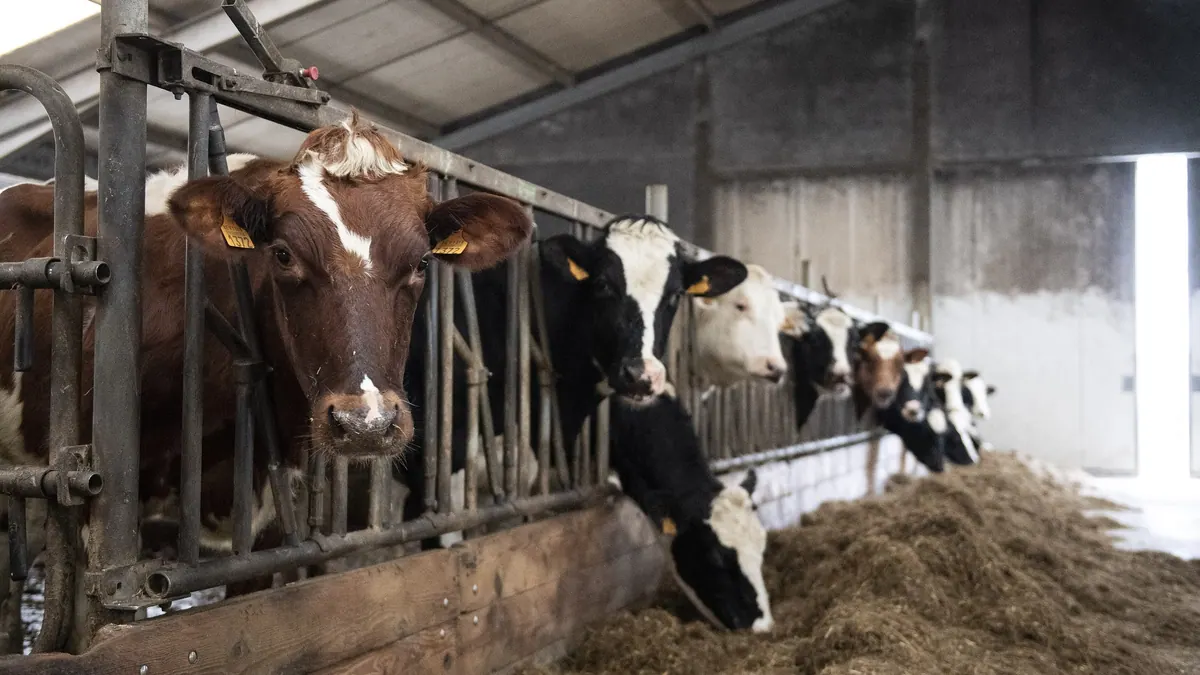

Slurry is the basic substrate of many agricultural biogas plants, and together with it everything that was left in the cowshed or pig house reaches the digester: residues of veterinary drugs, feed additives and the agents used for washing and disinfection. Concentrations are usually low and the biomass tolerates them, but there are episodes in which a short-term discharge of biocide clearly lowers gas production. Below we describe what is known about this from the literature, without attributing figures to specific installations.
Where active substances in slurry come from
Antibiotics given to animals are partly excreted unchanged or as metabolites. The ones most often discussed in digestion research are tetracyclines, sulfonamides, macrolides and beta-lactam antibiotics. Their amount in slurry depends on the therapy carried out in the herd, so it can vary greatly over time: zero for several weeks, then a short peak.
Cleaning and disinfecting agents enter the slurry channels together with the wash water. The agents used include:
- quaternary ammonium salts (e.g. benzalkonium chloride),
- peroxides and peracetic acid,
- formaldehyde and aldehydes (including in hoof baths and in the disinfection of buildings),
- chlorine compounds,
- acids and bases, detergents (foam, pH change).
Extensive compilations can be found in reviews of process inhibition, including Chen et al. (2008), although they concern mainly metals, ammonia and VFA, and veterinary biocides less.
How the biomass reacts
Three recurring phenomena are visible in the laboratory literature.
Large variability of results. The same compounds sometimes do not change methane production and sometimes slow it. This is explained by substrate composition, concentration, degree of adaptation and the presence of solid particles.
Sorption. Tetracyclines bind strongly to solid particles and metal ions, so in the liquid phase their actual concentration is lower than the dose. Sulfonamides sorb more weakly and are more mobile. Sorption reduces toxicity but creates a reserve that is released later (especially when pH changes).
Adaptation and selection. With repeated exposure the biomass often begins to tolerate similar doses. However, the composition of the microbiome changes, and some resistance genes may persist in the digestate. This is an argument for managing the delivery, not just for relying on tolerance.
In terms of kinetics, the sensitive groups usually suffer first: methanogens, especially acetoclastic ones, and syntrophic bacteria. The symptom is a rise in VFA (especially propionate) and a fall in pH with gas production maintained or worsening. Hydrolysing bacteria are generally more resistant, so acids accumulate. The course therefore resembles the general diagnosis of acidification, described in the article on digester acidification.
Disinfectants: acute discharge versus low background
Biocides are by design active against microorganisms, so methanogens are no exception.
- Quaternary ammonium salts sorb strongly on the biomass and are toxic to many microorganisms; the problem arises when a large batch of rinse water enters the digester at once.
- Peroxides decompose into oxygen and water, so the action is short, but in larger quantities they can damage the floc structure and strict anaerobes.
- Formaldehyde is a biocide that is broken down in the digester, but at higher concentrations it delays methane production.
- Acids, bases and detergents change the pH or cause foaming; the response here is an alkalinity buffer and control of dosing.
It is worth basing the risk assessment on the safety data sheet of the agent and on information from the farmer about what was used, how much and when.
Symptoms
- A fall in biogas production within a day or two of a large slurry delivery, with no change in the rest of the mix.
- A fall in methane content at a similar gas volume.
- A rise in VFA and in the FOS/TAC ratio (see FOS/TAC), often first in the propionate measurement.
- A change in smell or foam after the delivery.
These symptoms are not specific, so correlating them with the calendar of deliveries and barn washing is the basic recognition technique.
Practice for limiting risk
- Communication with the supplier. Establish when washing, herd treatment and disinfection take place. A simple schedule for exchanging information often solves the problem.
- Buffer. If possible, collect rinse water in an intermediate tank and dose it in batches rather than all at once.
- Dilution. Mixing with slurry from other sources or with liquid from the digester reduces the peak concentration.
- Careful dosing after washing. Reduce the share of slurry after a disinfection campaign in the first days and observe gas and VFA before returning to the normal mix.
- Deferral. Batches after medical treatments (especially large herds after therapy) can be put aside for a smaller dose; we base the judgement on the observed reaction.
- Monitoring. Record deliveries, origin, dates and the result. After a few months you build your own knowledge of which sources are troublesome.
Limits of knowledge
There are no universal thresholds whose exceedance always means inhibition. Results from batch tests do not transfer directly to a continuous digester with adapted biomass. We therefore recommend an approach based on observation of your own installation, not on figures from other studies. In the event of repeated disturbances, a batch test (BMP with your own inoculum) on a sample of the problematic slurry can help, as it will show whether a given batch inhibits the process.
Sources
Related articles