Process biology and start-upAnalysis
Biogas plant start-up in the investment schedule and budget: how long it takes to reach full capacity
Biological start-up takes from weeks to months. We show how to account for it in the schedule, costs, the contractor agreement and the financial model.
Other language versions: Polski, Deutsch, Español, Français, Italiano, Nederlands.
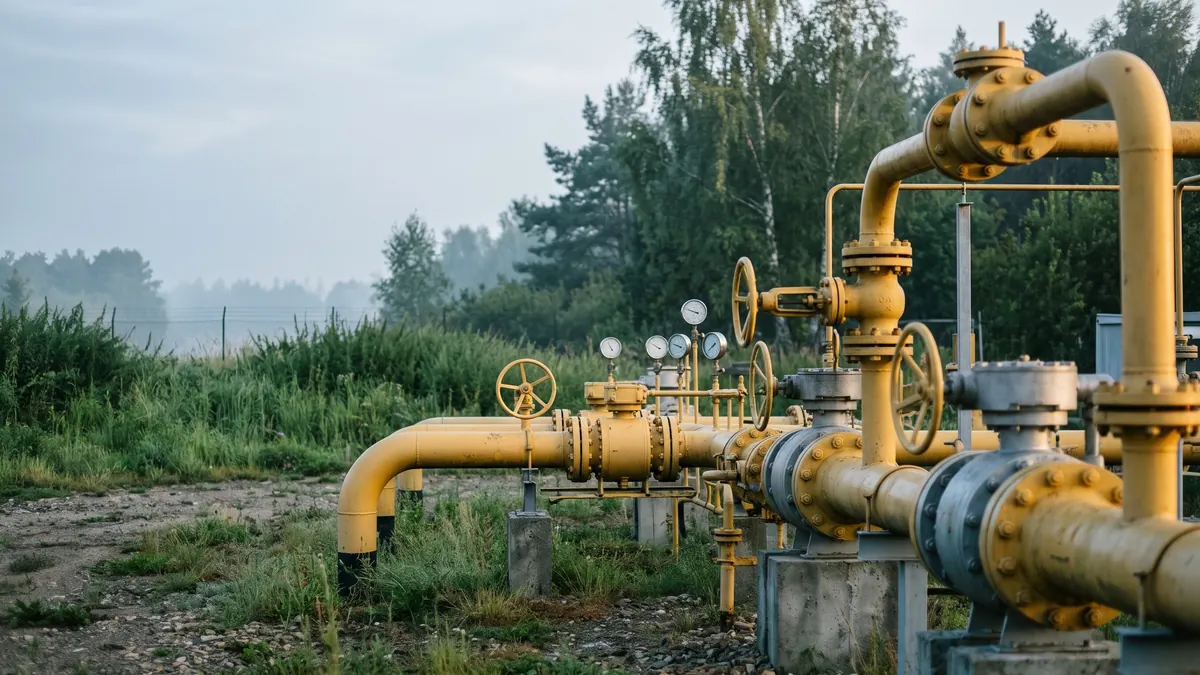
Biological start-up of a biogas plant is the period from filling and heating the digester to reaching stable throughput at the design load; it is a stage separate from assembly and mechanical tests, and its length results from the growth rate of microorganisms, not from the contractor's will. Investors often treat it as a formality at the end of the schedule, and it is one of the most common sources of delayed revenue. The technique of start-up is described in the article on digester start-up; here we look at the schedule, costs and agreements. The figures given are indicative ranges.
Stages and their durations
- Mechanical acceptance and leak tightness. Water tests of tanks, the gas, electrical and automation systems. The time depends on the contractor, not on the biology.
- Filling and heating. The tank is filled with inoculum, water and slurry; heating to operating temperature takes days to weeks.
- Biological start-up. Gradual increase of the dose, observation of VFA, pH and gas.
- Reaching full capacity. Increasing to the design load and optimising the mix.
- Final acceptance and trial operation.
Stages 3-4 usually last:
- a few to over ten weeks, when good, active inoculum is available (e.g. from a working digester with similar conditions),
- a few months, when the inoculum is weak, feeding relies on energy substrates with a low nitrogen content, or the process is thermophilic,
- in cases of problems (acidification, inhibition) - longer, even after replacing part of the contents.
These are general values. The specific schedule depends on the installation, and the first weeks often run at a power much lower than nominal.
Start-up costs
Heat. Heating the mass to operating temperature: Q = m × c × ΔT. Assumptions: 2,500 m3 (≈ 2,500 t), c = 4.18 kJ/(kg·K), ΔT = 30 K (from 10 to 40 °C). Result: approx. 313,500 MJ, i.e. approx. 87 MWh. Losses through walls, pipes and evaporation increase the demand by over ten to several tens of percent. The source is a boiler on natural gas, oil or biomass, or portable units, so the expense concerns fuel paid for before the first sale of energy.
Inoculum. Purchase and transport. Assuming 30% of the volume as inoculum (750 m3) and tankers of 25 t, about 30 trips are needed. The cost depends on distance and availability, and the material has to be sourced in advance, in line with sanitary requirements.
Substrates and energy. At the beginning easily degradable and not very demanding substrates are used; part will not be converted into energy. The mixers and pumps run from the first day, and electricity is bought from the grid.
Team and analyses. Laboratory, process supervision and operator training.
Risks for agreements and finances
| Risk | Consequence |
|---|---|
| Delay in reaching capacity | shift of revenue, loan interest, repayment schedule |
| Delayed connection or availability of grid capacity | need to start up without selling energy |
| Contracts (sale of energy, gas, substrate supply) | penalties or loss of entitlements if deadlines are missed |
| Unsuitable inoculum | longer start-up, repetition |
| Season (winter) | higher heat demand and slower biology |
| Deadlines in support programmes | loss of the right to support if deadlines are exceeded (check the conditions of the specific instrument) |
Simple revenue arithmetic: if for two months the installation runs on average at 50% of capacity, the lost production equals one full month of nominal production, i.e. approx. 8% of annual revenue. On top of this come the start-up costs. In the financial model a ramp-up curve should therefore be applied (e.g. 20%, 50%, 80%, 100% in successive months), not a jump to 100% from the day of commissioning.
What to write in the contractor agreement
- Separating acceptances. Technical acceptance (leak tightness, equipment) and biological acceptance (process) should be separate items.
- Biological acceptance criteria. For example: operation for a defined time (e.g. a few weeks) at a set minimum load, stable VFA and FOS/TAC within agreed limits, gas production of a defined composition. The values must be agreed for the specific mix and design.
- Responsibility for inoculum. Who supplies it, of what quality and who bears the cost.
- Scope of training and documentation. Start-up protocols, instructions, supervision.
- Warranty period and complaint procedures for process-related components (exchangers, mixers, measurements).
- Assumptions about substrates. Start-up depends on their quality, so the criteria must refer to the substrates actually available.
Good practice for the investor
- Plan the start-up outside the coldest period, if the schedule allows.
- Secure inoculum and substrates before the tanks are ready.
- Add to the budget a reserve for heating, transport and a possible replacement of part of the contents.
- Hire an operator or process adviser before the end of construction.
- Agree with the grid operator or buyer realistic connection dates, so that start-up does not begin before energy or gas can be sold.
Start-up is the part of the investment that requires budget, time and experience. Treated as a full stage, it reduces the risk of delays and disputes with the contractor.
Sources
Related articles