

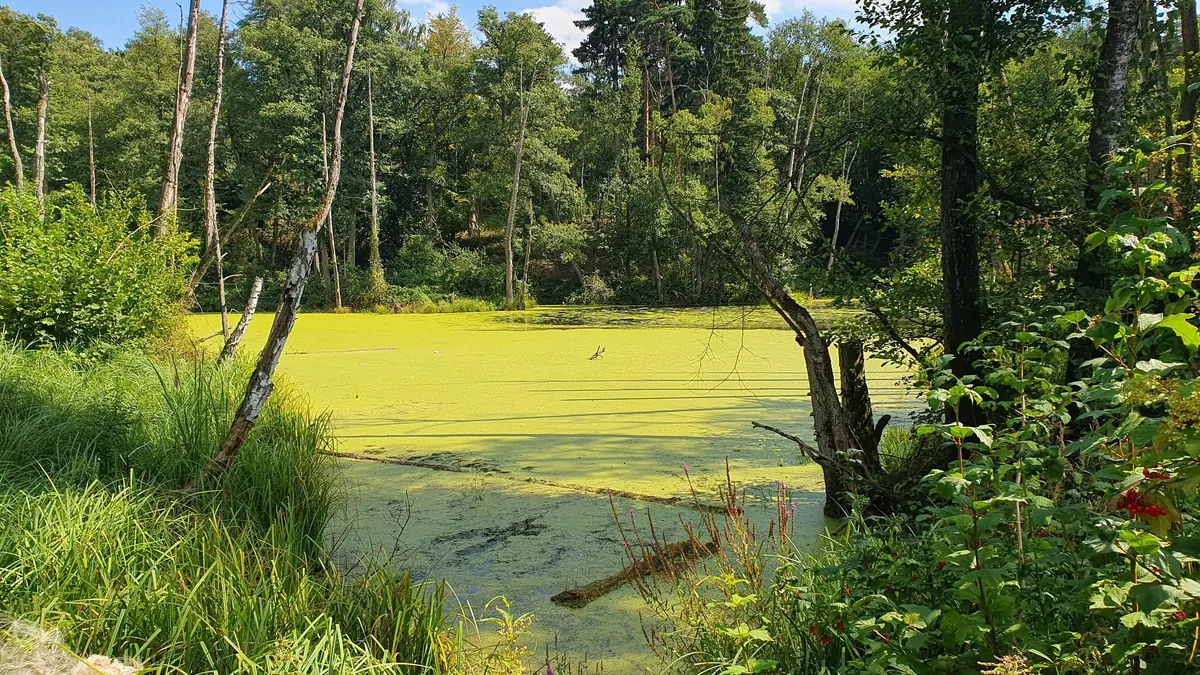
BMP testingAlgae and aquatic plants
Floating aquatic plants (duckweed, frogbit, water lettuce, salvinia, water chestnut) — BMP: 5 studies, mean 310 m³ CH₄/t VS
Duckweed, frogbit, water lettuce, salvinia and water chestnut are floating aquatic plants with a high water content; results come from several studies and different species.
rating: neutralCH₄ ≈ 52 % (estimate)
Photo Paavo01 / Wikimedia Commons, licence CC BY 4.0, source file; changes: cropping

- Weighted mean
- 310m³ CH₄/t VS
- Range
- 127–452m³ CH₄/t VS
- Records
- 5studies
- Publications
- 3sources
- Temperatures
- 35 °C, 37 °Cof the test
Methane in biogas
Medium methane content · ≈ 5.2 kWh/m³ of biogas
estimate from the substrate type The collected studies contain no measurement. The interval follows from the approximate composition (carbohydrate-dominated (no protein or fat characteristics)) and the yields of compound groups according to FNR.
Rating for biogas plants
neutral — editorial rating for biogas plantsNo clear advantages — worth charging a fee for accepting it
Potential per tonne of fresh matter: low (16 m³ CH₄/t); no particular threats to stability. No additional handling requirements.
Why? Rating factors
Potential per tonne 0
- ±0potential 16 m³ CH₄/t fresh matter (BMP 310 × DM 7 % × VS 75 %)
Process stability 0
- 0no factors
Handling and costs 0
- 0no factors
Total points: 0 · thresholds: ≥ 2.5 very good, ≥ 1 good, below — neutral; negative with cumulative process risk.
Add to the co-digestion calculator CSV data
BMP curves from 5 studies
Weighted mean Individual records
Dashed lines are a model curve (first-order kinetics, B(t) = B₀·(1 − e−kt)); the end point comes from the publication. All curves are model curves.
Cumulative methane production over the test [m³ CH₄/t VS]. The thick line is the weighted mean of all records (310); dots mark the end values given in the publications. Point at the chart to read values; click a legend item to hide or show a record.
Records and sources
Download CSV| Source | BMP m³ CH₄/t VS | Temperature | Sample | Curve |
|---|---|---|---|---|
| Cu et al. (2014) DOI | 341 | 37 °C · mesophilic | duckweed | end point (model curve) |
| Labatut et al. (2011) · 1 DOI | 359 | 35 °C · mesophilic | water chesnut | end point (model curve) |
| Labatut et al. (2011) · 2 DOI | 452 | 35 °C · mesophilic | frogbit | end point (model curve) |
| Saesin et al. (2026) · 1 DOI | 127 | — | Salvinia molesta | end point (model curve) |
| Saesin et al. (2026) · 2 DOI | 238 | — | Pistia stratiotes | end point (model curve) |
| Weighted mean | 310 | arithmetic mean 303, SD 124 | ||
Typical composition
- Dry matter (DM)
- 7% (range 7–7)
- Volatile solids (VS)
- 75 % DM (range 72–83)
Median and range of the determinations reported in the publications behind this substrate's BMP records (read from: MY-D); dry matter: 1 determination, volatile solids: 3 determinations. DM from a single determination – indicative value.
Sources: Cu et al. (2014); Labatut et al. (2011).
The composition of the raw material varies between batches — for plant calculations use an analysis of your own sample. The calculator inserts typical values automatically.
Process properties
Advantages
- Methane yield in the compendium: median 341 (range 127–452) m³ CH₄/t VS, 5 records from 3 papers (weighted mean 310).
- Duckweed (Spirodela) gave more methane than lawn grass and water spinach in the BMP test (Cu et al. (2014))
Dosing
The sources do not give a safe share of this substrate in the feed.
Sources of the process data
- Biogas Production from Vietnamese Animal Manure, Plant Residues and Organic Waste: Influence of Biomass Composition on Methane Yield
- Biochemical methane potential and biodegradability of complex organic substrates
- Bioenergy production from invasive plants in the Lower Mekong Basin using hydrothermal liquefaction and anaerobic digestion
- Effects of size and thermophilic pre-hydrolysis of banana peel during anaerobic digestion, and biomethanation potential of key tropical fruit wastes
- Effect of particle size on biogas generation from biomass residues
The co-digestion calculator will assess a specific mixture containing this substrate.
What it is and where it comes from
The entry combines floating aquatic plants: duckweed (Spirodela polyrhiza), frogbit, water lettuce (Pistia stratiotes), salvinia (Salvinia molesta) and water chestnut. These plants develop in standing or slow-flowing waters rich in nitrogen and phosphorus. Salvinia and water lettuce are tropical species which are invasive in many regions of the world, and their harvesting serves to protect water bodies.
Properties relevant to digestion
Floating plants have soft tissues with a small share of lignin, so they are readily accessible to bacteria. On the other hand the dry matter content is low, which means that a tonne of fresh biomass contains little organic matter. Duckweed is sometimes rich in protein, which increases the risk of ammonia release, and plants from polluted waters can accumulate heavy metals, which affects the quality of the digestate. Water chestnut has harder tissues than duckweed.
How to read the spread of results
The dataset consists of different species from several studies and temperatures, so the spread is considerable and is not an error. The influences are: the species, the composition of the water from which the plant was obtained, the time of year, the degree of drying of the material, size reduction, the test conditions and the inoculum. For some records the temperature is not given. It should not be assumed that duckweed and salvinia will behave similarly, even if they share a growth environment.
In biogas plant practice
Aquatic plants can be a supplement to the mix, especially as waste from the maintenance of water bodies. Practical limitations are the need to dewater or to transport large masses of water, seasonality, and sand and silt in the material. Cost-effectiveness depends on the transport distance. With substrates from polluted waters heavy metals must be monitored, and with invasive species care must be taken not to spread plant fragments with transport and with the digestate.
It is also important that aquatic plant biomass quickly undergoes spontaneous decomposition after harvest, so long storage lowers its value and causes nuisance odours. If the material is to be used, it should reach the digester within a short time of harvest, or possibly after ensiling or dewatering. In every case it pays to run a BMP test of your own, because the literature results cover species that are too different.
Methodology in brief
BMP is the amount of methane obtained from volatile solids (VS) in a batch test, given in m³ CH₄ per tonne of VS (numerically the same as NmL CH₄/g VS in the publications) and converted to normal conditions (0 °C, 101.325 kPa). The weighted mean gives each publication a total weight of 1, split equally between its results for the substrate — a paper testing twenty varieties does not outweigh a paper with a single sample. In inter-laboratory programmes the unit is the laboratory (total weight 1), and within it the weight of a test grows with the number of bottles (replicates). Results after pretreatment (e.g. thermal, chemical, enzymatic) are shown separately and are not included in the mean.
Solid lines are curves measured in the tests. Where a publication gives only the final result, we draw a first-order kinetic model, B(t) = B₀·(1 − e−kt): only the end point comes from the publication, and the shape of the curve serves purely as visualisation — do not read the production on a particular day from it. For this substrate k = 0.102 d−1 was assumed (median of rate constants k reported in the sources and/or fitted to the mean measured curves).
The statistics describe the spread of published results — a descriptive compilation, not a meta-analysis or a guarantee of plant yield.
Bibliography
- Cu, T.T.T.; Nguyen, T.X.; Triolo, J.M.; Pedersen, L.; Le, V.D.; Le, P.D.; Sommer, S.G. (2014). Biogas Production from Vietnamese Animal Manure, Plant Residues and Organic Waste: Influence of Biomass Composition on Methane Yield. Asian-Australasian Journal of Animal Sciences 28(2), 280–289. DOI: 10.5713/ajas.14.0312 DOI
- Labatut, R.A.; Angenent, L.T.; Scott, N.R. (2011). Biochemical methane potential and biodegradability of complex organic substrates. Bioresource Technology 102(3), 2255–2264. DOI: 10.1016/j.biortech.2010.10.035 DOI
- Saesin, P.; Rujichit, K.; Poggio, D.; Nimmo, W.; Peerakiatkhajohn, P.; Nakason, K.; Panyapinyopol, B.; Wongpakam, K.; Phanthuwongpakdee, J. (2026). Bioenergy production from invasive plants in the Lower Mekong Basin using hydrothermal liquefaction and anaerobic digestion. Energy Conversion and Management: X 29, 101554. DOI: 10.1016/j.ecmx.2026.101554 DOI
All sources of the site: bibliography.
Other substrates in the group “Algae and aquatic plants”
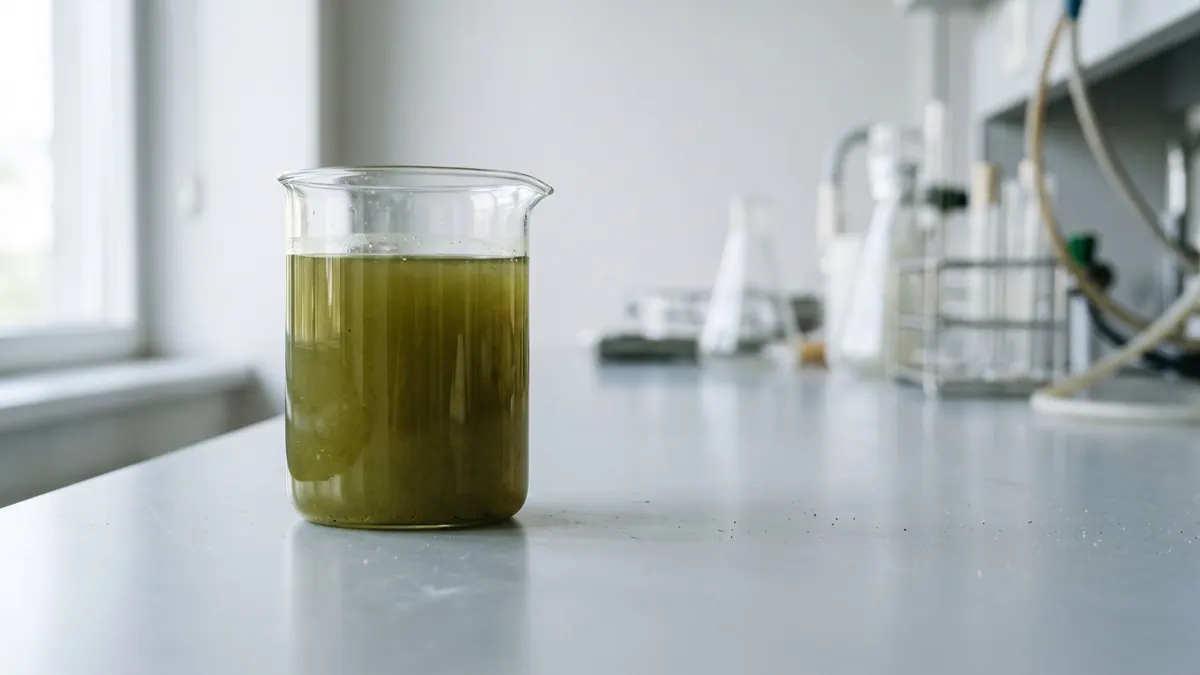
Nannochloropsis salina — BMP: 8 studies, weighted mean 417 m³ CH₄/t VS
417 m³ CH₄/t VS weighted mean from 8 studies
≈58 %
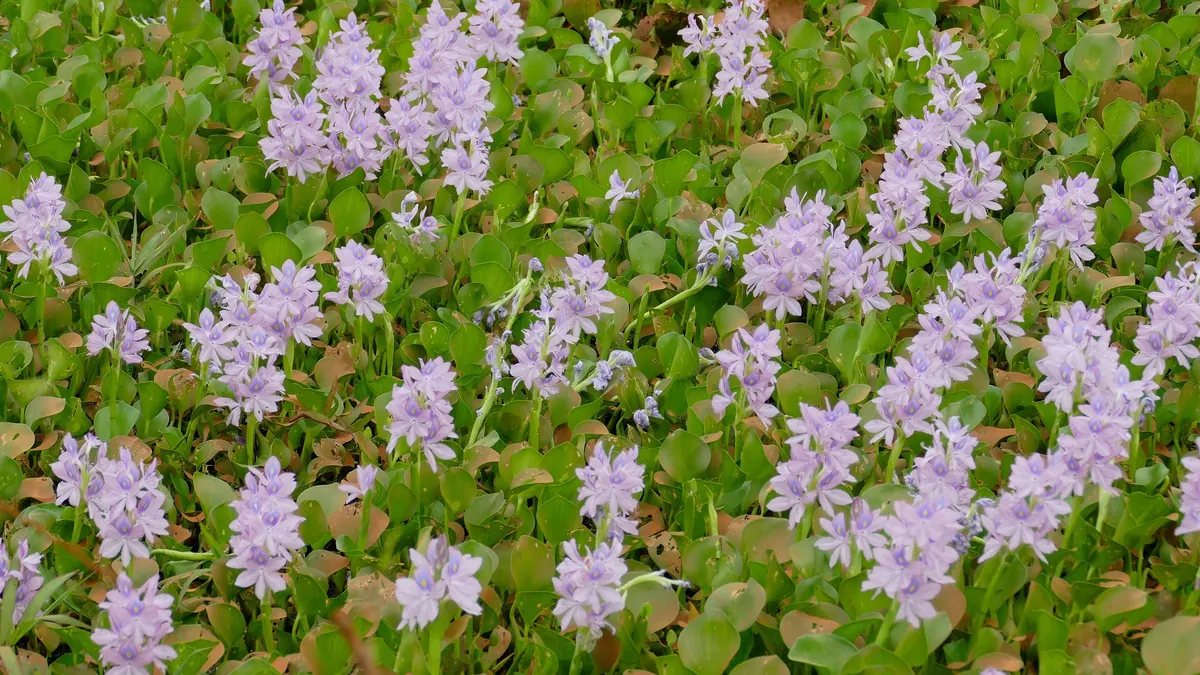
Water hyacinth — BMP: 3 studies, weighted mean 191 m³ CH₄/t VS
191 m³ CH₄/t VS weighted mean from 3 studies
≈52 %
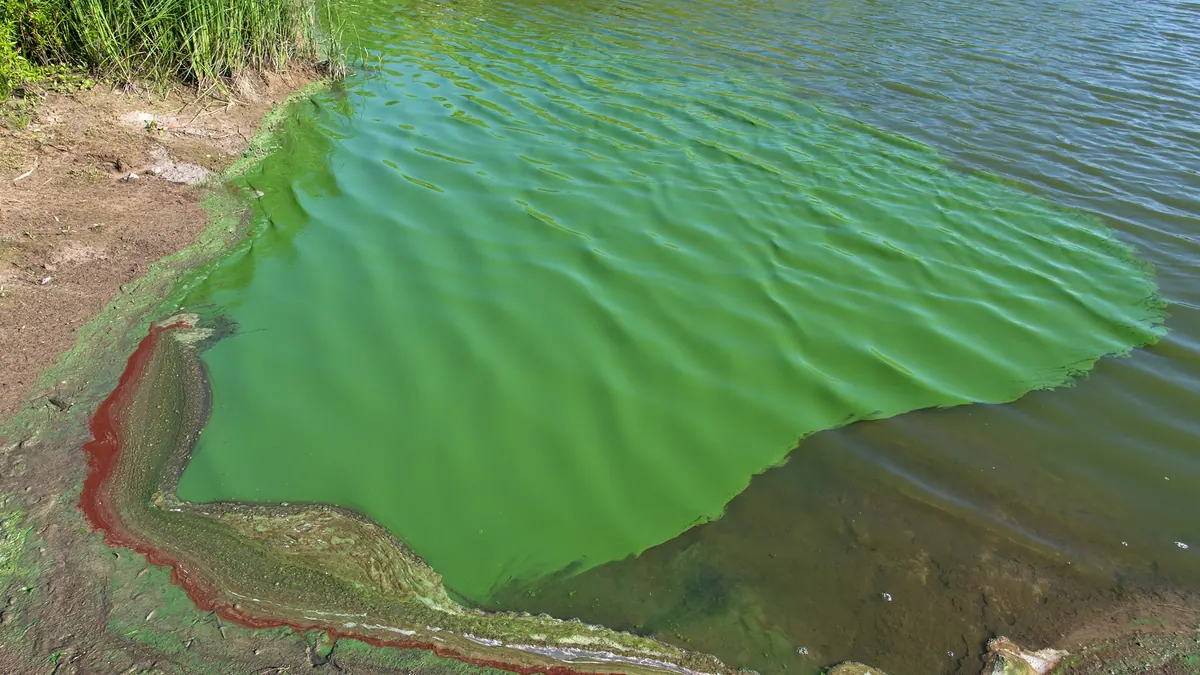
Cyanobacteria (Phormidium, Desertifilum, Anabaena, Nostoc) — BMP: 4 studies, weighted mean 152 m³ CH₄/t VS
152 m³ CH₄/t VS weighted mean from 4 studies
≈58 %
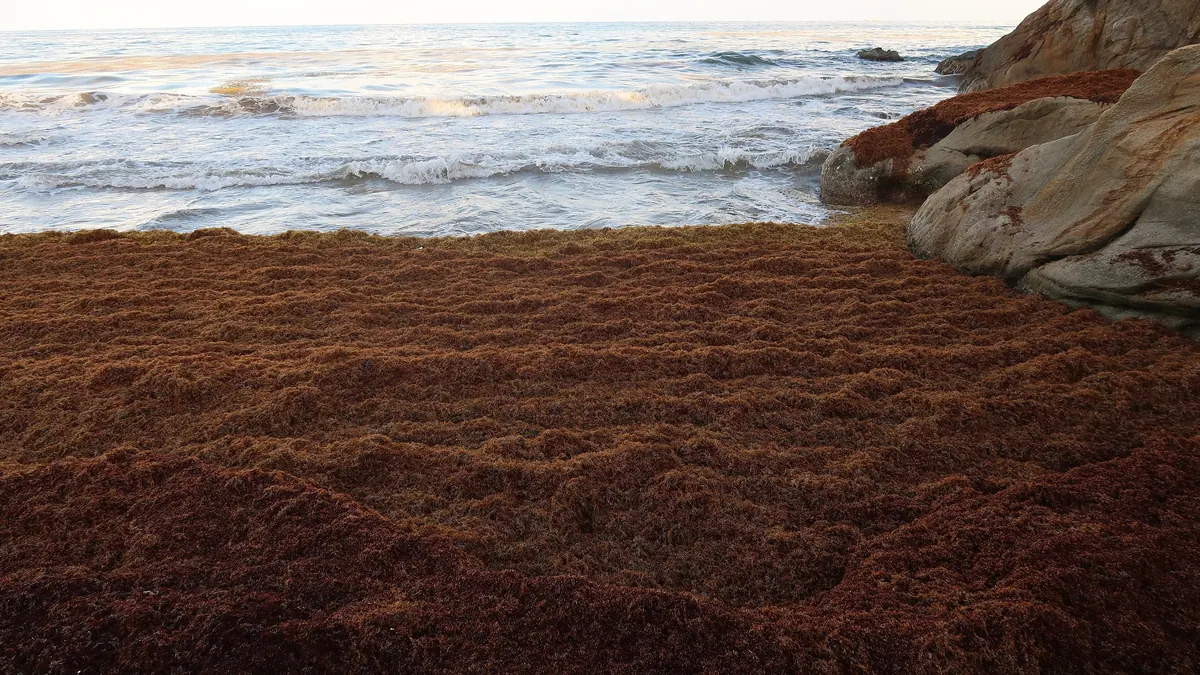
Sargassum biomass — BMP: 16 studies, weighted mean 89 m³ CH₄/t VS
89 m³ CH₄/t VS weighted mean from 16 studies
≈52 %