

BMP testingBioplastics and compostable packaging
PLA (polylactic acid) — BMP: 8 studies, weighted mean 127 m³ CH₄/t VS
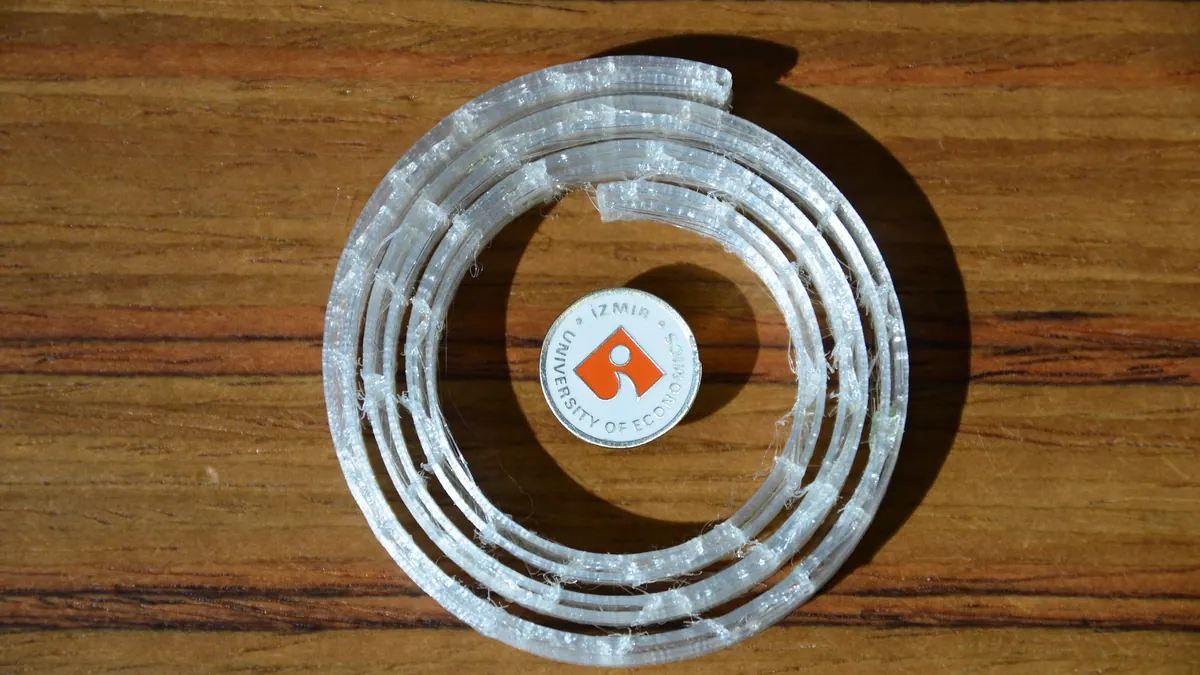
PLA (polylactide) and products made of it, e.g. films, tableware and cutlery, degrades very slowly under mesophilic conditions, and much better under thermophilic ones.
rating: neutralCH₄ ≈ 51 % (estimate)
Photo Murat Bengisu / Wikimedia Commons, licence CC BY-SA 4.0, source file; changes: cropping

- Weighted mean
- 127m³ CH₄/t VS
- Range
- 50–397m³ CH₄/t VS
- Records
- 8studies
- Publications
- 3sources
- Temperatures
- 37 °C, 55 °Cof the test
Methane in biogas
Low methane content · ≈ 5.1 kWh/m³ of biogas
estimate from the substrate type The collected studies contain no measurement. The interval follows from the approximate composition (protein from total nitrogen (N 0 % DM × 6.25)) and the yields of compound groups according to FNR.
Rating for biogas plants
neutral — editorial rating for biogas plantsNo clear advantages — worth charging a fee for accepting it
Potential per tonne of fresh matter: moderate, but limited by the poor degradability of the organic matter (115 m³ CH₄/t); no particular threats to stability. Handling costs: physical contaminants (packaging, plastics), slow degradation.
Why? Rating factors
Potential per tonne +1
- +1potential 115 m³ CH₄/t fresh matter (BMP 127 × DM 92.3 % × VS 98.2 %); low degradability of VS (BMP 127 m³ CH₄/t VS) — points capped
Process stability 0
- 0no factors
Handling and costs −1.5
- −1physical contaminants (packaging, plastics) — depackaging and separation
- −0.5slow degradation — long retention time
Total points: −0.5 · thresholds: ≥ 2.5 very good, ≥ 1 good, below — neutral; negative with cumulative process risk.
Add to the co-digestion calculator CSV data
BMP curves from 8 studies
Weighted mean Individual records
Dashed lines are a model curve (first-order kinetics, B(t) = B₀·(1 − e−kt)); the end point comes from the publication. All curves are model curves.
Cumulative methane production over the test [m³ CH₄/t VS]. The thick line is the weighted mean of all records (127); dots mark the end values given in the publications. Point at the chart to read values; click a legend item to hide or show a record.
Records and sources
Download CSV| Source | BMP m³ CH₄/t VS | Temperature | Sample | Curve |
|---|---|---|---|---|
| Üveges et al. (2023) DOI | 50 | — · mesophilic | Pure PLA | end point (model curve) |
| Zhang et al. (2018) DOI | 97 | 37 °C · mesophilic | Polylactic Acid Film | end point (model curve) |
| Cucina et al. (2022) · 1 DOI | 81 | 55 °C · thermophilic | PLA based dishes | end point (model curve) |
| Cucina et al. (2022) · 2 DOI | 104 | 55 °C · thermophilic | PLA based cutlery | end point (model curve) |
| Cucina et al. (2022) · 3 DOI | 215 | 55 °C · thermophilic | PLA based dishes | end point (model curve) |
| Cucina et al. (2022) · 4 DOI | 279 | 55 °C · thermophilic | PLA based cutlery | end point (model curve) |
| Cucina et al. (2022) · 5 DOI | 330 | 55 °C · thermophilic | PLA based dishes | end point (model curve) |
| Cucina et al. (2022) · 6 DOI | 397 | 55 °C · thermophilic | PLA based cutlery | end point (model curve) |
| Weighted mean | 127 | arithmetic mean 194, SD 130 | ||
Typical composition
- Dry matter (DM)
- 92.3% (range 85–99.6)
- Volatile solids (VS)
- 98.2 % DM (range 97.3–99.1)
- Nitrogen
- 0 % DM
Median and range of the determinations reported in the publications behind this substrate's BMP records (read from: MY-D); dry matter: 2 determinations, volatile solids: 2 determinations. Samples were tested dried/air-dry – the DM refers to the material in the test, not to fresh material.
Sources: Üveges et al. (2023); Zhang et al. (2018).
The composition of the raw material varies between batches — for plant calculations use an analysis of your own sample. The calculator inserts typical values automatically.
Process properties
Advantages
- Methane potential in the Substraty.pl BMP dataset: weighted mean 127.3 m³ CH₄/t VS (SD 130.0; 8 records, 3 sources).
- Degrades better under thermophilic conditions: PLA degraded by approx. 60% in 30 d, 80% in 40 d, 90% in 60 d at 55 °C (Yagi et al. 2009).
Drawbacks and risks
- At mesophilic temperature degradation began only after 55 days and was considerably slower (Yagi et al. 2009).
- Degradation times of bioplastics are 3-6 times longer than the retention time in commercial plants (Narancic et al. 2018).
Co-digestion — what to combine it with, what to watch out for
- combines well
substrates: high alkalinity (buffer) — e.g. Cattle manure, Pig slurry, Cattle slurry, Duck slurry, Rumen and digestive tract content
Dosing
No target share; treat as a contaminant. Complete degradation of PLA requires thermophilic conditions and a longer time than the typical HRT.
Introduce gradually, starting with a small dose and monitoring the process (e.g. FOS/TAC, pH, gas composition).
Practical requirements
- Shred: shredding increases the surface available for degradation and speeds it up, but does not necessarily raise the final gas yield (FNR 2010, Ch. 3 “Triturado”).
Sources of the process data
- Benn, Zitomer (2018). Pretreatment and anaerobic co-digestion of selected PHB and PLA bioplastics. Front. Environ. Sci.
- Yagi et al. (2009). Anaerobic biodegradation tests of poly(lactic acid) under mesophilic and thermophilic conditions using a new evaluation system. Int. J. Mol. Sci.
- Narancic et al. (2018). Biodegradable plastic blends create new possibilities for end-of-life management of plastics but they are not a panacea for plastic pollution. Environ. Sci. Technol.
- FNR (2010). Guía sobre el Biogás – Desde la producción hasta el uso (hiszp. wydanie „Leitfaden Biogas”, GIZ 2013)
The co-digestion calculator will assess a specific mixture containing this substrate.
What it is and where it comes from
PLA is a polyester of lactic acid, produced from fermented starch or sugar, e.g. from maize or sugar cane. It is one of the most widespread bioplastics: it is used for films, cups, tableware, cutlery, fibres and packaging. In municipal waste it appears mainly as disposable tableware and packaging. The dataset covers both pure PLA and specific products (film, tableware, cutlery).
Properties relevant to digestion
PLA is degraded in two stages: first the ester bonds are hydrolysed to oligomers and lactic acid, and only then do microorganisms convert the products to methane. Hydrolysis accelerates significantly above the glass transition temperature of the polymer, about 55–60 °C, so thermophilic digestion is much more favourable for PLA than mesophilic. At mesophilic temperature products are sometimes almost intact even after many weeks. Lactic acid is not toxic, but with rapid degradation of large quantities it can lower the pH. PLA contributes neither nitrogen nor sulphur.
How to read the spread of results
The dataset shows very large differences between records. They stem above all from the test temperature (mesophilic or thermophilic), the form of the sample (thin film, pure polymer, thick product), crystallinity and molecular weight, and the length of the test. A low value often means that the test ended before hydrolysis took place, not that PLA inherently has a low potential. Size reduction and the inoculum also matter, because the presence of microorganisms converting the hydrolysis products varies.
In biogas plant practice
In mesophilic plants PLA behaves as an almost inert material and may remain in the digestate as visible fragments. In thermophilic plants or ones with thermal pre-hydrolysis degradation is more complete. Dosing should therefore not be based on the assumption of full conversion. Practical precautions are size reduction before introduction into the chamber and quality control of the digestate. Legal requirements arise from the classification of the packaging waste and the plant's permits.
By comparison: PLA is more commonly found in waste than PHA, so it is more often a practical problem at plants accepting biowaste. Plant manufacturers increasingly require packaging of this type to be sorted out, precisely because of its slow degradation under typical mesophilic conditions.
Methodology in brief
BMP is the amount of methane obtained from volatile solids (VS) in a batch test, given in m³ CH₄ per tonne of VS (numerically the same as NmL CH₄/g VS in the publications) and converted to normal conditions (0 °C, 101.325 kPa). The weighted mean gives each publication a total weight of 1, split equally between its results for the substrate — a paper testing twenty varieties does not outweigh a paper with a single sample. In inter-laboratory programmes the unit is the laboratory (total weight 1), and within it the weight of a test grows with the number of bottles (replicates). Results after pretreatment (e.g. thermal, chemical, enzymatic) are shown separately and are not included in the mean.
Solid lines are curves measured in the tests. Where a publication gives only the final result, we draw a first-order kinetic model, B(t) = B₀·(1 − e−kt): only the end point comes from the publication, and the shape of the curve serves purely as visualisation — do not read the production on a particular day from it. For this substrate k = 0.091 d−1 was assumed (no kinetic data for the group – the median of all available rate constants k (93 values) was used).
The statistics describe the spread of published results — a descriptive compilation, not a meta-analysis or a guarantee of plant yield.
Bibliography
- Üveges, Z.; Damak, M.; Klátyik, S.; Ramay, M.W.; Fekete, G.; Varga, Z.; Gyuricza, C.; Székács, A.; Aleksza, L. (2023). Biomethane Potential in Anaerobic Biodegradation of Commercial Bioplastic Materials. Fermentation 9(3), 261. DOI: 10.3390/fermentation9030261 DOI
- Zhang, W.; Heaven, S.; Banks, C.J. (2018). Degradation of some EN13432 compliant plastics in simulated mesophilic anaerobic digestion of food waste. Polymer Degradation and Stability 147, 76–88. DOI: 10.1016/j.polymdegradstab.2017.11.005 DOI
- Cucina, M.; Soggia, G.; De Nisi, P.; Giordano, A.; Adani, F. (2022). Assessing the anaerobic degradability and the potential recovery of biomethane from different biodegradable bioplastics in a full-scale approach. Bioresource Technology 354, 127224. DOI: 10.1016/j.biortech.2022.127224 DOI
All sources of the site: bibliography.
Other substrates in the group “Bioplastics and compostable packaging”
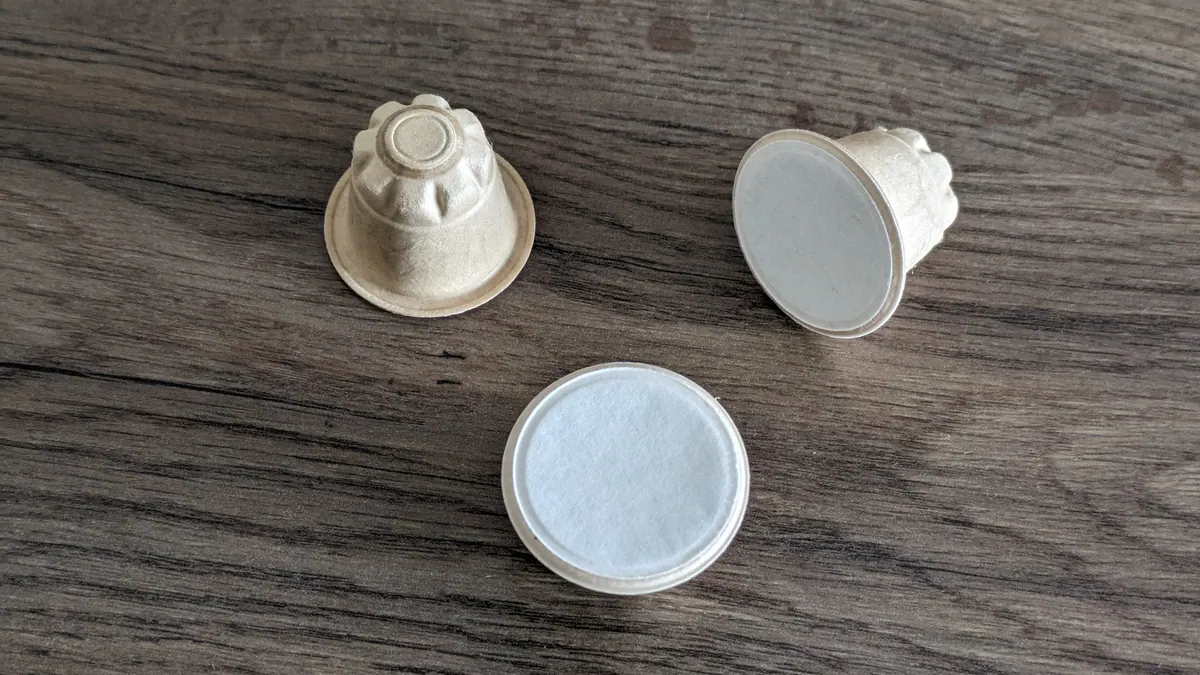
Compostable coffee capsules — BMP: 6 studies, weighted mean 201 m³ CH₄/t VS
201 m³ CH₄/t VS weighted mean from 6 studies
≈52 %
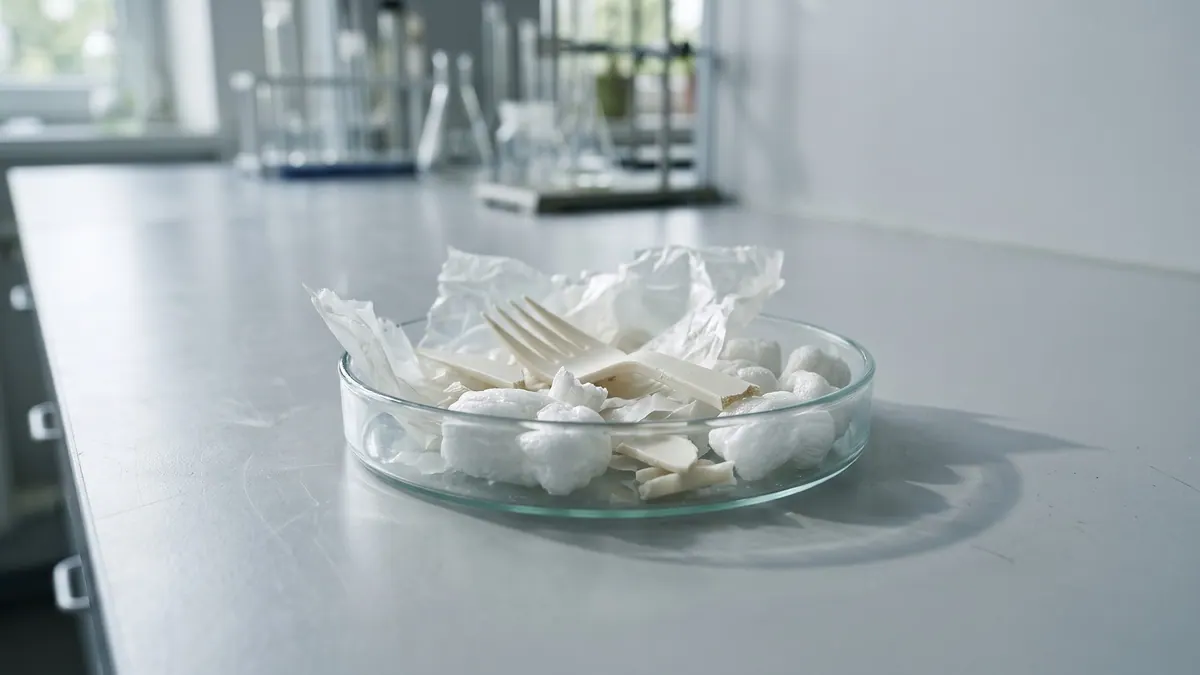
Starch-based bioplastics — BMP: 10 studies, weighted mean 266 m³ CH₄/t VS
266 m³ CH₄/t VS weighted mean from 10 studies
good — editorial rating for biogas plants≈52 %
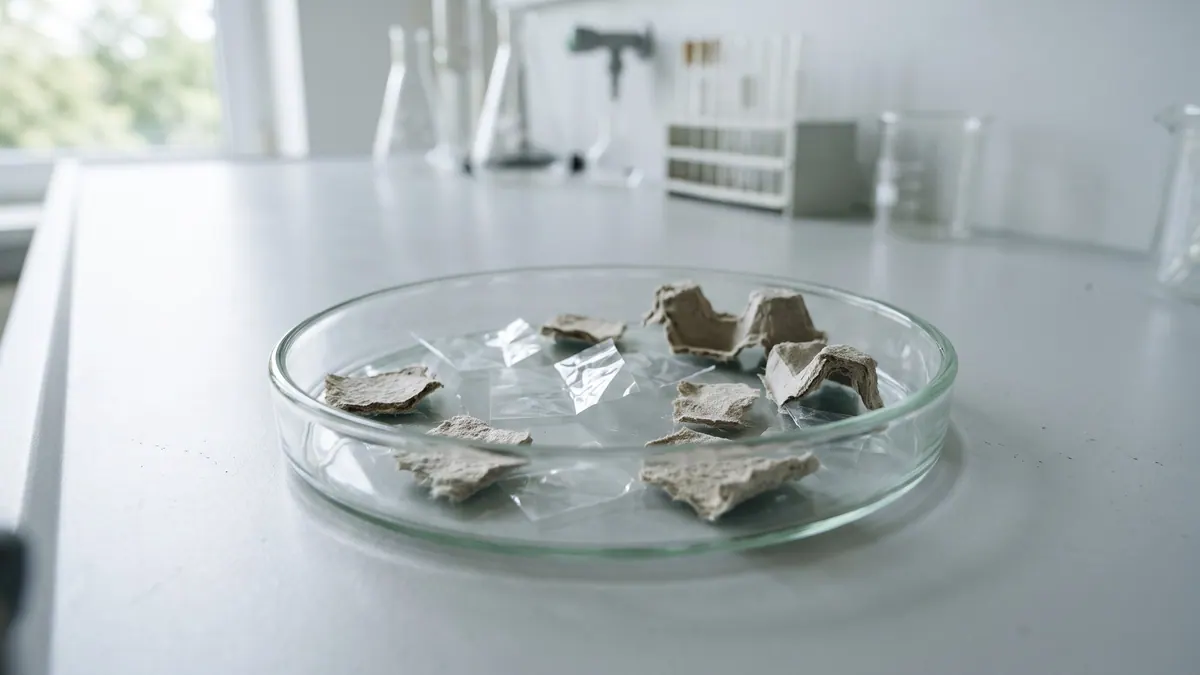
Cellulose-based films and packaging — BMP: 10 studies, weighted mean 355 m³ CH₄/t VS
355 m³ CH₄/t VS weighted mean from 10 studies
good — editorial rating for biogas plants≈51 %
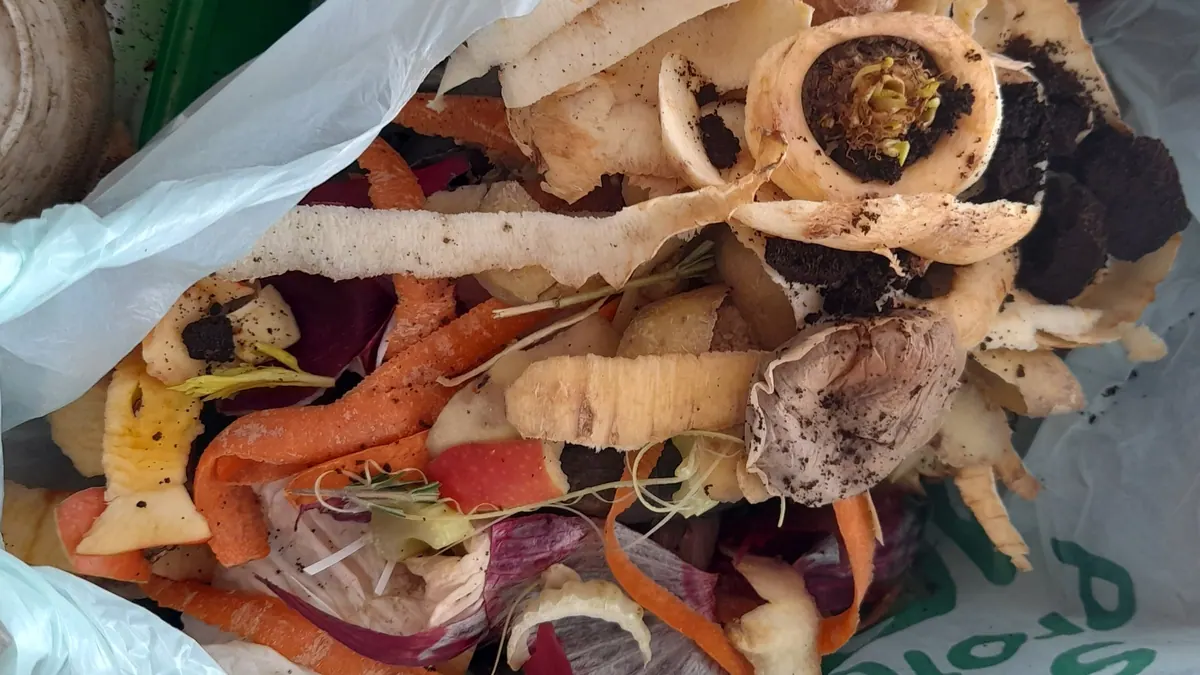
Compostable bags — BMP: 8 studies, weighted mean 119 m³ CH₄/t VS
119 m³ CH₄/t VS weighted mean from 8 studies
neutral — editorial rating for biogas plants≈52 %