

BMP testingWood and woody biomass
Sawdust and wood chips — BMP: 6 studies, weighted mean 130 m³ CH₄/t VS
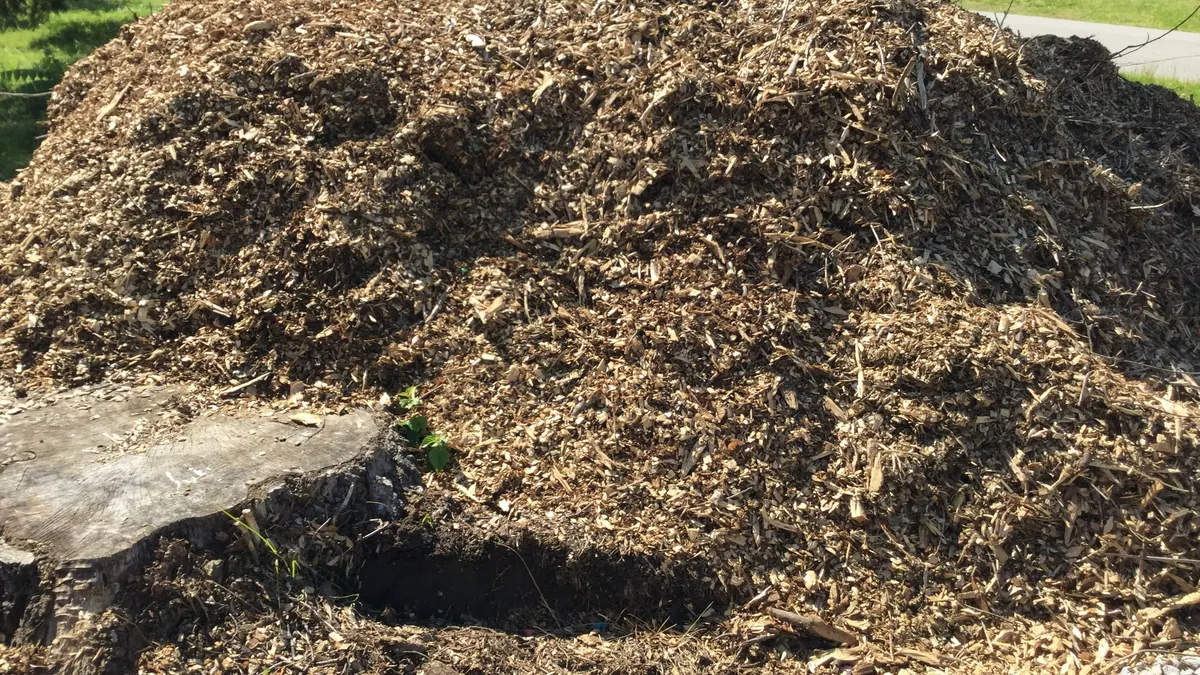
Sawdust and wood chips are a dry, nitrogen-poor lignocellulosic material with low digestibility; sawdust from Mozambique and chips from bedding were studied.
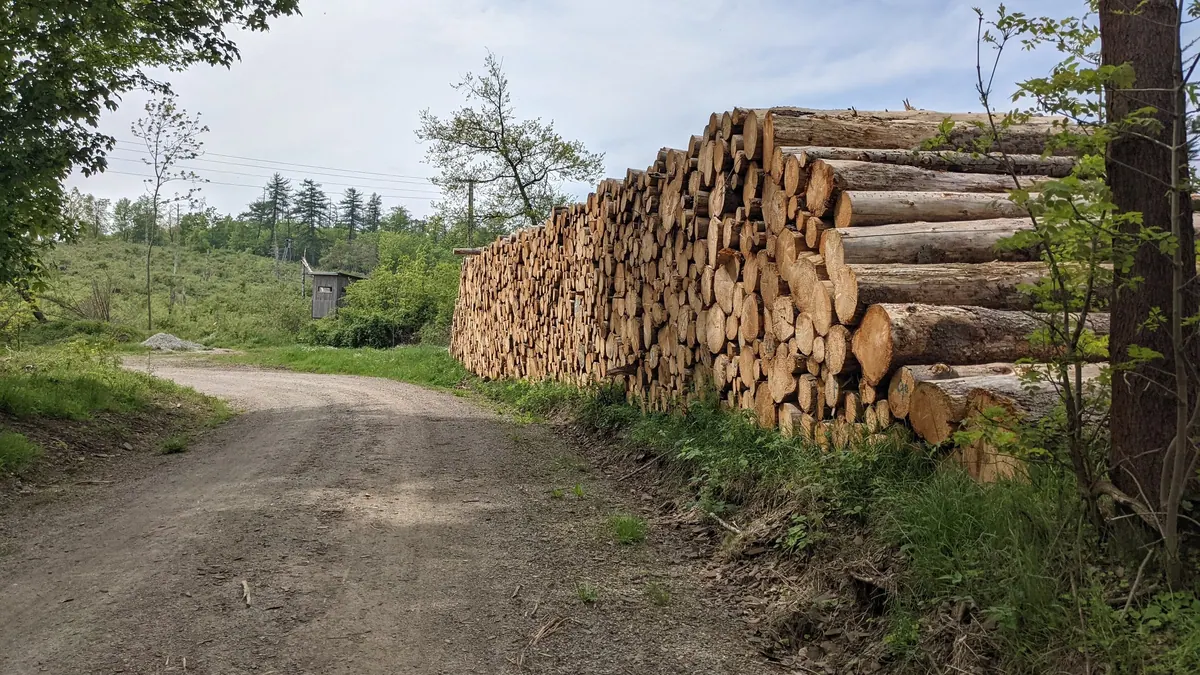
Photo Geo Lightspeed7 / Wikimedia Commons, licence CC BY-SA 4.0, source file; changes: cropping

- Weighted mean
- 130m³ CH₄/t VS
- Range
- 73–178m³ CH₄/t VS
- Records
- 6studies
- Publications
- 4sources
- Temperatures
- 38 °Cof the test
Methane in biogas
Medium methane content · ≈ 5.2 kWh/m³ of biogas
estimate from the substrate type The collected studies contain no measurement. The interval follows from the approximate composition (carbohydrate-dominated (no protein or fat characteristics)) and the yields of compound groups according to FNR.
Rating for biogas plants
not rated — editorial rating for biogas plants
Not rated: no dry matter or volatile solids in the data. We calculate the rating when the dry matter and volatile solids of the material are known.
Add to the co-digestion calculator CSV data
BMP curves from 6 studies
Weighted mean Individual records
Dashed lines are a model curve (first-order kinetics, B(t) = B₀·(1 − e−kt)); the end point comes from the publication. All curves are model curves.
Cumulative methane production over the test [m³ CH₄/t VS]. The thick line is the weighted mean of all records (130); dots mark the end values given in the publications. Point at the chart to read values; click a legend item to hide or show a record.
Records and sources
Download CSV| Source | BMP m³ CH₄/t VS | Temperature | Sample | Curve |
|---|---|---|---|---|
| Dubrovskis i Dubrovskis (2023) · 1 DOI | 178 | 38 °C · mesophilic | Birch sawdust briquettes (no additives) | end point (model curve) |
| Dubrovskis i Dubrovskis (2023) · 2 DOI | 153 | 38 °C · mesophilic | Old sawdust | end point (model curve) |
| Dubrovskis i Dubrovskis (2023) · 3 DOI | 175 | 38 °C · mesophilic | Fresh sawdust | end point (model curve) |
| Mabecua et al. (2021) · 1 DOI | 73 | — | Sawdust SD2 (manometric) | end point (model curve) |
| Mabecua et al. (2021) · 2 DOI | 129 | — | Sawdust SD1 (manometric) | end point (model curve) |
| Naji et al. (2023) DOI | 77 | — | Wood chips (WC) | end point (model curve) |
| Weighted mean | 130 | arithmetic mean 131, SD 47 | ||
Process properties
Advantages
- Methane potential in the database: weighted mean 130 m³ CH₄/t VS (median 141; range 73–178; 6 records from 4 sources).
Drawbacks and risks
- Fresh sawdust gave a higher result than old (Dubrovskis 2023) — storage reduces the value.
Co-digestion — what to combine it with, what to watch out for
- combines well
substrates: nitrogen-rich — e.g. Pig slurry, Poultry manure, Waste activated sludge (secondary sludge), Chlorella vulgaris, Nannochloropsis salina
Sawdust dilutes excess ammonium nitrogen in mixes with poultry (poultry litter with sawdust tested in Dubrovskis 2023).[1][2]
Dosing
No source-based dose limits. In Dubrovskis 2023 sawdust was used as bedding with poultry excrement and slaughterhouse waste — this is not evidence of a maximum share; treat as a minor additive, after a BMP test.
Practical requirements
- Shred: shredding increases the surface available for degradation and speeds it up, but does not necessarily raise the final gas yield (FNR 2010, Ch. 3 “Triturado”).
- Control floating crust and sediment: when solids are fed directly into the digester, the risk of their formation depends on the substrate (FNR 2010, Ch. 3).
Sources of the process data
- Dubrovskis, V.; Dubrovskis, D. (2023) Biogas production from fresh and old sawdust litter with chicken manure. Engineering for Rural Development 22
- Chen, Y.; Cheng, J.J.; Creamer, K.S. (2008) Inhibition of anaerobic digestion process: A review. Bioresource Technology
- Dahunsi, S. (2019) Mechanical pretreatment of lignocelluloses for enhanced biogas production: Methane yield prediction from biomass structural components. Bioresource Technology 280, 18–26
- Dubrovskis, V.; Dubrovskis, D. (2023) Methane production from briquettes of birch sawdust. Engineering for Rural Development 22
- Hendriks, A.T.W.M.; Zeeman, G. (2009) Pretreatments to enhance the digestibility of lignocellulosic biomass. Bioresource Technology
- Mabecua, F.; Schwede, S.; Lucas, C.; Klintenberg, P. (2021) Agro-Waste, a Solution for Rural Electrification? Assessing Biomethane Potential of Agro-Waste in Inhambane Province, Southern Mozambique. Water 13(7), 939
- Naji, A.; Rechdaoui, S.G.; Jabagi, E.; Lacroix, C.; Azimi, S.; Rocher, V. (2023) Horse Manure and Lignocellulosic Biomass Characterization as Methane Production Substrates. Fermentation 9(6), 580
- FNR (2010). Guía sobre el Biogás – Desde la producción hasta el uso (hiszp. wydanie „Leitfaden Biogas”, GIZ 2013)
The co-digestion calculator will assess a specific mixture containing this substrate.
What it is and where it comes from
Sawdust arises in the cutting and working of wood in sawmills and joinery plants, and chips in the comminution of wood with chippers. They are available in large quantities, but are used mainly as a raw material for particleboard, briquettes, pellets or bedding. The dataset contains sawdust from Mozambique, tested by the manometric method, and wood chips from bedding, i.e. samples of limited scope.
Properties relevant to digestion
Sawdust and chips have a composition close to wood: cellulose, hemicelluloses and lignin, with lignin being mainly what limits degradation. The material is dry, has a very high C/N ratio and few minerals, which favours deficiencies of nitrogen and trace elements. Sawdust absorbs water and can increase the viscosity of the suspension. The fine fraction has a larger surface area, but can also float to the surface. Chips from bedding may additionally contain animal excreta, which changes the properties of the material.
How to read the spread of results
The differences arise from the wood species (coniferous, deciduous, tropical), particle size, moisture and origin: fresh sawdust from cutting or bedding with excreta. The measurement method (manometric or volumetric test), temperature and inoculum also have an effect. The dataset contains few records, so the spread does not fully describe the variability of the material in practice. Transferring a result from tropical sawdust to Polish coniferous sawdust requires caution.
In biogas plant practice
Sawdust and chips can serve as a structural material or a sorbent, but are not a sensible source of methane. A large quantity of wood in the digester risks increased viscosity and sedimentation. If they occur in manure bedding, they must be taken into account in the dry matter balance. Wood waste is more valuable as biomass for combustion or as an industrial raw material. The legal requirements depend on whether the material is a waste, a by-product or part of bedding.
Contaminants must also be borne in mind: sawdust from impregnated, painted or glued wood is not suitable for digestion, and its origin should be well documented before the material reaches a plant.
Before any use, the origin and composition of the batch should therefore be checked.
Methodology in brief
BMP is the amount of methane obtained from volatile solids (VS) in a batch test, given in m³ CH₄ per tonne of VS (numerically the same as NmL CH₄/g VS in the publications) and converted to normal conditions (0 °C, 101.325 kPa). The weighted mean gives each publication a total weight of 1, split equally between its results for the substrate — a paper testing twenty varieties does not outweigh a paper with a single sample. In inter-laboratory programmes the unit is the laboratory (total weight 1), and within it the weight of a test grows with the number of bottles (replicates). Results after pretreatment (e.g. thermal, chemical, enzymatic) are shown separately and are not included in the mean.
Solid lines are curves measured in the tests. Where a publication gives only the final result, we draw a first-order kinetic model, B(t) = B₀·(1 − e−kt): only the end point comes from the publication, and the shape of the curve serves purely as visualisation — do not read the production on a particular day from it. For this substrate k = 0.039 d−1 was assumed (median of rate constants k reported in the sources and/or fitted to the mean measured curves).
The statistics describe the spread of published results — a descriptive compilation, not a meta-analysis or a guarantee of plant yield.
Bibliography
- Dubrovskis, V.; Dubrovskis, D. (2023). Methane production from briquettes of birch sawdust. Engineering for Rural Development 22. DOI: 10.22616/erdev.2023.22.tf124 DOI
- Dubrovskis, V.; Dubrovskis, D. (2023). Biogas production from fresh and old sawdust litter with chicken manure. Engineering for Rural Development 22. DOI: 10.22616/erdev.2023.22.tf123 DOI
- Mabecua, F.; Schwede, S.; Lucas, C.; Klintenberg, P. (2021). Agro-Waste, a Solution for Rural Electrification? Assessing Biomethane Potential of Agro-Waste in Inhambane Province, Southern Mozambique. Water 13(7), 939. DOI: 10.3390/w13070939 DOI
- Naji, A.; Rechdaoui, S.G.; Jabagi, E.; Lacroix, C.; Azimi, S.; Rocher, V. (2023). Horse Manure and Lignocellulosic Biomass Characterization as Methane Production Substrates. Fermentation 9(6), 580. DOI: 10.3390/fermentation9060580 DOI
All sources of the site: bibliography.
Other substrates in the group “Wood and woody biomass”
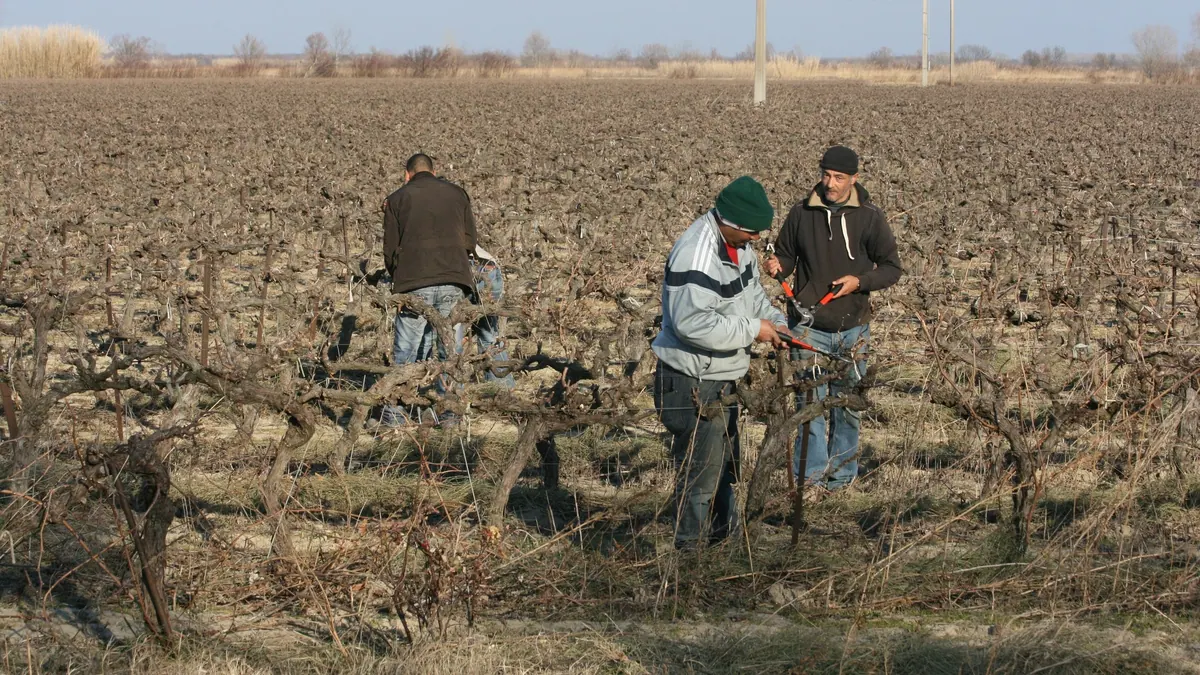
Olive and vine prunings — BMP: 2 studies, weighted mean 55 m³ CH₄/t VS
55 m³ CH₄/t VS weighted mean from 2 studies
≈52 %
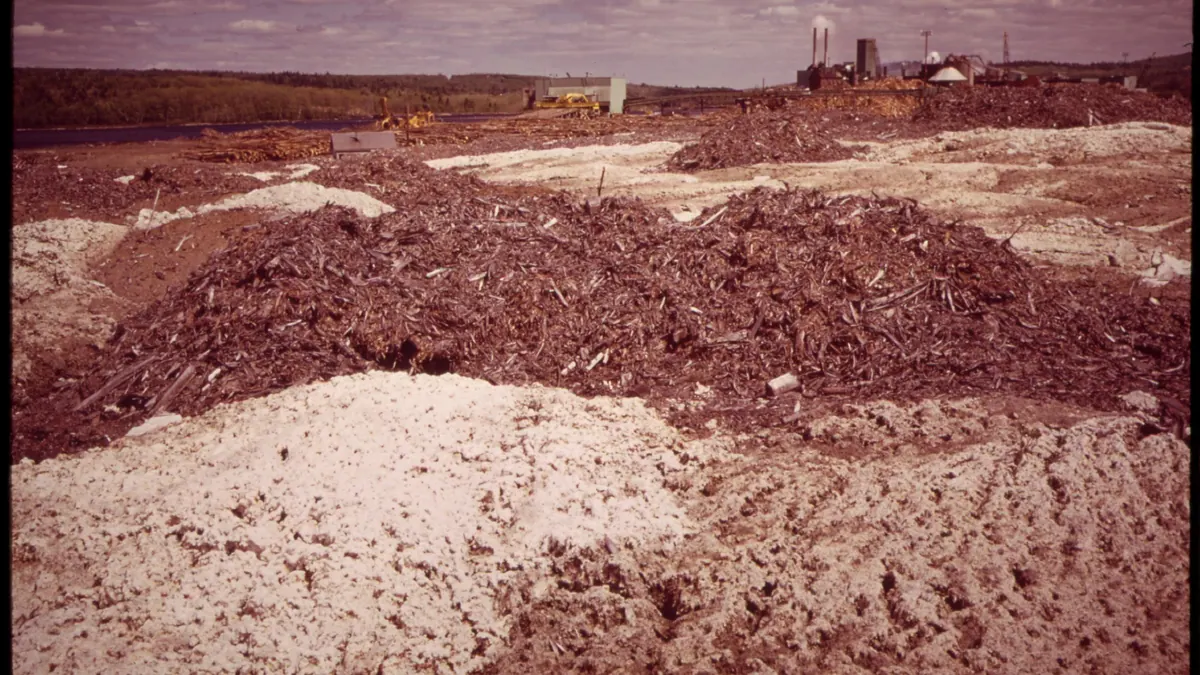
Wood residues from paper industry — BMP: 2 studies, weighted mean 144 m³ CH₄/t VS
144 m³ CH₄/t VS weighted mean from 2 studies
≈52 %
Lignin-rich hydrolysis residue — BMP: 2 studies, weighted mean 105 m³ CH₄/t VS
105 m³ CH₄/t VS weighted mean from 2 studies
≈52 %
Softwood — BMP: 7 studies, weighted mean 58 m³ CH₄/t VS
58 m³ CH₄/t VS weighted mean from 7 studies
neutral — editorial rating for biogas plants≈52 %