

BMP testingStraws and crop residues
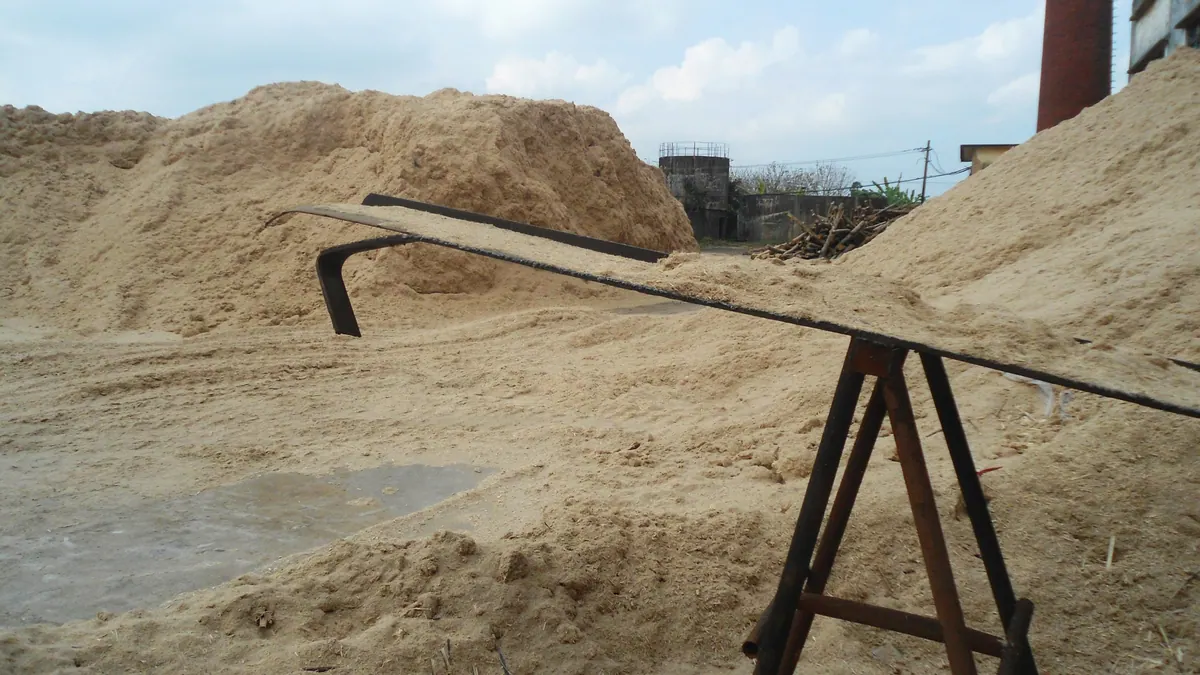
Sugarcane bagasse — BMP: 10 studies, weighted mean 205 m³ CH₄/t VS
Bagasse is a fibrous waste left after pressing sugar cane. Rich in lignocellulose, it requires size reduction and often pretreatment to perform well in the digestion chamber.
rating: goodCH₄ ≈ 51 % (estimate)
Photo Anna Frodesiak / Wikimedia Commons, licence CC0 1.0, source file; changes: cropping

- Weighted mean
- 205m³ CH₄/t VS
- Range
- 76–326m³ CH₄/t VS
- Records
- 10studies
- Publications
- 6sources
- Temperatures
- 35 °C, 37 °C, 38 °Cof the test
Methane in biogas
Low methane content · ≈ 5.1 kWh/m³ of biogas
estimate from the substrate type The collected studies contain no measurement. The interval follows from the approximate composition (protein from total nitrogen (N 0.2 % DM × 6.25)) and the yields of compound groups according to FNR.
Rating for biogas plants
good — editorial rating for biogas plantsStable, usually accepted without a fee
Potential per tonne of fresh matter: high (98 m³ CH₄/t); no particular threats to stability. Handling costs: fibres, floating layer, slow degradation.
Why? Rating factors
Potential per tonne +2
- +2potential 98 m³ CH₄/t fresh matter (BMP 205 × DM 52.2 % × VS 92 %)
Process stability 0
- 0no factors
Handling and costs −1
- −0.5fibres, floating layer — shredding and intensive mixing
- −0.5slow degradation — long retention time
Total points: 1 · thresholds: ≥ 2.5 very good, ≥ 1 good, below — neutral; negative with cumulative process risk.
Add to the co-digestion calculator CSV data
BMP curves from 10 studies
Weighted mean Individual records
Dashed lines are a model curve (first-order kinetics, B(t) = B₀·(1 − e−kt)); the end point comes from the publication. All curves are model curves.
Cumulative methane production over the test [m³ CH₄/t VS]. The thick line is the weighted mean of all records (205); dots mark the end values given in the publications. Point at the chart to read values; click a legend item to hide or show a record.
Records and sources
Download CSV| Source | BMP m³ CH₄/t VS | Temperature | Sample | Curve |
|---|---|---|---|---|
| Pereira et al. (2026) · 1 DOI | 246 | 37 °C · mesophilic | sugar cane bagasse (SCB) 100%, treatment T4 (S/I 1.0, TS 12.5%) | end point (model curve) |
| Pereira et al. (2026) · 2 DOI | 267 | 37 °C · mesophilic | sugar cane bagasse (SCB) 100%, treatment T1 (S/I 0.5, TS 10%) | end point (model curve) |
| Talha et al. (2016) DOI | 76 | 37 °C · mesophilic | sugarcane bagasse, untreated (0 min), 100% | end point (model curve) |
| Rahman et al. (2019) DOI | 205 | 35 °C · mesophilic | sugarcane bagasse (SB) | end point (model curve) |
| Janke et al. (2015) · 1 DOI | 236 | 38 °C · mesophilic | sugarcane bagasse B-2 | end point (model curve) |
| Janke et al. (2015) · 2 DOI | 326 | 38 °C · mesophilic | sugarcane bagasse B-1 | end point (model curve) |
| Lallement et al. (2023) · 1 DOI | 174 | 38 °C · mesophilic | bagasse | end point (model curve) |
| Lallement et al. (2023) · 2 DOI | 188 | 38 °C · mesophilic | bagasse | end point (model curve) |
| Lallement et al. (2023) · 3 DOI | 251 | 38 °C · mesophilic | bagasse | end point (model curve) |
| López-Dávila et al. (2022) DOI | 207 | — | Sugar cane bagasse | end point (model curve) |
| Weighted mean | 205 | arithmetic mean 218, SD 66 | ||
Typical composition
- Dry matter (DM)
- 52.2% (range 43.2–56.7)
- Volatile solids (VS)
- 92 % DM (range 73–95)
- Nitrogen
- 0.2 % DM
- C/N ratio
- 428
Median and range of the determinations reported in the publications behind this substrate's BMP records (read from: MY-D); dry matter: 3 determinations, volatile solids: 3 determinations. C/N was calculated as the ratio of C and N content (% DM) from the same source.
Sources: Lallement et al. (2023).
The composition of the raw material varies between batches — for plant calculations use an analysis of your own sample. The calculator inserts typical values automatically.
Process properties
Advantages
- Methane potential in the database: weighted mean 205 m³ CH₄/t VS (median 222; range 76-326; 10 records from 6 sources).
- Mixing with filter mud improves the N balance: C/N 24.7 at a mud:bagasse ratio of 25:75 versus 9.68 for the mud alone (Talha 2016).
Drawbacks and risks
- High content of lignin and crystalline cellulose: low conversion and a long degradation time (review by Hendriks 2009).
- Spread of results in the database: standard deviation 66 at a mean of 218 m³ CH₄/t VS (10 records from 6 sources).
Co-digestion — what to combine it with, what to watch out for
- combines well
Sugarcane filter cake / press mud
Filter cake from the sugar factory supplies N and P, and bagasse supplies structure and carbon; mixture C/N 24.7 at 25:75 (Talha 2016).[1]
- combines well
group: Animal excreta (slurry, manure, poultry litter)
Slurry/manure supplement N and buffer (Pereira 2026: co-digestion of bagasse in a solid-state system).[2]
Dosing
The sources do not give a maximum share; Talha 2016 shows a bagasse:filter mud ratio of 75:25 as favourable from the C/N point of view (not as a process limit).
Practical requirements
- Shred: shredding increases the surface available for degradation and speeds it up, but does not necessarily raise the final gas yield (FNR 2010, Ch. 3 “Triturado”).
- Control floating crust and sediment: when solids are fed directly into the digester, the risk of their formation depends on the substrate (FNR 2010, Ch. 3).
- Alkaline pretreatment raises the result (Talha 2016)
Sources of the process data
- Talha, Z.; Ding, W.; Mehryar, E.; Hassan, M.; Bi, J. (2016) Alkaline Pretreatment of Sugarcane Bagasse and Filter Mud Codigested to Improve Biomethane Production. BioMed Research International 2016, 1–10
- Pereira, L.M.S.; Pereira, C.V.R.; Baraldi, I.J.; Sophiatti, I.V.M.; Magrini, F.E.; Paesi, S.; Kaparaju, P.; Edwiges, T. (2026) Methane Yield and Microbial Dynamics in Solid-State Anaerobic Codigestion of Sugar Cane Bagasse and Bovine Manure. ACS Omega 11(8), 13149–13159
- Rahman, M.; Saha, C.K.; Feng, L.; Møller, H.B.; Alam, M. (2019) Anaerobic digestion of agro-industrial wastes of Bangladesh: Influence of total solids content. Engineering in Agriculture, Environment and Food 12(4), 484–493
- Janke, L.; Leite, A.; Nikolausz, M.; Schmidt, T.; Liebetrau, J.; Nelles, M.; Stinner, W. (2015) Biogas Production from Sugarcane Waste: Assessment on Kinetic Challenges for Process Designing. International Journal of Molecular Sciences 16(9), 20685–20703
- Hendriks, A.T.W.M.; Zeeman, G. (2009) Pretreatments to enhance the digestibility of lignocellulosic biomass. Bioresource Technology
- Lallement, A.; Peyrelasse, C.; Lagnet, C.; Barakat, A.; Schraauwers, B.; Maunas, S.; Monlau, F. (2023) A Detailed Database of the Chemical Properties and Methane Potential of Biomasses Covering a Large Range of Common Agricultural Biogas Plant Feedstocks. Waste 1(1), 195–227
- López-Dávila, E.; Jiménez Hernández, J.; López González, L.M.; Barrera Cardoso, E.L.; Bravo Amarante, E.; Contreras Velázquez, L.M.; Romero-Romero, O. (2022) Biochemical methane potential of agro-wastes as a renewable source alternative for electrical energy production in Cuba. Ciencia & Tecnología Agropecuaria 23(1)
- FNR (2010). Guía sobre el Biogás – Desde la producción hasta el uso (hiszp. wydanie „Leitfaden Biogas”, GIZ 2013)
The co-digestion calculator will assess a specific mixture containing this substrate.
What it is and where it comes from
Bagasse (sugar cane pressings) is the fibrous mass left after the juice has been pressed from sugar cane stalks in a sugar mill. It arises in large quantities wherever cane is grown, mainly in the tropical and subtropical zones. In Poland it does not occur as a local waste, because sugar here is produced from beet. Traditionally, bagasse is burned in sugar mill boilers to provide heat and electricity, and methane fermentation is one of the investigated routes for utilising surpluses.
Properties relevant to digestion
Bagasse is a lignocellulosic material: cellulose and hemicellulose dominate, and a significant part of the dry matter is lignin. Lignin is not degraded under anaerobic conditions and shields polysaccharides from enzymes, so hydrolysis is slow and part of the organic matter remains in the digestate. The material is dry and absorbent and has a high C/N ratio, so when bagasse is digested on its own nitrogen is lacking and it is advisable to combine it with a protein-rich substrate, for example animal excreta. A high fibre content promotes scum formation and floating of particles. A technological risk is mineral contamination (sand, soil from the field), which settles at the bottom of the digestion chamber.
How to read the spread of results
The samples tested come from different studies and countries, and some of the records are variants of a single experiment with a different substrate-to-inoculum ratio (S/I) and different dry matter content. The result is affected by: the cane variety, the thoroughness of juice extraction (the more thorough, the fewer residual sugars in the bagasse), particle size and inoculum quality. This compilation includes records without pretreatment; material after chemical or thermal treatment is a separate matter and may give completely different results. Because lignocellulose kinetics are slow, the result also depends on whether the test was ended after a dozen or so days or after several dozen.
In biogas plant practice
Bagasse is a seasonal substrate and requires storage, because sugar mills operate in campaigns. Before feeding it must be size-reduced, and in industrial installations pretreatment (hydrothermal, steam, chemical or enzymatic) is considered if the economic balance allows it. It works best as a component of a mix with slurry or another moist substrate, which provides nitrogen and buffering. Scum in the digester and the load on the mixing system should be monitored. The content of residual sugars, moisture and contaminants can differ considerably between sugar mills, so before contracting a batch it is worth carrying out your own BMP test.
Methodology in brief
BMP is the amount of methane obtained from volatile solids (VS) in a batch test, given in m³ CH₄ per tonne of VS (numerically the same as NmL CH₄/g VS in the publications) and converted to normal conditions (0 °C, 101.325 kPa). The weighted mean gives each publication a total weight of 1, split equally between its results for the substrate — a paper testing twenty varieties does not outweigh a paper with a single sample. In inter-laboratory programmes the unit is the laboratory (total weight 1), and within it the weight of a test grows with the number of bottles (replicates). Results after pretreatment (e.g. thermal, chemical, enzymatic) are shown separately and are not included in the mean.
Solid lines are curves measured in the tests. Where a publication gives only the final result, we draw a first-order kinetic model, B(t) = B₀·(1 − e−kt): only the end point comes from the publication, and the shape of the curve serves purely as visualisation — do not read the production on a particular day from it. For this substrate k = 0.136 d−1 was assumed (median of rate constants k reported in the sources and/or fitted to the mean measured curves).
The statistics describe the spread of published results — a descriptive compilation, not a meta-analysis or a guarantee of plant yield.
Bibliography
- Pereira, L.M.S.; Pereira, C.V.R.; Baraldi, I.J.; Sophiatti, I.V.M.; Magrini, F.E.; Paesi, S.; Kaparaju, P.; Edwiges, T. (2026). Methane Yield and Microbial Dynamics in Solid-State Anaerobic Codigestion of Sugar Cane Bagasse and Bovine Manure. ACS Omega 11(8), 13149–13159. DOI: 10.1021/acsomega.5c08172 DOI
- Talha, Z.; Ding, W.; Mehryar, E.; Hassan, M.; Bi, J. (2016). Alkaline Pretreatment of Sugarcane Bagasse and Filter Mud Codigested to Improve Biomethane Production. BioMed Research International 2016, 1–10. DOI: 10.1155/2016/8650597 DOI
- Rahman, M.; Saha, C.K.; Feng, L.; Møller, H.B.; Alam, M. (2019). Anaerobic digestion of agro-industrial wastes of Bangladesh: Influence of total solids content. Engineering in Agriculture, Environment and Food 12(4), 484–493. DOI: 10.1016/j.eaef.2019.10.002 DOI
- Janke, L.; Leite, A.; Nikolausz, M.; Schmidt, T.; Liebetrau, J.; Nelles, M.; Stinner, W. (2015). Biogas Production from Sugarcane Waste: Assessment on Kinetic Challenges for Process Designing. International Journal of Molecular Sciences 16(9), 20685–20703. DOI: 10.3390/ijms160920685 DOI
- Lallement, A.; Peyrelasse, C.; Lagnet, C.; Barakat, A.; Schraauwers, B.; Maunas, S.; Monlau, F. (2023). A Detailed Database of the Chemical Properties and Methane Potential of Biomasses Covering a Large Range of Common Agricultural Biogas Plant Feedstocks. Waste 1(1), 195–227. DOI: 10.3390/waste1010014 DOI
- López-Dávila, E.; Jiménez Hernández, J.; López González, L.M.; Barrera Cardoso, E.L.; Bravo Amarante, E.; Contreras Velázquez, L.M.; Romero-Romero, O. (2022). Biochemical methane potential of agro-wastes as a renewable source alternative for electrical energy production in Cuba. Ciencia & Tecnología Agropecuaria 23(1). DOI: 10.21930/rcta.vol23_num1_art:1890 DOI
All sources of the site: bibliography.
Other substrates in the group “Straws and crop residues”
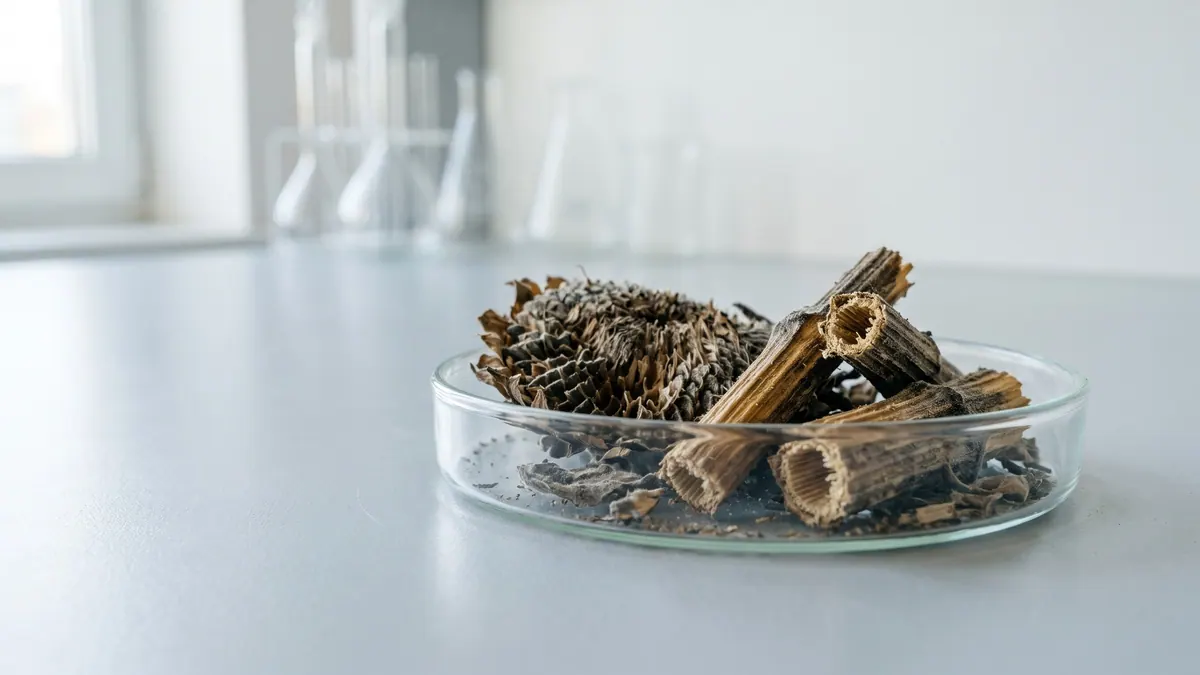
Sunflower residues (heads, stalks) — BMP: 2 studies, weighted mean 169 m³ CH₄/t VS
169 m³ CH₄/t VS weighted mean from 2 studies
≈52 %
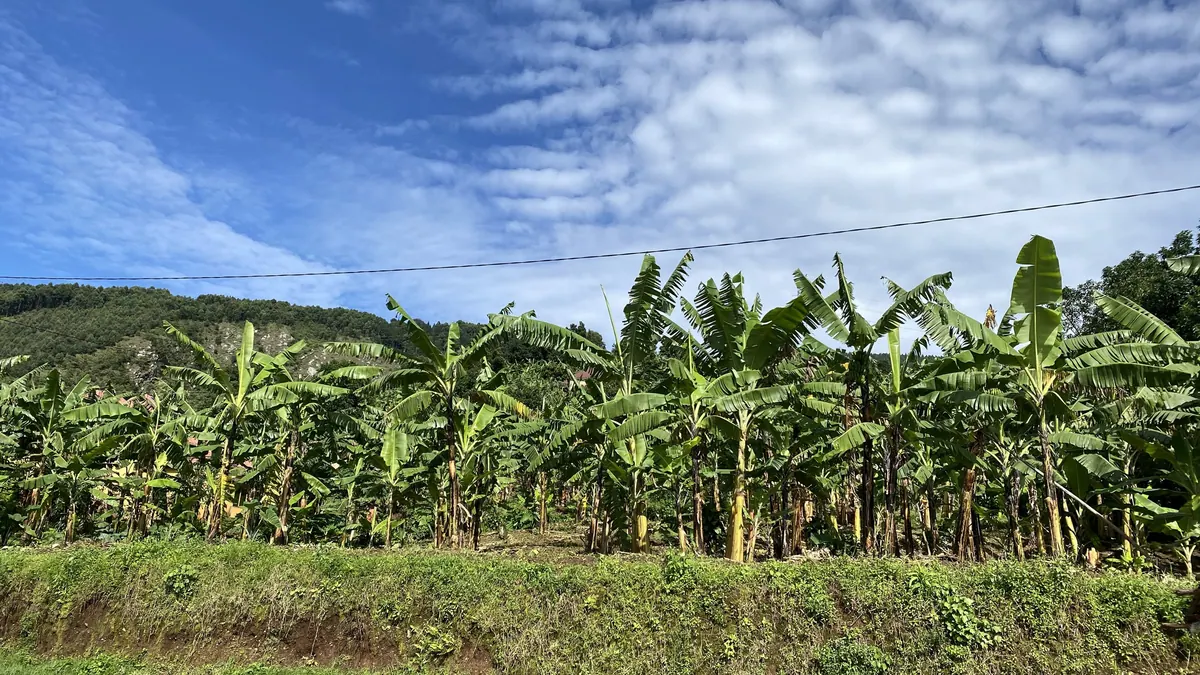
Banana stalks and leaves — BMP: 2 studies, weighted mean 262 m³ CH₄/t VS
262 m³ CH₄/t VS weighted mean from 2 studies
≈52 %
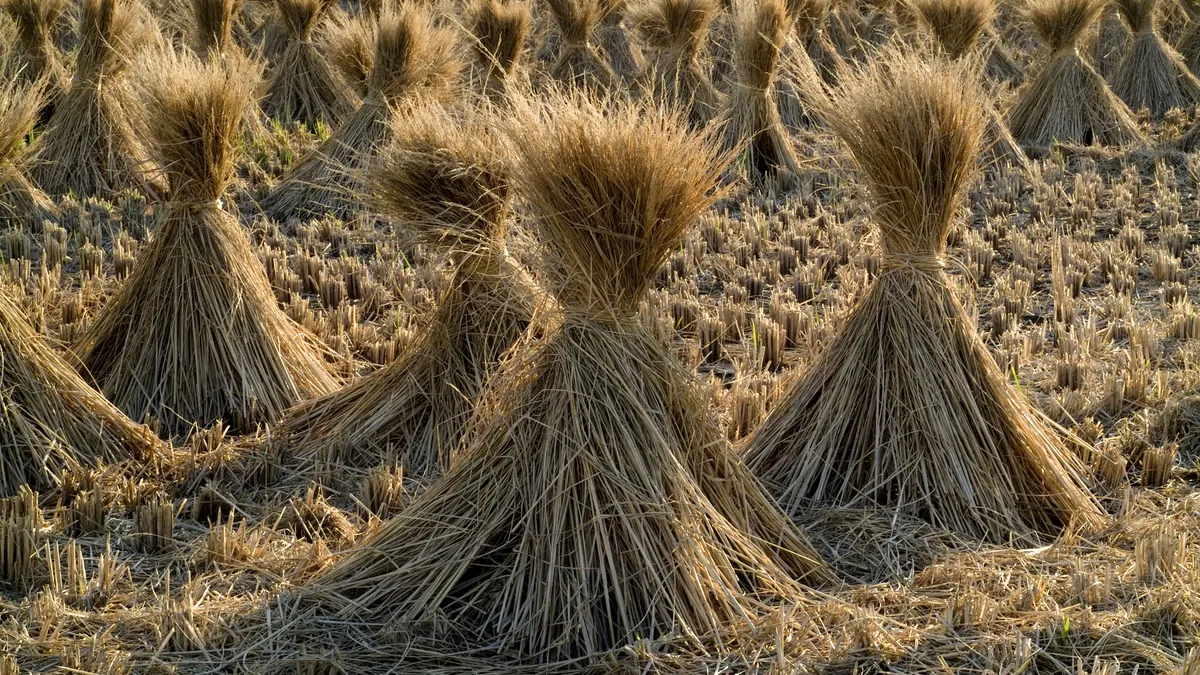
Rice straw — BMP: 12 studies, weighted mean 262 m³ CH₄/t VS
262 m³ CH₄/t VS weighted mean from 12 studies
good — editorial rating for biogas plants≈52 %
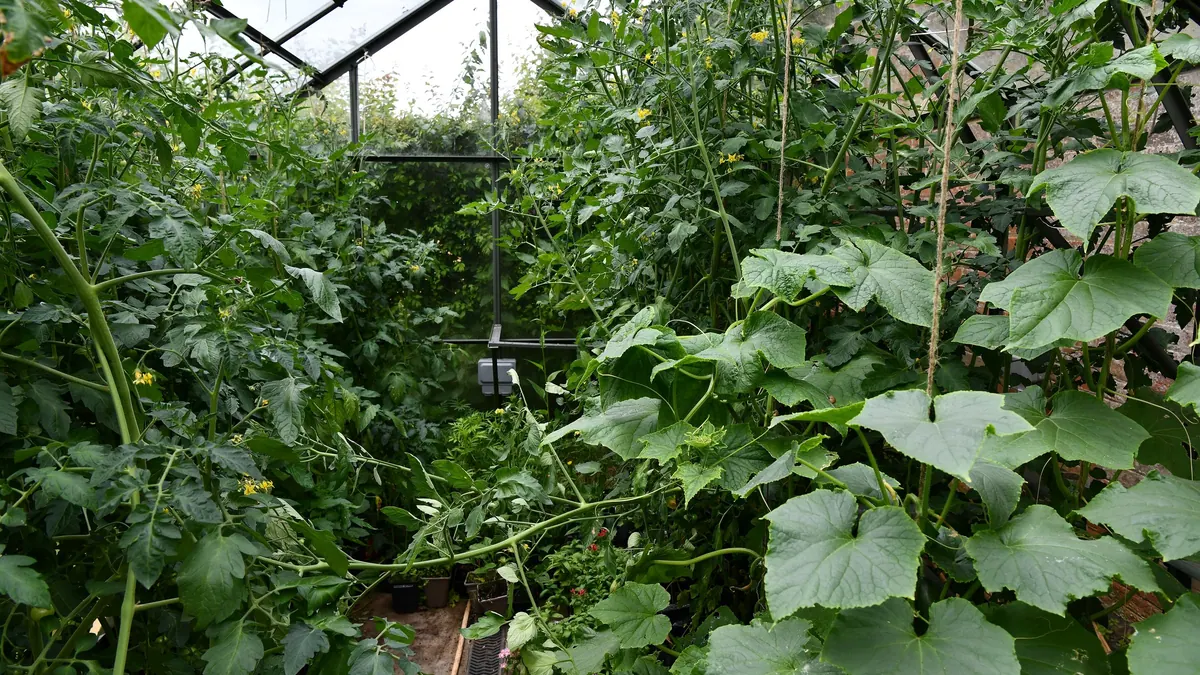
Tomato leaves and stems — BMP: 6 studies, weighted mean 200 m³ CH₄/t VS
200 m³ CH₄/t VS weighted mean from 6 studies
58 %