

BMP testingBy-products of the agri-food industry
Sugarcane filter cake / press mud — BMP: 4 studies, weighted mean 190 m³ CH₄/t VS
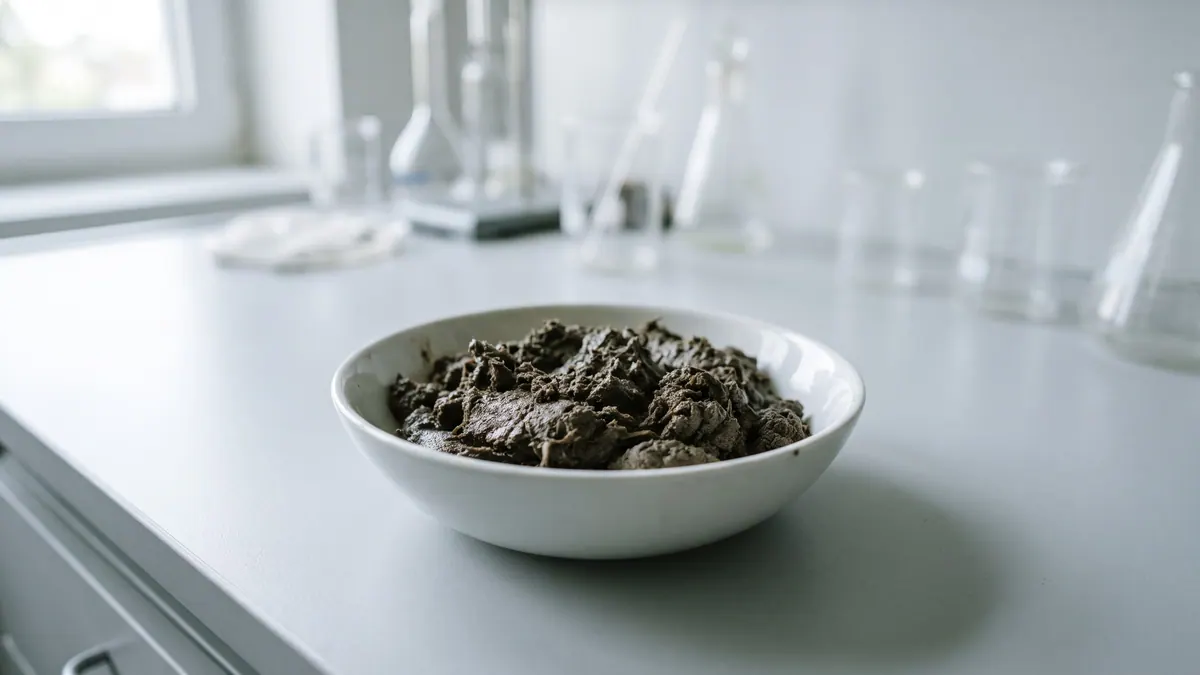
Filter cake from a cane sugar mill (press mud) is a moist, mineral-organic residue of juice clarification; it contains waxes, fibre and calcium.
Illustration: FeedstockData (AI, Google Gemini)
- Weighted mean
- 190m³ CH₄/t VS
- Range
- 121–281m³ CH₄/t VS
- Records
- 4studies
- Publications
- 2sources
- Temperatures
- 35 °C, 38 °Cof the test
Methane in biogas
Medium methane content · ≈ 5.4 kWh/m³ of biogas
estimate from the substrate type The collected studies contain no measurement. The interval follows from the approximate composition (animal manure (process classification)) and the yields of compound groups according to FNR.
Rating for biogas plants
not rated — editorial rating for biogas plants
Not rated: no dry matter or volatile solids in the data. We calculate the rating when the dry matter and volatile solids of the material are known.
Add to the co-digestion calculator CSV data
BMP curves from 4 studies
Weighted mean Individual records
Dashed lines are a model curve (first-order kinetics, B(t) = B₀·(1 − e−kt)); the end point comes from the publication. All curves are model curves.
Cumulative methane production over the test [m³ CH₄/t VS]. The thick line is the weighted mean of all records (190); dots mark the end values given in the publications. Point at the chart to read values; click a legend item to hide or show a record.
Records and sources
Download CSV| Source | BMP m³ CH₄/t VS | Temperature | Sample | Curve |
|---|---|---|---|---|
| Rahman et al. (2019) DOI | 121 | 35 °C · mesophilic | press mud (PM), sugarcane | end point (model curve) |
| Janke et al. (2015) · 1 DOI | 245 | 38 °C · mesophilic | sugarcane filter cake FC-2 | end point (model curve) |
| Janke et al. (2015) · 2 DOI | 254 | 38 °C · mesophilic | sugarcane filter cake FC-3 | end point (model curve) |
| Janke et al. (2015) · 3 DOI | 281 | 38 °C · mesophilic | sugarcane filter cake FC-1 | end point (model curve) |
| Weighted mean | 190 | arithmetic mean 225, SD 71 | ||
Process properties
Low confidence: the description is based on general characteristics of the substrate group, not on studies of this material. Treat it as a hint to be verified.
Advantages
- Methane potential in the Substraty.pl BMP dataset: weighted mean 190.5 m³ CH₄/t VS (SD 71.2; 4 records, 2 sources).
- A considerable mineral fraction (calcium, phosphates) provides alkalinity and micronutrients (Weiland 2010).
Drawbacks and risks
- Waxes and lignin degrade poorly; the mineral fraction settles in the tank (Hendriks and Zeeman 2009).
- A large mineral fraction lowers the VS share and raises the pH of the feed (a property of a mineral substrate; Weiland 2010).
Dosing
No source threshold.
Introduce gradually, starting with a small dose and monitoring the process (e.g. FOS/TAC, pH, gas composition).
Practical requirements
- Provide for removal of sand and heavy contaminants: sand is often strongly bound to organic matter and is released only in the digester, and sediments reduce its usable capacity, so a scraper or bottom drain is needed (FNR 2010, Ch. 3).
Sources of the process data
- Weiland (2010). Biogas production: current state and perspectives. Appl. Microbiol. Biotechnol.
- Hendriks, Zeeman (2009). Pretreatments to enhance the digestibility of lignocellulosic biomass. Bioresour. Technol.
- FNR (2010). Guía sobre el Biogás – Desde la producción hasta el uso (hiszp. wydanie „Leitfaden Biogas”, GIZ 2013)
The co-digestion calculator will assess a specific mixture containing this substrate.
What it is and where it comes from
In cane sugar mills the juice is clarified with lime and other agents and then filtered. The residue is filter cake, called press mud or filter cake. It is a dark, moist mass, arising in large quantities in the cane processing season. In Poland sugar is produced from beet, so this waste is typical of tropical countries, and in Polish sugar factories the analogous material is carbonation lime (defecation lime), the sludge after lime purification of juice, which is a separate material.
Properties relevant to digestion
Press mud contains fibre from cane residues (cellulose, hemicellulose, lignin), cane waxes, protein and residual sugars, as well as a considerable mineral fraction, including calcium and phosphates. The organic part is moderately digestible; waxes and lignin are poorly degradable. A high mineral content raises alkalinity and can affect the pH of the feed, but at the same time supplies trace elements. The material is moist and spoils quickly, and in clamp storage it releases leachate.
How to read the spread of results
The dataset contains several records from several sources: a sample described as press mud and filter cake samples (FC-1, FC-2, FC-3), tested at a temperature of 35–38 °C. The spread is moderate. It results from differences between sugar mills, the clarification technology, the season, the amount of fibre in the cake, moisture, size reduction and the inoculum. Because the share of mineral fraction is variable, results expressed per volatile solids can differ more than results expressed per dry matter.
In biogas plant practice
Press mud is used in co-digestion with manure or distillery stillage, in countries where cane sugar mills are linked with ethanol distilleries. The material requires size reduction and dilution because it is dense. After digestion the residue is suitable as an organic fertiliser. In regions where press mud is traditionally composted and applied to fields, a biogas plant competes with this use. For Poland the data are of comparative significance only.
From the point of view of the energy balance press mud has a moderate value, but its advantage is availability in large, uniform batches in the processing season. The mineral fraction may, however, accumulate in the digester as sediment, so it requires periodic removal.
Methodology in brief
BMP is the amount of methane obtained from volatile solids (VS) in a batch test, given in m³ CH₄ per tonne of VS (numerically the same as NmL CH₄/g VS in the publications) and converted to normal conditions (0 °C, 101.325 kPa). The weighted mean gives each publication a total weight of 1, split equally between its results for the substrate — a paper testing twenty varieties does not outweigh a paper with a single sample. In inter-laboratory programmes the unit is the laboratory (total weight 1), and within it the weight of a test grows with the number of bottles (replicates). Results after pretreatment (e.g. thermal, chemical, enzymatic) are shown separately and are not included in the mean.
Solid lines are curves measured in the tests. Where a publication gives only the final result, we draw a first-order kinetic model, B(t) = B₀·(1 − e−kt): only the end point comes from the publication, and the shape of the curve serves purely as visualisation — do not read the production on a particular day from it. For this substrate k = 0.091 d−1 was assumed (no kinetic data for the group – the median of all available rate constants k (93 values) was used).
The statistics describe the spread of published results — a descriptive compilation, not a meta-analysis or a guarantee of plant yield.
Bibliography
- Rahman, M.; Saha, C.K.; Feng, L.; Møller, H.B.; Alam, M. (2019). Anaerobic digestion of agro-industrial wastes of Bangladesh: Influence of total solids content. Engineering in Agriculture, Environment and Food 12(4), 484–493. DOI: 10.1016/j.eaef.2019.10.002 DOI
- Janke, L.; Leite, A.; Nikolausz, M.; Schmidt, T.; Liebetrau, J.; Nelles, M.; Stinner, W. (2015). Biogas Production from Sugarcane Waste: Assessment on Kinetic Challenges for Process Designing. International Journal of Molecular Sciences 16(9), 20685–20703. DOI: 10.3390/ijms160920685 DOI
All sources of the site: bibliography.
Other substrates in the group “By-products of the agri-food industry”
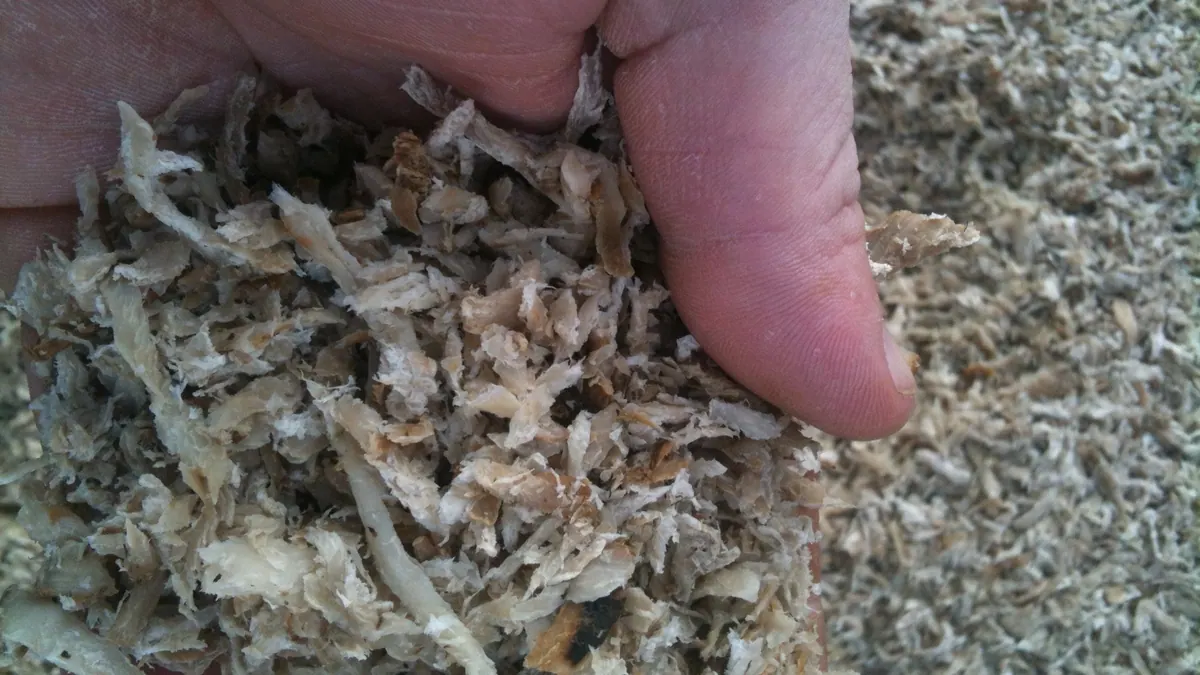
Sugar beet pulp — BMP: 2 studies, weighted mean 358 m³ CH₄/t VS
358 m³ CH₄/t VS weighted mean from 2 studies
good — editorial rating for biogas plants≈52 %
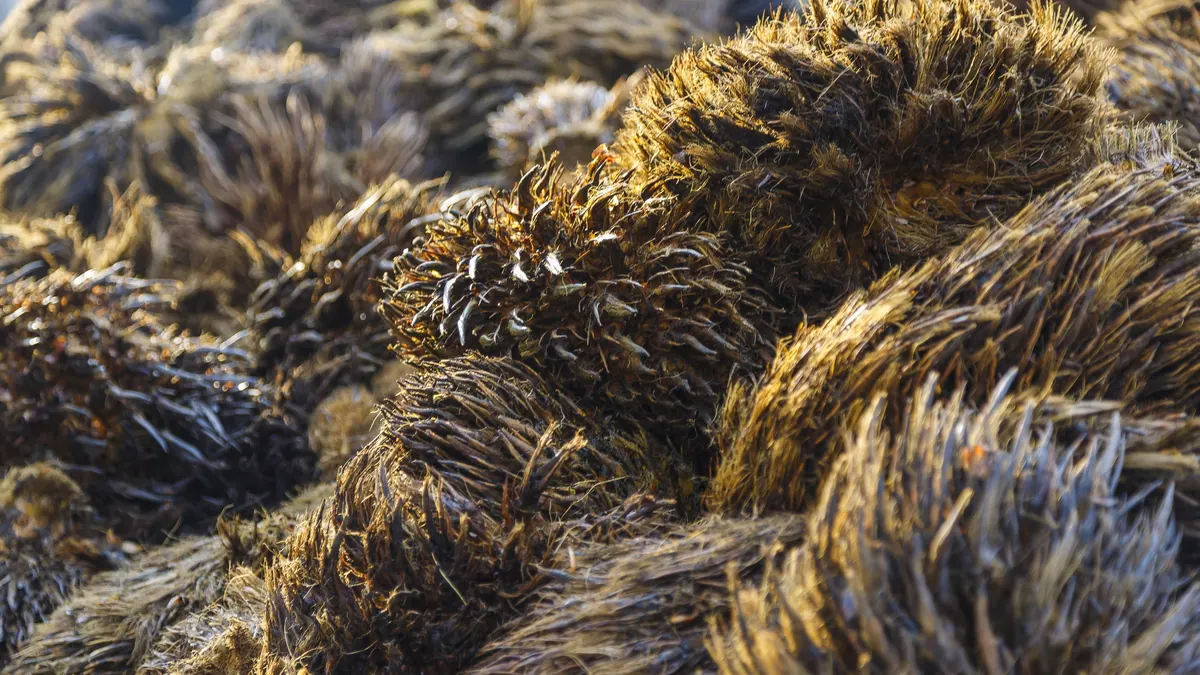
Oil palm empty fruit bunches — BMP: 2 studies, weighted mean 179 m³ CH₄/t VS
179 m³ CH₄/t VS weighted mean from 2 studies
≈52 %
Distillery stillage and vinasse — BMP: 5 studies, weighted mean 326 m³ CH₄/t VS
326 m³ CH₄/t VS weighted mean from 5 studies
neutral — editorial rating for biogas plants58 %
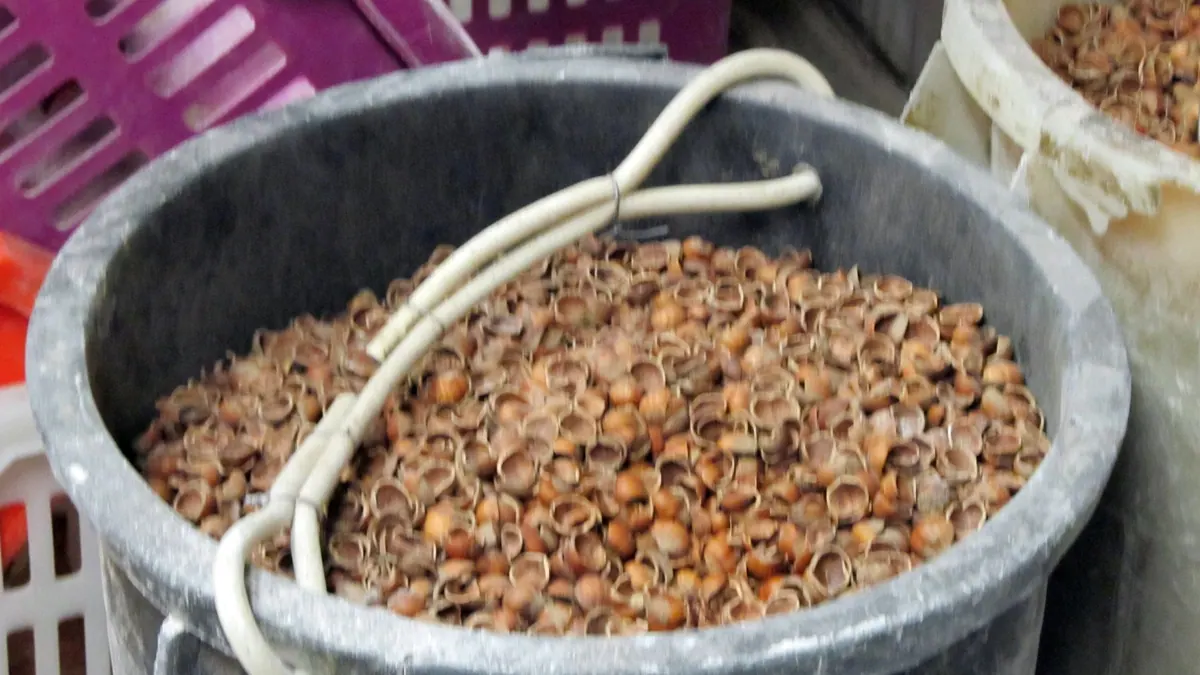
Hazelnut residues (shell, skin) — BMP: 2 studies, weighted mean 153 m³ CH₄/t VS
153 m³ CH₄/t VS weighted mean from 2 studies
neutral — editorial rating for biogas plants≈51 %