

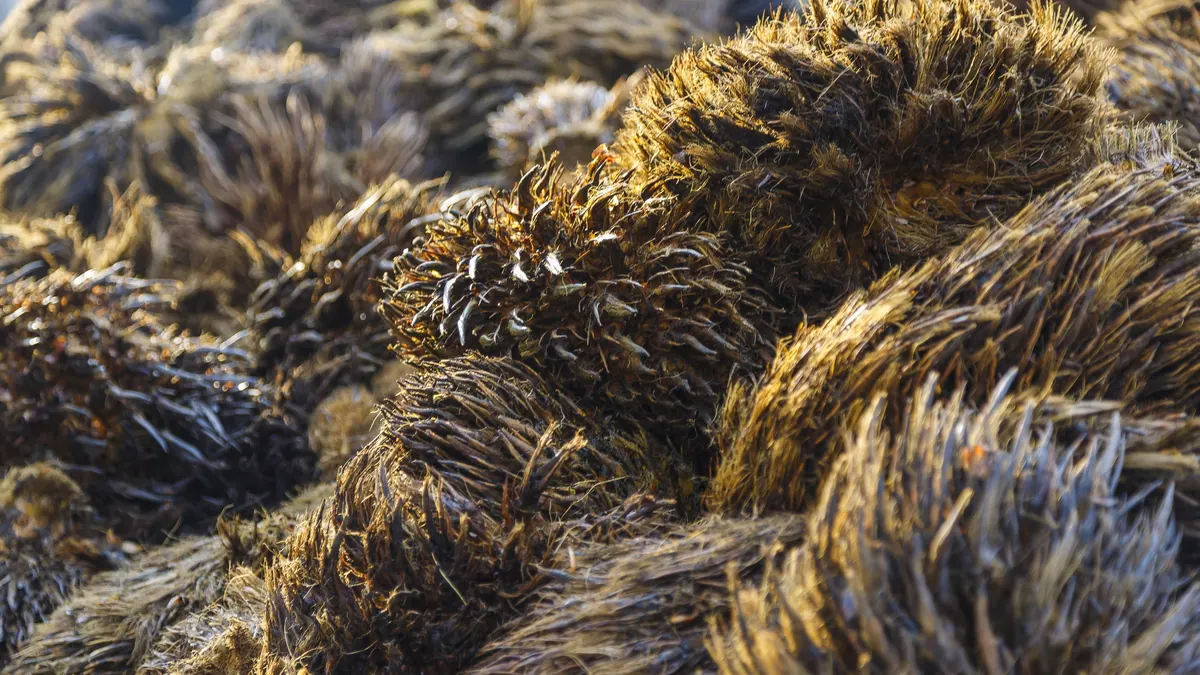
BMP testingBy-products of the agri-food industry
Oil palm empty fruit bunches — BMP: 2 studies, weighted mean 179 m³ CH₄/t VS
Oil palm empty fruit bunches (EFB) are a fibrous, lignin-rich waste of oil mills; digestion is slow and benefits from pretreatment.
Photo CEphoto, Uwe Aranas / Wikimedia Commons, licence CC BY-SA 3.0, source file; changes: cropping

- Weighted mean
- 179m³ CH₄/t VS
- Range
- 169–189m³ CH₄/t VS
- Records
- 2studies
- Publications
- 2sources
- Temperatures
- 40 °C, 55 °Cof the test
Methane in biogas
Medium methane content · ≈ 5.2 kWh/m³ of biogas
estimate from the substrate type The collected studies contain no measurement. The interval follows from the approximate composition (carbohydrate-dominated (no protein or fat characteristics)) and the yields of compound groups according to FNR.
Rating for biogas plants
not rated — editorial rating for biogas plants
Not rated: no dry matter or volatile solids in the data. We calculate the rating when the dry matter and volatile solids of the material are known.
Add to the co-digestion calculator CSV data
BMP curves from 2 studies
Weighted mean Individual records
Dashed lines are a model curve (first-order kinetics, B(t) = B₀·(1 − e−kt)); the end point comes from the publication. All curves are model curves.
Cumulative methane production over the test [m³ CH₄/t VS]. The thick line is the weighted mean of all records (179); dots mark the end values given in the publications. Point at the chart to read values; click a legend item to hide or show a record.
Records and sources
Download CSV| Source | BMP m³ CH₄/t VS | Temperature | Sample | Curve |
|---|---|---|---|---|
| Chanthong et al. (2024) DOI | 169 | 40 °C · mesophilic | raw empty fruit bunch (EFB) | end point (model curve) |
| Saelor et al. (2024) DOI | 189 | 55 °C · thermophilic | untreated oil palm empty fruit bunches (EFB), thermophilic | end point (model curve) |
| Weighted mean | 179 | arithmetic mean 179, SD 14 | ||
Process properties
Low confidence: the description is based on general characteristics of the substrate group, not on studies of this material. Treat it as a hint to be verified.
Advantages
- Methane potential in the Substraty.pl BMP set: weighted mean 179.2 m³ CH₄/t VS (SD 14.4; 2 records, 2 sources).
- Empty oil palm fruit bunches (EFB): a dry and durable material with no acidification risk, which does not load the system with VFA (Hendriks and Zeeman 2009).
Drawbacks and risks
- The fibrous structure clogs feeding (Poh and Chong 2009: EFB as solid mill waste).
Co-digestion — what to combine it with, what to watch out for
- combines well
substrates: high alkalinity (buffer) — e.g. Cattle manure, Pig slurry, Cattle slurry, Duck slurry, Rumen and digestive tract content
Slurry supplies N and alkalinity, balancing the high C/N of the material.[1][2]
- combines well
substrates: protein-rich — e.g. Food waste, Municipal sewage sludge (mixed), Poultry manure, Organic fraction of municipal solid waste, Grass clippings
The high C/N of the material balances protein substrates, limiting the ammonia risk.[1][3]
Dosing
No source limits on the dose for this substrate.
Introduce gradually, starting with a small dose and monitoring the process (e.g. FOS/TAC, pH, gas composition).
Practical requirements
- Shred: shredding increases the surface available for degradation and speeds it up, but does not necessarily raise the final gas yield (FNR 2010, Ch. 3 “Triturado”).
- Control floating crust and sediment: when solids are fed directly into the digester, the risk of their formation depends on the substrate (FNR 2010, Ch. 3).
Sources of the process data
- Hagos et al. (2017). Anaerobic co-digestion process for biogas production: progress, challenges and perspectives. Renew. Sustain. Energy Rev.
- Weiland (2010). Biogas production: current state and perspectives. Appl. Microbiol. Biotechnol.
- Rajagopal, Masse, Singh (2013). A critical review on inhibition of anaerobic digestion process by excess ammonia. Bioresour. Technol.
- Hendriks, Zeeman (2009). Pretreatments to enhance the digestibility of lignocellulosic biomass. Bioresour. Technol.
- FNR (2010). Guía sobre el Biogás – Desde la producción hasta el uso (hiszp. wydanie „Leitfaden Biogas”, GIZ 2013)
The co-digestion calculator will assess a specific mixture containing this substrate.
What it is and where it comes from
Empty fruit bunches (EFB) are the largest stream of solid biomass in palm oil mills. They arise after the fruit has been separated from the bunches, and their quantity is considerable in relation to the mass of fruit processed. They are burned, composted, used as mulch or used to produce solid fuels. There is no palm oil production in Poland, so the material is known mainly from the literature.
Properties relevant to digestion
EFB is a classic lignocellulosic material: it contains a lot of cellulose and hemicellulose and a high share of lignin, and at the same time relatively little soluble sugar and protein. The fibrous structure hinders access by enzymes, so hydrolysis is slow and the yield in a short test limited. The material contains a small amount of residual oil. A high C/N ratio requires the addition of nitrogen, for example from POME or manure. The risk of acidification is small, but clogging of feeding systems because of the fibrous structure is significant.
How to read the spread of results
The dataset contains several records from several sources: raw EFB at 40 °C and EFB without pretreatment under thermophilic conditions at 55 °C. The results are close to one another. Even so, differences in temperature, inoculum, size reduction and test duration may matter, because with lignocellulosic materials ending the test too early underestimates the result. The degree of maturity of the bunches and their moisture content also have an effect.
In biogas plant practice
EFB requires size reduction, and in industrial installations also pretreatment (steam, alkaline, biological), which increases the availability of cellulose. Dosing in a mixture with POME or manure stabilises the process. Competition from other uses, such as fuel or compost, affects profitability. For installations in Poland the material has no practical significance, but it is a good model for other lignocellulosic wastes.
Because of the large quantity of EFB in oil mills, the material is the subject of numerous studies on pretreatment. Results for raw EFB should therefore be treated as a reference point for assessing the extent to which pretreatment raises the yield relative to unprocessed material.
Methodology in brief
BMP is the amount of methane obtained from volatile solids (VS) in a batch test, given in m³ CH₄ per tonne of VS (numerically the same as NmL CH₄/g VS in the publications) and converted to normal conditions (0 °C, 101.325 kPa). The weighted mean gives each publication a total weight of 1, split equally between its results for the substrate — a paper testing twenty varieties does not outweigh a paper with a single sample. In inter-laboratory programmes the unit is the laboratory (total weight 1), and within it the weight of a test grows with the number of bottles (replicates). Results after pretreatment (e.g. thermal, chemical, enzymatic) are shown separately and are not included in the mean.
Solid lines are curves measured in the tests. Where a publication gives only the final result, we draw a first-order kinetic model, B(t) = B₀·(1 − e−kt): only the end point comes from the publication, and the shape of the curve serves purely as visualisation — do not read the production on a particular day from it. For this substrate k = 0.091 d−1 was assumed (no kinetic data for the group – the median of all available rate constants k (93 values) was used).
The statistics describe the spread of published results — a descriptive compilation, not a meta-analysis or a guarantee of plant yield.
Bibliography
- Chanthong, S.; Kongjan, P.; Jariyaboon, R.; O-Thong, S. (2024). Synergistic integration of hydrothermal pretreatment and co-digestion for enhanced biogas production from empty fruit bunches in high solids anaerobic digestion. Heliyon 10(15), e34817. DOI: 10.1016/j.heliyon.2024.e34817 DOI
- Saelor, S.; Kongjan, P.; Prasertsan, P.; Mamimin, C.; O-Thong, S. (2024). Enhancing thermophilic methane production from oil palm empty fruit bunches through various pretreatment methods: A comparative study. Heliyon 10(20), e39668. DOI: 10.1016/j.heliyon.2024.e39668 DOI
All sources of the site: bibliography.
Other substrates in the group “By-products of the agri-food industry”
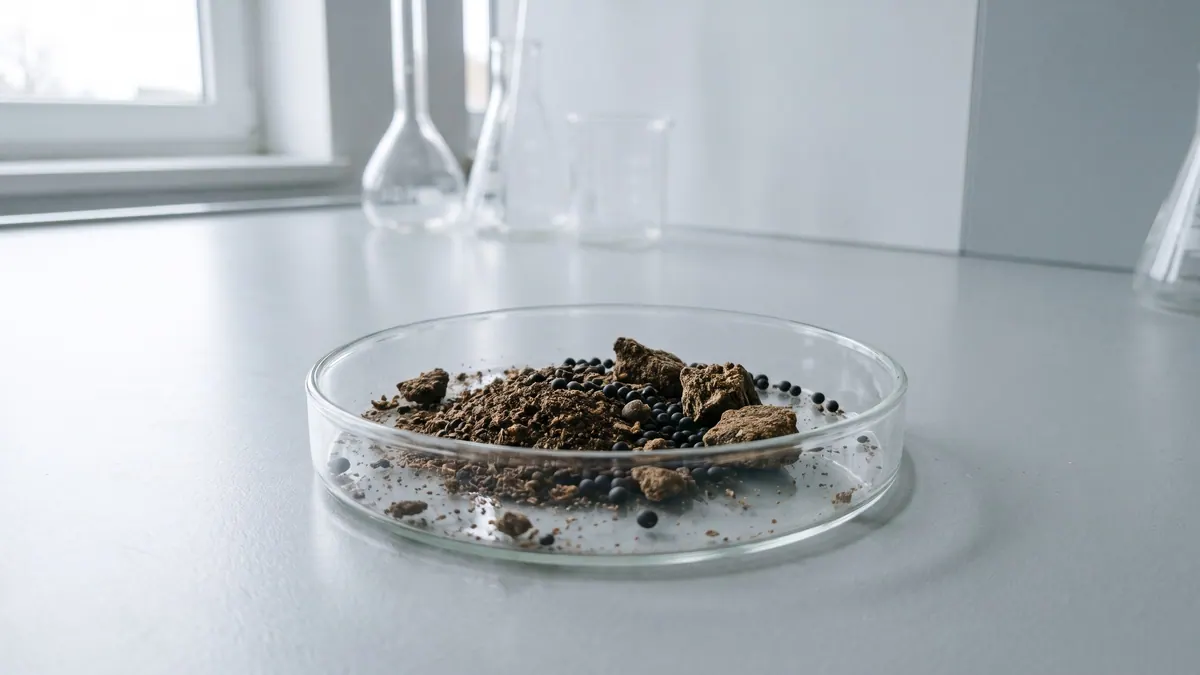
Rapeseed meal and cake — BMP: 2 studies, weighted mean 368 m³ CH₄/t VS
368 m³ CH₄/t VS weighted mean from 2 studies
≈66 %
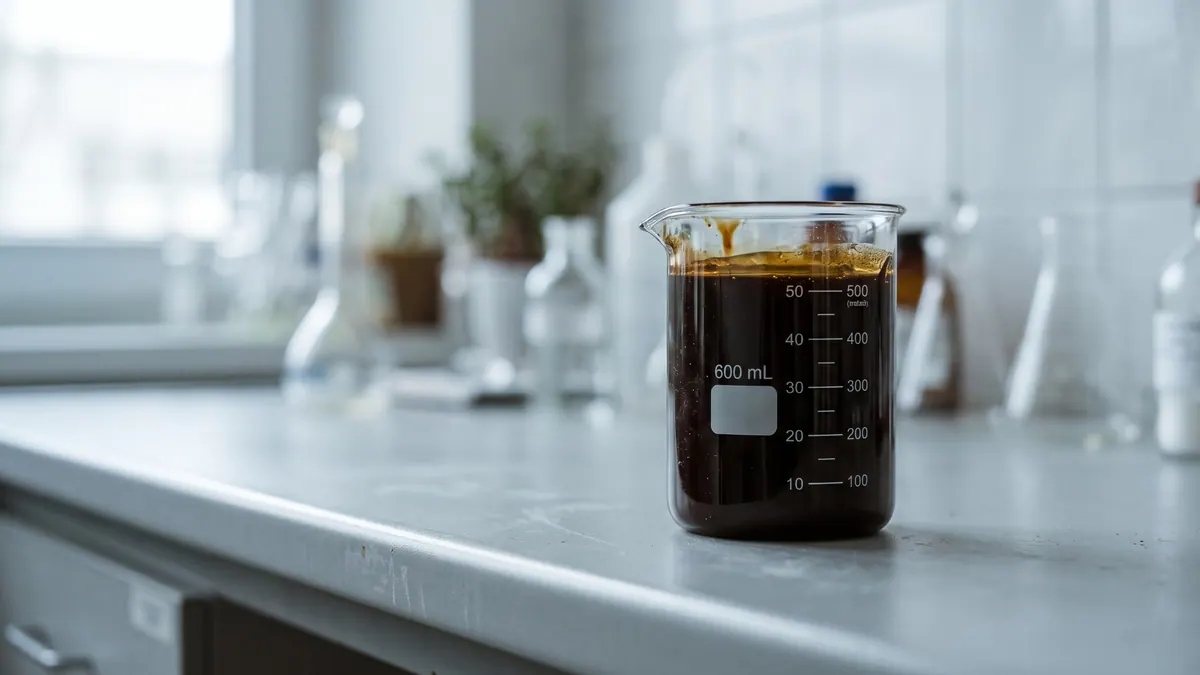
Glycerol refining residues (MONG, distillation residue) — BMP: 2 studies, weighted mean 406 m³ CH₄/t VS
406 m³ CH₄/t VS weighted mean from 2 studies
≈63 %
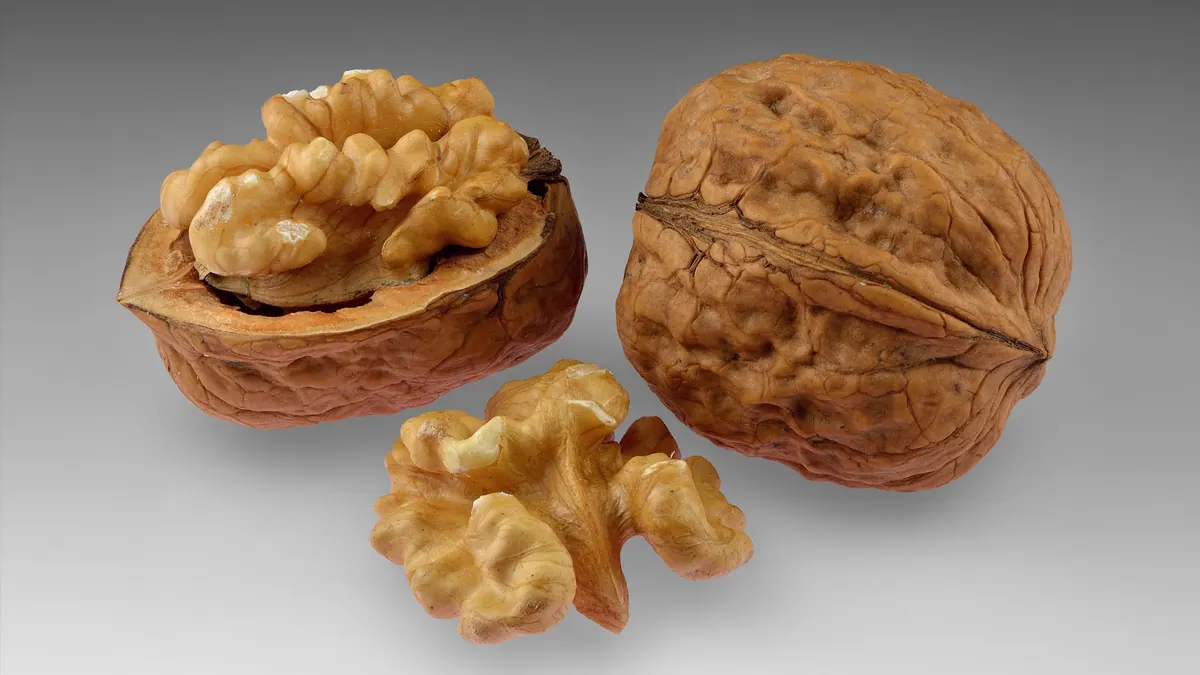
Walnut residues (shell, skin, green husk) — BMP: 3 studies, weighted mean 148 m³ CH₄/t VS
148 m³ CH₄/t VS weighted mean from 3 studies
neutral — editorial rating for biogas plants≈52 %
Coconut meal / oil cake — BMP: 3 studies, weighted mean 296 m³ CH₄/t VS
296 m³ CH₄/t VS weighted mean from 3 studies
≈66 %