

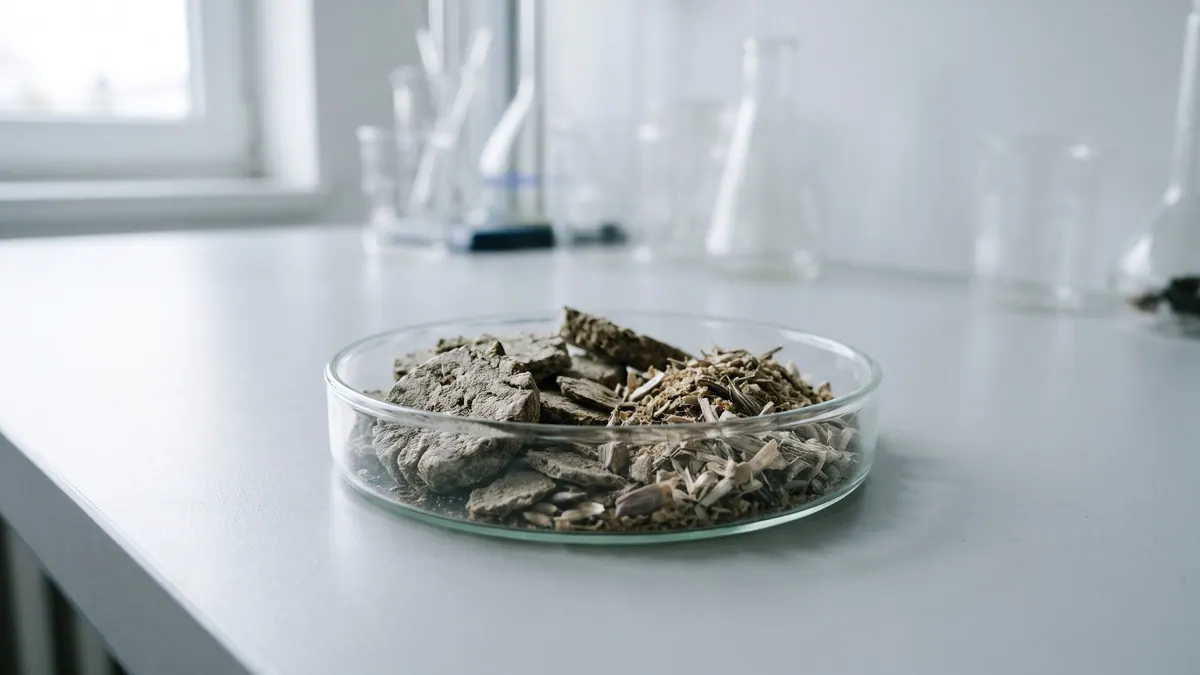
BMP testingBy-products of the agri-food industry
Sunflower oil cake and meal — BMP: 7 studies, weighted mean 184 m³ CH₄/t VS
Sunflower cake and meal are a by-product of oil pressing, rich in protein and in fibre from the husk; the yield depends on the residual oil and the share of husks.
rating: neutralCH₄ ≈ 64 % (estimate)
Illustration: FeedstockData (AI, Google Gemini)
- Weighted mean
- 184m³ CH₄/t VS
- Range
- 110–230m³ CH₄/t VS
- Records
- 7studies
- Publications
- 2sources
- Temperatures
- 35 °Cof the test
Methane in biogas
High methane content · ≈ 6.4 kWh/m³ of biogas
estimate from the substrate type The collected studies contain no measurement. The interval follows from the approximate composition (protein from total nitrogen (N 4.6 % DM × 6.25); fat-rich (process classification)) and the yields of compound groups according to FNR.
Rating for biogas plants
neutral — editorial rating for biogas plantsNo clear advantages — worth charging a fee for accepting it
Potential per tonne of fresh matter: moderate, but limited by the poor degradability of the organic matter (158 m³ CH₄/t); process risk: fats, protein / nitrogen. Handling costs: fibres, floating layer.
Why? Rating factors
Potential per tonne +1
- +1potential 158 m³ CH₄/t fresh matter (BMP 184 × DM 92 % × VS 93.4 %); low degradability of VS (BMP 184 m³ CH₄/t VS) — points capped
Process stability −1.5
- −1fats: risk of accumulation of long-chain fatty acids (LCFA), flotation and overloading
- −0.5protein / nitrogen: risk of ammonia inhibition at higher shares
Handling and costs −0.5
- −0.5fibres, floating layer — shredding and intensive mixing
Total points: −1 · thresholds: ≥ 2.5 very good, ≥ 1 good, below — neutral; negative with cumulative process risk.
Add to the co-digestion calculator CSV data
BMP curves from 7 studies
Weighted mean Individual records
Dashed lines are a model curve (first-order kinetics, B(t) = B₀·(1 − e−kt)); the end point comes from the publication. All curves are model curves.
Cumulative methane production over the test [m³ CH₄/t VS]. The thick line is the weighted mean of all records (184); dots mark the end values given in the publications. Point at the chart to read values; click a legend item to hide or show a record.
Records and sources
Download CSV| Source | BMP m³ CH₄/t VS | Temperature | Sample | Curve |
|---|---|---|---|---|
| Raposo et al. (2008) · 1 DOI | 110 | 35 °C · mesophilic | Sunflour Oil Cake (By-product) | end point (model curve) |
| Raposo et al. (2008) · 2 DOI | 150 | 35 °C · mesophilic | Sunflour Oil Cake (By-product) | end point (model curve) |
| Raposo et al. (2008) · 3 DOI | 160 | 35 °C · mesophilic | Sunflour Oil Cake (By-product) | end point (model curve) |
| Raposo et al. (2008) · 4 DOI | 170 | 35 °C · mesophilic | Sunflour Oil Cake (By-product) | end point (model curve) |
| Raposo et al. (2008) · 5 DOI | 200 | 35 °C · mesophilic | Sunflour Oil Cake (By-product) | end point (model curve) |
| Raposo et al. (2008) · 6 DOI | 230 | 35 °C · mesophilic | Sunflour Oil Cake (By-product) | end point (model curve) |
| Kouas et al. (2017) DOI | 197 | 35 °C · mesophilic | sunflower meal | end point (model curve) |
| Weighted mean | 184 | arithmetic mean 174, SD 39 | ||
Typical composition
- Dry matter (DM)
- 92% (range 92–92)
- Volatile solids (VS)
- 93.4 % DM (range 93.4–93.4)
- Nitrogen
- 4.6 % DM
- C/N ratio
- 9.5
Median and range of the determinations reported in the publications behind this substrate's BMP records (read from: CROPGEN D4); dry matter: 1 determination, volatile solids: 1 determination. Samples were tested dried/air-dry – the DM refers to the material in the test, not to fresh material.
Sources: Raposo et al. (2008).
The composition of the raw material varies between batches — for plant calculations use an analysis of your own sample. The calculator inserts typical values automatically.
Process properties
Advantages
- Methane potential in the Substraty.pl BMP dataset: weighted mean 183.5 m³ CH₄/t VS (SD 39.2; 7 records, 2 sources).
- Dry and stores well; protein and residual oil (De la Rubia et al. 2013).
Drawbacks and risks
- In mesophilic mono-digestion the methane yield fell significantly after the OLR was raised from 2 to 3 g VS/(L·d); in the two-stage system the methanogenic stage acidified already at an OLR of 2 (De la Rubia et al. 2013).
- Protein -> ammonia (Rajagopal et al. 2013).
Co-digestion — what to combine it with, what to watch out for
- combines well
substrates: high alkalinity (buffer) — e.g. Cattle manure, Pig slurry, Cattle slurry, Duck slurry, Rumen and digestive tract content
Slurry supplies N and alkalinity, balancing the high C/N of the material.[1][2]
Dosing
No source-based limit on the share in the mix. De la Rubia et al. (2013) studied mesophilic mono-digestion: the methane yield fell significantly after the OLR was raised from 2 to 3 g VS/(l·d), and in the two-stage system the methanogenic stage acidified (over 1600 mg acetic acid/l) already at an OLR of 2. This is the loading of an entire reactor fed solely with press cake (low digestibility), not a limit on the share of press cake in co-digestion, so max_share is not given. Start with a low share alongside slurry and monitor NH4-N and VFA.
Introduce gradually, starting with a small dose and monitoring the process (e.g. FOS/TAC, pH, gas composition).
Practical requirements
- Shred: shredding increases the surface available for degradation and speeds it up, but does not necessarily raise the final gas yield (FNR 2010, Ch. 3 “Triturado”).
Sources of the process data
- Hagos et al. (2017). Anaerobic co-digestion process for biogas production: progress, challenges and perspectives. Renew. Sustain. Energy Rev.
- Weiland, P. (2010) Biogas production: current state and perspectives. Applied Microbiology and Biotechnology
- De la Rubia et al. (2013). Anaerobic digestion of sunflower oil cake: a current overview. Water Sci. Technol.
- Rajagopal, Masse, Singh (2013). A critical review on inhibition of anaerobic digestion process by excess ammonia. Bioresour. Technol.
- FNR (2010). Guía sobre el Biogás – Desde la producción hasta el uso (hiszp. wydanie „Leitfaden Biogas”, GIZ 2013)
The co-digestion calculator will assess a specific mixture containing this substrate.
What it is and where it comes from
Sunflower cake is a by-product of pressing oil from sunflower seeds. If the oil is additionally extracted with a solvent, the residue is called extraction meal. The material is widely used as a protein feed, and in a biogas plant it is considered when it goes to waste or is cheaper than other feedstocks. In Poland sunflower oil production is developed, but the main route for managing the cakes is the feed industry.
Properties relevant to digestion
The composition depends on the technology: cold-pressed cake contains more fat, and extraction meal considerably less. Both forms contain protein, fibre from the husk (cellulose, lignin) and a small amount of sugars. The protein content means the C/N ratio is lower than in lignocellulosic materials, so at high doses the ammonia concentration may rise. A higher fat content raises the energy potential but increases the risk of LCFA. Sunflower husk is hard to degrade, and the material is dry and stores well.
How to read the spread of results
The dataset contains several records from several sources, all under mesophilic conditions. Some records come from studies in which the same cake was examined at different ratios of substrate to inoculum, which in itself changes the result. In addition, the residual oil content, the share of husk, the degree of comminution, the seed variety and the pressing technology have an effect. The result for cake and for meal should not be uncritically equated.
In biogas plant practice
The cake is relatively easy to handle, because it is dry and durable, but its dose must be limited because of ammonia and lipids. It combines well with slurry of low nitrogen content and with carbohydrate material, e.g. silage. Grinding improves availability. Because the cake has a feed value, its price is often a significant barrier to cost-effectiveness. As a by-product of the food industry, it is subject to the rules on by-products or on waste, depending on its status.
It is also good practice to check the husk content, because cake with added husks has more lignin and lower digestibility, while cake without husks is richer in protein; both the yield and the ammonia risk depend on this.
Methodology in brief
BMP is the amount of methane obtained from volatile solids (VS) in a batch test, given in m³ CH₄ per tonne of VS (numerically the same as NmL CH₄/g VS in the publications) and converted to normal conditions (0 °C, 101.325 kPa). The weighted mean gives each publication a total weight of 1, split equally between its results for the substrate — a paper testing twenty varieties does not outweigh a paper with a single sample. In inter-laboratory programmes the unit is the laboratory (total weight 1), and within it the weight of a test grows with the number of bottles (replicates). Results after pretreatment (e.g. thermal, chemical, enzymatic) are shown separately and are not included in the mean.
Solid lines are curves measured in the tests. Where a publication gives only the final result, we draw a first-order kinetic model, B(t) = B₀·(1 − e−kt): only the end point comes from the publication, and the shape of the curve serves purely as visualisation — do not read the production on a particular day from it. For this substrate k = 0.091 d−1 was assumed (no kinetic data for the group – the median of all available rate constants k (93 values) was used).
The statistics describe the spread of published results — a descriptive compilation, not a meta-analysis or a guarantee of plant yield.
Bibliography
- Raposo, F.; Borja, R.; Rincon, B.; Jimenez, A. (2008). Assessment of process control parameters in the biochemical methane potential of sunflower oil cake. Biomass and Bioenergy 32(12), 1235–1244. DOI: 10.1016/j.biombioe.2008.02.019 DOI
- Kouas, M.; Torrijos, M.; Sousbie, P.; Steyer, J.P.; Sayadi, S.; Harmand, J. (2017). Robust assessment of both biochemical methane potential and degradation kinetics of solid residues in successive batches. Waste Management 70, 59–70. DOI: 10.1016/j.wasman.2017.09.001 DOI
All sources of the site: bibliography.
Other substrates in the group “By-products of the agri-food industry”
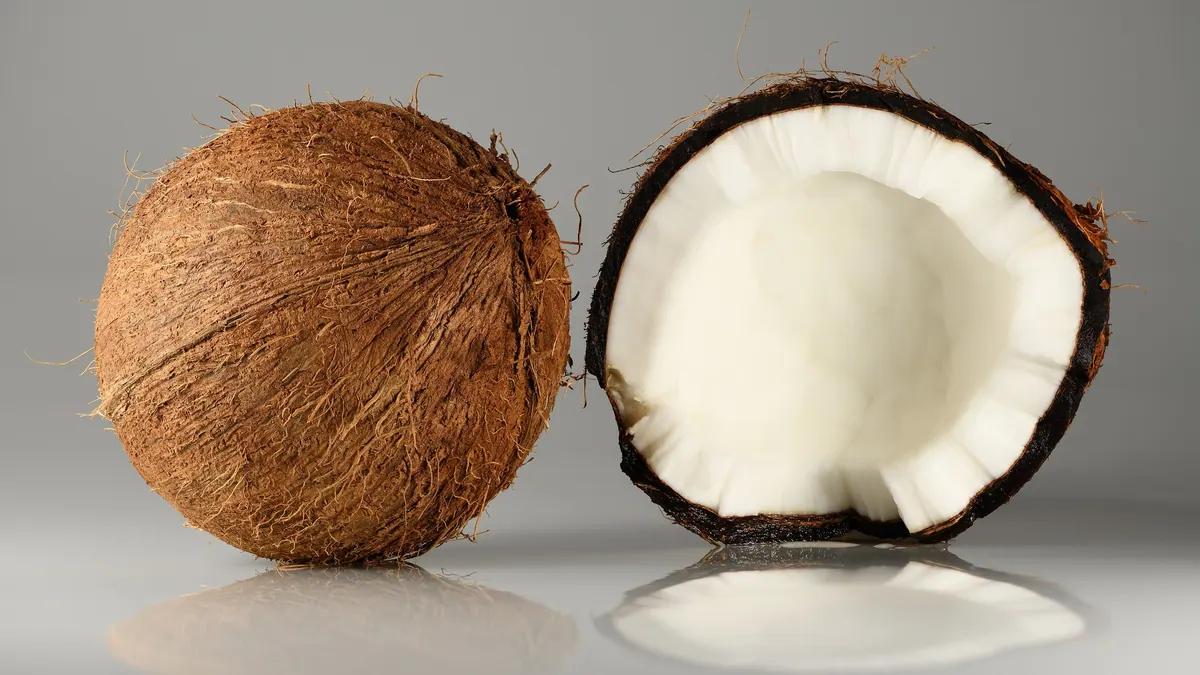
Coconut meal / oil cake — BMP: 3 studies, weighted mean 296 m³ CH₄/t VS
296 m³ CH₄/t VS weighted mean from 3 studies
≈66 %
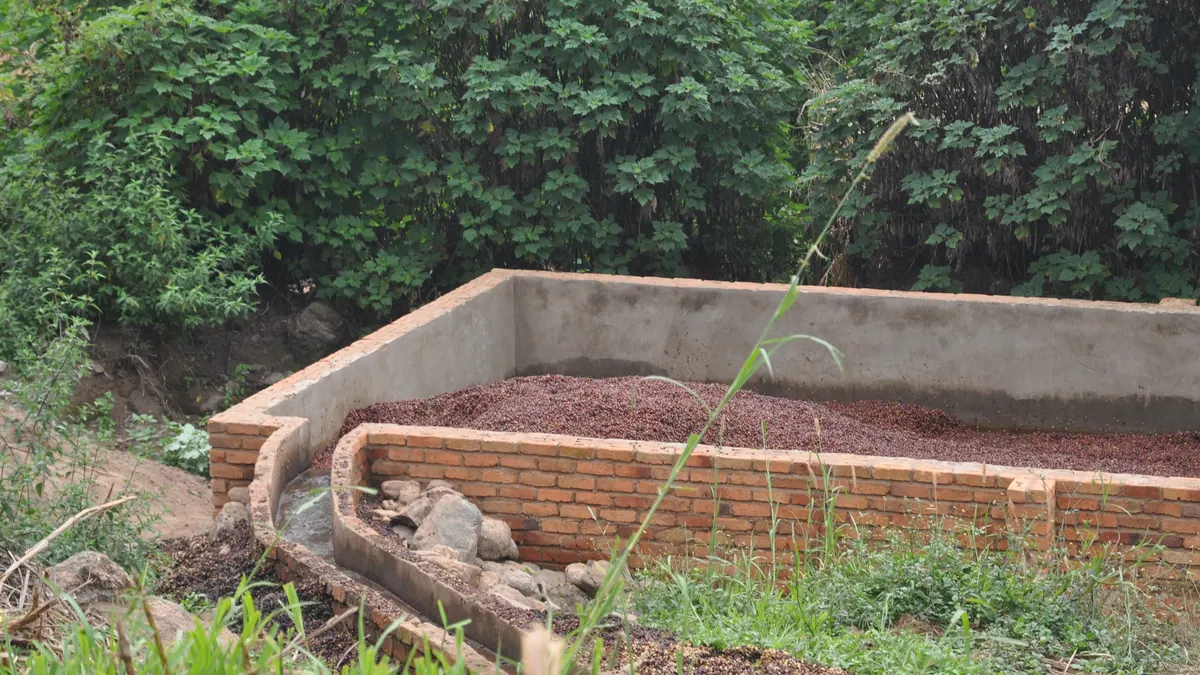
Coffee pulp — BMP: 3 studies, weighted mean 225 m³ CH₄/t VS
225 m³ CH₄/t VS weighted mean from 3 studies
≈52 %
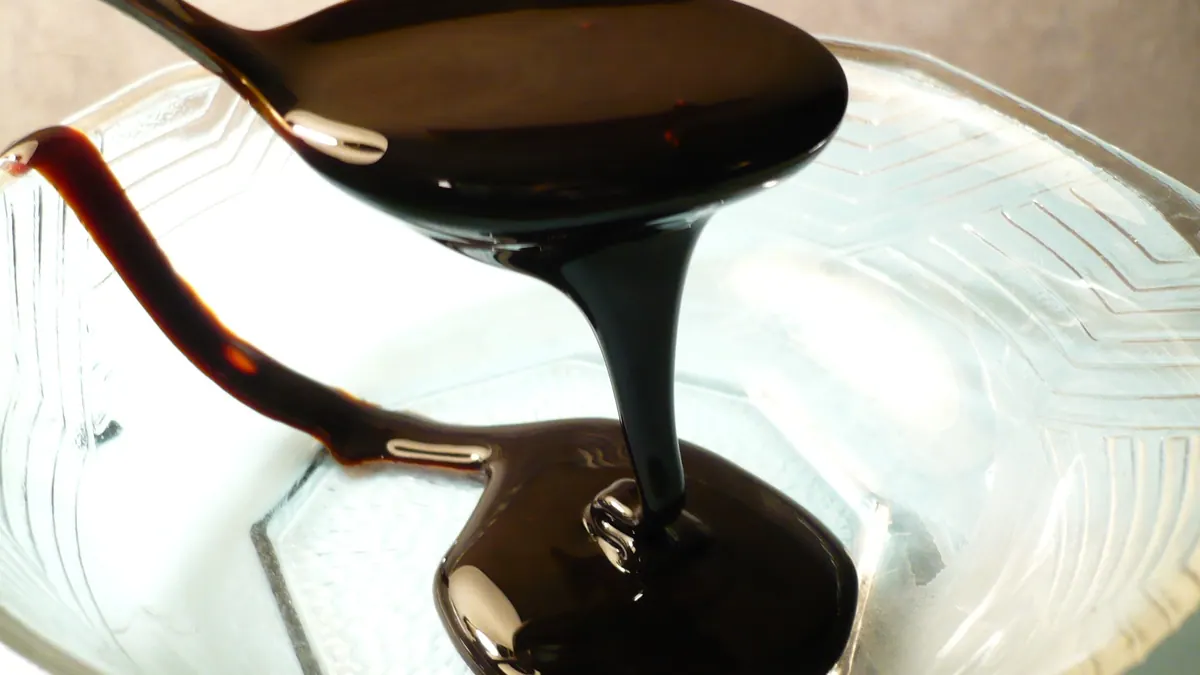
Molasses — BMP: 2 studies, weighted mean 410 m³ CH₄/t VS
410 m³ CH₄/t VS weighted mean from 2 studies
good — editorial rating for biogas plants≈52 %
Walnut residues (shell, skin, green husk) — BMP: 3 studies, weighted mean 148 m³ CH₄/t VS
148 m³ CH₄/t VS weighted mean from 3 studies
neutral — editorial rating for biogas plants≈52 %