

BMP testingBy-products of the agri-food industry
Molasses — BMP: 2 studies, weighted mean 410 m³ CH₄/t VS
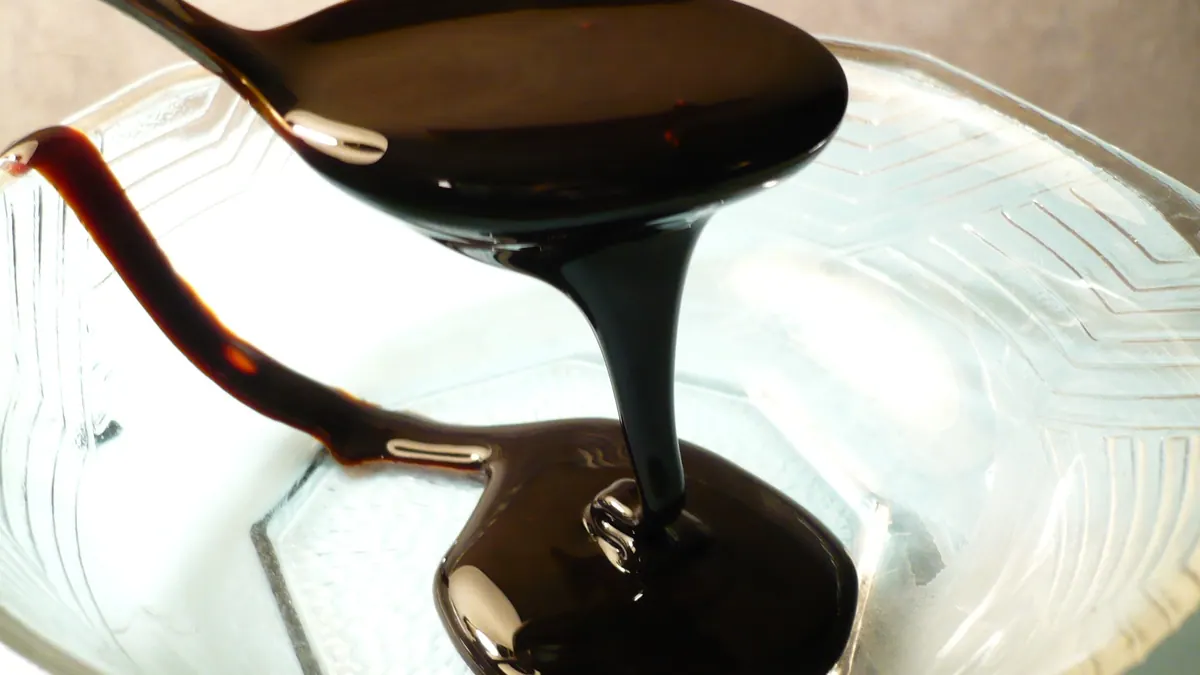
Molasses is a thick, sugar-rich by-product of sugar factories that ferments almost immediately; it threatens acidification and salinity, so it is dosed in small portions.
rating: goodCH₄ ≈ 52 % (estimate)
Photo Badagnani / Wikimedia Commons, licence CC BY 3.0, source file; changes: cropping

- Weighted mean
- 410m³ CH₄/t VS
- Range
- 363–457m³ CH₄/t VS
- Records
- 2studies
- Publications
- 2sources
- Temperatures
- 38 °Cof the test
Methane in biogas
Medium methane content · ≈ 5.2 kWh/m³ of biogas
estimate from the substrate type The collected studies contain no measurement. The interval follows from the approximate composition (carbohydrate-dominated (no protein or fat characteristics)) and the yields of compound groups according to FNR.
Rating for biogas plants
good — editorial rating for biogas plantsStable, usually accepted without a fee
Potential per tonne of fresh matter: very high (307 m³ CH₄/t); process risk: salt / sodium, acidification, sulphur. No additional handling requirements.
Why? Rating factors
Potential per tonne +3
- +3potential 307 m³ CH₄/t fresh matter (BMP 410 × composition per FNR (2013), Guía sobre el Biogás, Tabla 4.9: molasses (DM 85 %, VS 88 % DM))
Process stability −1.75
- −1salt / sodium: inhibition at high shares
- −0.5acidification: rapid degradation / acidic pH, risk of VFA accumulation, needs buffering
- −0.25sulphur: H₂S in the biogas (toxicity to bacteria, corrosion, desulphurisation)
Handling and costs 0
- 0no factors
Total points: 1.25 · thresholds: ≥ 2.5 very good, ≥ 1 good, below — neutral; negative with cumulative process risk.
Add to the co-digestion calculator CSV data
BMP curves from 2 studies
Weighted mean Individual records
Dashed lines are a model curve (first-order kinetics, B(t) = B₀·(1 − e−kt)); the end point comes from the publication. All curves are model curves.
Cumulative methane production over the test [m³ CH₄/t VS]. The thick line is the weighted mean of all records (410); dots mark the end values given in the publications. Point at the chart to read values; click a legend item to hide or show a record.
Records and sources
Download CSV| Source | BMP m³ CH₄/t VS | Temperature | Sample | Curve |
|---|---|---|---|---|
| De Vrieze et al. (2015) DOI | 363 | — | molasses | end point (model curve) |
| Dubrovskis et al. (2019) DOI | 457 | 38 °C · mesophilic | Molasses | end point (model curve) |
| Weighted mean | 410 | arithmetic mean 410, SD 66 | ||
Process properties
Low confidence: the description is based on general characteristics of the substrate group, not on studies of this material. Treat it as a hint to be verified.
Advantages
- Methane potential in the Substraty.pl BMP dataset: weighted mean 410.0 m³ CH₄/t VS (SD 66.5; 2 records, 2 sources).
- Very readily available sugars - rapid increase in biogas production (Hagos et al. 2017).
Drawbacks and risks
- Potassium and sodium in molasses promote salt inhibition (Chen et al. 2008).
- Sulphates -> sulphate reduction and H2S, competition with methanogens (Hilton and Archer 1988).
Co-digestion — what to combine it with, what to watch out for
- combines well
substrates: high alkalinity (buffer) — e.g. Cattle manure, Pig slurry, Cattle slurry, Duck slurry, Rumen and digestive tract content
Slurry supplies N and alkalinity, balancing the high C/N of the material.[1][2]
- avoid
substrates: easily degradable — e.g. Maize silage (whole crop), Food waste, Sorghum, whole crop, Whey, Beet leaves and tops
Molasses + whey/bread/sugars: overlapping acidification.[1]
Dosing
No source-based threshold. Dose in small portions, with slurry (buffer, N).
Introduce gradually, starting with a small dose and monitoring the process (e.g. FOS/TAC, pH, gas composition).
Sources of the process data
- Hagos et al. (2017). Anaerobic co-digestion process for biogas production: progress, challenges and perspectives. Renew. Sustain. Energy Rev.
- Weiland (2010). Biogas production: current state and perspectives. Appl. Microbiol. Biotechnol.
- Chen, Cheng, Creamer (2008). Inhibition of anaerobic digestion process: A review. Bioresour. Technol.
- Hilton, Archer (1988). Anaerobic digestion of a sulfate-rich molasses wastewater: inhibition of hydrogen sulfide production. Biotechnol. Bioeng.
The co-digestion calculator will assess a specific mixture containing this substrate.
What it is and where it comes from
Molasses is a dark, viscous syrup remaining after the crystallisation of sucrose in a sugar factory. In Poland it arises in the processing of sugar beet, and in other countries in the processing of sugar cane. It is a valued raw material for distilleries, yeast plants, citric acid production and feed, so in a biogas plant it occurs less often and usually under favourable price conditions or as an energy reserve for quickly raising gas production.
Properties relevant to digestion
Molasses contains a great deal of sugars (mainly sucrose), as well as betaine, amino acids, mineral salts (potassium, sodium), sulphates and colour compounds. The sugars are immediately available, so the risk is abrupt acidification at too large a dose, and the high content of potassium and sodium can cause salt inhibition. Sulphates favour sulphate-reducing bacteria, which compete with methanogens and produce hydrogen sulphide. The material is thick and viscous, requires heating or dilution for pumping, and tolerates storage in tanks well.
How to read the spread of results
The dataset contains several records from several sources, including an average from several different inocula from mesophilic biogas plants (35 days, Belgium) and a result from a project at 38 °C. Differences may result from the molasses feedstock (beet or cane), the production batch, the content of dry matter and salts, and from the inoculum and test length. For such an easily fermentable material, the substrate-to-inoculum ratio is very important.
In biogas plant practice
Molasses is used as a yield-boosting additive, in small portions well spread over time and with monitoring of pH and volatile acids. It combines well with slurry, which has buffering capacity. When planning, the salt and sulphate content and the efficiency of desulphurisation must be taken into account. Its market price is sometimes volatile, which determines cost-effectiveness. As a by-product of the sugar industry, its status depends on how it is managed.
An additional advantage of molasses is its durability: in a closed tank it can be stored for a long time, which allows it to be used as a reserve for quickly correcting the yield or restoring production after disturbances, provided the doses are small and controlled.
Methodology in brief
BMP is the amount of methane obtained from volatile solids (VS) in a batch test, given in m³ CH₄ per tonne of VS (numerically the same as NmL CH₄/g VS in the publications) and converted to normal conditions (0 °C, 101.325 kPa). The weighted mean gives each publication a total weight of 1, split equally between its results for the substrate — a paper testing twenty varieties does not outweigh a paper with a single sample. In inter-laboratory programmes the unit is the laboratory (total weight 1), and within it the weight of a test grows with the number of bottles (replicates). Results after pretreatment (e.g. thermal, chemical, enzymatic) are shown separately and are not included in the mean.
Solid lines are curves measured in the tests. Where a publication gives only the final result, we draw a first-order kinetic model, B(t) = B₀·(1 − e−kt): only the end point comes from the publication, and the shape of the curve serves purely as visualisation — do not read the production on a particular day from it. For this substrate k = 0.091 d−1 was assumed (no kinetic data for the group – the median of all available rate constants k (93 values) was used).
The statistics describe the spread of published results — a descriptive compilation, not a meta-analysis or a guarantee of plant yield.
Bibliography
- De Vrieze, J.; Raport, L.; Willems, B.; Verbrugge, S.; Volcke, E.; Meers, E.; Angenent, L.T.; Boon, N. (2015). Inoculum selection influences the biochemical methane potential of agro‐industrial substrates. Microbial Biotechnology 8(5), 776–786. DOI: 10.1111/1751-7915.12268 DOI
- Dubrovskis, V.; Plume, I.; Straume, I. (2019). Co-digestion of molasses with dry grain sweeps and birch leaves. Engineering for Rural Development. DOI: 10.22616/erdev2019.18.n114 DOI
All sources of the site: bibliography.
Other substrates in the group “By-products of the agri-food industry”
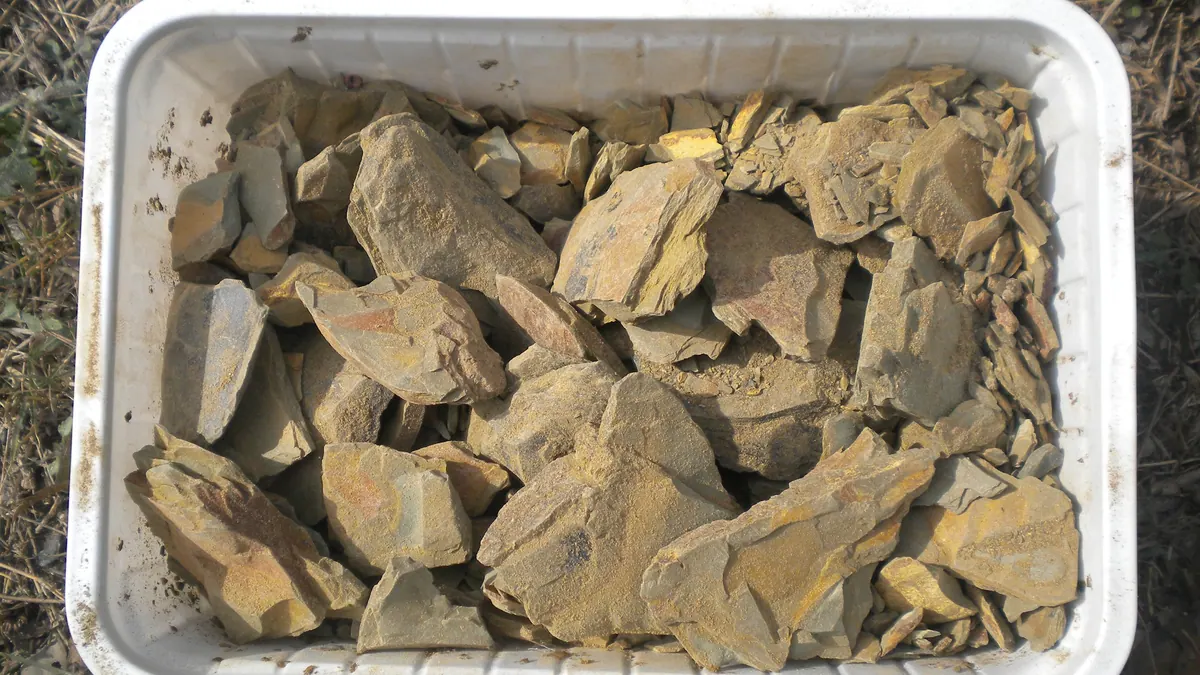
Oil refining residues (gums, condensates, spent earth) — BMP: 5 studies, weighted mean 714 m³ CH₄/t VS
714 m³ CH₄/t VS weighted mean from 5 studies
≈63 %
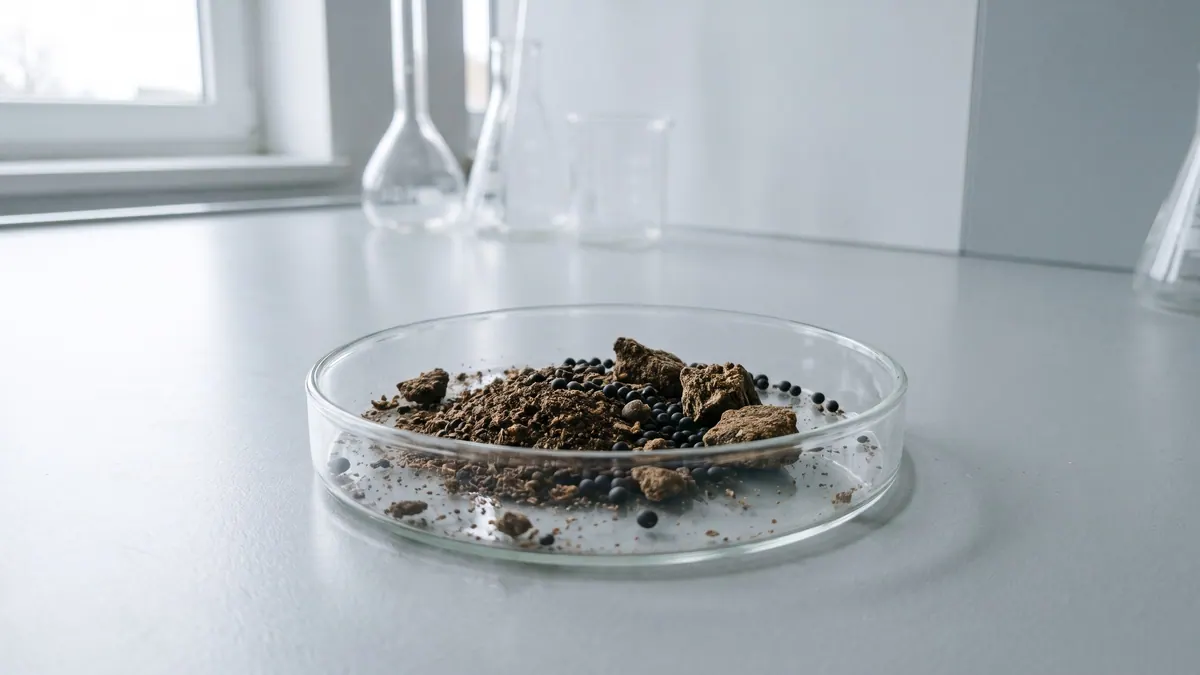
Rapeseed meal and cake — BMP: 2 studies, weighted mean 368 m³ CH₄/t VS
368 m³ CH₄/t VS weighted mean from 2 studies
≈66 %
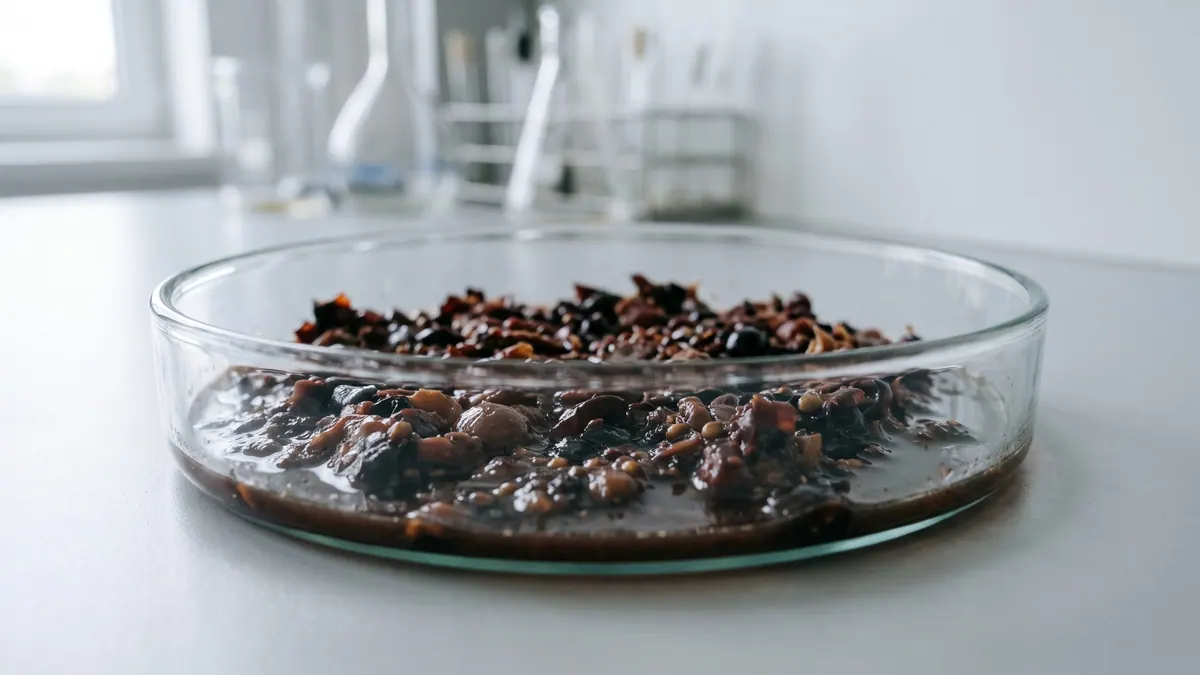
Vinegar residue — BMP: 2 studies, weighted mean 187 m³ CH₄/t VS
187 m³ CH₄/t VS weighted mean from 2 studies
≈52 %
Palm oil mill effluent (POME) — BMP: 2 studies, weighted mean 431 m³ CH₄/t VS
431 m³ CH₄/t VS weighted mean from 2 studies
≈63 %