

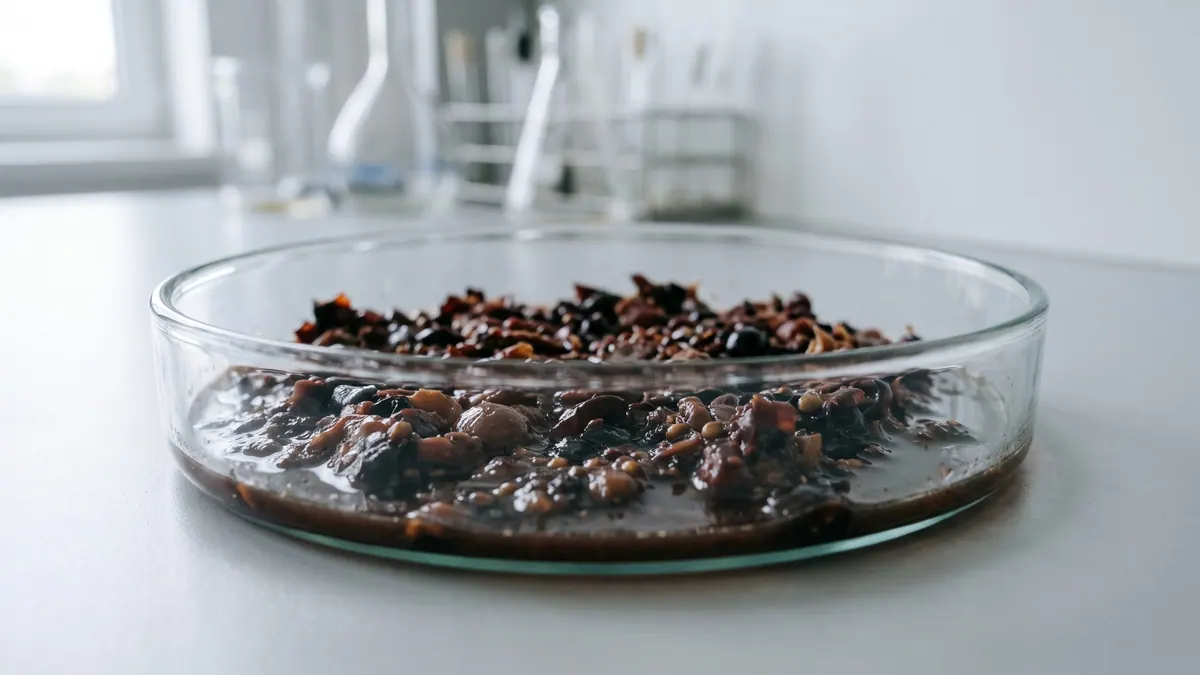
BMP testingBy-products of the agri-food industry
Vinegar residue — BMP: 2 studies, weighted mean 187 m³ CH₄/t VS
Residues from vinegar production (vinegar residue) are a lignocellulosic waste after acetic fermentation; records from several studies, both for raw material without pretreatment.
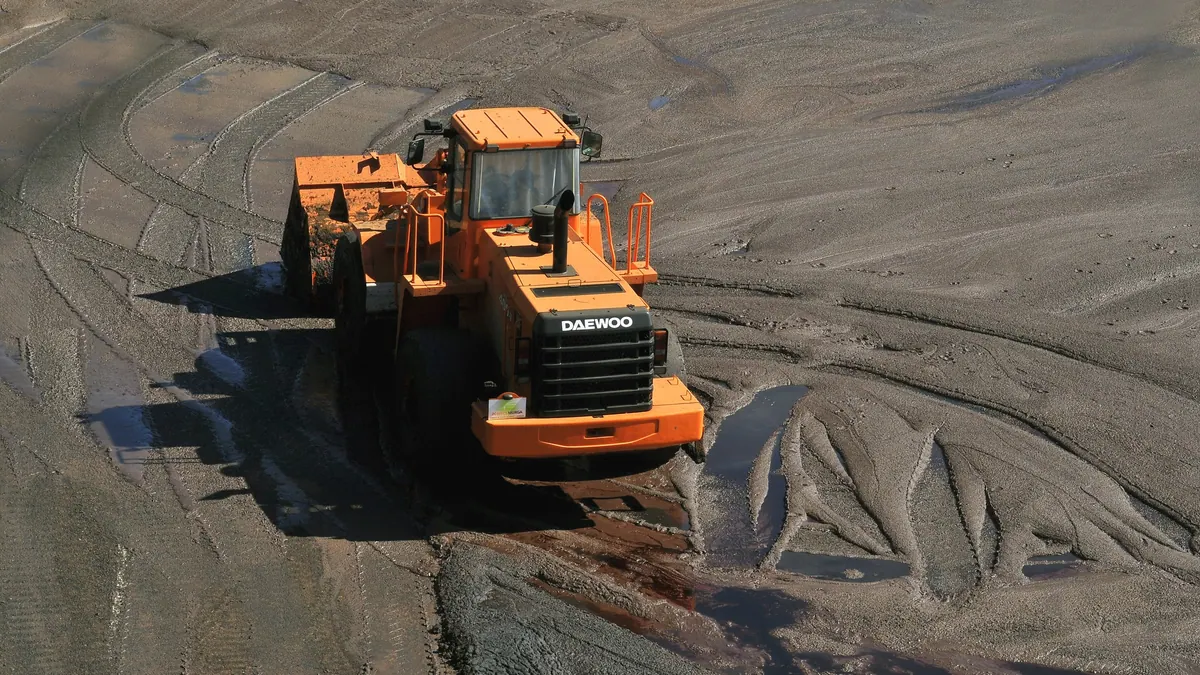
Illustration: FeedstockData (AI, Google Gemini)
- Weighted mean
- 187m³ CH₄/t VS
- Range
- 120–253m³ CH₄/t VS
- Records
- 2studies
- Publications
- 2sources
- Temperatures
- 37 °Cof the test
Methane in biogas
Medium methane content · ≈ 5.2 kWh/m³ of biogas
estimate from the substrate type The collected studies contain no measurement. The interval follows from the approximate composition (carbohydrate-dominated (no protein or fat characteristics)) and the yields of compound groups according to FNR.
Rating for biogas plants
not rated — editorial rating for biogas plants
Not rated: the dry matter in the data refers to a sample dried for the test, not to the material as delivered. We calculate the rating when the dry matter and volatile solids of the material are known.
Add to the co-digestion calculator CSV data
BMP curves from 2 studies
Weighted mean Individual records
Dashed lines are a model curve (first-order kinetics, B(t) = B₀·(1 − e−kt)); the end point comes from the publication. All curves are model curves.
Cumulative methane production over the test [m³ CH₄/t VS]. The thick line is the weighted mean of all records (187); dots mark the end values given in the publications. Point at the chart to read values; click a legend item to hide or show a record.
Records and sources
Download CSV| Source | BMP m³ CH₄/t VS | Temperature | Sample | Curve |
|---|---|---|---|---|
| Feng et al. (2016) DOI | 120 | — | Untreated vinegar residue | end point (model curve) |
| Li et al. (2013) DOI | 253 | 37 °C · mesophilic | Vinegar residue | end point (model curve) |
| Weighted mean | 187 | arithmetic mean 187, SD 94 | ||
Typical composition
- Dry matter (DM)
- 92.4% (range 92.4–92.4)
- Volatile solids (VS)
- 91.8 % DM (range 91.8–91.8)
Median and range of the determinations reported in the publications behind this substrate's BMP records (read from: MY-D); dry matter: 1 determination, volatile solids: 1 determination. Samples were tested dried/air-dry – the DM refers to the material in the test, not to fresh material.
Sources: Li et al. (2013).
The composition of the raw material varies between batches — for plant calculations use an analysis of your own sample. The calculator inserts typical values automatically.
Process properties
Low confidence: the description is based on general characteristics of the substrate group, not on studies of this material. Treat it as a hint to be verified.
Advantages
- Methane potential in the Substraty.pl BMP dataset: weighted mean 186.7 m³ CH₄/t VS (SD 93.8; 2 records, 2 sources).
- Contains residual organic acids, which may be a substrate for methanogenesis (Chen et al. 2008).
Drawbacks and risks
- Low pH, a large dose acidifies.
- The fibrous structure degrades slowly (Hendriks and Zeeman 2009).
Co-digestion — what to combine it with, what to watch out for
- combines well
substrates: high alkalinity (buffer) — e.g. Cattle manure, Pig slurry, Cattle slurry, Duck slurry, Rumen and digestive tract content
Slurry supplies N and alkalinity, balancing the high C/N of the material.[1][2]
Dosing
No source-based threshold; buffer (slurry).
Introduce gradually, starting with a small dose and monitoring the process (e.g. FOS/TAC, pH, gas composition).
Sources of the process data
- Hagos et al. (2017). Anaerobic co-digestion process for biogas production: progress, challenges and perspectives. Renew. Sustain. Energy Rev.
- Weiland, P. (2010) Biogas production: current state and perspectives. Applied Microbiology and Biotechnology
- Chen, Cheng, Creamer (2008). Inhibition of anaerobic digestion process: A review. Bioresour. Technol.
- Hendriks, Zeeman (2009). Pretreatments to enhance the digestibility of lignocellulosic biomass. Bioresour. Technol.
The co-digestion calculator will assess a specific mixture containing this substrate.
What it is and where it comes from
Vinegar residue arises in vinegar production by solid-state fermentation, popular especially in China. The substrate is cereals and bran, husks and additives, which after the process is completed remain as a wet residue, rich in microbial biomass and undigested fibre. In Poland vinegar is produced mainly by liquid methods, so such a waste does not occur in this form on a large scale. The dataset includes several records from several studies.
Properties relevant to digestion
The material is to a considerable extent lignocellulosic, because the plant walls of the substrate were only partly decomposed. It contains residues of organic acids (including acetic acid), which lower the pH and can be a substrate for methanogenesis, but at high concentration acidify the system. Salts and microbial biomass are also present. The fibrous structure needs time for hydrolysis, so pretreatment is often studied; such variants, however, are not part of this dataset.
How to read the spread of results
The records concern raw material, but come from different studies and plants, so the composition of the substrate (proportions of cereals, bran, husks) may differ. In one of the records, the temperature was not given in the compilation. Moisture, salt and acid content, comminution, inoculum and test length also have an effect. The result is not a characteristic of vinegar as such, but of a specific production process and recipe.
In biogas plant practice
In Poland vinegar residue is not a typical substrate. If such a material appears, its composition, acidity and salt content must be checked, and it should then be dosed gradually together with buffering substrates. Because of its industrial nature, the waste is subject to waste legislation, and its acceptance requires an appropriate permit. A BMP test on your own batch is essential for planning production.
Methodology in brief
BMP is the amount of methane obtained from volatile solids (VS) in a batch test, given in m³ CH₄ per tonne of VS (numerically the same as NmL CH₄/g VS in the publications) and converted to normal conditions (0 °C, 101.325 kPa). The weighted mean gives each publication a total weight of 1, split equally between its results for the substrate — a paper testing twenty varieties does not outweigh a paper with a single sample. In inter-laboratory programmes the unit is the laboratory (total weight 1), and within it the weight of a test grows with the number of bottles (replicates). Results after pretreatment (e.g. thermal, chemical, enzymatic) are shown separately and are not included in the mean.
Solid lines are curves measured in the tests. Where a publication gives only the final result, we draw a first-order kinetic model, B(t) = B₀·(1 − e−kt): only the end point comes from the publication, and the shape of the curve serves purely as visualisation — do not read the production on a particular day from it. For this substrate k = 0.091 d−1 was assumed (no kinetic data for the group – the median of all available rate constants k (93 values) was used).
The statistics describe the spread of published results — a descriptive compilation, not a meta-analysis or a guarantee of plant yield.
Bibliography
- Feng, J.; Zhang, J.; Zhang, J.; He, Y.; Zhang, R.; Liu, G.; Chen, C. (2016). Influence of steam explosion pretreatment on the anaerobic digestion of vinegar residue. Waste Management & Research: The Journal for a Sustainable Circular Economy 34(7), 630–637. DOI: 10.1177/0734242x16644681 DOI
- Li, Y.; Zhang, R.; Liu, G.; Chen, C.; He, Y.; Liu, X. (2013). Comparison of methane production potential, biodegradability, and kinetics of different organic substrates. Bioresource Technology 149, 565–569. DOI: 10.1016/j.biortech.2013.09.063 DOI
All sources of the site: bibliography.
Other substrates in the group “By-products of the agri-food industry”
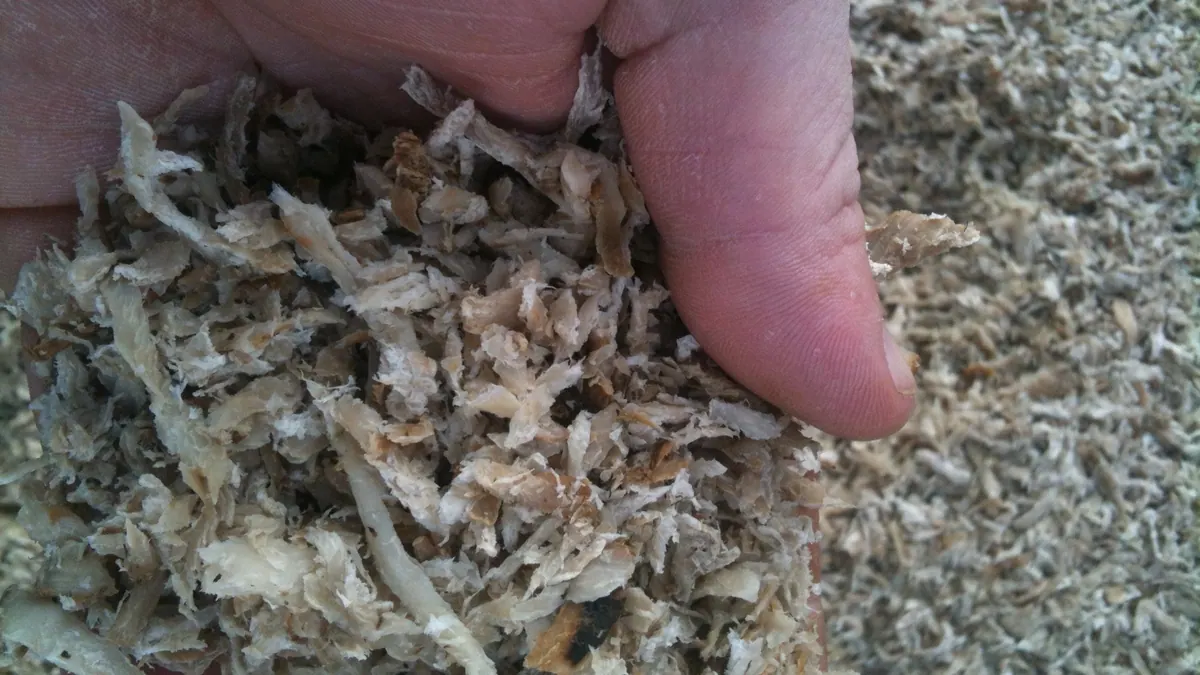
Sugar beet pulp — BMP: 2 studies, weighted mean 358 m³ CH₄/t VS
358 m³ CH₄/t VS weighted mean from 2 studies
good — editorial rating for biogas plants≈52 %
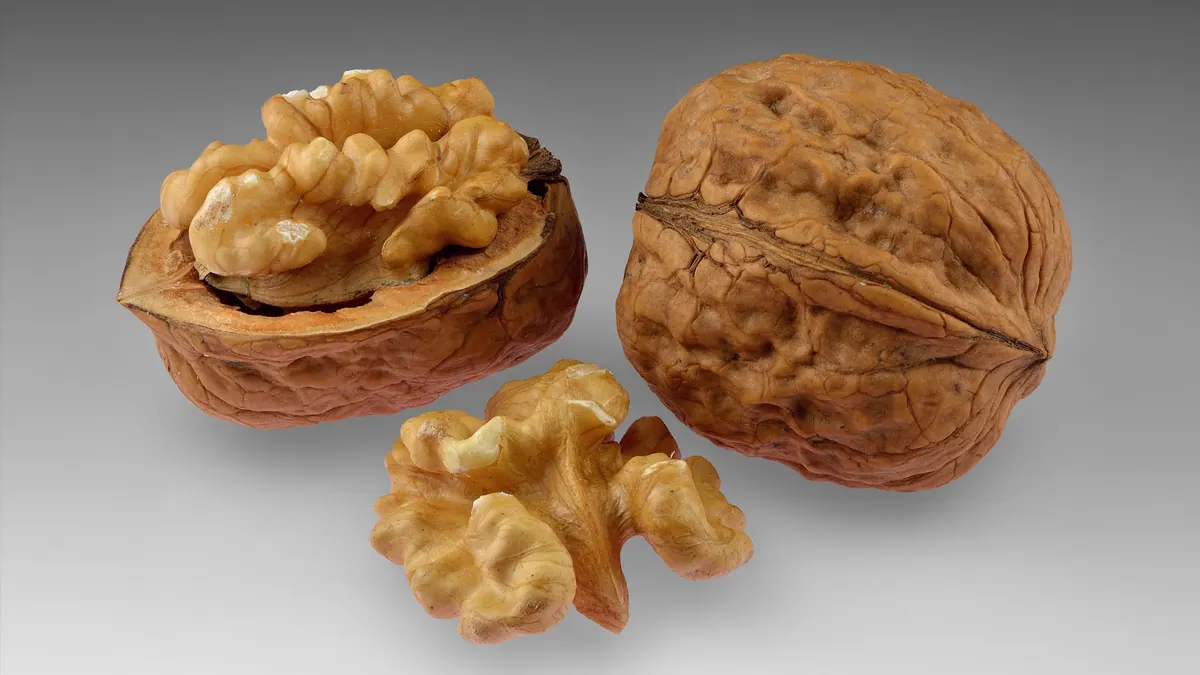
Walnut residues (shell, skin, green husk) — BMP: 3 studies, weighted mean 148 m³ CH₄/t VS
148 m³ CH₄/t VS weighted mean from 3 studies
neutral — editorial rating for biogas plants≈52 %
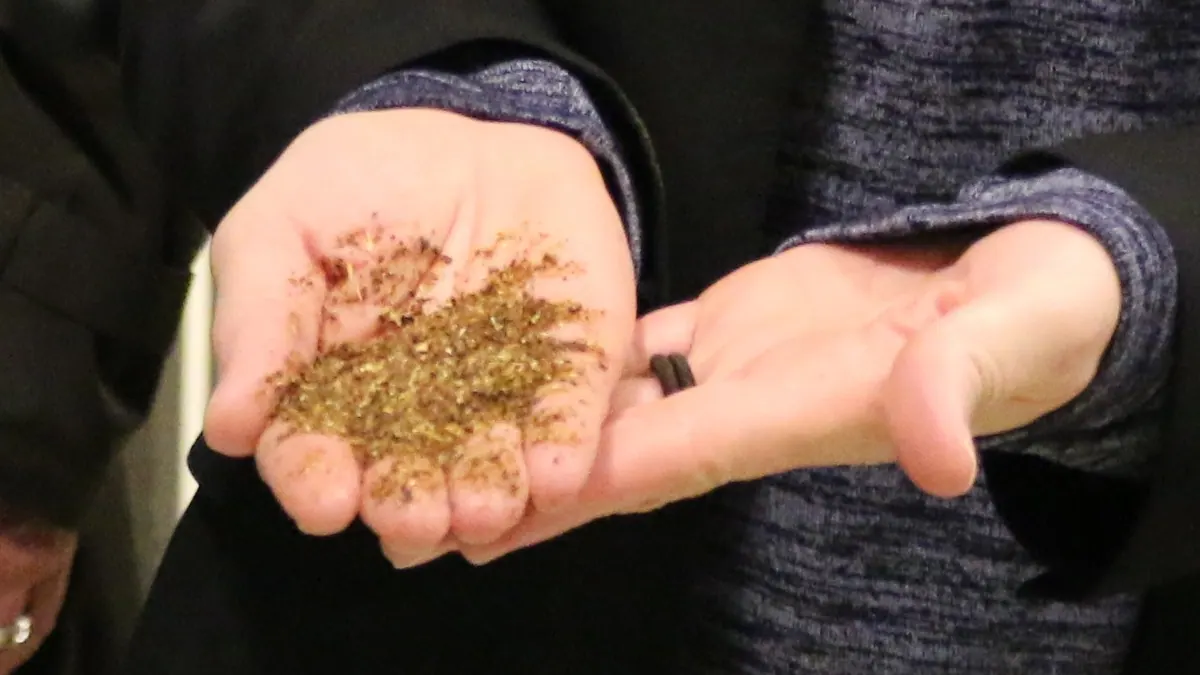
Distillery stillage and vinasse — BMP: 5 studies, weighted mean 326 m³ CH₄/t VS
326 m³ CH₄/t VS weighted mean from 5 studies
neutral — editorial rating for biogas plants58 %
Olive pomace / olive mill solid waste — BMP: 8 studies, weighted mean 266 m³ CH₄/t VS
266 m³ CH₄/t VS weighted mean from 8 studies
≈63 %