

BMP testingBy-products of the agri-food industry
Oil refining residues (gums, condensates, spent earth) — BMP: 5 studies, weighted mean 714 m³ CH₄/t VS
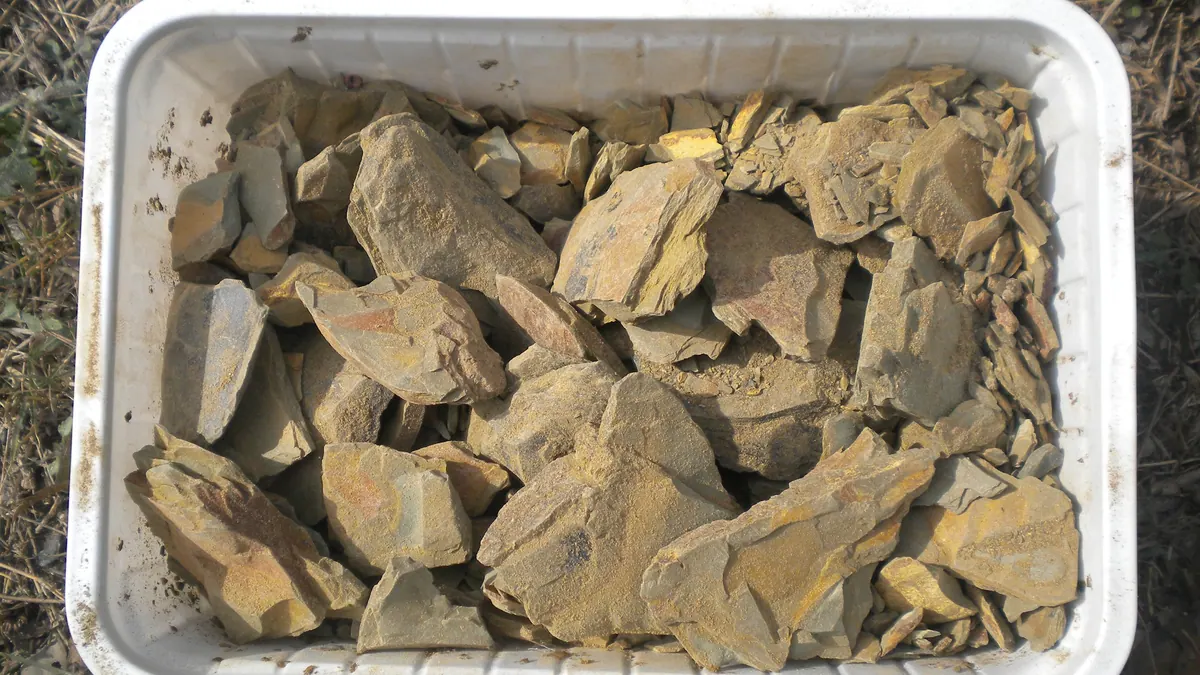
Oil refining residues (gums, condensates, bleaching earth) are concentrates of fats and lipids with a high gas potential and LCFA risk.
Photo Khalid Mahmood / Wikimedia Commons, licence CC BY-SA 3.0, source file; changes: cropping

- Weighted mean
- 714m³ CH₄/t VS
- Range
- 426–866m³ CH₄/t VS
- Records
- 5studies
- Publications
- 2sources
- Temperatures
- 35 °C, 38 °Cof the test
Methane in biogas
High methane content · ≈ 6.3 kWh/m³ of biogas
estimate from the substrate type The collected studies contain no measurement. The interval follows from the approximate composition (carbohydrate-dominated (no protein or fat characteristics); fat-rich (process classification)) and the yields of compound groups according to FNR.
Rating for biogas plants
not rated — editorial rating for biogas plants
Not rated: no dry matter or volatile solids in the data. We calculate the rating when the dry matter and volatile solids of the material are known.
Add to the co-digestion calculator CSV data
BMP curves from 5 studies
Weighted mean Individual records
Dashed lines are a model curve (first-order kinetics, B(t) = B₀·(1 − e−kt)); the end point comes from the publication. All curves are model curves.
Cumulative methane production over the test [m³ CH₄/t VS]. The thick line is the weighted mean of all records (714); dots mark the end values given in the publications. Point at the chart to read values; click a legend item to hide or show a record.
Records and sources
Download CSV| Source | BMP m³ CH₄/t VS | Temperature | Sample | Curve |
|---|---|---|---|---|
| Dubrovskis i Plume (2024) DOI | 814 | 38 °C · mesophilic | Rapeseed oil refining by-product | end point (model curve) |
| Kouas et al. (2017) · 1 DOI | 426 | 35 °C · mesophilic | condensate (sunflower oil) | end point (model curve) |
| Kouas et al. (2017) · 2 DOI | 504 | 35 °C · mesophilic | condensate (palm oil) | end point (model curve) |
| Kouas et al. (2017) · 3 DOI | 664 | 35 °C · mesophilic | oil | end point (model curve) |
| Kouas et al. (2017) · 4 DOI | 866 | 35 °C · mesophilic | gum | end point (model curve) |
| Weighted mean | 714 | arithmetic mean 655, SD 190 | ||
Process properties
Low confidence: the description is based on general characteristics of the substrate group, not on studies of this material. Treat it as a hint to be verified.
Advantages
- Methane potential in the Substraty.pl BMP dataset: weighted mean 714.5 m³ CH₄/t VS (SD 190.5; 5 records, 2 sources).
- A lipid concentrate of high potential (Long et al. 2012).
Drawbacks and risks
- Free LCFA inhibit methanogenesis and cause flotation (Long et al. 2012; Elsamadony et al. 2021).
- Low N content requires a slurry base.
Co-digestion — what to combine it with, what to watch out for
- combines well
substrates: high alkalinity (buffer) — e.g. Cattle manure, Pig slurry, Cattle slurry, Duck slurry, Rumen and digestive tract content
Slurry supplies N and alkalinity, balancing the high C/N of the material.[1][2]
- avoid
substrates: fat-rich — e.g. Food waste, Spent coffee grounds, Primary sludge, Sunflower seeds, Olive pomace / olive mill solid waste
Dosing
No source-based threshold; apply the shared lipid limit, start low.
Introduce gradually, starting with a small dose and monitoring the process (e.g. FOS/TAC, pH, gas composition).
Sources of the process data
- Hagos et al. (2017). Anaerobic co-digestion process for biogas production: progress, challenges and perspectives. Renew. Sustain. Energy Rev.
- Weiland, P. (2010) Biogas production: current state and perspectives. Applied Microbiology and Biotechnology
- Long et al. (2012). Anaerobic co-digestion of fat, oil, and grease (FOG): A review of gas production and process limitations. Process Saf. Environ. Prot.
- Elsamadony et al. (2021). Advances towards understanding long chain fatty acids-induced inhibition and overcoming strategies for efficient anaerobic digestion process. Water Res.
- Pitk et al. (2014). Mesophilic co-digestion of dairy manure and lipid rich solid slaughterhouse wastes. Bioresour. Technol.
The co-digestion calculator will assess a specific mixture containing this substrate.
What it is and where it comes from
The refining of vegetable oils consists in removing impurities and undesirable components from crude oil. The successive stages generate wastes: gums (degumming, rich in phospholipids), deodorisation condensates (free fatty acids and volatile compounds), and spent bleaching and filtration earth, on which oil is deposited. In Poland rapeseed and sunflower oil refineries are significant, and the materials described here include sunflower and palm oil condensates and earth from the winterisation of sunflower oil.
Properties relevant to digestion
The main components are lipids in various forms: phospholipids in gums, free fatty acids in condensates, and oil adsorbed in earth. Such wastes have a very high energy potential, because fats give more methane per unit of dry matter than carbohydrates. At the same time free long-chain fatty acids are inhibitors of methanogenesis and cause foaming and flotation of biomass. Bleaching earth additionally contains mineral components which do not ferment. The low nitrogen content requires combining with slurry or protein-rich material.
How to read the spread of results
The dataset contains several records from a small number of sources, mainly one study, so independent verification is limited. They describe different materials: condensates, earth and gums, which have different compositions, so the variability stems more from the type of waste than from measurement error. The result is also affected by the type of oil (sunflower, palm, rapeseed), the degree of refining, the share of adsorbed fat in the earth, size reduction, the inoculum and the adaptation of the microflora to lipids.
In biogas plant practice
Refining wastes are used at a limited share, dosed gradually and evenly to avoid lipid shock. Combining with slurry and constant monitoring of volatile acids and gas production are recommended. Fatty materials may require heating for pumping. Waste from the food industry is waste, so its acceptance requires appropriate authorisations. Spent earth has limited use because of its mineral content.
It should be noted that the internal diversity of this group is so great that an average for it has limited practical value; in planning the dose, the analysis of the specific batch should be relied on, especially its fatty acid and water content.
Methodology in brief
BMP is the amount of methane obtained from volatile solids (VS) in a batch test, given in m³ CH₄ per tonne of VS (numerically the same as NmL CH₄/g VS in the publications) and converted to normal conditions (0 °C, 101.325 kPa). The weighted mean gives each publication a total weight of 1, split equally between its results for the substrate — a paper testing twenty varieties does not outweigh a paper with a single sample. In inter-laboratory programmes the unit is the laboratory (total weight 1), and within it the weight of a test grows with the number of bottles (replicates). Results after pretreatment (e.g. thermal, chemical, enzymatic) are shown separately and are not included in the mean.
Solid lines are curves measured in the tests. Where a publication gives only the final result, we draw a first-order kinetic model, B(t) = B₀·(1 − e−kt): only the end point comes from the publication, and the shape of the curve serves purely as visualisation — do not read the production on a particular day from it. For this substrate k = 0.091 d−1 was assumed (no kinetic data for the group – the median of all available rate constants k (93 values) was used).
The statistics describe the spread of published results — a descriptive compilation, not a meta-analysis or a guarantee of plant yield.
Bibliography
- Dubrovskis, V.; Plume, I. (2024). Biogas potential from biodiesel production residues. Engineering for Rural Development 23. DOI: 10.22616/erdev.2024.23.tf104 DOI
- Kouas, M.; Torrijos, M.; Sousbie, P.; Steyer, J.P.; Sayadi, S.; Harmand, J. (2017). Robust assessment of both biochemical methane potential and degradation kinetics of solid residues in successive batches. Waste Management 70, 59–70. DOI: 10.1016/j.wasman.2017.09.001 DOI
All sources of the site: bibliography.
Other substrates in the group “By-products of the agri-food industry”
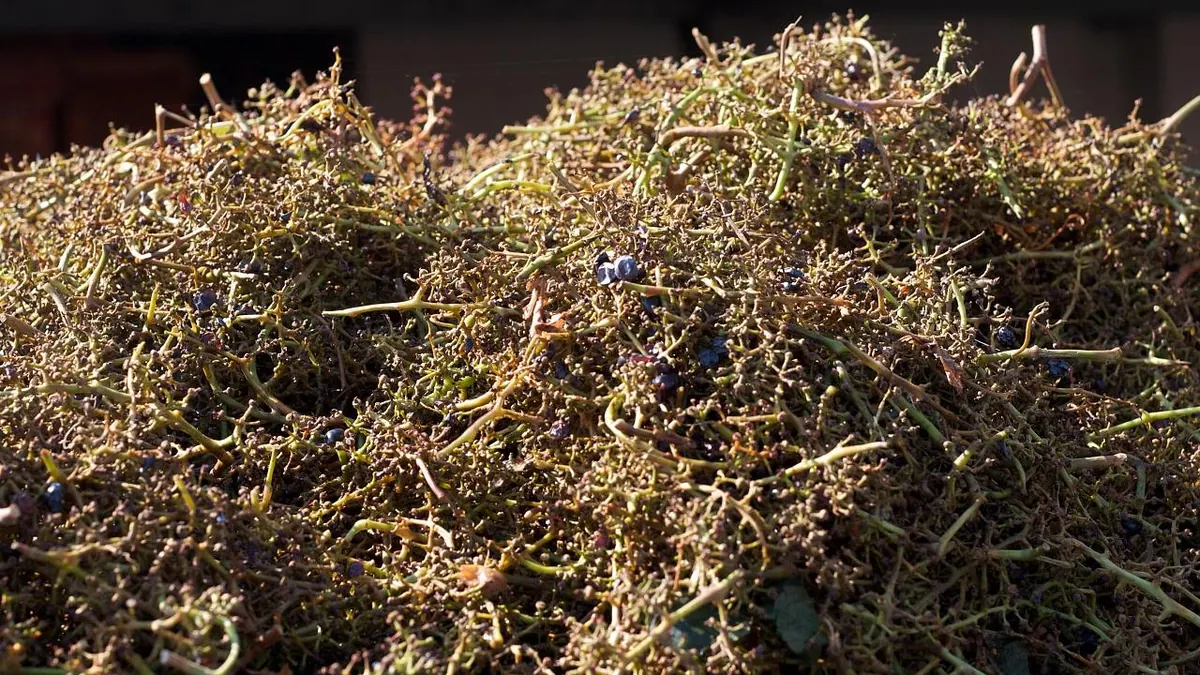
Grape stalks — BMP: 3 studies, weighted mean 137 m³ CH₄/t VS
137 m³ CH₄/t VS weighted mean from 3 studies
≈53 %

Soapstock — BMP: 3 studies, weighted mean 516 m³ CH₄/t VS
516 m³ CH₄/t VS weighted mean from 3 studies
≈63 %
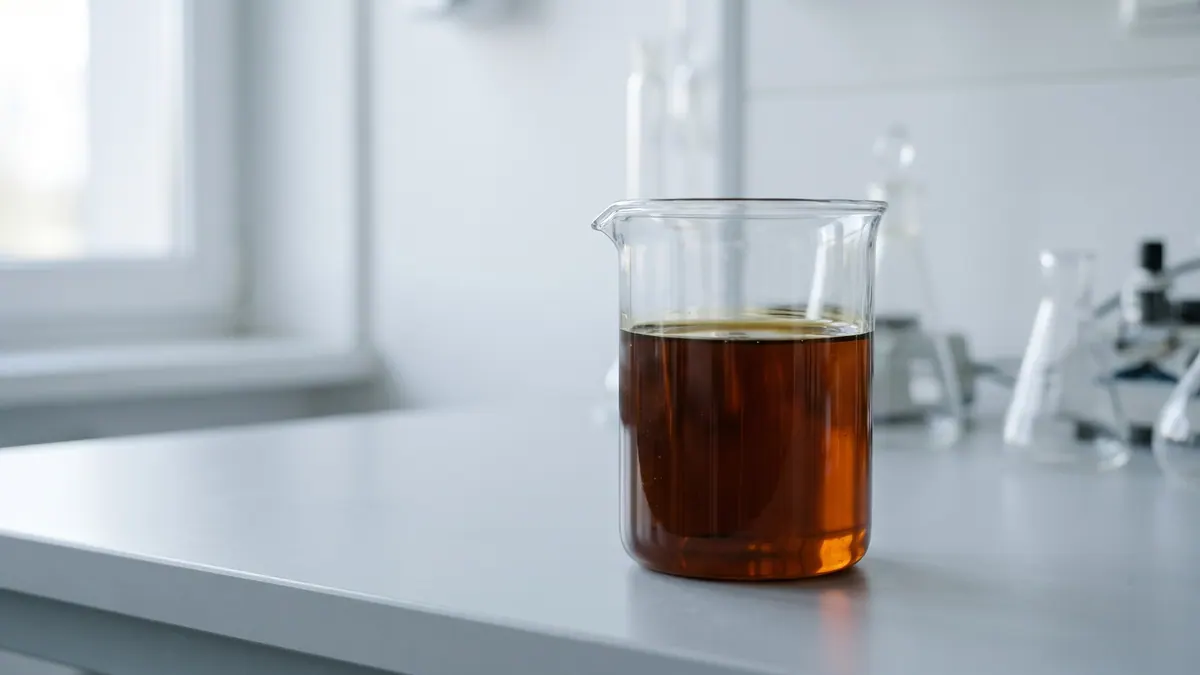
Crude glycerol — BMP: 2 studies, weighted mean 426 m³ CH₄/t VS
426 m³ CH₄/t VS weighted mean from 2 studies
good — editorial rating for biogas plants≈52 %
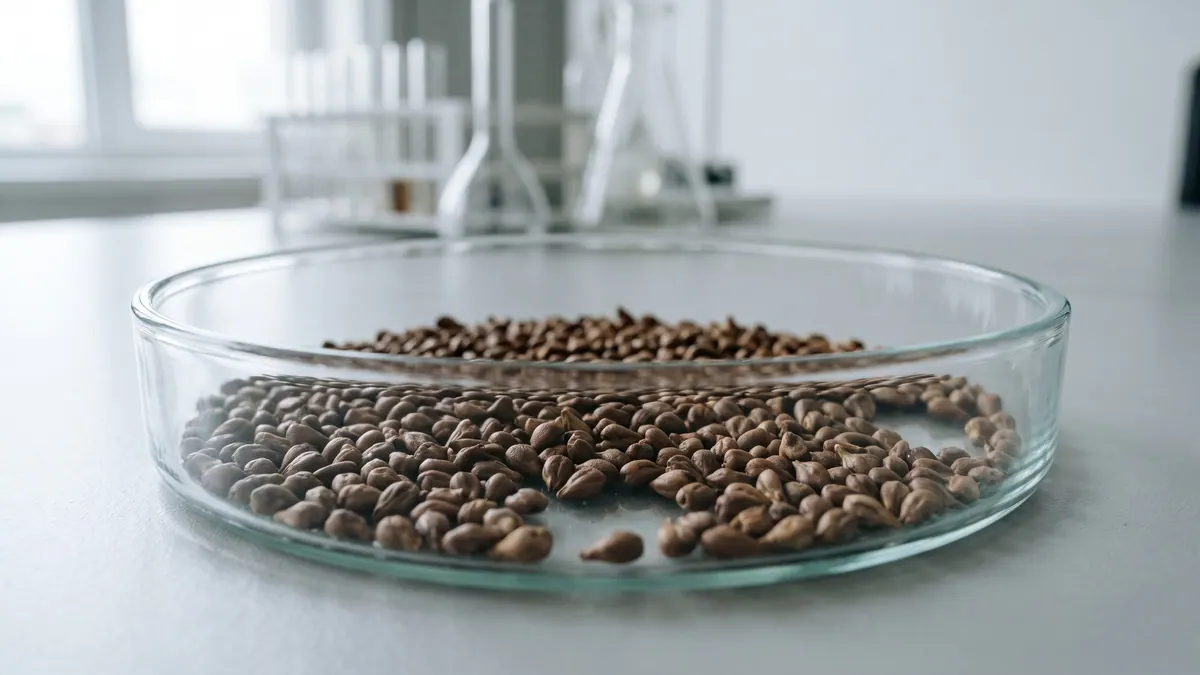
Grape seeds — BMP: 2 studies, weighted mean 214 m³ CH₄/t VS
214 m³ CH₄/t VS weighted mean from 2 studies
≈52 %