

BMP testingBy-products of the agri-food industry
Soapstock — BMP: 3 studies, weighted mean 516 m³ CH₄/t VS
Soapstock is a sediment from the alkaline refining of oils, containing soaps, free fatty acids and phospholipids; very rich in lipids, but difficult to dose.
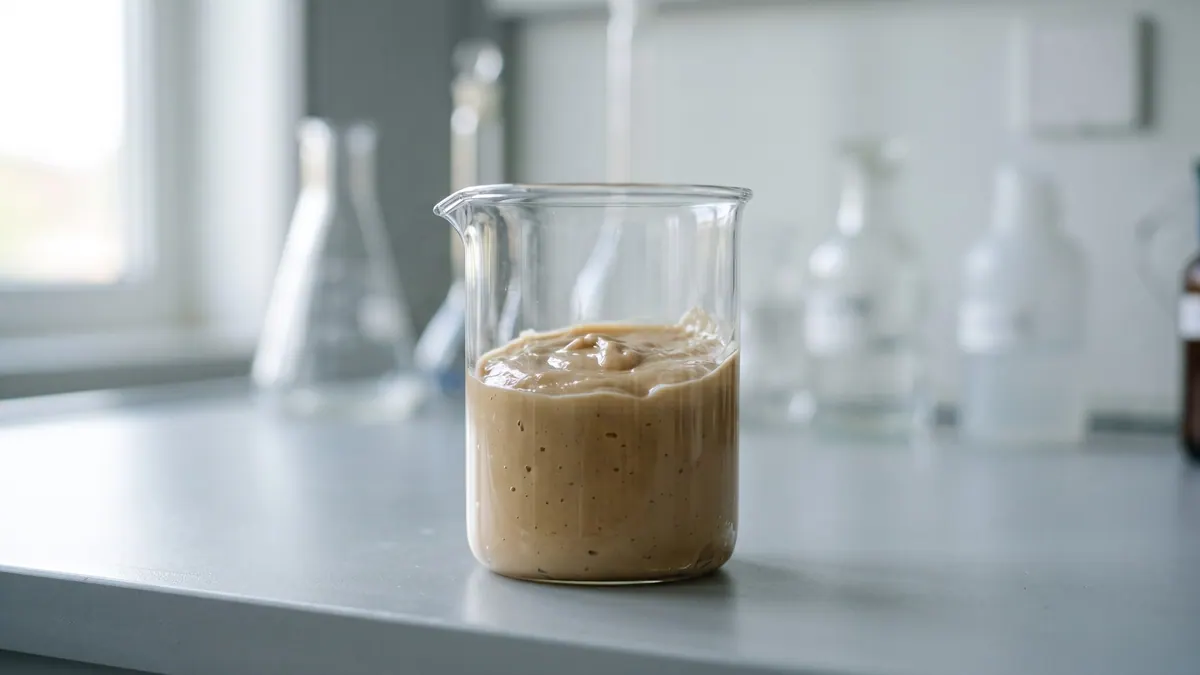
Illustration: FeedstockData (AI, Google Gemini)
- Weighted mean
- 516m³ CH₄/t VS
- Range
- 283–705m³ CH₄/t VS
- Records
- 3studies
- Publications
- 2sources
- Temperatures
- 35 °Cof the test
Methane in biogas
High methane content · ≈ 6.3 kWh/m³ of biogas
estimate from the substrate type The collected studies contain no measurement. The interval follows from the approximate composition (carbohydrate-dominated (no protein or fat characteristics); fat-rich (process classification)) and the yields of compound groups according to FNR.
Rating for biogas plants
not rated — editorial rating for biogas plants
Not rated: no dry matter or volatile solids in the data. We calculate the rating when the dry matter and volatile solids of the material are known.
Add to the co-digestion calculator CSV data
BMP curves from 3 studies
Weighted mean Individual records
Dashed lines are a model curve (first-order kinetics, B(t) = B₀·(1 − e−kt)); the end point comes from the publication. All curves are model curves.
Cumulative methane production over the test [m³ CH₄/t VS]. The thick line is the weighted mean of all records (516); dots mark the end values given in the publications. Point at the chart to read values; click a legend item to hide or show a record.
Records and sources
Download CSV| Source | BMP m³ CH₄/t VS | Temperature | Sample | Curve |
|---|---|---|---|---|
| Borowski i Cieciura-Włoch (2021) DOI | 538 | — | Interphase from soapstock splitting, no enzyme | end point (model curve) |
| Kouas et al. (2017) · 1 DOI | 283 | 35 °C · mesophilic | oil | end point (model curve) |
| Kouas et al. (2017) · 2 DOI | 705 | 35 °C · mesophilic | oil | end point (model curve) |
| Weighted mean | 516 | arithmetic mean 509, SD 212 | ||
Process properties
Low confidence: the description is based on general characteristics of the substrate group, not on studies of this material. Treat it as a hint to be verified.
Advantages
- Methane potential in the Substraty.pl BMP dataset: weighted mean 516.0 m³ CH₄/t VS (SD 212.5; 3 records, 2 sources).
- Very high lipid concentration in DM (Long et al. 2012).
Drawbacks and risks
- Sodium/calcium soaps and LCFA inhibit methanogenesis; sodium raises salinity (Chen et al. 2008; Long et al. 2012).
- Foams on contact with water.
- Dense - difficult to pump.
Co-digestion — what to combine it with, what to watch out for
- combines well
substrates: high alkalinity (buffer) — e.g. Cattle manure, Pig slurry, Cattle slurry, Duck slurry, Rumen and digestive tract content
Slurry supplies N and alkalinity, balancing the high C/N of the material.[1][2]
- avoid
substrates: fat-rich — e.g. Food waste, Spent coffee grounds, Primary sludge, Sunflower seeds, Olive pomace / olive mill solid waste
Soapstock + other fats.[3]
Dosing
No source-based threshold; the most cautious dosing among lipids.
Introduce gradually, starting with a small dose and monitoring the process (e.g. FOS/TAC, pH, gas composition).
Sources of the process data
- Hagos et al. (2017). Anaerobic co-digestion process for biogas production: progress, challenges and perspectives. Renew. Sustain. Energy Rev.
- Weiland, P. (2010) Biogas production: current state and perspectives. Applied Microbiology and Biotechnology
- Long et al. (2012). Anaerobic co-digestion of fat, oil, and grease (FOG): A review of gas production and process limitations. Process Saf. Environ. Prot.
- Chen, Cheng, Creamer (2008). Inhibition of anaerobic digestion process: A review. Bioresour. Technol.
- Elsamadony et al. (2021). Advances towards understanding long chain fatty acids-induced inhibition and overcoming strategies for efficient anaerobic digestion process. Water Res.
The co-digestion calculator will assess a specific mixture containing this substrate.
What it is and where it comes from
Soapstock, i.e. soap sediment, arises during the chemical refining of vegetable oils, when free fatty acids are neutralised with lye. The mixture of soaps, phospholipids, neutral oils and water is separated as a distinct fraction. It is often processed further: split with acid into fatty acids, which are sold as a technical raw material. In Poland the processing of rapeseed oil is significant, so soapstock arises in refineries, but it is usually utilised in industry.
Properties relevant to digestion
Soapstock contains in its dry matter a very high share of lipids in the form of soaps, fatty acids and glycerides, and of phospholipids. This gives the largest methane potential among typical wastes, but at the same time the greatest risk of inhibition: the accumulation of long-chain fatty acids and of calcium and sodium salts can inhibit methanogenesis. A high sodium content from neutralisation can increase the salinity of the digester. The material is dense and difficult to pump, and foams on contact with water. The low nitrogen content requires balancing with other feedstocks.
How to read the spread of results
The dataset contains several records from several sources: soapstock from rapeseed and sunflower oil and an intermediate phase from the splitting of soapstock. The differences arise from the type of oil, the refining process, the pH and water in the waste and the degree of splitting. In addition, the way the sample is introduced into the test (suspension, emulsion) and the adaptation of the inoculum to lipids are of great importance, because without it the result in a short test is underestimated.
In biogas plant practice
Soapstock is used only in a small, stable share and introduced gradually, preferably together with slurry. It requires heating for pumping, control of volatile acids and observation of foam. Its use is sometimes limited by competition from the chemical and fuel industries. As an industrial waste it is subject to waste regulations, and if it contains raw materials of animal origin, also to additional requirements.
Because of the high risk to the process, soapstock is rather a material for specialised disposal plants than for a typical agricultural biogas plant. The share should be established in stages, observing the volatile acids and the methane content of the biogas over at least several retention-time cycles.
Methodology in brief
BMP is the amount of methane obtained from volatile solids (VS) in a batch test, given in m³ CH₄ per tonne of VS (numerically the same as NmL CH₄/g VS in the publications) and converted to normal conditions (0 °C, 101.325 kPa). The weighted mean gives each publication a total weight of 1, split equally between its results for the substrate — a paper testing twenty varieties does not outweigh a paper with a single sample. In inter-laboratory programmes the unit is the laboratory (total weight 1), and within it the weight of a test grows with the number of bottles (replicates). Results after pretreatment (e.g. thermal, chemical, enzymatic) are shown separately and are not included in the mean.
Solid lines are curves measured in the tests. Where a publication gives only the final result, we draw a first-order kinetic model, B(t) = B₀·(1 − e−kt): only the end point comes from the publication, and the shape of the curve serves purely as visualisation — do not read the production on a particular day from it. For this substrate k = 0.091 d−1 was assumed (no kinetic data for the group – the median of all available rate constants k (93 values) was used).
The statistics describe the spread of published results — a descriptive compilation, not a meta-analysis or a guarantee of plant yield.
Bibliography
- Borowski, S.; Cieciura-Włoch, W. (2021). Enzymatic Pretreatment of Byproducts from Soapstock Splitting and Glycerol Processing for Improvement of Biogas Production. Molecules 26(22), 6782. DOI: 10.3390/molecules26226782 DOI
- Kouas, M.; Torrijos, M.; Sousbie, P.; Steyer, J.P.; Sayadi, S.; Harmand, J. (2017). Robust assessment of both biochemical methane potential and degradation kinetics of solid residues in successive batches. Waste Management 70, 59–70. DOI: 10.1016/j.wasman.2017.09.001 DOI
All sources of the site: bibliography.
Other substrates in the group “By-products of the agri-food industry”
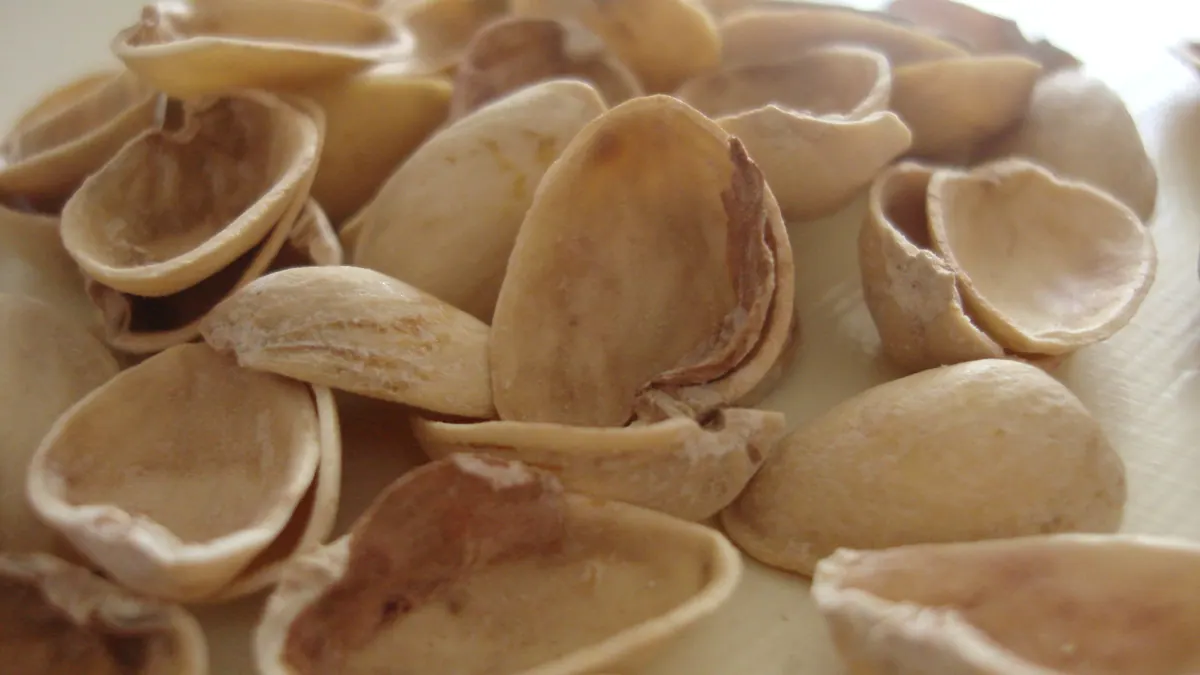
Other nut shells (pistachio, pecan, chestnut, macadamia, pine nut, hickory, ginkgo) — BMP: 7 studies, mean 64 m³ CH₄/t VS
64 m³ CH₄/t VS weighted mean from 7 studies
neutral — editorial rating for biogas plants≈51 %
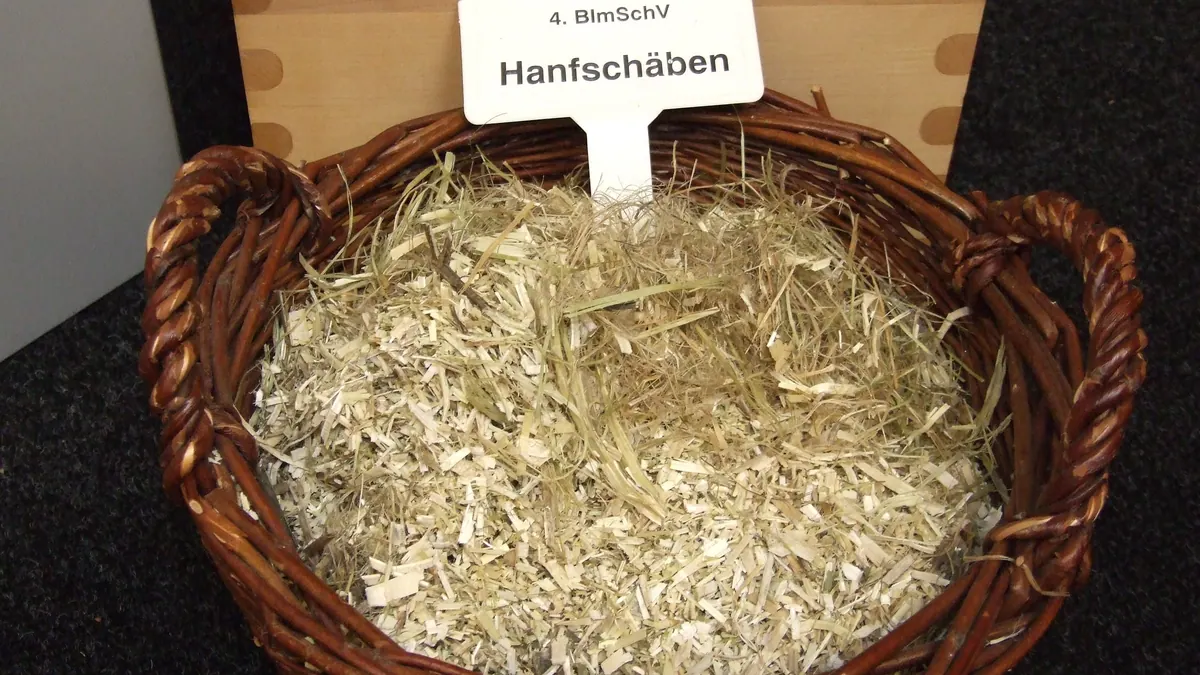
Hemp hurds and dust — BMP: 2 studies, weighted mean 212 m³ CH₄/t VS
212 m³ CH₄/t VS weighted mean from 2 studies
good — editorial rating for biogas plants≈52 %
Sunflower oil cake and meal — BMP: 7 studies, weighted mean 184 m³ CH₄/t VS
184 m³ CH₄/t VS weighted mean from 7 studies
neutral — editorial rating for biogas plants≈64 %

Oil palm empty fruit bunches — BMP: 2 studies, weighted mean 179 m³ CH₄/t VS
179 m³ CH₄/t VS weighted mean from 2 studies
≈52 %