

BMP testingBy-products of the agri-food industrysingle study (7 samples)
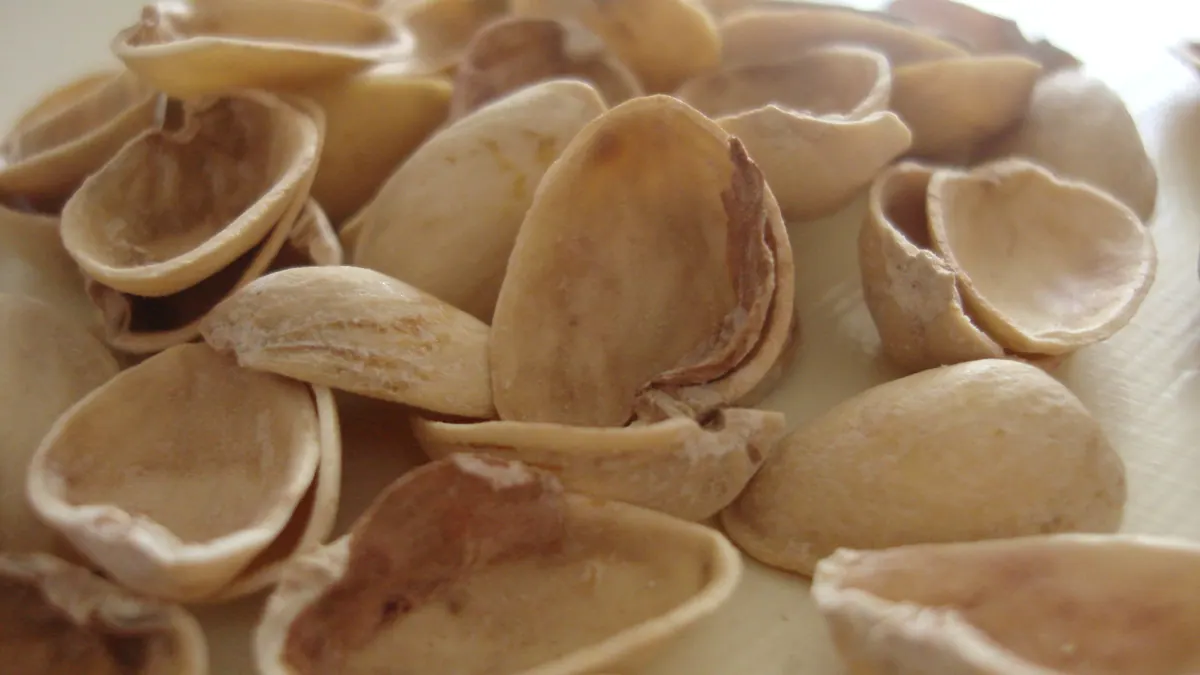
Other nut shells (pistachio, pecan, chestnut, macadamia, pine nut, hickory, ginkgo) — BMP: 7 studies, mean 64 m³ CH₄/t VS
Shells of other nuts (pistachio, pecan, sweet chestnut, macadamia, pine nuts, hickory, ginkgo) are seven strongly woody materials from a single study.
rating: neutralCH₄ ≈ 51 % (estimate)
Photo Editor at Large / Wikimedia Commons, licence CC BY-SA 2.5, source file; changes: cropping

- Weighted mean
- 64m³ CH₄/t VS
- Range
- 29–142m³ CH₄/t VS
- Records
- 7single study (7 samples)
- Publications
- 1source
- Temperatures
- 37 °Cof the test
Methane in biogas
Low methane content · ≈ 5.1 kWh/m³ of biogas
estimate from the substrate type The collected studies contain no measurement. The interval follows from the approximate composition (protein from total nitrogen (N 0.2 % DM × 6.25)) and the yields of compound groups according to FNR.
Rating for biogas plants
neutral — editorial rating for biogas plantsNo clear advantages — worth charging a fee for accepting it
Potential per tonne of fresh matter: low, but limited by the poor degradability of the organic matter (57 m³ CH₄/t); no particular threats to stability. Handling costs: fibres, floating layer, slow degradation.
Why? Rating factors
Potential per tonne 0
- ±0potential 57 m³ CH₄/t fresh matter (BMP 64 × DM 89.8 % × VS 99.1 %); low degradability of VS (BMP 64 m³ CH₄/t VS) — points capped
Process stability 0
- 0no factors
Handling and costs −1
- −0.5fibres, floating layer — shredding and intensive mixing
- −0.5slow degradation — long retention time
Total points: −1 · thresholds: ≥ 2.5 very good, ≥ 1 good, below — neutral; negative with cumulative process risk.
Add to the co-digestion calculator CSV data
BMP curves from 7 studies
Weighted mean Individual records
Dashed lines are a model curve (first-order kinetics, B(t) = B₀·(1 − e−kt)); the end point comes from the publication. All curves are model curves.
Cumulative methane production over the test [m³ CH₄/t VS]. The thick line is the weighted mean of all records (64); dots mark the end values given in the publications. Point at the chart to read values; click a legend item to hide or show a record.
Records and sources
Download CSV| Source | BMP m³ CH₄/t VS | Temperature | Sample | Curve |
|---|---|---|---|---|
| Shen et al. (2018) · 1 DOI | 29 | 37 °C · mesophilic | Macadamia nut shell · pretreatment: particle size reduction/sample preparation (MY-D: physical treatment) | end point (model curve) |
| Shen et al. (2018) · 2 DOI | 46 | 37 °C · mesophilic | ginko shell · pretreatment: particle size reduction/sample preparation (MY-D: physical treatment) | end point (model curve) |
| Shen et al. (2018) · 3 DOI | 51 | 37 °C · mesophilic | pine nut shell · pretreatment: particle size reduction/sample preparation (MY-D: physical treatment) | end point (model curve) |
| Shen et al. (2018) · 4 DOI | 52 | 37 °C · mesophilic | hickory nut shell · pretreatment: particle size reduction/sample preparation (MY-D: physical treatment) | end point (model curve) |
| Shen et al. (2018) · 5 DOI | 62 | 37 °C · mesophilic | pecan shell · pretreatment: particle size reduction/sample preparation (MY-D: physical treatment) | end point (model curve) |
| Shen et al. (2018) · 6 DOI | 67 | 37 °C · mesophilic | chesnut shell · pretreatment: particle size reduction/sample preparation (MY-D: physical treatment) | end point (model curve) |
| Shen et al. (2018) · 7 DOI | 142 | 37 °C · mesophilic | pistachio shell · pretreatment: particle size reduction/sample preparation (MY-D: physical treatment) | end point (model curve) |
| Weighted mean | 64 | arithmetic mean 64, SD 37 | ||
Typical composition
- Dry matter (DM)
- 89.8% (range 74.3–97.6)
- Volatile solids (VS)
- 99.1 % DM (range 98.1–100)
- Nitrogen
- 0.2 % DM
- C/N ratio
- 207.3
Median and range of the determinations reported in the publications behind this substrate's BMP records (read from: MY-D); dry matter: 7 determinations, volatile solids: 7 determinations. C/N was calculated as the ratio of C and N content (% DM) from the same source.
Sources: Shen et al. (2018).
The composition of the raw material varies between batches — for plant calculations use an analysis of your own sample. The calculator inserts typical values automatically.
Process properties
Low confidence: the description is based on general characteristics of the substrate group, not on studies of this material. Treat it as a hint to be verified.
Advantages
- Methane potential in the Substraty.pl BMP set: weighted mean 64.2 m³ CH₄/t VS (SD 36.6; 7 records, 1 source).
- Nut shells (pistachio, pecan, chestnut, etc.): a dry and durable material with no acidification risk, which does not load the system with VFA (Hendriks and Zeeman 2009).
Drawbacks and risks
- No additional inhibitors, but also no rapid energy effect (Hendriks and Zeeman 2009).
Co-digestion — what to combine it with, what to watch out for
- combines well
substrates: high alkalinity (buffer) — e.g. Cattle manure, Pig slurry, Cattle slurry, Duck slurry, Rumen and digestive tract content
Slurry supplies N and alkalinity, balancing the high C/N of the material.[1][2]
- combines well
substrates: protein-rich — e.g. Food waste, Municipal sewage sludge (mixed), Poultry manure, Organic fraction of municipal solid waste, Grass clippings
The high C/N of the material balances protein substrates, limiting the ammonia risk.[1][3]
Dosing
No source limits on the dose for this substrate.
Introduce gradually, starting with a small dose and monitoring the process (e.g. FOS/TAC, pH, gas composition).
Practical requirements
- Shred: shredding increases the surface available for degradation and speeds it up, but does not necessarily raise the final gas yield (FNR 2010, Ch. 3 “Triturado”).
- Control floating crust and sediment: when solids are fed directly into the digester, the risk of their formation depends on the substrate (FNR 2010, Ch. 3).
Sources of the process data
- Hagos et al. (2017). Anaerobic co-digestion process for biogas production: progress, challenges and perspectives. Renew. Sustain. Energy Rev.
- Weiland (2010). Biogas production: current state and perspectives. Appl. Microbiol. Biotechnol.
- Rajagopal, Masse, Singh (2013). A critical review on inhibition of anaerobic digestion process by excess ammonia. Bioresour. Technol.
- Hendriks, Zeeman (2009). Pretreatments to enhance the digestibility of lignocellulosic biomass. Bioresour. Technol.
- FNR (2010). Guía sobre el Biogás – Desde la producción hasta el uso (hiszp. wydanie „Leitfaden Biogas”, GIZ 2013)
The co-digestion calculator will assess a specific mixture containing this substrate.
What it is and where it comes from
Nut shells are the hard seed coverings that arise during shelling in processing. This group, examined in a single study, includes the shells of pistachios, pecans, sweet chestnut, macadamia, pine nuts, hickory and ginkgo. It does not include walnut and hazelnut, which have separate entries. The shells are a dry waste and fairly uniform within a species, although of varying thickness and density.
Properties relevant to digestion
The shells are almost completely woody: they are built of cellulose, hemicelluloses and a large amount of lignin, which closes off enzyme access to the polysaccharides. Under anaerobic conditions they decompose slowly and only to a small extent. They also contain phenolic compounds and tannins. The low nitrogen content and high C/N ratio mean it is better to combine them with protein-rich wastes. The great hardness makes comminution difficult and wears out tools.
How to read the spread of results
Several records from a single study describe different species, so their spread reflects differences in the structure of the shells: density, thickness and lignin share. Because the method and test conditions are common, differences between species are more comparable than in compilations from many laboratories, but there are no data on variability between studies. The degree to which the sample was ground, the test length and the inoculum also have an effect.
In biogas plant practice
Nut shells are usually sent for fuel, composting or the production of activated carbon, and rarely go to the digester. In countries with large nut production, their use in biogas plants after intensive size reduction or pretreatment is being considered. In Polish conditions most of these species occur only as imports. A BMP test is necessary for every batch, and the literature result is indicative.
Methodology in brief
BMP is the amount of methane obtained from volatile solids (VS) in a batch test, given in m³ CH₄ per tonne of VS (numerically the same as NmL CH₄/g VS in the publications) and converted to normal conditions (0 °C, 101.325 kPa). The weighted mean gives each publication a total weight of 1, split equally between its results for the substrate — a paper testing twenty varieties does not outweigh a paper with a single sample. In inter-laboratory programmes the unit is the laboratory (total weight 1), and within it the weight of a test grows with the number of bottles (replicates). Results after pretreatment (e.g. thermal, chemical, enzymatic) are shown separately and are not included in the mean.
Solid lines are curves measured in the tests. Where a publication gives only the final result, we draw a first-order kinetic model, B(t) = B₀·(1 − e−kt): only the end point comes from the publication, and the shape of the curve serves purely as visualisation — do not read the production on a particular day from it. For this substrate k = 0.091 d−1 was assumed (no kinetic data for the group – the median of all available rate constants k (93 values) was used).
The statistics describe the spread of published results — a descriptive compilation, not a meta-analysis or a guarantee of plant yield.
Bibliography
- Shen, J.; Yan, H.; Zhang, R.; Liu, G.; Chen, C. (2018). Characterization and methane production of different nut residue wastes in anaerobic digestion. Renewable Energy 116, 835–841. DOI: 10.1016/j.renene.2017.09.018 DOI
All sources of the site: bibliography.
Other substrates in the group “By-products of the agri-food industry”
Soapstock — BMP: 3 studies, weighted mean 516 m³ CH₄/t VS
516 m³ CH₄/t VS weighted mean from 3 studies
≈63 %
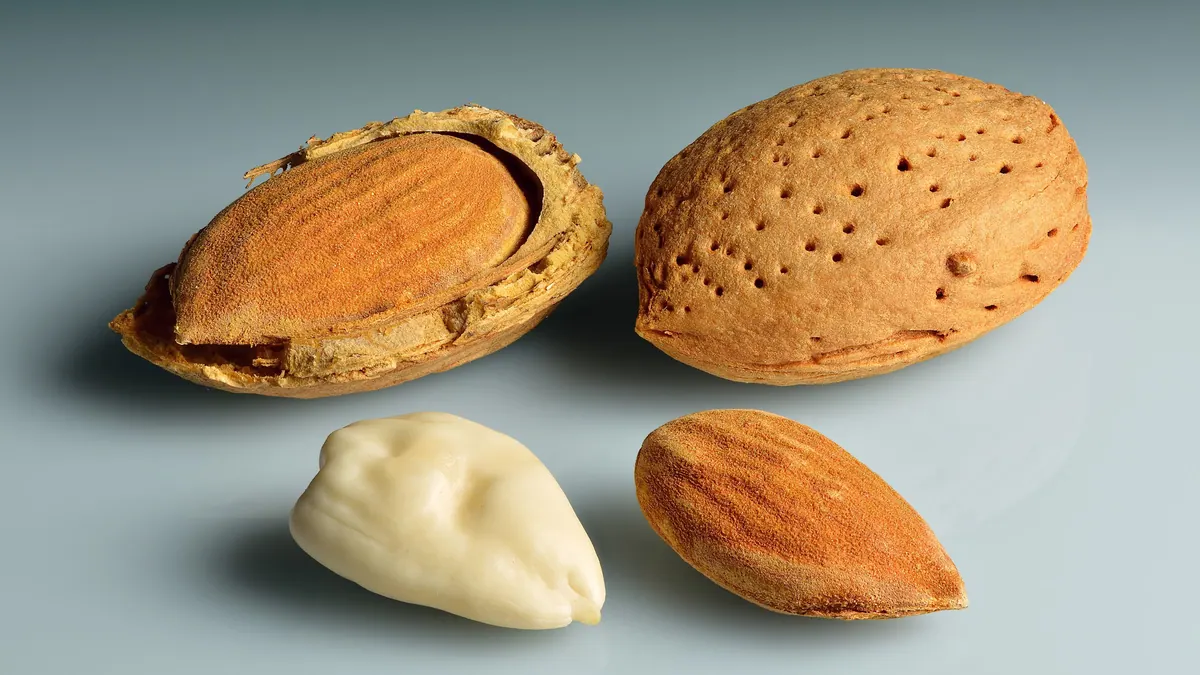
Almond shells — BMP: 3 studies, weighted mean 40 m³ CH₄/t VS
40 m³ CH₄/t VS weighted mean from 3 studies
neutral — editorial rating for biogas plants≈52 %

Glycerol refining residues (MONG, distillation residue) — BMP: 2 studies, weighted mean 406 m³ CH₄/t VS
406 m³ CH₄/t VS weighted mean from 2 studies
≈63 %
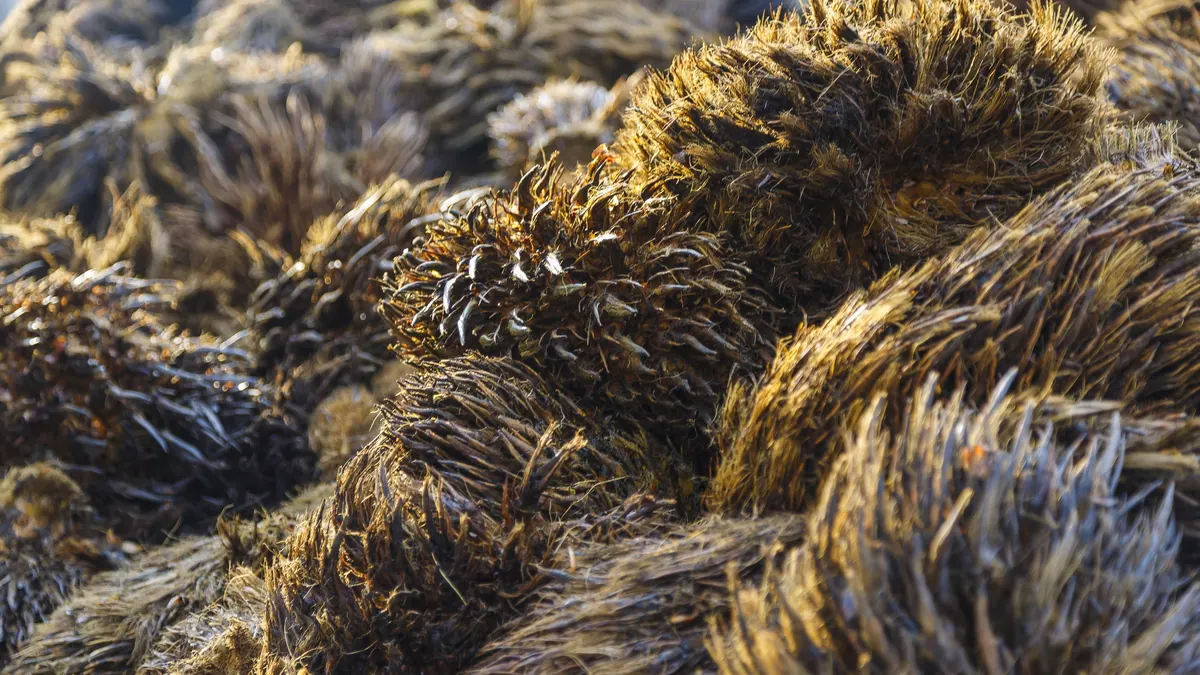
Oil palm empty fruit bunches — BMP: 2 studies, weighted mean 179 m³ CH₄/t VS
179 m³ CH₄/t VS weighted mean from 2 studies
≈52 %