

BMP testingGrain, bran, feed and foddersingle study (11 samples)
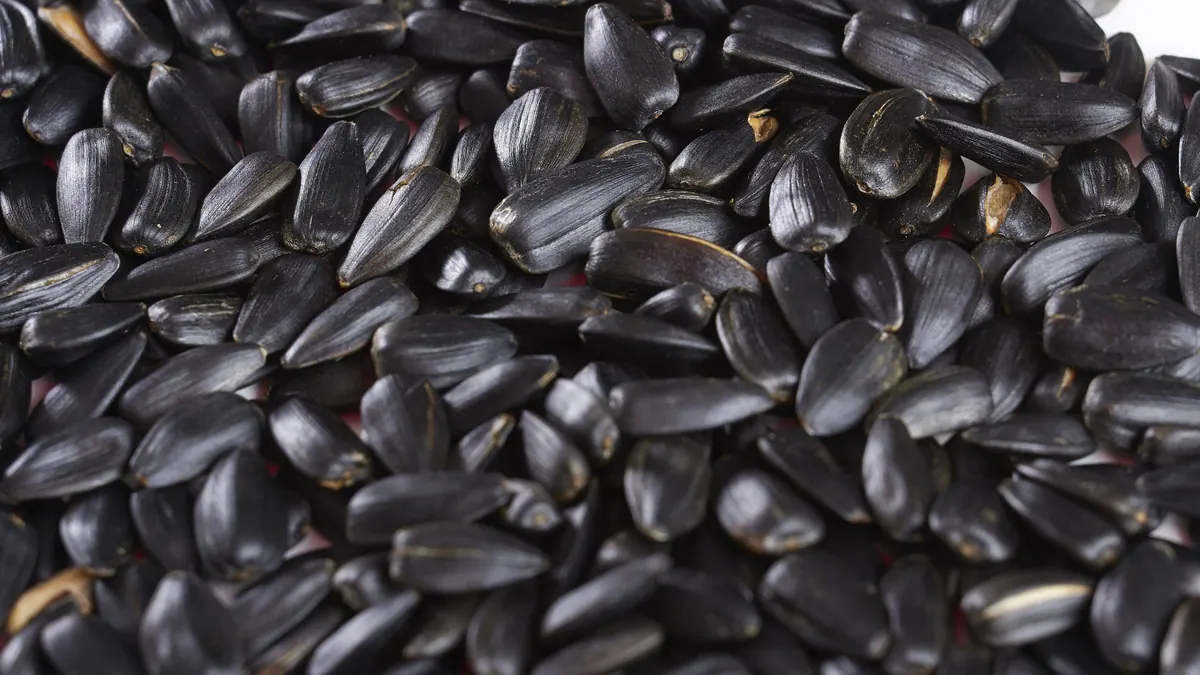
Sunflower seeds — BMP: 11 studies, weighted mean 493 m³ CH₄/t VS
Sunflower seeds are an oily and protein-rich material, examined in an interlaboratory BMP programme. A high fat content gives a high potential, but requires caution in dosing.
Photo Dmitry Makeev / Wikimedia Commons, licence CC BY-SA 4.0, source file; changes: cropping

- Weighted mean
- 493m³ CH₄/t VS
- Range
- 412–538m³ CH₄/t VS
- Records
- 11single study (11 samples)
- Publications
- 1source
- Temperatures
- —of the test
Methane in biogas
High methane content · ≈ 6.3 kWh/m³ of biogas
estimate from the substrate type The collected studies contain no measurement. The interval follows from the approximate composition (carbohydrate-dominated (no protein or fat characteristics); fat-rich (process classification)) and the yields of compound groups according to FNR.
Rating for biogas plants
not rated — editorial rating for biogas plants
Not rated: no dry matter or volatile solids in the data. We calculate the rating when the dry matter and volatile solids of the material are known.
Add to the co-digestion calculator CSV data
BMP curves from 11 studies
Weighted mean Individual records
All curves are measurements from the publications.
Cumulative methane production over the test [m³ CH₄/t VS]. The thick line is the weighted mean of all records (493); dots mark the end values given in the publications. Point at the chart to read values; click a legend item to hide or show a record.
Records and sources
Download CSV| Source | BMP m³ CH₄/t VS | Temperature | Sample | Curve |
|---|---|---|---|---|
| Hafner et al. (2026) · lab. E27 DOI | 412 | — · mesophilic | Sunflower seeds | measurement (31 pts) |
| Hafner et al. (2026) · lab. E21 DOI | 454 | — · mesophilic | Sunflower seeds | measurement (31 pts) |
| Hafner et al. (2026) · lab. R04 DOI | 479 | — · mesophilic | Sunflower seeds | measurement (31 pts) |
| Hafner et al. (2026) · lab. E18 DOI | 483 | — · mesophilic | Sunflower seeds | measurement (31 pts) |
| Hafner et al. (2026) · lab. E08 DOI | 484 | — · mesophilic | Sunflower seeds | measurement (31 pts) |
| Hafner et al. (2026) · lab. R06 DOI | 505 | — · mesophilic | Sunflower seeds | measurement (31 pts) |
| Hafner et al. (2026) · lab. E19 DOI | 508 | — · mesophilic | Sunflower seeds | measurement (31 pts) |
| Hafner et al. (2026) · lab. R05 DOI | 511 | — · mesophilic | Sunflower seeds | measurement (31 pts) |
| Hafner et al. (2026) · lab. R03 DOI | 525 | — · mesophilic | Sunflower seeds | measurement (31 pts) |
| Hafner et al. (2026) · lab. E13 DOI | 526 | — · mesophilic | Sunflower seeds | measurement (31 pts) |
| Hafner et al. (2026) · lab. R02 DOI | 538 | — · mesophilic | Sunflower seeds | measurement (31 pts) |
| Weighted mean | 493 | arithmetic mean 493, SD 36 | ||
Process properties
Low confidence: the description is based on general characteristics of the substrate group, not on studies of this material. Treat it as a hint to be verified.
Advantages
- Methane potential in the database: weighted mean 493 m³ CH₄/t VS (median 505; range 412–538; 11 records from 1 sources).
- The data come from an interlaboratory BMP study involving 31 laboratories (Hafner 2026).
Drawbacks and risks
- Fatty substrates carry a risk of inhibition by long-chain fatty acids (LCFA) and sludge flotation (Chen 2008, Palatsi 2009).
- Palatsi 2009 describes recovery strategies after LCFA inhibition in thermophilic reactors — introduce fats gradually.
Co-digestion — what to combine it with, what to watch out for
- avoid
substrates: fat-rich — e.g. Food waste, Spent coffee grounds, Primary sludge, Olive pomace / olive mill solid waste, Slaughterhouse waste (cattle, pigs, poultry)
Accumulation of fats with slaughterhouse/catering waste increases the risk of LCFA and flotation (Chen 2008, Palatsi 2009).[1][2]
Dosing
No source-based max share; Palatsi 2009 describes recovery strategies after LCFA inhibition in thermophilic reactors.
Introduce gradually, starting with a small dose and monitoring the process (e.g. FOS/TAC, pH, gas composition).
Practical requirements
- Shred: shredding increases the surface available for degradation and speeds it up, but does not necessarily raise the final gas yield (FNR 2010, Ch. 3 “Triturado”).
Sources of the process data
- Chen, Y.; Cheng, J.J.; Creamer, K.S. (2008) Inhibition of anaerobic digestion process: A review. Bioresource Technology
- Palatsi, J. et al. (2009) Strategies for recovering inhibition caused by long chain fatty acids on anaerobic thermophilic biogas reactors. Bioresource Technology
- Hafner, S.D.; Leca, E.; Sambusiti, C.; Astals, S.; Azam, O.; Koch, K.; Liu, J.; Møller, H.B.; Nistor, M.; Olaya-Rincon, M.; Peyrelasse, C.; Ward, A.J.; Zennaro, B.; Monlau, F. (2026) Reliable biochemical methane potential testing: insights and recommendations from global interlaboratory study. Bioresource Technology 446, 134136
- FNR (2010). Guía sobre el Biogás – Desde la producción hasta el uso (hiszp. wydanie „Leitfaden Biogas”, GIZ 2013)
The co-digestion calculator will assess a specific mixture containing this substrate.
What it is and where it comes from
Sunflower (Helianthus annuus) seeds are a raw material for producing oil, snacks and feed. They are not a typical biogas plant substrate, because they have a high commercial value, but they appear as waste, spoiled batches or test material. The dataset includes several records from the 2026 interlaboratory programme, in which many laboratories examined the same sample of seeds, with measured curves.
Properties relevant to digestion
The seeds are rich in lipids and protein and contain little water. This gives a very high energy density, but also specific risks: long-chain fatty acids formed from the fat can inhibit methanogenesis, and protein releases ammonia. The husks contain a lot of lignin, which decomposes slowly. Whole seeds are hard and poorly accessible, so comminution has a large effect on the rate of decomposition. In a mixture with other substrates the balance improves, but the dose should be increased gradually.
How to read the spread of results
The several records are results for one sample examined by different laboratories, so the spread indicates above all the effect of methodology: inoculum, substrate-to-inoculum ratio, sample preparation, gas measurement method and test length. In this programme the result on day 30 of the test was adopted. For fatty substrates the sensitivity to overloading the inoculum is particularly high, so laboratories with different settings may obtain quite different results. The variability of the material (variety, moisture, husk) is not resolved here.
In biogas plant practice
Sunflower seeds may appear as a waste of the food or feed industry. If they are used, it is at a small, gradually increased share and after comminution, with monitoring of volatile fatty acids, pH and foaming. It must be taken into account that the material is valuable and may have competing uses. For batches of unknown parameters a BMP test is essential, and a measured curve helps to assess the kinetics of decomposition. It is also worth remembering that the values from the interlaboratory programme describe one specific sample of seeds. Seeds from another batch, with a different content of husk, fat and moisture, may give different results, even if the study was carried out in the same way.
Methodology in brief
BMP is the amount of methane obtained from volatile solids (VS) in a batch test, given in m³ CH₄ per tonne of VS (numerically the same as NmL CH₄/g VS in the publications) and converted to normal conditions (0 °C, 101.325 kPa). The weighted mean gives each publication a total weight of 1, split equally between its results for the substrate — a paper testing twenty varieties does not outweigh a paper with a single sample. In inter-laboratory programmes the unit is the laboratory (total weight 1), and within it the weight of a test grows with the number of bottles (replicates). Results after pretreatment (e.g. thermal, chemical, enzymatic) are shown separately and are not included in the mean.
Solid lines are curves measured in the tests. Where a publication gives only the final result, we draw a first-order kinetic model, B(t) = B₀·(1 − e−kt): only the end point comes from the publication, and the shape of the curve serves purely as visualisation — do not read the production on a particular day from it.
The statistics describe the spread of published results — a descriptive compilation, not a meta-analysis or a guarantee of plant yield.
Bibliography
- Hafner, S.D.; Leca, E.; Sambusiti, C.; Astals, S.; Azam, O.; Koch, K.; Liu, J.; Møller, H.B.; Nistor, M.; Olaya-Rincon, M.; Peyrelasse, C.; Ward, A.J.; Zennaro, B.; Monlau, F. (2026). Reliable biochemical methane potential testing: insights and recommendations from global interlaboratory study. Bioresource Technology 446, 134136. DOI: 10.1016/j.biortech.2026.134136 DOI
All sources of the site: bibliography.
Other substrates in the group “Grain, bran, feed and fodder”
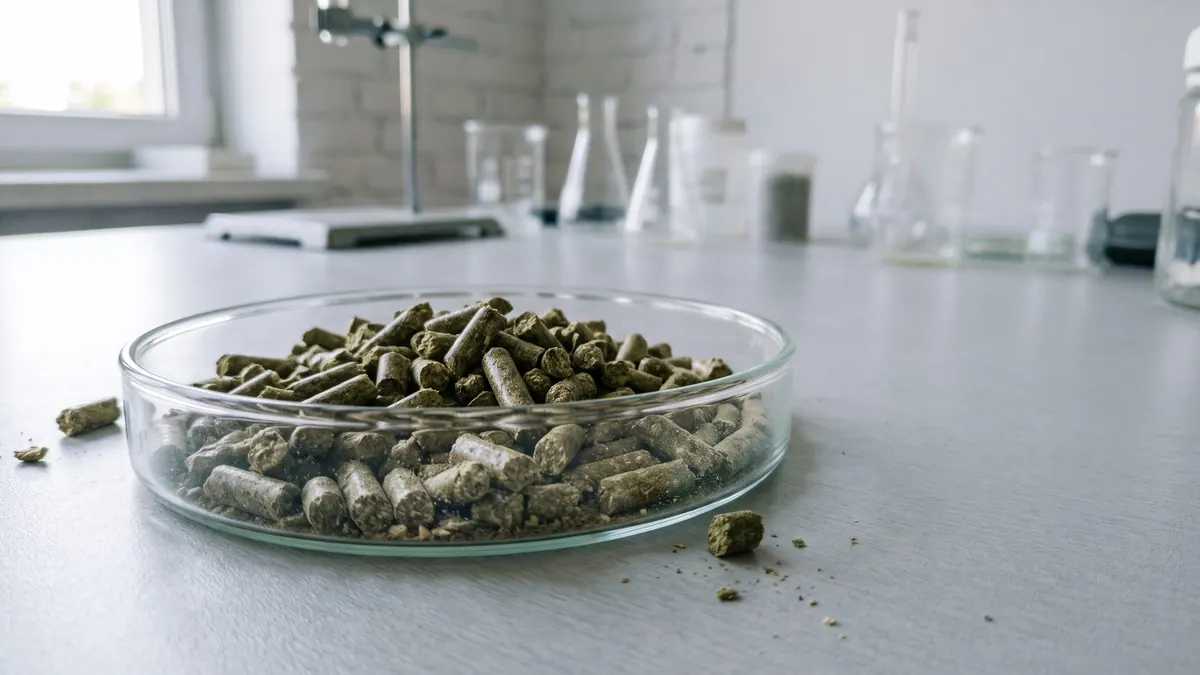
Rabbit and rodent feed pellets — BMP: 12 studies, weighted mean 330 m³ CH₄/t VS
330 m³ CH₄/t VS weighted mean from 12 studies
≈52 %
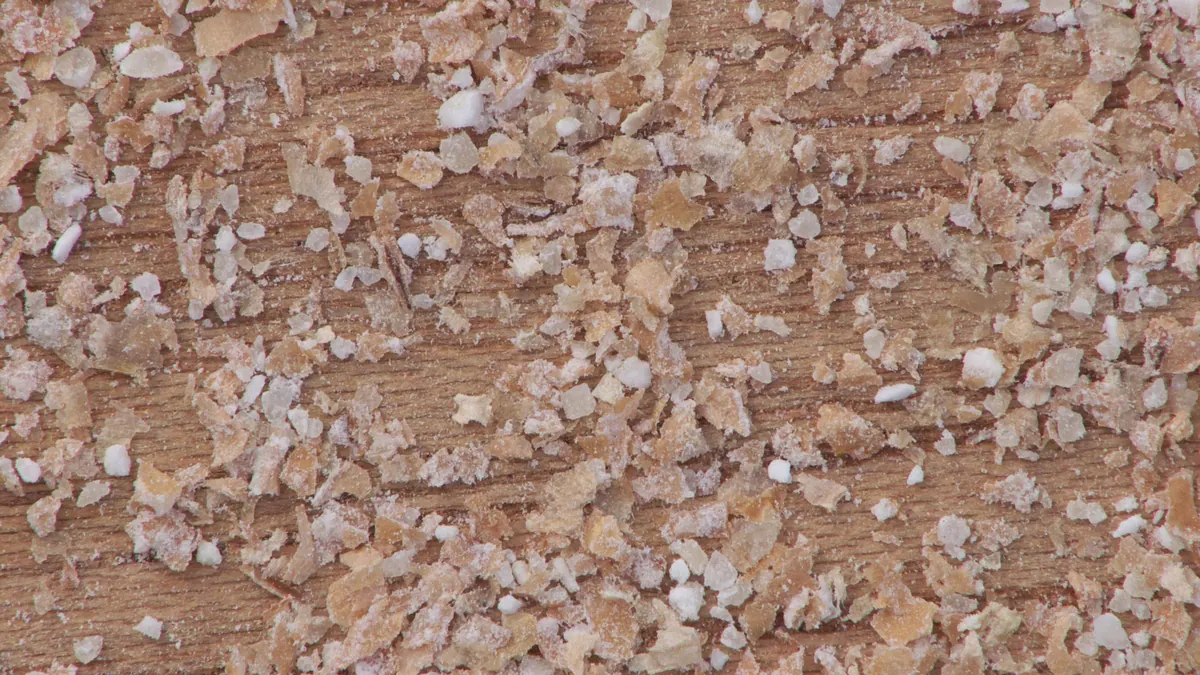
Wheat bran — BMP: 2 studies, weighted mean 330 m³ CH₄/t VS
330 m³ CH₄/t VS weighted mean from 2 studies
very good — editorial rating for biogas plants≈52 %
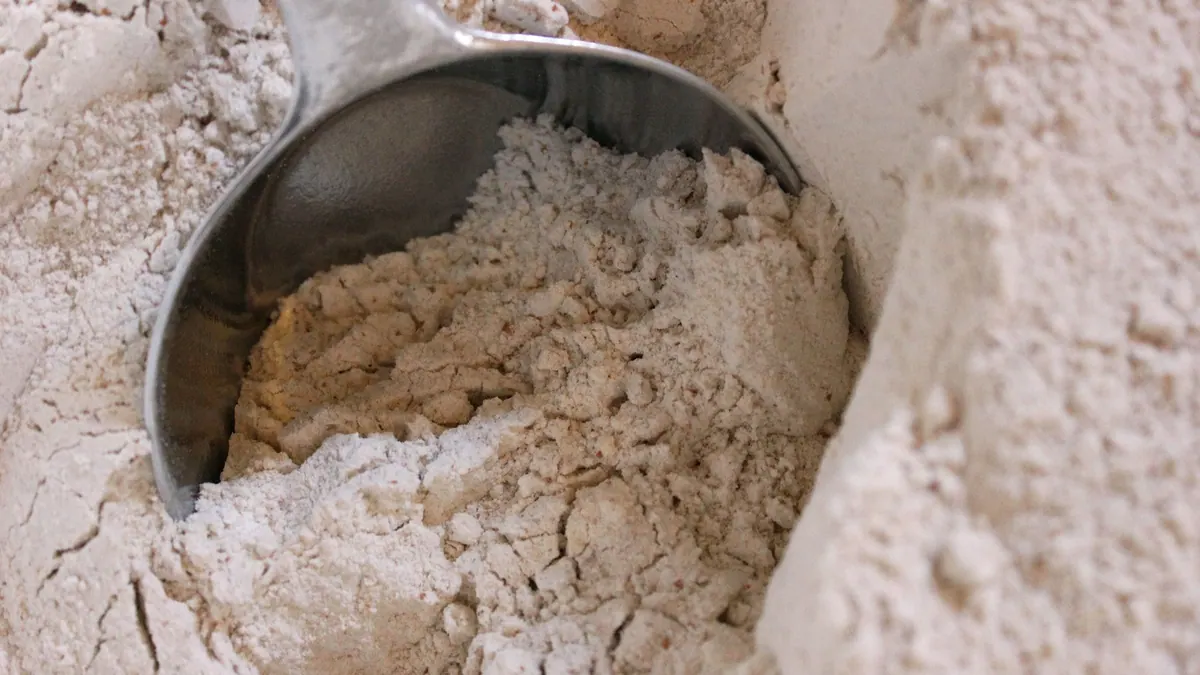
Cereal grain and flour — BMP: 4 studies, weighted mean 350 m³ CH₄/t VS
350 m³ CH₄/t VS weighted mean from 4 studies
very good — editorial rating for biogas plants≈52 %
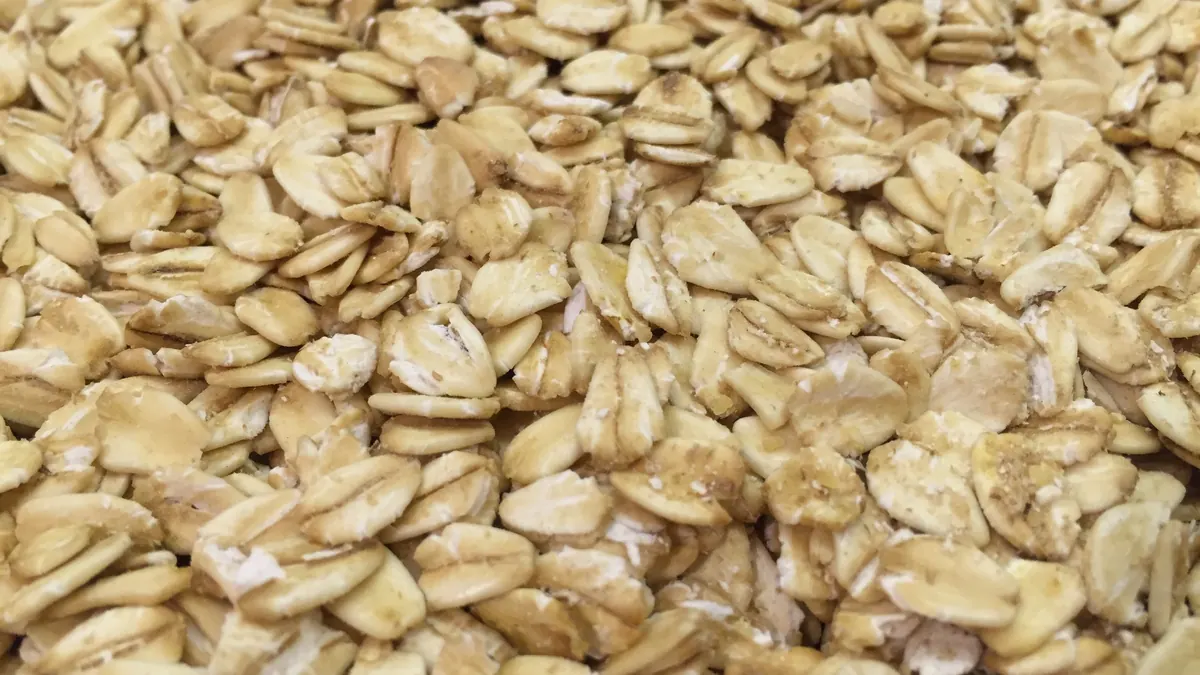
Cereal flakes (oat, corn) — BMP: 2 studies, weighted mean 376 m³ CH₄/t VS
376 m³ CH₄/t VS weighted mean from 2 studies
≈52 %