Tanks and membranesAnalysis
Checking the tightness of a biogas installation without risky tests
How to check the tightness of tanks, membranes and biogas pipework using non-invasive methods: optical gas imaging, detectors, gas balance and observation, with no tests on flammable gas.
Other language versions: polski.
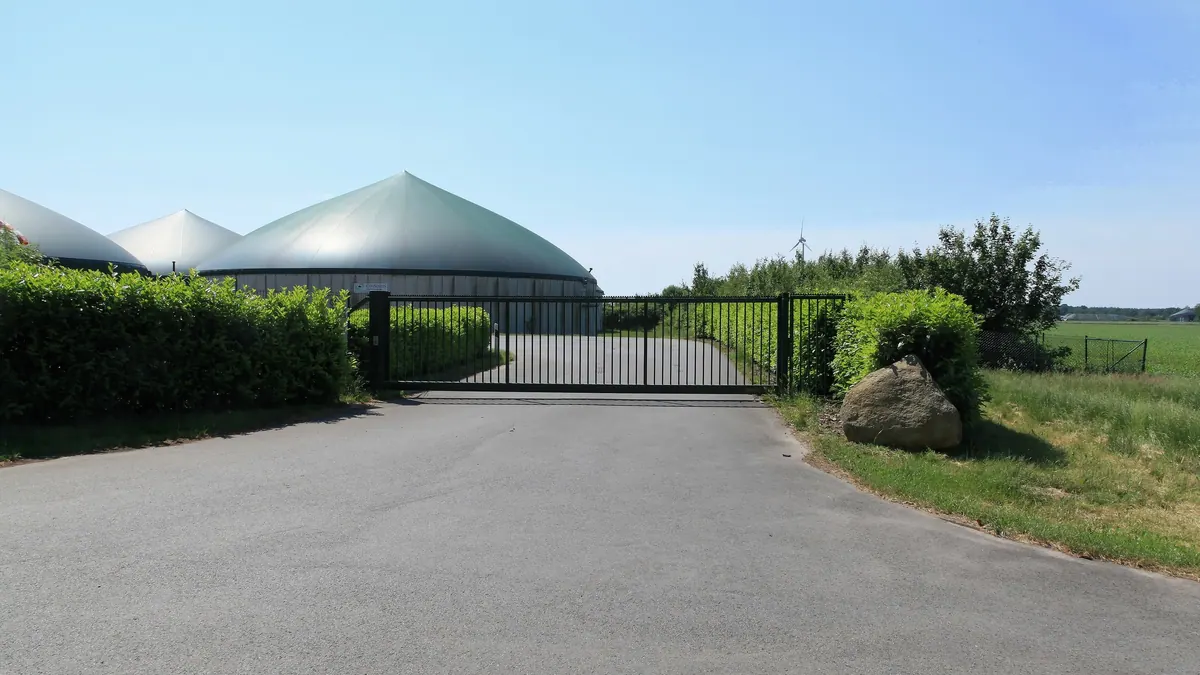
The tightness of a biogas installation can be checked without risky tests by combining four non-invasive sources of information: observation and visual inspection, gas balance, measurement with a portable detector, and imaging with a methane-sensitive camera. These methods do not require raising the pressure, opening pipework or entering tanks, so they do not create additional hazards themselves. Below we describe their scope and limitations and how to build them into a coherent programme.
Why avoid "tests on gas"
In the past, tightness was sometimes checked by methods that required working with flammable gas or overloading equipment, for example raising the pressure above the working pressure or opening connections in search of the source of an odour. Such actions carry a risk of explosion, damage to the membrane or exposure of people to biogas. Biogas contains CH₄, which forms an explosive mixture with air within a limited range of concentrations, as well as CO₂ and H₂S, which are hazardous to health. For this reason improvised tests are not used, and tightness checking should rely on procedures and tools designed for the purpose. Pressure tests are carried out at commissioning and after significant modifications, according to the design and regulations, in a planned manner and by authorised persons.
Method 1: visual and aural inspection
A basic, cheap and effective inspection covers:
- the condition of the membrane: folds, creases, abrasion points, dampness and signs of corrosion on the fixings,
- the condition of the seals on flanges, penetrations and valves,
- traces of condensate or droplets in unusual places,
- the behaviour of vegetation or frost near pipework (in the case of large leaks),
- a hissing sound in quiet conditions, especially at pressure relief valves and near pressurised branches.
The results are recorded on a walk-round checklist. An inspection does not detect small leaks, but it indicates areas of elevated risk.
Method 2: gas balance
The balance compares how much gas was produced, how much was used and how much the stock in storage changed. If the sum of consumption (engine, boiler, flare, upgrading) and the change in stock does not match production, the difference may indicate a leak or a measurement error. For the balance to be useful:
- all flow meters should be calibrated and corrected for temperature, pressure and humidity,
- the storage level must be measured in a repeatable way,
- the comparison is made over a long period, because short oscillations introduce noise.
The balance will not indicate the location of a leak, but it will signal that a more detailed inspection is worth commissioning. It is also a tool for tracking the effectiveness of repairs.
Method 3: portable detector
A methane detector (using, for example, infrared absorption or a semiconductor sensor) makes it possible to pinpoint the location of a leak from a distance of a dozen or so centimetres from the point. Inspection practice:
- connections, shaft seals, valves, drains and flanges are checked one by one, according to a list,
- the values read are recorded and compared with the leak classification criterion set in the programme,
- the device must be approved for work in an explosive atmosphere zone if it is used in one,
- the equipment requires calibration and a check before use.
Wind dilutes the gas and may distort readings, so measurements are taken close to the source and weather conditions are taken into account.
Method 4: imaging with a methane-sensitive camera
An optical gas imaging (OGI) camera makes it possible to see a methane cloud in an infrared image. Its advantage is the quick scanning of large areas, for example the roof of a tank with a membrane or pipeline layouts, from a safe distance. Its limitations are the price of the equipment, the operator training required and sensitivity to conditions: wind, thermal background and temperature. Using the camera requires a risk assessment for the workplace, especially on tanks, where rules on fall protection and gas hazards apply. The practice of leak detection and repair programmes is discussed in the article LDAR at a biogas plant.
Comparison of methods
| Method | What it detects | Advantages | Limitations |
|---|---|---|---|
| Visual and aural inspection | large leaks, damage | cheap, quick | does not detect small leaks |
| Gas balance | presence of a loss | covers the whole system | does not indicate the location |
| Portable detector | location and concentration | accurate, pinpoints leaks | slow, requires close access |
| OGI camera | gas clouds over a large area | quick, from a distance | cost, training, weather conditions |
The best results come from a combination: the balance signals a problem, the camera narrows down the area, the detector pinpoints the location precisely, and the visual inspection checks the condition of the seals.
A step-by-step inspection programme
- Inventory of points – a list of all elements of the gas system: tanks, membranes, penetrations, valves, flanges, drains.
- Schedule – inspection frequency depending on risk; high-risk points more often.
- Classification criteria – the concentration threshold or leak size above which a repair is required, and within what time.
- Repair procedure – who removes the leak, when and how, with the plant operation secured.
- Verification – a repeat measurement after the repair and a record of the result.
- Reporting – a register of leaks and a trend, also useful in relation to methane emission reduction requirements (Regulation 2024/1787 regulates primarily methane emissions in the oil, fossil gas and coal sectors; its application to biogas is limited and needs to be checked in the text of the act).
Repair work on pipework containing gas is not done "in a hurry". It requires a written procedure, a risk assessment, protection against ignition and authorised personnel, in line with the site instructions.
Typical mistakes
- relying on smell as the only indicator,
- no records, and therefore no trend,
- measurements in poor conditions (strong wind) without correction,
- repairing without verification,
- neglecting membranes, which require separate, regular inspection.
Membranes as a separate topic
Tanks with a gas membrane require their own rules. The membrane works under variable loading (wind, snow, pressure), and damage to it often starts at the fixings and the perimeter. In addition to gas tightness checks, these cover the condition of the fixings, the tension of the supports, drainage of the space between the membranes and the efficiency of the blower maintaining pressure in the outer membrane. The roof is inspected in line with the rules for working at height and without stepping onto the membrane unless the instructions provide for it. It is worth comparing the inspection result with weather data, because some leaks appear only under particular conditions.
What to do with the results
An inspection result makes sense only if it triggers action. Every leak detected goes into the register with its location, date, detection method and an assessment of its size. Repair deadlines are set according to the classification: leaks with the highest concentration or near ignition sources take priority. After the repair a verification measurement is made, and the register entry is closed only on a positive result. Once a year it is worth analysing the register for recurring locations, because repeated leaks on the same element point to an installation error or a poor choice of material.
Sources
Questions and answers
Is a pressure test needed to check tightness?
Not always. Pressure tests are carried out at acceptance and after significant changes, according to the design and regulations. For routine checks in operation, non-invasive methods are better suited, as they do not require shutting down the installation or raising the pressure.
Is the smell of biogas enough to detect leaks?
No. The smell comes mainly from H₂S and other trace components, not from methane, and depends on the gas composition and the wind. With a low H₂S concentration or after desulphurisation, a leak may be undetectable by smell, so measuring instruments are needed.