How to choose anti-freeze heating for overpressure and vacuum protection?
A frozen liquid seal no longer protects the tank. Criteria for choosing heating: power, insulation, medium, explosion-hazard zone and monitoring.
Other language versions: polski.
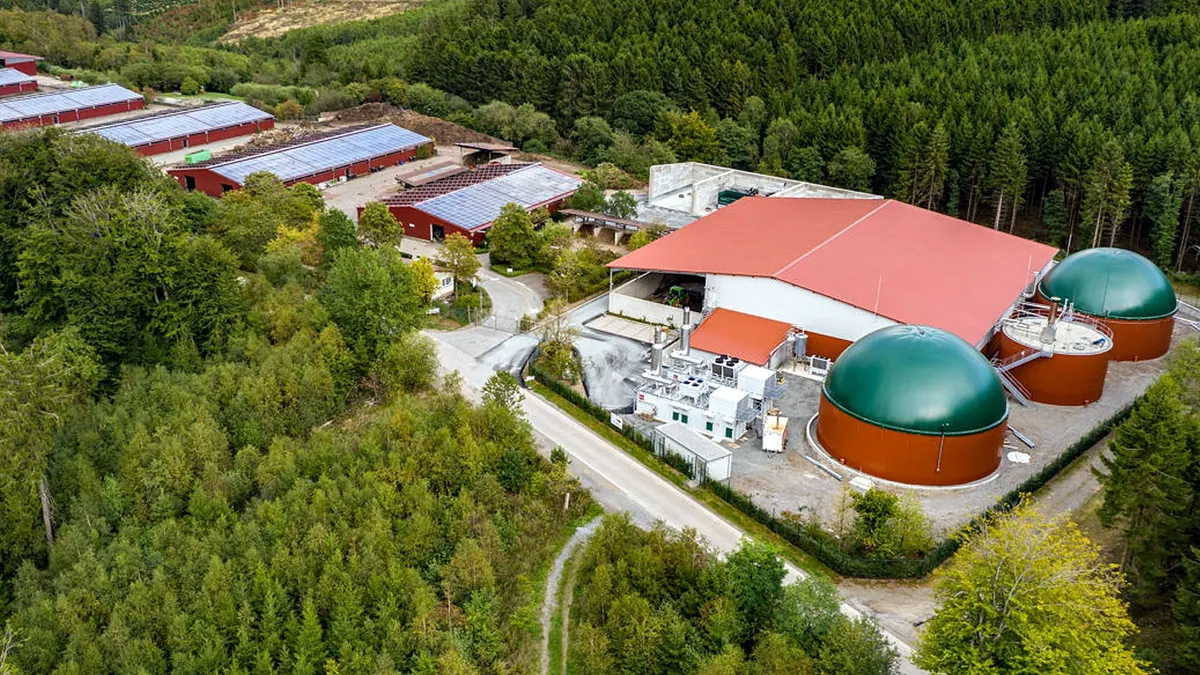
Anti-freeze heating of overpressure and vacuum protection is selected according to the lowest design temperature at the given location, the construction of the protection and the classification of the explosion-hazard zone. Its purpose is to keep the sealing liquid (usually water or a mixture of it) fluid and the venting channels clear. It is a safety element, so the rule applies that the heating must be monitored and its failure signalled, not discovered after the fact.
What the protection is for and why frost is dangerous
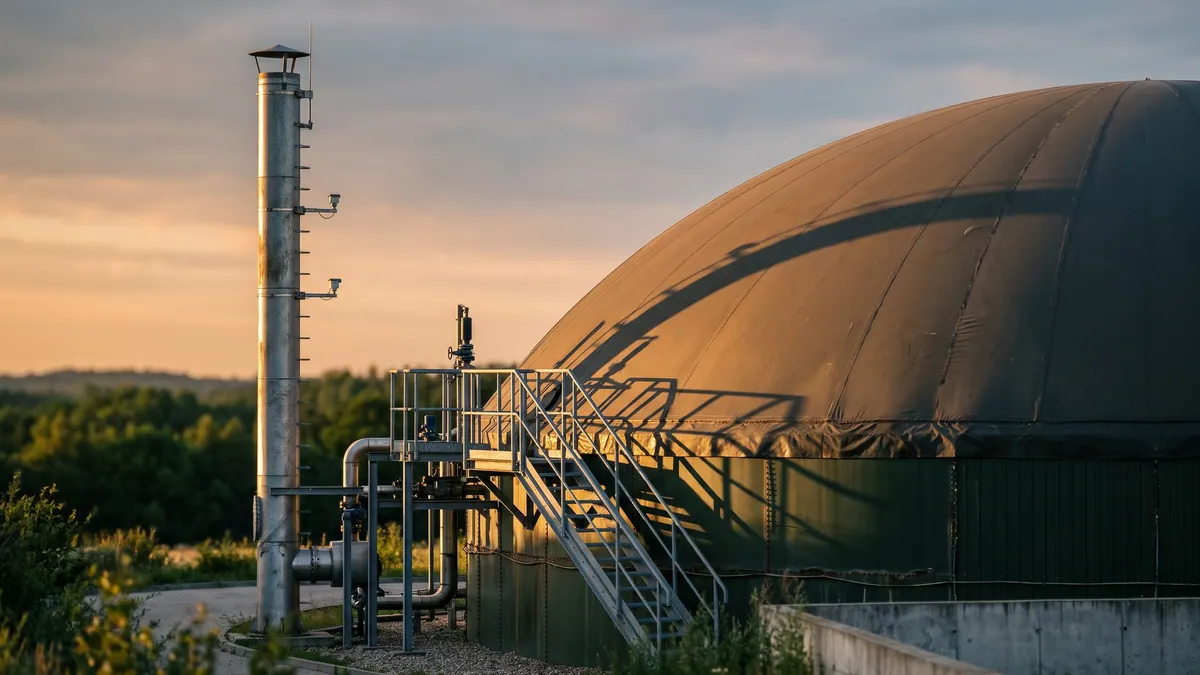
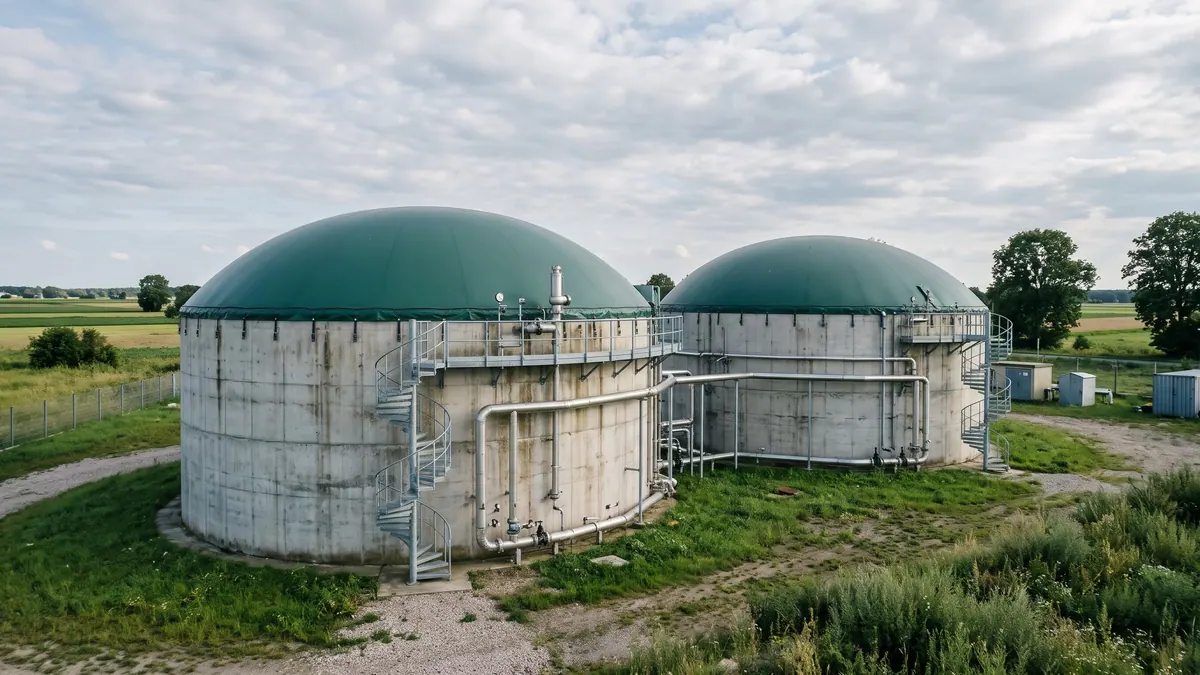
A gas tank, including a tank with a membrane roof, requires protection against excessive overpressure and vacuum. One solution is liquid protection: the activation pressure results from the height of the liquid column (as a guide, 10 mm of water column corresponds to about 1 mbar). When the gas exceeds the pressure, it displaces the liquid and escapes. If the liquid freezes, a plug of ice forms: the protection will either not act, or will act at a much higher pressure than assumed. The details of the risks for tanks are described in the article on biogas storage with a double-membrane roof.
Constructions vary (liquid valves, mechanical protection, combined systems), so we always start from the manufacturer's documentation.
Criteria for choosing heating
1. Design conditions. The lowest temperature that can occur at the location is assumed, taking into account wind and longer periods of frost. The winter average is not enough; freezing is an extreme event.
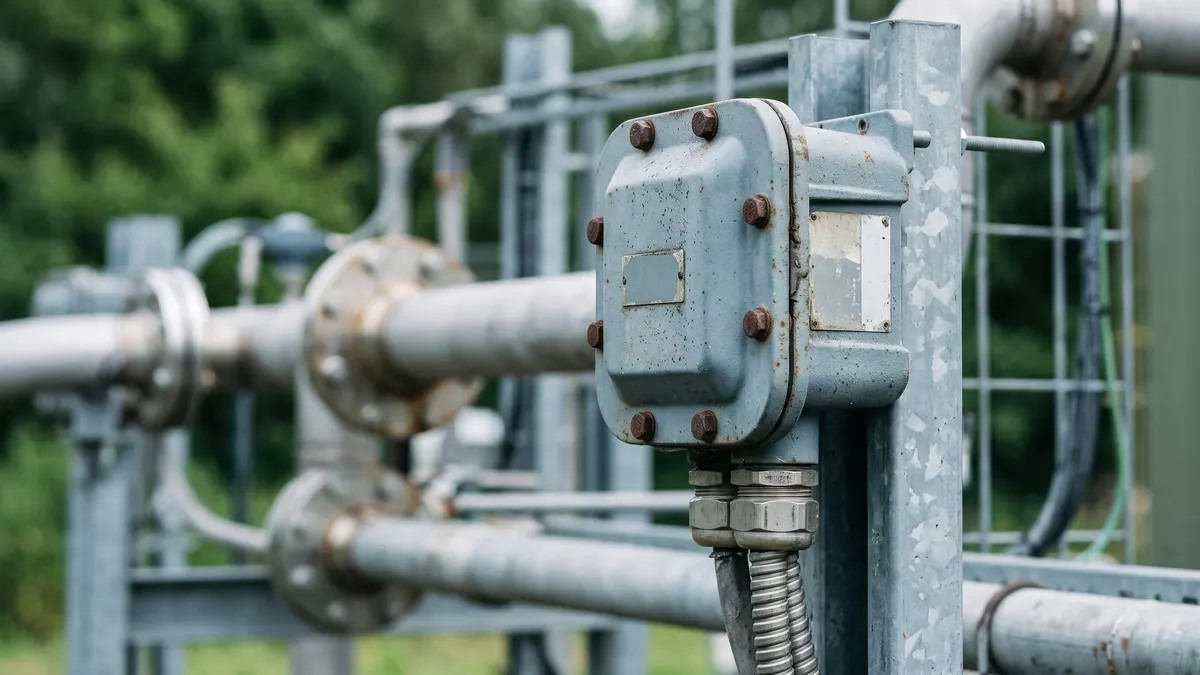
2. What exactly to heat. Not only the vessel with the liquid. Connecting lines, nozzles, vents, drains and fittings are also at risk. The most common mistake: a heated vessel, a frozen drain.
3. Insulation. Heating power is only half of the solution. Insulation with a moisture barrier decides how much power is needed and whether the system will work in strong wind. Damp insulation loses its properties.
4. Type of heating. The usual choices are: heating cables with control (self-regulating or constant-power), a hot water circuit from the process installation, and a heated space (enclosure or container). A hot water circuit can be cheaper to run, but depends on the operation of the heat source; cables depend on the electricity supply. For critical points a duplicated system is considered.
5. Explosion-hazard zone. If a heating element or sensor is located in a hazardous zone, it must comply with the requirements for equipment in explosive atmospheres (Directive 2014/34/EU) and have a temperature class and group consistent with the explosion protection document for the facility (Directive 1999/92/EC). The surface temperature must not exceed that permitted in the zone. The selection is made by a person with the relevant qualifications, on the basis of a risk assessment. See ATEX in a biogas plant.
6. Medium. Adding glycol lowers the freezing point, but changes the density and hence the activation pressure. This has to be recalculated and agreed with the manufacturer. Safety and environmental issues come in (disposal, risk of leakage).
Monitoring and maintenance
- A temperature sensor at the coldest point of the system (not only at the heater) with an alarm to the control room.
- Monitoring of the current drawn by the heating circuit: no current draw means no heating, even if the breaker is switched on.
- Power from a circuit resistant to voltage dips; for critical systems, backup power.
- Pre-season inspection: condition of insulation and covers, tightness, thermostat setpoint values, checking that the liquid is at the right level.
- A record of inspections in the operating log.
Typical errors
| Error | Effect |
|---|---|
| Heating the vessel but not the drains and lines | Freezing beyond the reach of the heater |
| No insulation or damp insulation | Insufficient power in wind |
| Thermostat set too low or sensor in a warm place | The system "thinks" it is warm |
| Change of liquid without recalculation | A different activation pressure |
| No alarm | Failure discovered after freezing |
| Elements without proper certification in an Ex zone | Risk of ignition |
When in doubt about the selection or changes to the protection system, refer to the site instructions, the manufacturer's documentation and authorised persons. A reminder: this text describes criteria and does not replace a design or a risk assessment. The facility's heat balance in winter is discussed in the article Heat balance of a biogas plant in winter.
How to plan the selection step by step
Selection is best carried out as a short decision process. First the documentation of the protection (type, medium, height of the liquid column, dimensions of the lines) and the climate data for the location are collected. Next it is determined which elements of the system can freeze, and for each a method of protection is chosen: a heated enclosure, a heat circuit or a heating cable with insulation. Then the requirements of the explosion-hazard zones are checked and fittings with proper certification are selected. Finally monitoring and an inspection plan are designed. Documentation of changes is kept together with the explosion protection document, and every modification of the protection system should go through a risk assessment.
Check questions for the designer and the operator
- What is the lowest design temperature and has wind been taken into account?
- Do all elements containing liquid (vessel, drain, connecting lines) have protection?
- What will happen to the protection when the electricity supply disappears for longer than a few hours?
- Who will learn of a heating failure, and how quickly?
- Has a change of liquid or additives been recalculated and approved by the manufacturer?
Sources
Questions and answers
Does adding glycol to the protective liquid solve the frost problem?
It lowers the freezing point, but changes the density of the liquid, so at the same column height the activation pressure changes. Glycol also has environmental and safety requirements. The change must be agreed with the manufacturer of the safeguard.
How often should the heating of the safety device be checked?
Before the heating season and after every power failure; during the season in line with the site instructions, preferably with an alarm for loss of current draw or a drop in temperature.