Law and regulationEvent
Commission approves EUR 3.1 billion for Spanish cogeneration, including on biogas and biomass (SA.114058)
On 28 January 2026 the Commission approved a Spanish EUR 3.1 billion, 10-year scheme for new or substantially modernised high-efficiency CHP plants, including those fuelled by biogas and biomass.
Other language versions: polski.
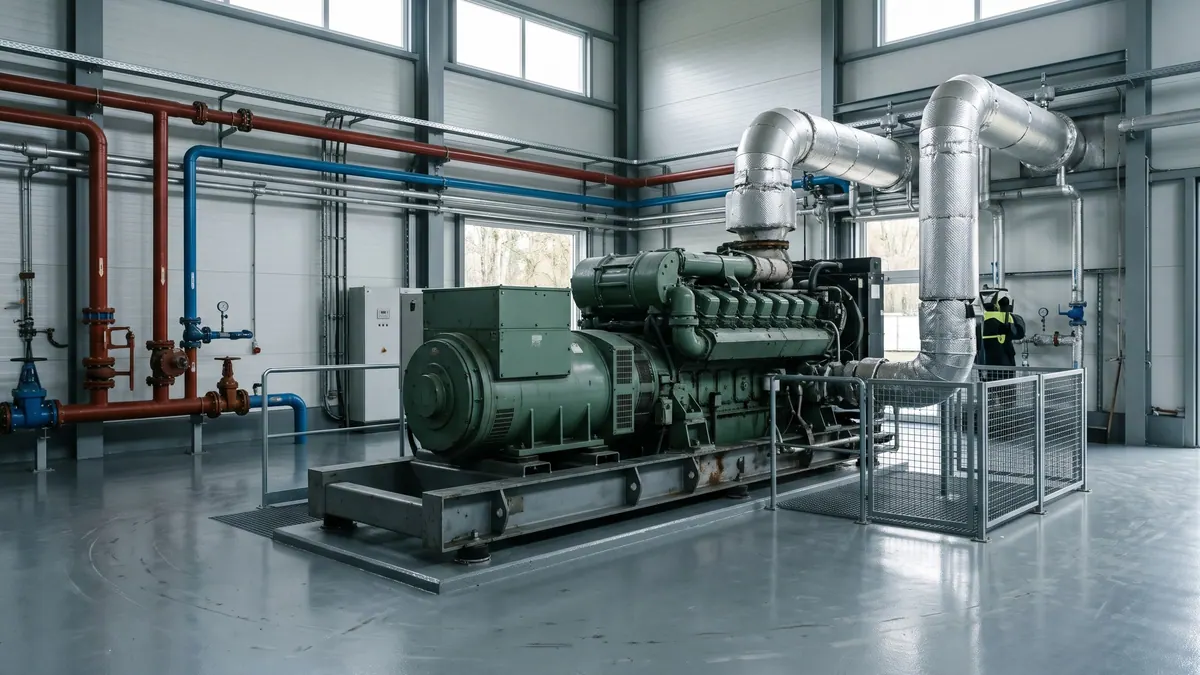
On 28 January 2026 the European Commission approved the Spanish state aid scheme SA.114058, worth EUR 3.1 billion, to support electricity from new or substantially modernised high-efficiency combined heat and power (CHP) plants. Among the permitted fuels are biogas and solid biomass, but also natural gas.
What was approved
The scheme lasts 10 years. According to press reports, CHP plants may use natural gas, bioliquids, biogas or solid biomass. Gas-fired installations must have equipment allowing the use of at least 10% renewable hydrogen by volume. Investment aid is to be granted in open tenders, and operating aid adjusted quarterly, which limits the risk of excessive support when energy and fuel prices change.
The Commission assessed the scheme on the basis of art. 107 para. 3 (c) of the Treaty on the Functioning of the EU and the 2022 CEEAG guidelines (see the article on CEEAG), finding that the aid is limited to the necessary minimum, has an incentive effect, and that the benefits outweigh the distortion of competition.
Significance for biogas and biomass
The scheme is not dedicated to renewable fuels: natural gas is one of the permitted fuels. For biogas plants the conclusion is twofold: they can apply for support on an equal footing with other fuels, but they compete in tenders with gas-fired installations, which have a different cost structure.
The requirement of readiness to use 10% hydrogen applies to gas-fired installations; press reports do not specify whether it also covers biogas plants, so the conditions need to be checked in the public version of the decision. Sustainability criteria and cogeneration efficiency are also important for biogas plants.
Why cogeneration
High-efficiency cogeneration produces heat and electricity simultaneously, using fuel better than separate generation. State aid guidelines therefore treat it as a justified aim of support, including for biogas installations, where heat from the generator set improves the economic efficiency of the project. The provision on quarterly adjustment of operating aid reflects the principle that support should cover the funding gap, not guarantee a constant profit.
What follows from this
- Biogas access to the Spanish scheme is possible, but in competition with natural gas.
- Investment aid in tenders favours projects with a low cost per unit of capacity.
- Quarterly adjustment of operating aid limits the risk of excessive payments, but also revenue predictability.
- The details of rates and limits result from the public version of the decision in the state aid register and from national tender documents.
Sources
Questions and answers
Is the programme intended for biogas plants?
The programme covers high-efficiency cogeneration fuelled by various fuels, including biogas and biomass. It is not a programme dedicated solely to biogas, and natural gas remains one of the permitted fuels.
Related articles