BioLNG and bioCNGEvent
FuelEU Maritime: agreement between Parliament and Council. Bio-LNG gains importance in shipping
On 23 March 2023 the European Parliament and the Council of the EU reached a provisional agreement on FuelEU Maritime: a reduction in the emission intensity of shipping fuels of 2% in 2025 and up to 80% in 2050.
Other language versions: polski.
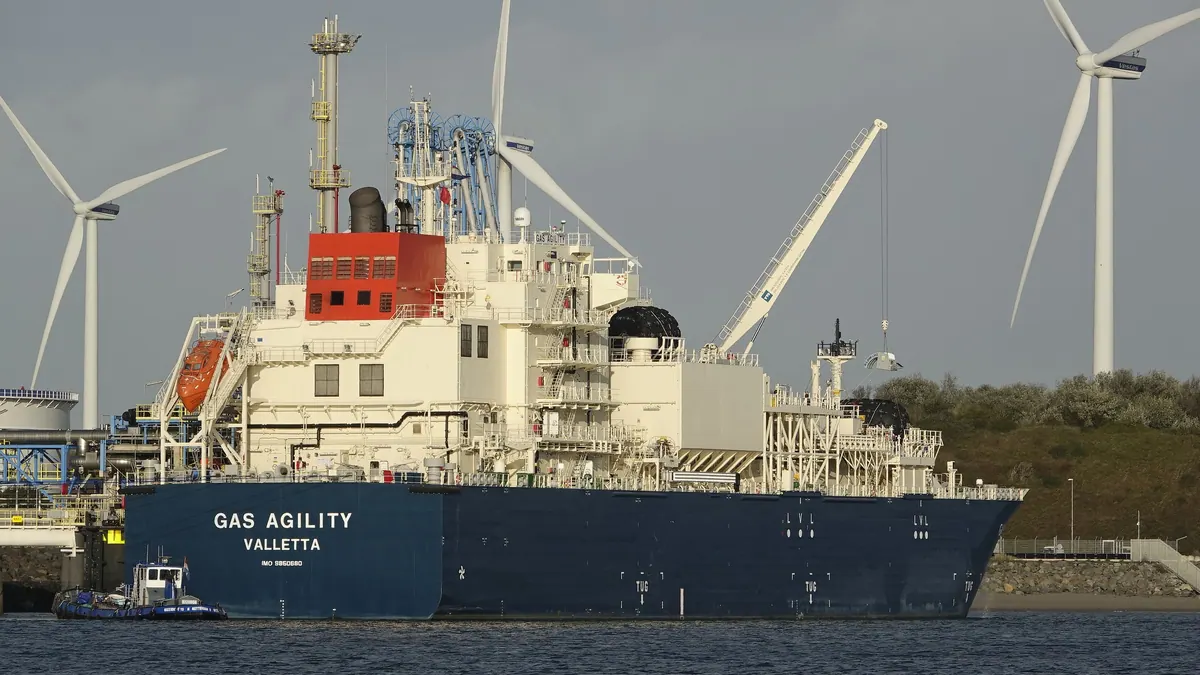

The European Parliament and the Council of the EU reached a provisional agreement on 23 March 2023 on the FuelEU Maritime regulation, which introduces a requirement to reduce the greenhouse gas intensity of energy used on ships. The reduction pathway runs from 2% in 2025 to 80% in 2050 compared with the 2020 reference level. The rules are to cover ships of over 5,000 GT gross tonnage calling at EU ports. For the market in renewable fuels for shipping, including bio-LNG, this is an important decision, because it creates long-term demand.
What is changing
The regulation sets target levels for the emission intensity of energy used on ships:
| Year | Reduction in emission intensity |
|---|---|
| 2025 | 2% |
| 2030 | 6% |
| 2035 | 14.5% |
| 2040 | 31% |
| 2045 | 62% |
| 2050 | 80% |
The calculation is made "well-to-wake", that is, it takes into account life-cycle emissions of the fuel and the methane and N₂O emissions from combustion. For LNG this means accounting for methane slip from engines, which limits the benefits of the fossil fuel but does not rule out bio-LNG. In addition, a sub-target is provided for RFNBO fuels (from 2034, if their share in 2031 turns out to be low), as well as an obligation for passenger and container ships to use shore power in TEN-T ports from 2030.
Shipowners can meet the requirement by blending fuels, using renewable fuels, harnessing wind energy and through mechanisms for pooling emissions across a fleet.
Significance for the industry in Poland
For Polish biogas and biomethane producers, FuelEU Maritime opens up a potential bio-LNG market in shipping, which may complement sales to the grid or to road transport. To sell fuel for shipping, a producer needs sustainability certification, a liquefaction installation or access to one, and logistics, to seaports and for bunkering. Poland has an LNG terminal in Świnoujście, so the development of bio-LNG in shipping is realistic, although bunkering in ports requires additional investment and certification.
For shipowners, it matters that bio-LNG is a "drop-in" fuel: it can be bunkered into existing tanks and engines without modifying them.
How shipowners can meet the requirement
A shipowner can combine several routes: blending fuels with different emission intensities, using renewable fuels, installing wind-assisted propulsion or using shore power in ports. Any surplus in the reduction achieved can, within certain limits, be carried over to subsequent years or settled with other ships in a so-called pool. Penalties for non-compliance depend on the deficit and the energy used on board, which encourages the earlier adoption of low-carbon-footprint fuels.
What next
The agreement requires formal adoption by Parliament and the Council, expected in summer 2023. Terminal operators and biomethane producers should watch how the definitions of renewable fuels and the certification rules are worded, as these will decide which gas can be counted towards emission reductions.
Sources
Related articles