Tanks and membranesAnalysis
Gas membrane, outer membrane and substructure: three independent functions
A tank membrane roof has three layers with different tasks: the gas membrane, the outer membrane and the substructure. We separate their functions and show what each of them withstands.
Other language versions: Polski, Deutsch, Español, Français, Italiano, Nederlands.
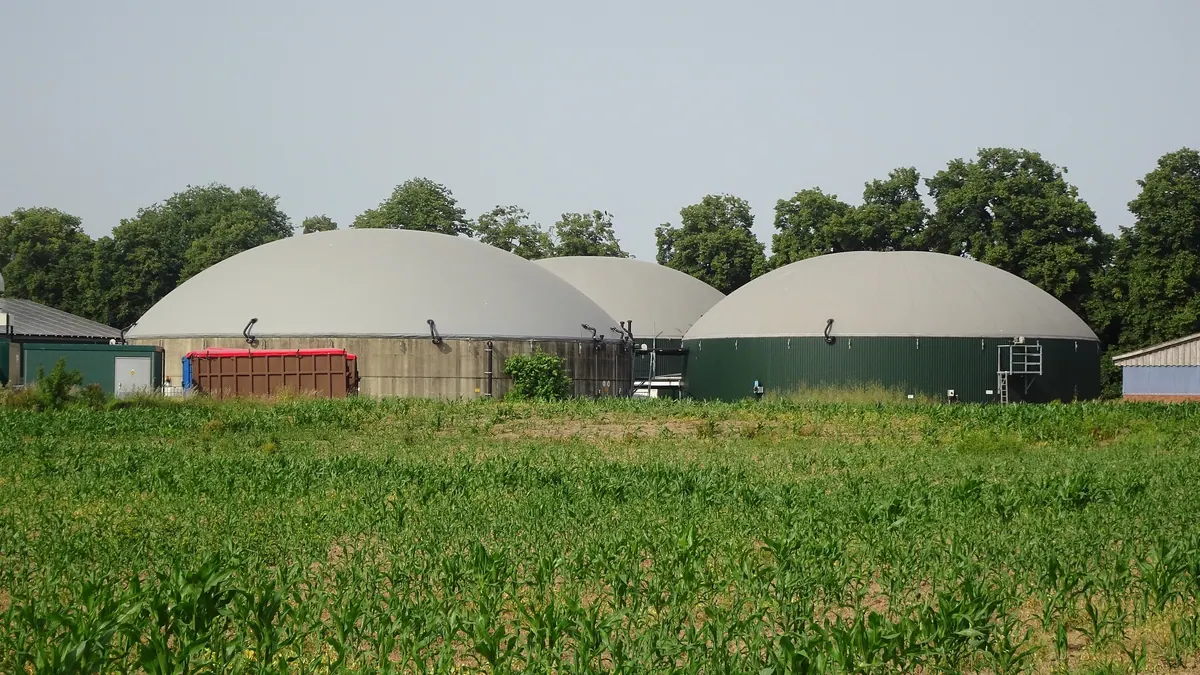

A biogas tank's membrane roof separates three tasks that are often mixed up in conversation: tightly retaining the gas, protection against the weather and transfer of loads to the structure. They are performed by three different elements: the gas membrane, the outer membrane and the substructure with the edge fixing. Understanding this division makes it easier to choose a solution, plan inspections and recognise what has actually failed.
Function 1: the gas (inner) membrane
The gas membrane is the element in direct contact with the biogas. Its task is tightness and the ability to change volume: when gas accumulates the membrane rises, and when it is drawn off it falls. The material requirements follow from this:
- resistance to moisture, H₂S and other biogas components, and to operating temperatures,
- low gas permeability, because every diffusion is a methane emission and a loss,
- flexibility under repeated rising and falling,
- good weldability, so that the seams are tight.
The gas membrane is not designed to carry external loads. It is supported by the gas pressure and by the protective layer above it. Typical damage mechanisms are material fatigue at fold lines, mechanical damage and ageing.
Function 2: the outer membrane
The outer membrane closes the system from above, protects the gas membrane from rain, snow, UV radiation and wind, and gives the roof its dome shape. The space between the membranes is filled with air, held at constant pressure by a blower. This pressure tensions the outer membrane and allows it to carry the load from wind and snow. Consequences:
- the outer membrane works as a tensioned shell. Too low an inflation pressure means a slack shell, which deforms more easily and collects water or snow,
- blower efficiency, tightness of the lines and the power supply are elements of the structure's safety, not just of its equipment,
- damage to the outer membrane (a tear, a rip) does not have to mean an immediate gas leak, but it exposes the inner membrane to external factors.
Function 3: the substructure and edge fixing
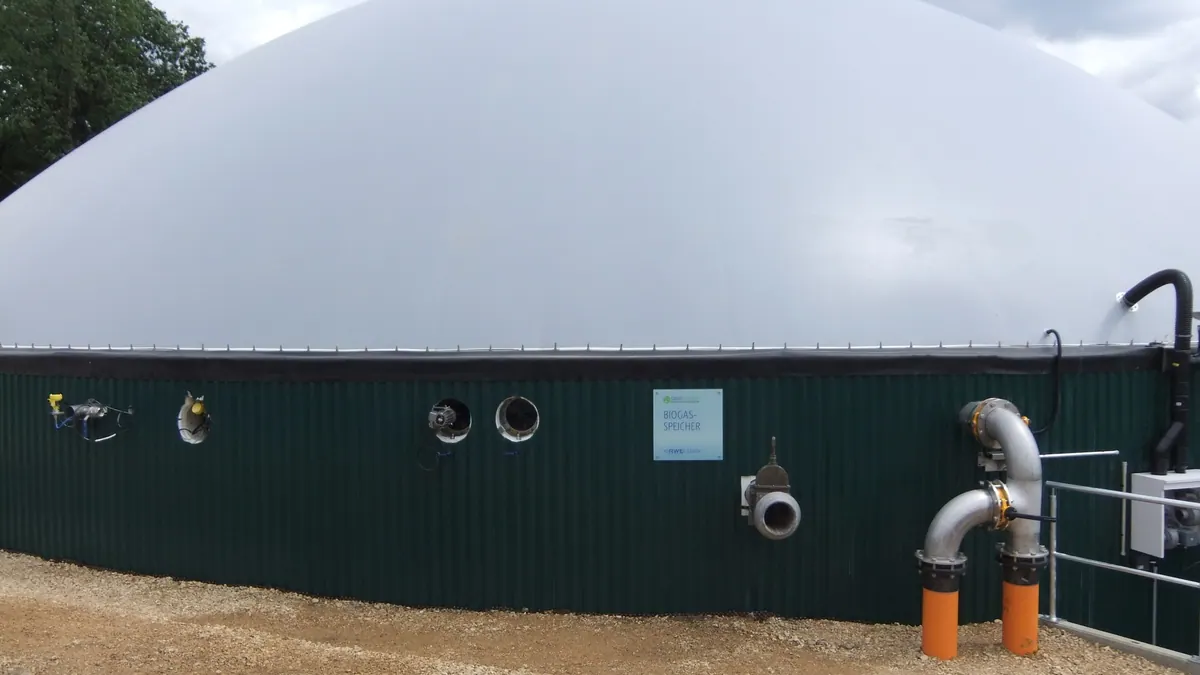
The substructure is everything that holds both sheets in place: the tank rim, clamping profiles, cables, rings, rails and fixings. It transfers forces from the membranes to the tank wall. It also includes the elements that create a tight closure at the edge. Its tasks are:
- transferring tensile forces from the tensioned membranes,
- ensuring a tight gas and air connection,
- protecting the membrane edges from chafing,
- stability over time, despite thermal contraction, corrosion and fatigue.
Table: functions, hazards, inspection
| Element | Main function | Typical hazards | What to inspect |
|---|---|---|---|
| Gas membrane | tightness, variable volume | ageing, fatigue, mechanical damage | tightness (leak detection), condition of seams |
| Outer membrane | weather, shape, load transfer | wind, snow, UV, tears | tension, inflation pressure, surface condition |
| Substructure | fixing and transfer of forces | corrosion, loosening, chafing | tightening torques, corrosion, condition of profiles |
Why it is worth distinguishing the functions
Separating the functions helps with diagnostics. When the blower's air consumption rises, the first suspicion is a leak in the inter-membrane space. When the smell of biogas appears at the edge, the tightness of the gas membrane and the connections at the edge must be checked. When, after snow, we notice folds in the outer membrane, the tension and inflation pressure need to be assessed. This approach also makes it possible, in a tender, to compare offers against the same criteria, for example by requiring separate material specifications and calculations for each layer.
When planning work on the tank roof, remember the safety rules: explosion hazard zones, the risk of falling from height and the ban on stepping onto the membrane without an approved procedure. Work is carried out only by authorised persons in line with the plant manual and risk assessment. Details of gas storage safety are described in the article on the biogas store with a double-membrane roof.
How the connections between functions affect operation
Although the functions are independent, the elements affect each other. The gas pressure under the gas membrane and the air pressure in the inter-membrane space are linked: the blower maintains air overpressure, while the gas store's regulation works on its own thresholds. Changing one parameter without analysing the other can lead to the gas membrane being pressed down too hard, a reduction in storage capacity, or the outer membrane working at incorrect tension. That is why pressure settings and alarms should be described in the plant manual and changed only by authorised persons.
From the perspective of replacing parts, too, it is worth thinking separately. The gas membrane, as the element in contact with the gas, often has a shorter service life than the substructure, and the outer membrane ages mainly under the influence of UV radiation and wind. The substructure, if properly protected against corrosion, can last longer than both membranes. The service plan should therefore provide for different inspection intervals, and the installation date of each element must be recorded in the documentation. Real service lives depend on the material, operating conditions and the manufacturer, so always refer to the supplier's documentation.
Typical symptoms of incorrect operation
If the blower runs almost continuously, the outer membrane loses tension or folds appear, look for leaks in the space between the membranes or in the inflation lines. The smell of biogas at the edge requires immediate reporting to those responsible for safety, not independent attempts to locate the leak. Variations in the gas membrane's position that are inconsistent with gas production usually indicate a problem with level measurement or with the fittings. Such symptoms are best described in the operating log, because their history helps the service engineers.
Questions for the supplier when choosing a solution
- What are the material parameters of each membrane (thickness, resistance to H₂S and UV, gas permeability, strength of joints)?
- How has the transfer of snow and wind loads been designed, and what climatic assumptions and load zone were adopted?
- How is the edge fixing realised and how is it checked during operation?
- What power supply does the blower require, is there a reserve and what happens if it fails?
- What is the procedure for safely replacing or repairing each layer and what qualifications does it require?
Conclusions
The three elements of a membrane roof perform three separate functions: tightness, protection and load-bearing. A good design, specification and inspection programme treat them separately, while bearing in mind their interdependence: the substructure must withstand the forces from the tensioned outer membrane, and the latter in turn must shield the delicate gas membrane.
Sources
Related articles