BiohydrogenEvent
JRC on RFNBO fuels: e-methane is growing, and CO₂ from biogas upgrading is the main carbon source
On 14 January 2026 the European Commission's Joint Research Centre (JRC) published a report on RFNBO fuels. Among other things, it shows that most new e-methane installations plan to use CO₂ from biogas upgrading.
Other language versions: polski.
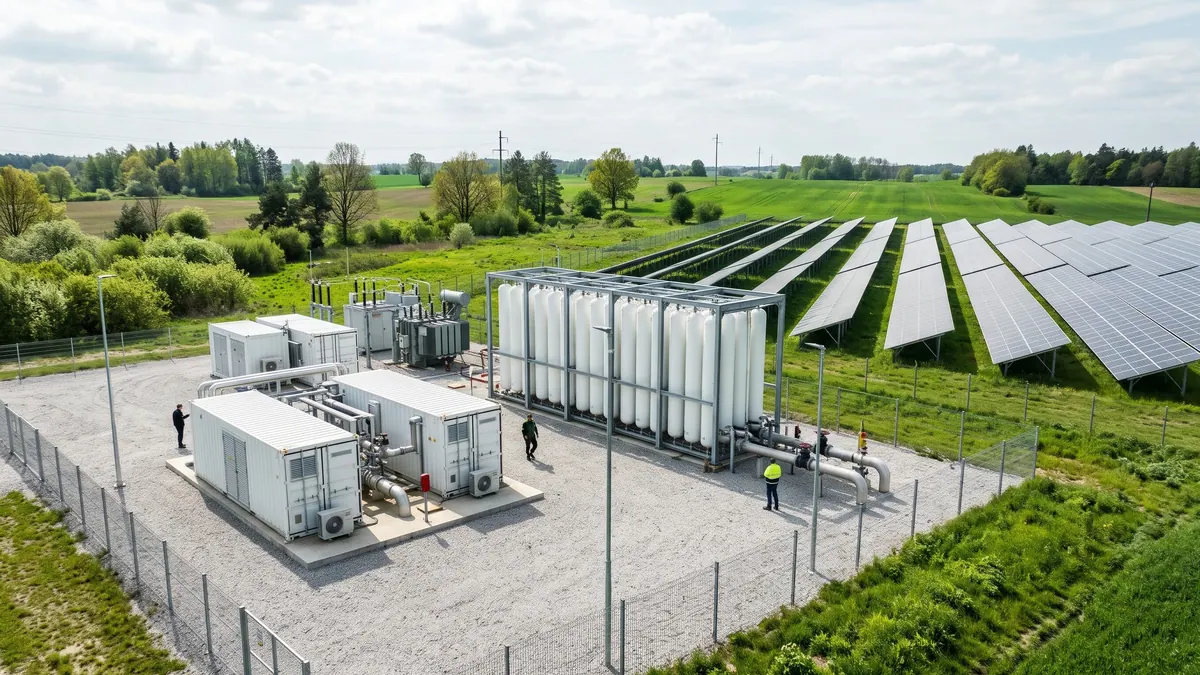
The European Commission's Joint Research Centre (JRC) published on 14 January 2026 a report on renewable fuels of non-biological origin (RFNBO); for the biogas industry the most interesting point is that most new e-methane projects plan to use CO₂ from upgrading biogas to biomethane. The document is titled "Renewable Fuels of Non-Biological Origin in the European Union – 2025 Status Report". The year in the title denotes the scope of the data, not the publication date: in the JRC repository the report is dated 2026-01-14.
What RFNBO are in the report's terms
The report defines RFNBO as pure renewable hydrogen or synthetic fuels produced from renewable hydrogen and captured CO₂ or nitrogen. It deals mainly with the conversion of hydrogen into fuels: e-methane (the Sabatier reaction), e-ammonia, e-methanol, and e-diesel and e-jet fuel (e-kerosene). The key distinction is that the hydrogen must come from renewable sources other than biomass. Therefore biomethane and biohydrogen from fermentation are not RFNBO. We describe the rules of this classification in the article Electrolysis versus biohydrogen: RFNBO and why electricity from biogas is a different category.
Key figures
- Technology readiness: the best market options, including e-methanol, e-jet fuel, e-ammonia and e-methane, have reached TRL 6–8. Methanation itself (e-methane) is at TRL 8–9.
- E-methane: about 35 production installations in the EU, mainly in Germany; capacity of 449 GWh a year (2024), and by 2027 almost 3000 GWh a year across about 55 installations in operation or planned (industry association estimates).
- E-fuels overall: EU capacity below 0.5 Mt a year; 45 e-jet fuel projects and several Power-to-X hubs have been announced, which are to provide capacity in the order of several hundred thousand tonnes a year by 2030.
- Regulatory target: under RED III, transport is subject to a combined sub-target of 5.5% for advanced biofuels, biogases and RFNBO (including at least 1% RFNBO), and in industry RFNBO are to account for 42% of hydrogen use by 2030 and 60% by 2035. Two delegated acts of 2023 define when hydrogen fuels qualify as RFNBO, and the life-cycle emissions methodology, which requires at least a 70% reduction relative to fossil fuels. The effects of RED III for Poland are described in the article RED III entered into force on 20 November 2023, and of the delegated acts themselves in RFNBO delegated regulations published on 20 June 2023.
Where biogas comes in
Synthetic methane needs CO₂. The report lists as sources flue gases, process gases, biogenic CO₂ (for example from alcoholic fermentation and from upgrading biogas to biomethane) and direct air capture. In the section on e-methane the JRC notes that most new installations and projects plan to use CO₂ from upgrading biogas to biomethane, while direct air capture (DAC) is a long-term possibility. In 2025 the company Hy2gen obtained certification for its Atlantis installation in Werlte as the first producer in Germany of RFNBO-compliant e-methane under the RED system, and the Danish PowerLBG installation was accredited under ISCC for e-LNG. For a biomethane plant operator this means a potential offtaker for the CO₂ stream, which today usually goes to the atmosphere; the techniques that separate it are described, among others, in the article on water scrubbing of biogas.
Barriers and horizon
The report points out that competitiveness is limited by: the high price of renewable electricity, low production of renewable hydrogen, energy-intensive CO₂ capture, and high capital expenditure and long permitting procedures. The JRC also recalls the limits on carbon sources: CO₂ from fossil-fuel power plants may be used until 2036, and from other installations covered by the EU ETS until 2041; after that the main eligible sources will be bioenergy installations and DAC. For biogas and biomethane plants this foreshadows the growing importance of their CO₂, but also competition for that stream.
Sources
Questions and answers
Is biomethane an RFNBO?
No. RFNBO are fuels made from renewable hydrogen not produced from biomass, and from CO₂ or nitrogen. Biomethane is made from biomass, so it is a biofuel; it can, however, supply biogenic CO₂ for the production of e-methane.
Related articles