Cogeneration and enginesAnalysis
Major overhaul or replacement of a CHP unit: decision criteria after approx. 60 thousand hours
How to compare a major overhaul, a new or reconditioned unit and a replacement engine: costs, efficiency, emissions, parts and downtime risk, with a numerical example.
Other language versions: Polski, Deutsch, Español, Français, Italiano, Nederlands.
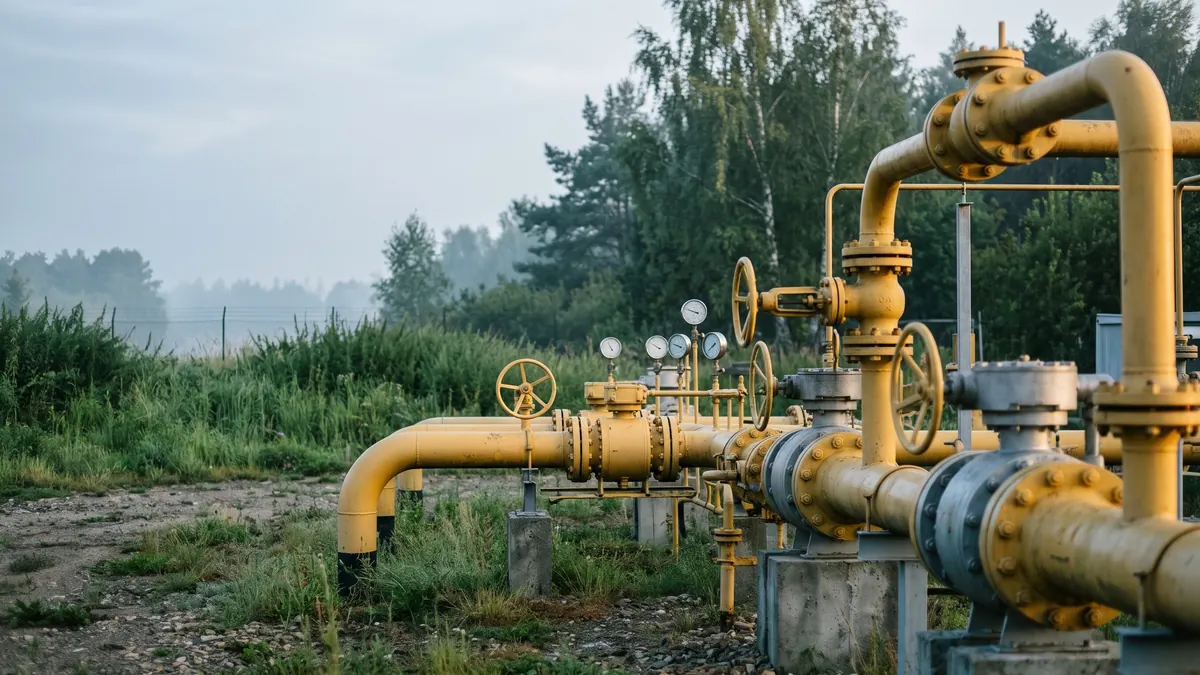
A biogas CHP unit after 50–70 thousand hours of operation, which in continuous operation means 7–9 years, approaches the limit at which the manufacturer recommends a major overhaul. Then a decision has to be made: carry out a major overhaul of the engine, buy a new or reconditioned unit, or replace just the engine with a replacement one. The decision depends on the cost of each path, the expected efficiency, emission requirements, the horizon of the energy contract and the risk of downtime. Below we propose a decision model with a numerical example. The figures are illustrative assumptions, not data from a specific installation.
What a major overhaul includes
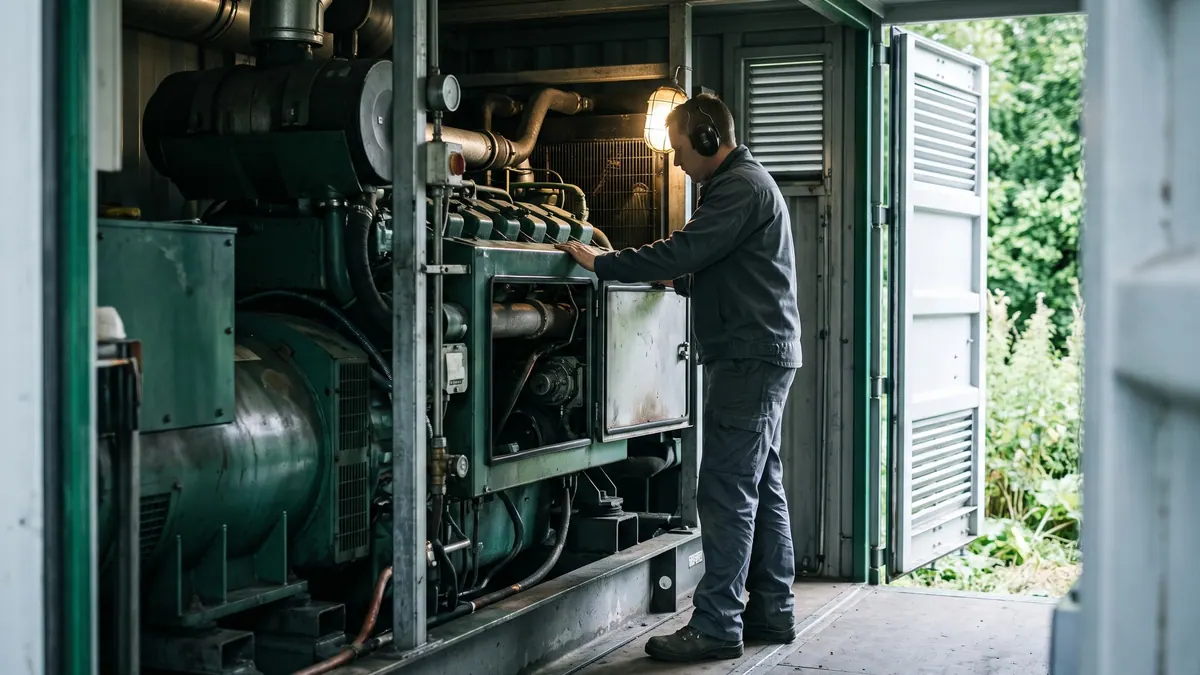
A major overhaul usually means replacing liners, pistons, rings, crankpin and main bearings, valves, seats and guides, gaskets, often the turbocharger and pumps, as well as inspection or reconditioning of the crankshaft. It is carried out by the manufacturer's service or a specialised workshop, on site or in the workshop. The cost is, indicatively, from a dozen or so to over 30% of the price of a new engine, depending on the scope. Downtime is typically from several days to several weeks. After the overhaul efficiency approaches the value from the period after commissioning, not the level of the latest designs.
Options
| Option | Advantages | Disadvantages |
|---|---|---|
| Major overhaul | lowest cost, connections and documentation retained | efficiency as before, older technology, risk of ageing of other components |
| Replacement engine (swap of the complete engine) | short downtime, warranty on the engine | generator and ancillaries remain old |
| Reconditioned unit | lower price than new, warranty | variable quality, limited choice |
| New unit | higher efficiency, newer emission performance, full warranty | highest cost, connection works, longer delivery |
Decision criteria
Efficiency. A new machine can have an electrical efficiency 1–4 percentage points higher than a unit after overhaul. With gas consumption corresponding to 10 million kWh of energy in the fuel a year (a 500 kW unit, 8,000 h), a gain of 2 points is about 200,000 kWh of electricity, that is at a price of PLN 0.40/kWh about PLN 80 thousand a year.
Emissions and legal requirements. New units usually meet the requirements for NOx and CO better. For an old engine you have to check whether the permit and the regulations do not require changes, for example a catalyst.
Availability of parts. For models withdrawn from production, parts become more expensive and waiting times grow. This is an argument for replacement.
Residual value. A new unit retains resale value, and an old one after overhaul partly does. In the calculation it is worth taking both into account.
Contract horizon. If support or the energy sales contract ends in 2–3 years, an investment in a new unit must pay back faster or must be justified in the perspective after the contract.
Downtime risk. An overhaul scheduled for winter, when heat offtake is greatest, is more costly than one in summer.
Numerical example (illustrative)
Assumptions: a 500 kW unit, operation 8,000 h/year, horizon 8 years, discount rate 8%, margin from energy and heat PLN 0.40/kWh.
- Major overhaul: PLN 450 thousand, electrical efficiency 40%, service PLN 0.05/kWh of production, 3 weeks of downtime (lost production 21 days × 24 h × 500 kW ≈ 252,000 kWh, about PLN 100 thousand).
- New unit: PLN 1.6 million, efficiency 43%, service PLN 0.04/kWh, downtime of 2 weeks (about PLN 67 thousand), residual value after 8 years 20% of the price (PLN 320 thousand).
The additional gain from efficiency with the same gas is 3/40 = 7.5% of production, that is about 300,000 kWh a year (at a baseline production of 4 million kWh), and so about PLN 120 thousand/year. The saving on service is PLN 0.01/kWh × 4 million kWh = PLN 40 thousand a year. In total about PLN 160 thousand a year. At a discount of 8% and 8 years the present value factor is about 5.75, so the present value of the gain is about PLN 920 thousand, plus the residual value of PLN 320 thousand discounted (about PLN 170 thousand). The difference in outlays is 1.6 million − 0.45 million = PLN 1.15 million, plus the difference in the cost of downtime (−PLN 33 thousand in favour of the new unit). The net result is close to zero or slightly positive (about 920 + 170 + 33 − 1,150 ≈ −27 thousand PLN), so the paths are comparable. This indicates that the decision is settled rather by availability of parts, emissions and the contract horizon than by efficiency alone.
Recommended process
- Gather data: hours, trends of compression pressures, oil consumption, oil analyses, the service report.
- Ask for at least two offers for each path, with an explicit scope and warranty.
- Calculate the model with your own energy and heat contract.
- Verify the environmental requirements.
- Set the date of the overhaul or replacement outside the heat peak.
A major overhaul is not always the cheaper choice, and a new unit does not always pay back. The outcome is decided by the conditions of the specific installation. This text concerns only the decision calculation. What ordinary inspections and overhauls include is described in the article Servicing a CHP gas engine: oil, spark plugs, valves and overhauls, and the way of using heat, on which the profitability of a new unit depends, in the article Waste heat from cogeneration at a biogas plant: balance, seasonality and ways of use.
Sources
Related articles