Tanks and membranesGuide
Protective coatings and linings for the interior of a concrete tank: epoxies, PE/PP and selection criteria
Resin coatings and plastic linings protect concrete from acids and condensate. We compare both solutions, the substrate, layer thicknesses and quality control.
Other language versions: Polski, Deutsch, Español, Français, Italiano, Nederlands.
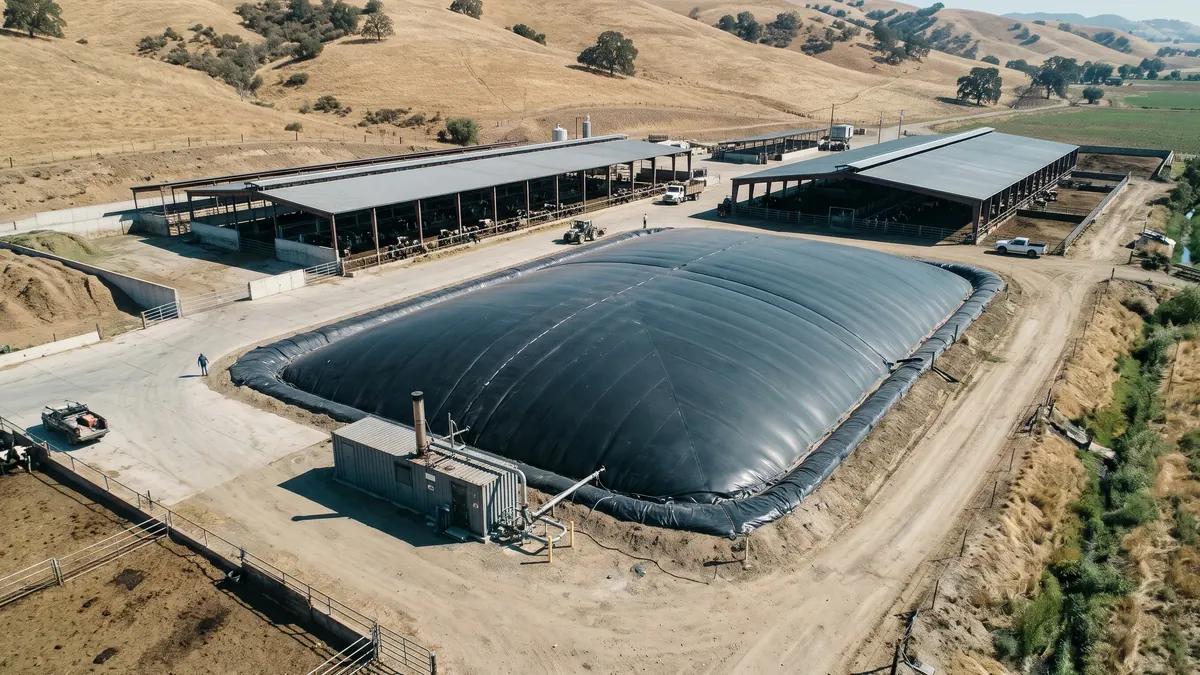
Protecting the interior of a concrete tank relies on two groups of solutions: coatings applied on site and linings installed like cladding. Both have the same aim – to separate the concrete from organic acids, condensate and moisture – but they differ in their requirements for the substrate, in crack resistance and in the method of control. Below are the selection criteria, without naming brands.
Resin coatings
Epoxy systems are used most often, polyurethane or vinyl ester ones less often. A coating consists of a primer layer (which penetrates the concrete and bonds with it), an optional levelling filler layer and one or two top layers. The total thickness is usually in the range from about 0.3 to several millimetres, depending on the system; the range is set by the manufacturer in the technical data sheet and must be observed. The advantage is good adaptation to irregular surfaces and the possibility of local repairs; the disadvantages are sensitivity to substrate moisture during application and a limited ability to bridge moving cracks.
Plastic linings
Linings made of polyethylene (PE) or polypropylene (PP) are resistant to acids and practically do not absorb water. Sheets or films with anchors are cast into the concrete during concreting or fixed afterwards, and the joints are connected by extrusion welding or hot-air welding. The thickness is usually several millimetres. The advantage is high chemical and mechanical resistance; the disadvantages are high cost and more difficult execution around penetrations, corners and curves, as well as the risk of moisture accumulating behind the lining.
Substrate preparation
Errors in preparation are the most common cause of coating delamination. The required steps include:
- Removal of damaged concrete and cement laitance by shot blasting, milling or hydrodynamic cleaning with high-pressure water.
- Repair of defects with mortars compliant with the PN-EN 1504 series and filling of cracks.
- Checking the surface pull-off strength; values of the order of several tenths to 1.5 MPa are typically required, according to the system data sheet.
- Measurement of concrete moisture and the dew point, because application on a damp substrate or during vapour condensation causes blisters.
- Degreasing and dust removal.
Concrete saturated with acids and corrosion products must first be levelled and cleaned, not painted.
Crack bridging
Stabilised cracks can be filled and covered with a coating. Moving cracks require flexible sealing or a coating with a reinforcing fleece bridging the crack. If large temperature changes or settlement are expected, it is better to choose a lining, which stretches independently of the concrete.
Quality control
During the works the following are controlled:
- conditions: substrate and air temperature, relative humidity, dew point,
- wet and dry film thickness,
- adhesion on control samples (pull-off test),
- coating continuity by a spark test (detects pores and pinholes),
- lining welds: by a vacuum, pressure or spark test.
The documentation, including the material batch card and the dates and conditions of application, is the basis for warranty claims.
Durability and repairs
The declared durability of systems is usually stated in years and depends on the aggressiveness of the environment. The coating is inspected at every emptying of the tank: one looks for blisters, cracks, delamination, colour changes and soft spots. Minor damage is repaired locally after grinding and degreasing, and larger damage by removing the zone down to sound substrate. A lining is repaired by welding on a patch, if the material is weldable.
How to choose
| Criterion | Coating | Lining |
|---|---|---|
| Initial cost | lower | higher |
| Chemical resistance | good, depends on the system | very good |
| Sensitivity to substrate | high | moderate |
| Crack bridging | limited | good |
| Repairability | local | by welding on patches |
| Difficult geometries | easier | more difficult |
In the gas zone, where exposure is greatest, it is worth considering a system of higher resistance than in the submerged part.
What to look out for
Before commissioning the works, ask the contractor to make a trial area on a section of the tank. It makes it possible to assess the substrate preparation, the adhesion and the appearance of the coating before the entire surface is done. It is a small cost compared with the risk of the whole layer delaminating after the first season of operation. The trial area is documented with photographs, and its results, including layer thickness and the pull-off test, are attached to the acceptance record.
Summary
A coating or lining that is well selected and executed protects concrete for years, but only with correct substrate preparation and quality control. The choice is based on the condition of the concrete, the mobility of cracks, the geometry of the tank and the budget. It is always worth requiring documentation of the work.
Sources
Related articles