InnovationAnalysis
Protein from biogas: methanotrophs and protein biomass as feed, realistic or futuristic
Methanotrophic bacteria can convert methane from biogas into feed protein. We assess the technology, safety, regulations and economics for agricultural biogas plants.
Other language versions: Polski, Deutsch, Español, Français, Italiano, Nederlands.
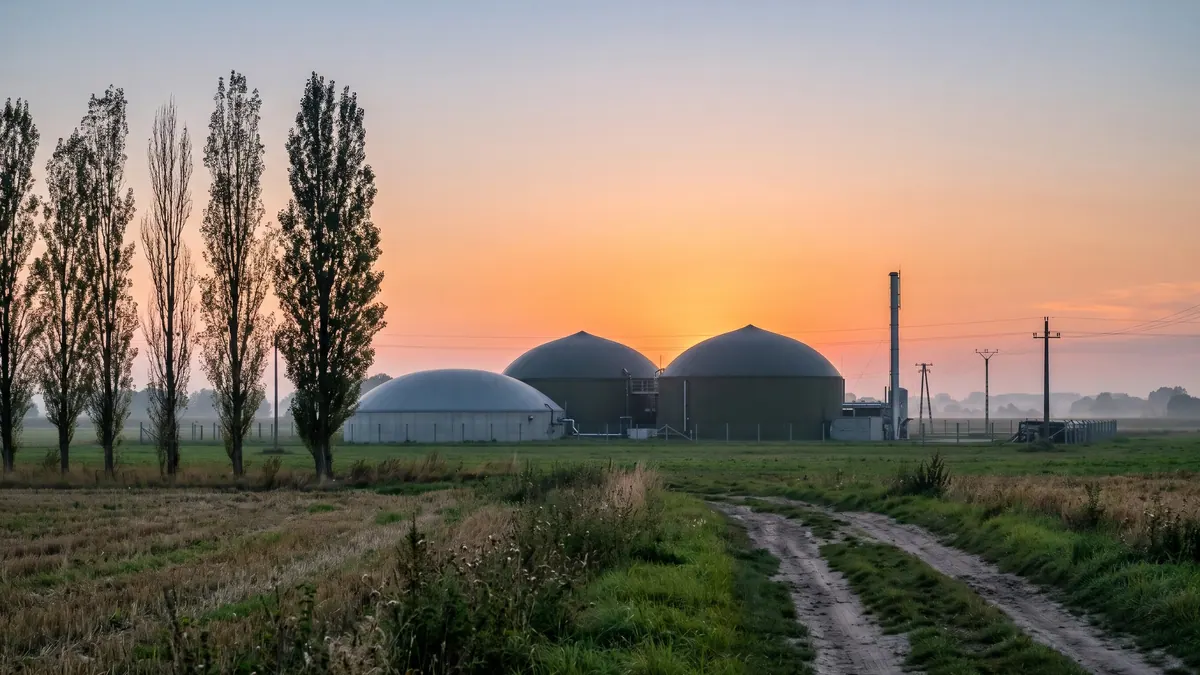
Protein from methane is technically possible and exists in the first commercial installations, but for a typical agricultural biogas plant it is today something to observe rather than an investment offer. Below we discuss the principle, the requirements and the place of this route among other ways of using biogas.
The principle
Methanotrophic bacteria (methanotrophs) use methane as a source of carbon and energy, oxidising it with oxygen. The first step is catalysed by methane monooxygenase, the following steps lead to formaldehyde, and this is built into biomass. The result is cell biomass, called single cell protein (SCP), with a protein content usually of 60–70% of dry matter according to literature reviews, with a share of fats and nucleic acids. In practice the cultures are often mixed: methanotrophs cooperate with accompanying bacteria that remove metabolites.
The reaction is strongly exothermic: oxidation of methane releases a lot of heat, so the reactor needs intensive cooling, and part of the methane's energy is converted into heat rather than biomass. The reactor must also supply a lot of oxygen, far more than in classical aerobic fermentations, and the solubility of methane and oxygen in water is low, which limits the growth rate.
Reactors
Loop and airlift reactors are used, in which gas is fed into the lower part and the circulation of the liquid provides mass transfer. The designs aim to increase the gas-liquid contact area and to separate the gas phases safely. The biomass is separated, dewatered and dried, and the process water returns to the cycle.
Process requirements
- Gas purity: biogas contains CO₂ (tolerated or removed), hydrogen sulphide and other compounds that can inhibit growth or end up in the product; cleaning adapted to the installation is required.
- Oxygen: supplied as air, pure oxygen or a mixture; its cost is significant.
- Nitrogen and salts: ammonia or nitrates, phosphorus, trace elements, which can come from digestate, an interesting link with the biogas plant.
- Heat: removal of the excess or its utilisation.
- Safety: a mixture of methane and oxygen can be explosive; the design must ensure operation outside the flammability limits or with controlled zones, sensors, flame arrestors and ATEX. This is the main difference compared with an ordinary biogas plant.
Feed regulations
Biomass intended for feed must meet EU feed law, including Regulation (EC) 767/2009 and related acts on feed materials. If the material is not in the catalogue of feed materials, placing it on the market requires notification and compliance with safety and labelling requirements; in selected cases it may need to be assessed as a novel feed ingredient. The exact routes depend on the application (feed for fish, poultry, pigs) and on changes in the rules, which we do not prejudge in this text. The origin of the methane from biogas does not exempt from the requirements; it is important to document the absence of contaminants (metals, process residues, microbiology).
Economics and maturity
Profitability is decided by the relationship between the price of feed protein (e.g. soy or fish meal) and the cost of gas, oxygen, energy and depreciation. Biogas is cheap, but energy prices and the upgrading of biomethane set the opportunity cost: if the methane went to the grid, its value would be determined by the gas price and the guarantees of origin. Protein makes sense when the feed price is high and the biogas is available on a large scale and in a steady stream.
The first commercial installations run mainly on natural gas or large methane streams; for biogas from small agricultural biogas plants, reports concern mainly research and pilots. The readiness level for biogas is roughly TRL 6–7.
Comparison with other routes
Biomethane to the grid and CHP are mature and have known costs and buyers. Protein from methane requires new infrastructure, oxygen, regulation and a feed market. For the operator the key question is whether a local feed buyer is ready to sign a long-term contract. The choice between the classical routes is discussed in the article on CHP or biomethane.
Conclusions
- The idea is technically realistic, especially for large gas streams.
- For an agricultural biogas plant the barriers are scale, the safety of CH₄–O₂ mixtures, feed law and the lack of a market.
- It is worth following pilots and considering a partnership with a research centre, rather than an independent investment.
- If the project considers financing, documentation for feed certification and a risk analysis for the financing institution must be prepared.
Sources
Related articles