Safety and ATEXGuide
Safety at a biomethane plant: oxygen in biogas, compressors, odorant and grid injection
Biogas upgrading brings compression, higher pressures and a connection to the grid. We discuss oxygen, compressors, odorant, pressure reducing stations and off-spec gas.
Other language versions: Polski, Deutsch, Español, Français, Italiano, Nederlands.
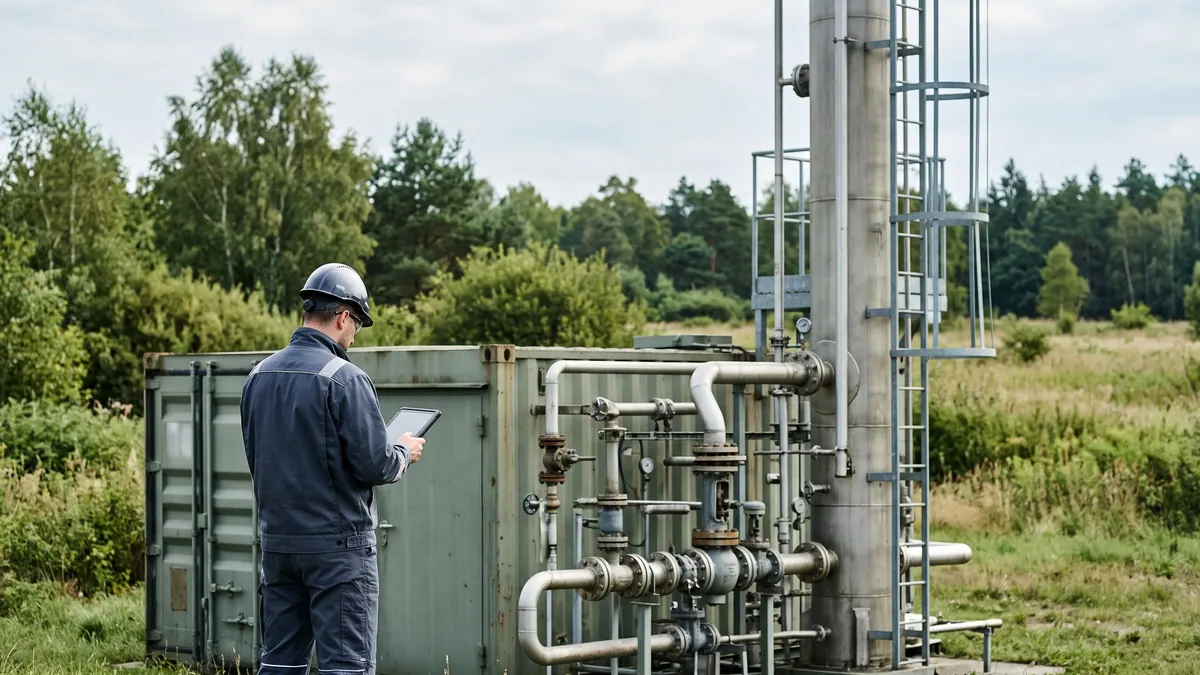
Adding an upgrading installation changes the character of the establishment: a low-pressure biogas plant becomes a site with compressed gas, pressure vessels and a connection to the grid. The remarks below concern risks specific to biomethane plants; upgrading technologies, quality parameters and grid connection formalities are described separately.
Oxygen: the risk in raw gas and in biomethane
Raw biogas usually contains trace amounts of oxygen (originating from microaerobic desulphurisation in the digester, ingress through leaks, or air in gas from certain sources). Methane forms an explosive mixture with oxygen over a wide range of concentrations, and methane itself has a lower explosive limit of the order of 4.4–5 % by volume in air. In upgraded gas the methane concentration is high, so a "rich" mixture does not explode as long as oxygen does not appear in the system in an amount sufficient, given local concentration differences, to enter the flammable range – and then the risk concerns especially places where gas mixes or streams expand.
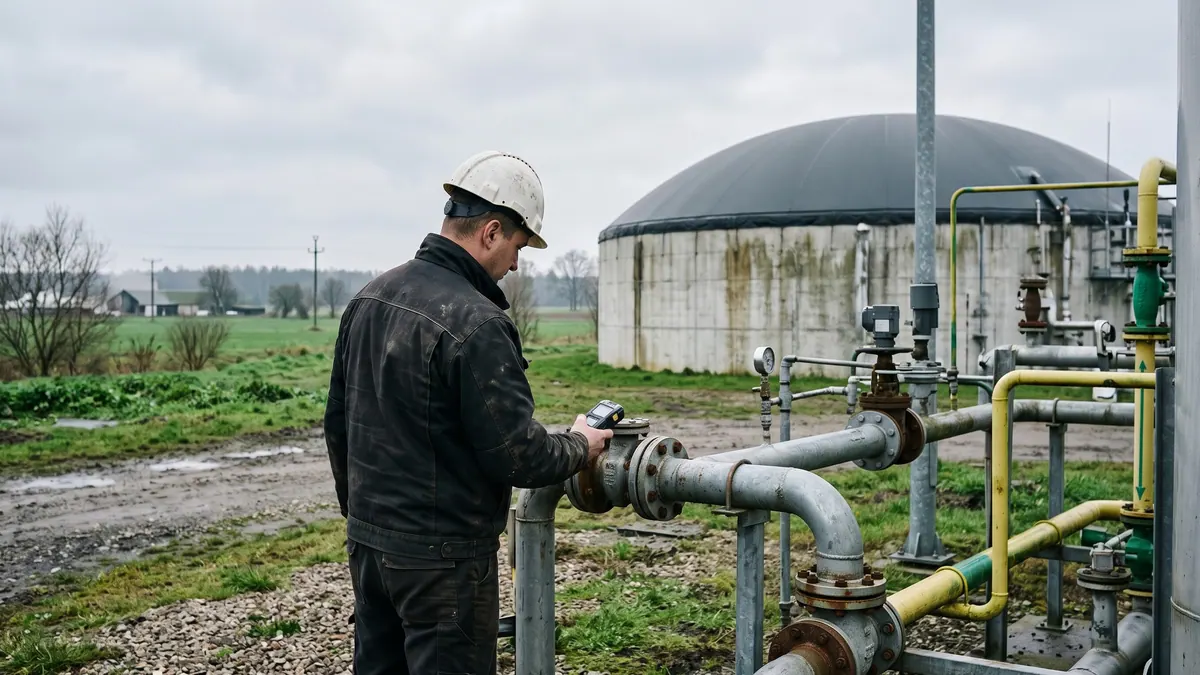
For this reason upgrading installations have oxygen measurement at the inlet and outlet, and usually also on branches important to the process. Gas grids additionally impose quality requirements on the oxygen content of biomethane, and the limit value depends on the operator and the regulations in force; it should be checked in the connection agreement and the current grid requirements. When a measurement shows a value higher than permitted, the installation should automatically cut the gas off from the grid and direct it to the flare or back into circulation.
Transient states are especially dangerous: start-up, shutdown, and downtime, in which the system is filled or emptied. Nitrogen inerting and purging procedures are then more important than in normal operation.
Compressors and pressure installations
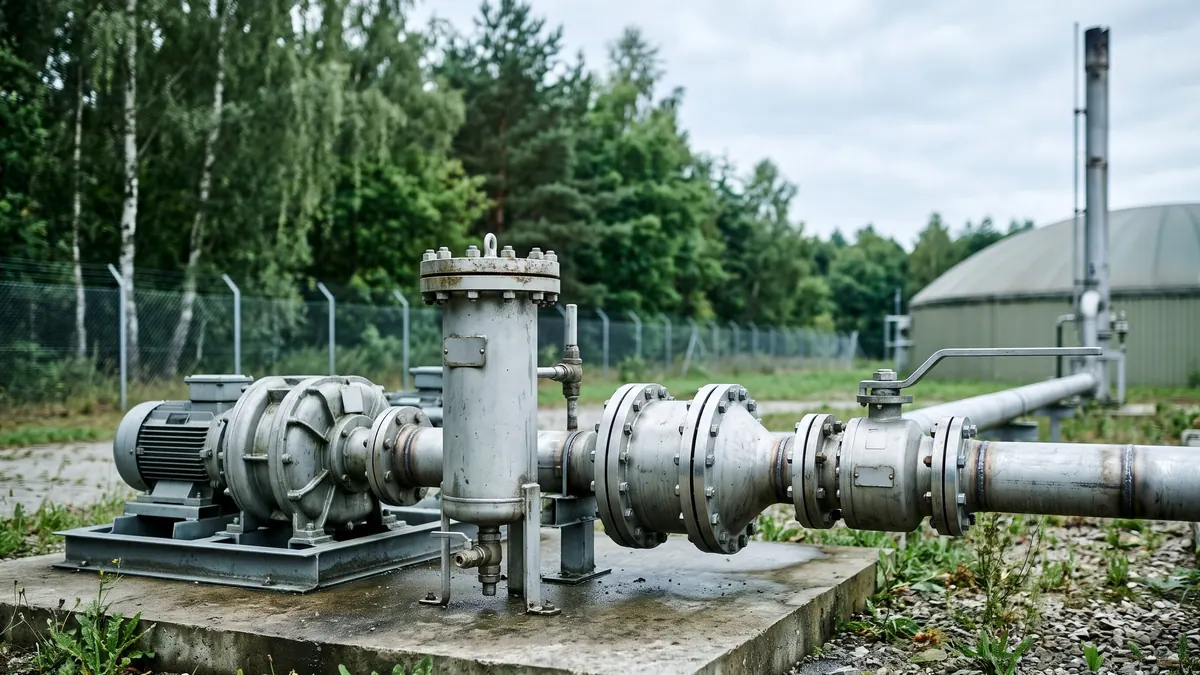
Compressors raise the pressure of biogas or biomethane from several hundred millibars to several, or a dozen or so bar, and at CNG stations up to 200–250 bar. Pressure equipment and vessels are subject to Directive 2014/68/EU and Polish regulations on technical supervision; some of them require acceptance and periodic examinations by the Office of Technical Inspection (UDT). The detailed scope depends on the parameters and type of equipment.
Operating notes: overpressure protection on every section, interstage cooling and discharge temperature, drainage, checking the tightness of connections and pipeline vibrations, protection against vacuum on the suction side (ingress of air). A compressor in a container requires ventilation and gas sensors; electrics and drives in a hazardous area must carry the appropriate Ex marking.
A typical mistake is thinking that high pressure turns the gas into an "ordinary" industrial gas. Explosion hazard zones around flanges, glands and relief valves still apply, and a failure at high pressure produces a jet reaction force and strong cooling due to expansion.
Odorant
Biomethane injected into the distribution grid must have a perceptible smell, so the station doses odorant. Sulphur compounds (e.g. THT – tetrahydrothiophene) or sulphur-free mixtures are used. Odorant has a very intense smell at minimal concentrations, is harmful when inhaled and on contact with skin, and a leak can cause false alarms in the neighbourhood. The rules: storage in sealed tanks with a bund, dosing through a closed system, container replacement according to the instruction, personal protective equipment, and a procedure for a spill. A separate matter is propane added to biomethane to adjust the calorific value – it is one more flammable substance on site that must be included in the Ex document and the risk assessment.
Pressure reducing and metering stations and injection
The station at the connection reduces, measures and monitors the gas parameters (pressure, flow, quality). Safety is based on multiple layers: a working regulator, a standby regulator, safety and shut-off valves, and an interlock system after pressure is exceeded. Pressure reduction causes the Joule-Thomson effect, that is, a drop in gas temperature; combined with moisture this can lead to icing of fittings, hydrates and frozen valves, so heating or gas drying is used. The site also has requirements on the division of ownership and responsibility between the producer and the grid operator; this division is described in the connection agreement.
Off-spec gas
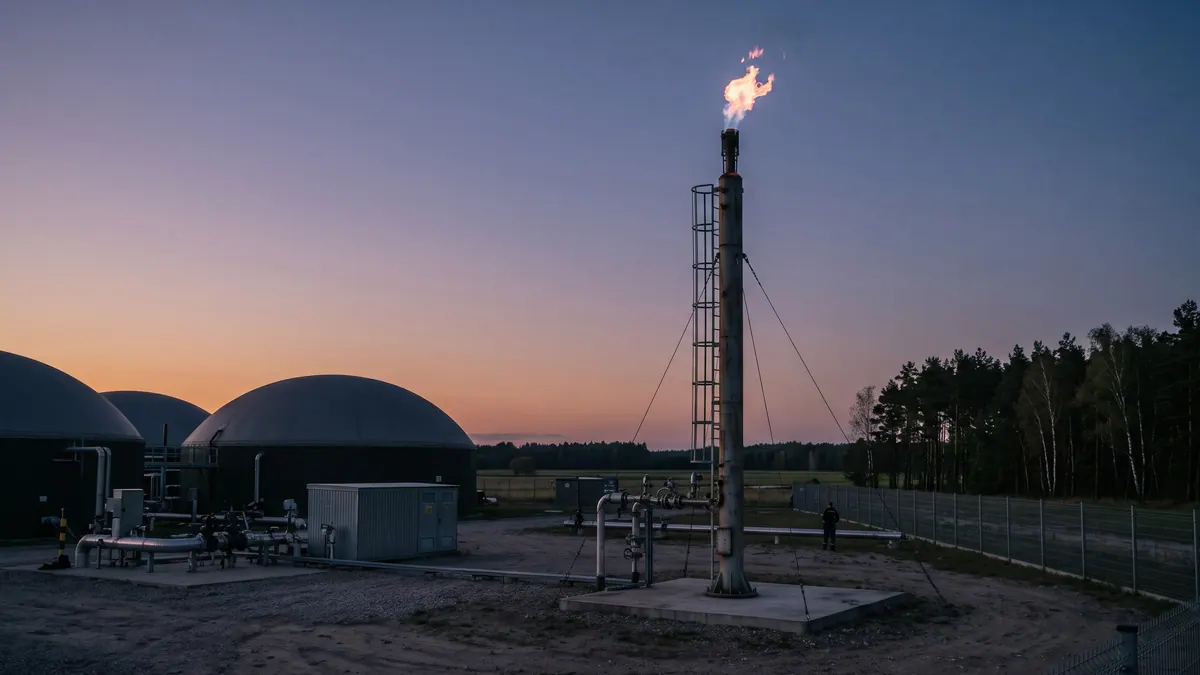
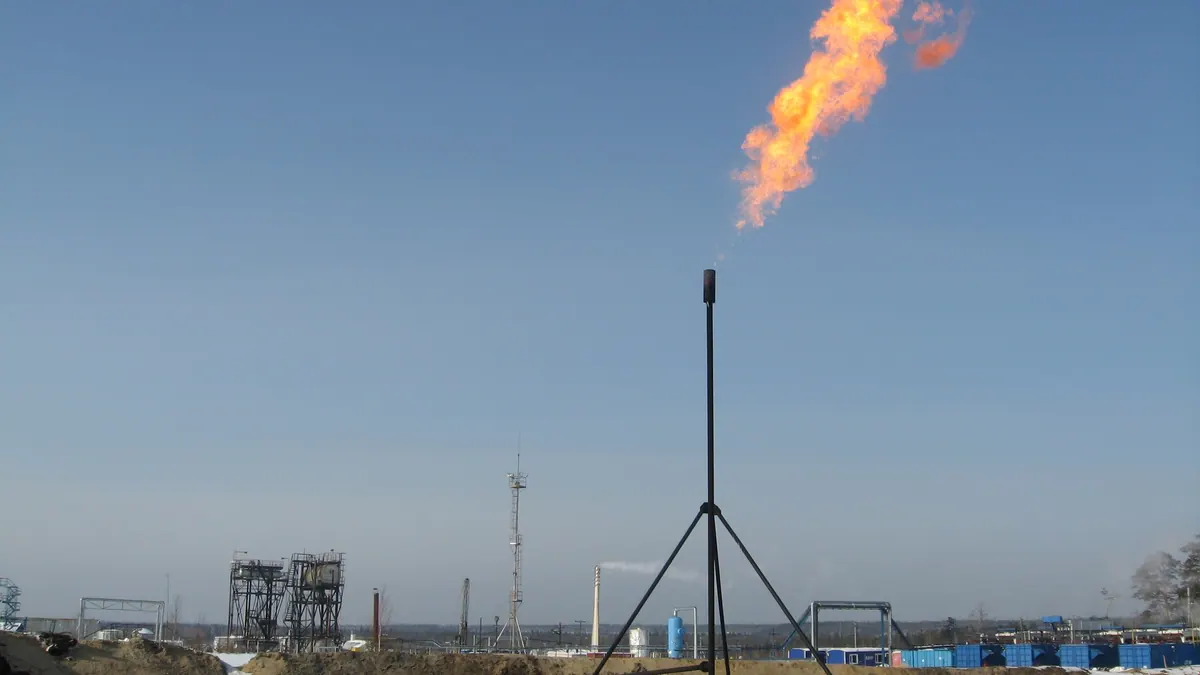
The most important rule: gas that does not meet the requirements must not reach the grid. For this purpose gas quality analysers are connected to the shut-off valve, and the gas is directed to the flare or returned to the start of the process. The flare must be in working order and have a capacity matched to the maximum flow, because in a failure it takes the whole stream. In such a situation, signals to the grid operator also apply. It is worth periodically testing the whole path: from a simulated alarm, through valve closure, to flare ignition.
Checklist
- Is the oxygen measurement duplicated or regularly verified with calibration gas?
- Do the start-up and shutdown procedures include inerting?
- Do compressors and vessels have current technical supervision documents?
- Do the Ex zones cover the compressor, the odorant station and the pressure reducing station?
- Are odorant and propane included in the risk assessment and the emergency plan?
- Has the flare discharge route been tested?
Typical mistakes
- No verification of analysers, which drift over time.
- Downplaying transient states (start-up, shutdown).
- Station operating instructions without a description of what to do in case of an odorant leak.
- A flare without regular ignition tests.
Sources
Related articles