Tanks and membranesExplainer
Tank wall penetrations: agitators, pipes and sight glasses as leak sources
A tank wall has many openings: for agitators, pipes, manholes and sight glasses. We describe the types of penetrations, the most common leak locations and the inspection of seals.
Other language versions: Polski, Deutsch, Español, Français, Italiano, Nederlands.

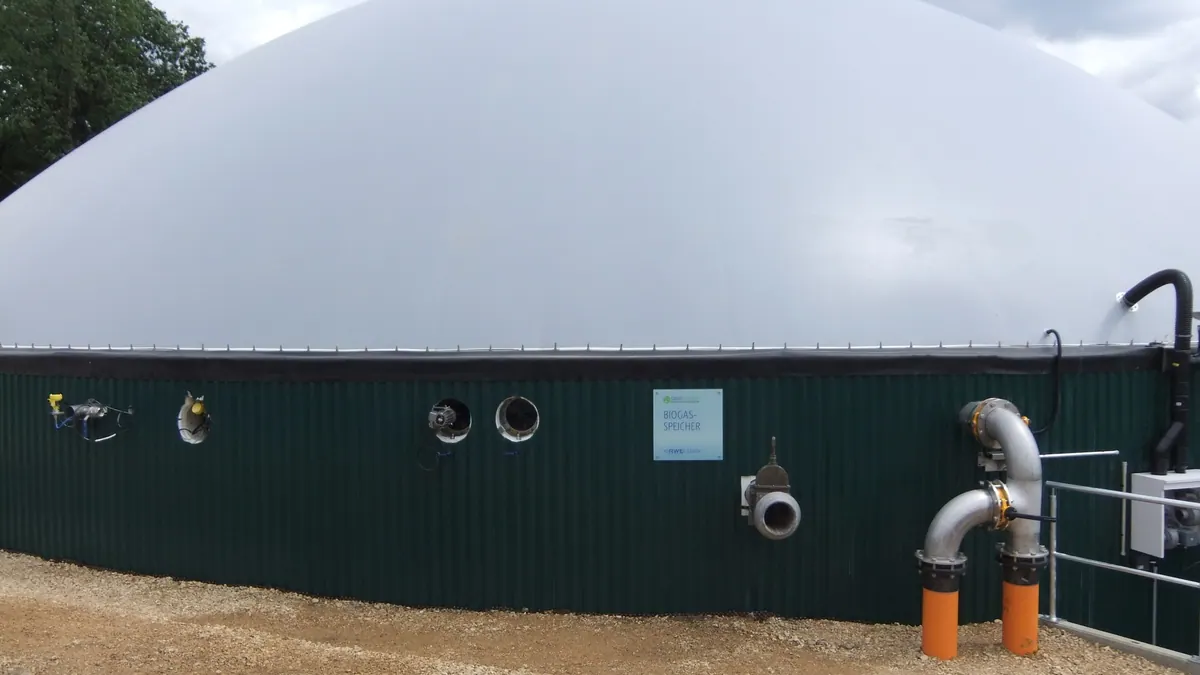
From outside, the wall of a digester tank looks like a monolith, but in practice it has a dozen or so openings: for agitator shafts, substrate and digestate pipes, gas and heating pipelines, inspection windows and manholes. Each of these openings is a potential place of gas or liquid leakage, and their number and the care taken in execution determine tightness more than the thickness of the concrete itself. The article describes the types of penetrations, their typical defects and methods of inspection. We discuss the choice of agitators in the article on agitators in the digester; here we are interested solely in tightness.
Types of penetrations
| Penetration | Function | Typical sealing solution |
|---|---|---|
| Side agitator shaft | transmission of torque to the blade inside | sleeve, stuffing box or mechanical seal, sometimes with a barrier fluid |
| Liquid pipes | filling, overflow, emptying | sleeve cast into the wall, flange, gasket |
| Gas and condensate pipes | gas discharge, drainage | stub, flange, siphon |
| Heating pipes | wall or internal heating | sleeves, sealing rings |
| Sight glass, inspection window | observation of the interior | glass or plastic in a housing with a gasket |
| Manhole | access to the interior | cover pressed by a gasket |
Why this is where leaks most often occur
Penetrations are loaded in ways that are not visible in the static calculations of the wall:
- Vibration and agitator forces: the agitator shaft transmits dynamic forces to the sleeve and the seal, which, where there is play, causes the seal to wear away.
- Tank movements: settlement, thermal expansion and deflection of the wall cause relative movement of the pipe and the wall; rigidly cast-in pipes can crack or detach from the concrete.
- Aggressive environment: humid biogas with hydrogen sulphide promotes corrosion of steel flanges and bolts, and digestate contains compounds that age elastomers.
- Ageing of gaskets: elastomers harden, lose elasticity and stop sealing; the higher the temperature, the faster.
- Workmanship: imprecise seating of the sleeve, unevenness, lack of expansion joints or lack of proper sealing at the junction of concrete and sleeve.
Tightness at the junction with concrete
Penetrations cast into the wall should have anti-diffusion collars or rings that lengthen the leakage path, and a seal at the junction with the concrete, e.g. a swelling tape or a sealing compound. A typical symptom of leakage is a damp or discoloured spot around the sleeve, salt efflorescence or a smell of gas. Repair requires drying and injection or making a new seal; the scope depends on the cause.
Agitators: shaft sealing
The shaft of a side agitator passes through the wall and rotates in the seal. Stuffing boxes with rope packing, mechanical seals and also systems with a barrier fluid or grease are used. The seal works in a mixture of liquid with fibres and sediments, so it is particularly exposed. Inspections cover leakage, housing temperature, shaft play and grease level. Replacement is carried out in accordance with the manufacturer's recommendations, often during a tank standstill, and in some designs it is possible to replace the seal with the tank full, thanks to valves or push-in systems. Replacement during operation requires caution because of the hazard from gas and liquid.
Sight glasses, windows and manholes
Sight glasses made of glass or plastic are prone to fouling, scratching and cracking under temperature differences. Manholes with a gasket pressed by bolts or latches require checking of the condition of the gasket and its tightening, and after every opening — checking the position of the gasket. It is recommended to keep a list of all penetrations with their location, type of seal and date of the last inspection.
Inspection and replacement
A practical inspection plan for penetrations includes:
- a visual check at every walk-round, especially around agitators and manholes;
- once a year, a measurement at penetrations with a methane detector or a camera for gas imaging;
- inspection of the tightening of flanges and the condition of bolts, using the correct torques from the instructions;
- a stock of spare parts for the seals with the shortest service life;
- replacement of seals according to the manufacturer's guidance or after a leak has been found;
- an entry in the leak register with the date and method of repair.
Leaks from liquid penetrations also have environmental consequences: digestate escaping through the wall can contaminate the ground, so it is worth providing for the possibility of observation in the bund and in the inspection drainage. Gas leaks mean energy losses and a risk of explosion, so detecting them is a priority task.
How to keep the list of penetrations
The list of penetrations is a simple table that can be set up in one day. For each item the number, location on the diagram, type of seal, installation date, date of the last inspection and date of the next one are recorded. For agitators the number of operating hours is added, and for manholes the date of the last opening. Such a list makes it possible to notice quickly that the seal of one agitator has been replaced twice as often as the others, which usually points to a problem with shaft alignment. The programme for checking leaks across the whole installation is described in the article on leak detection and repair.
Conclusion
Wall penetrations are small elements on the scale of a tank, but decisive for its tightness. Well designed and regularly inspected, they cause no trouble, and when neglected they are the most frequent source of small, long-lasting leaks that over the years add up to a significant loss of gas.
Sources
Related articles