InnovationExplainer
Wastewater treatment plants as biorefineries: energy, phosphorus and the requirements of Directive 2024/3019
Directive (EU) 2024/3019 steers treatment plants towards energy neutrality and nutrient recovery. Consequences for biogas from sludge. Status as of September 2026.
Other language versions: Polski, Deutsch, Español, Français, Italiano, Nederlands.
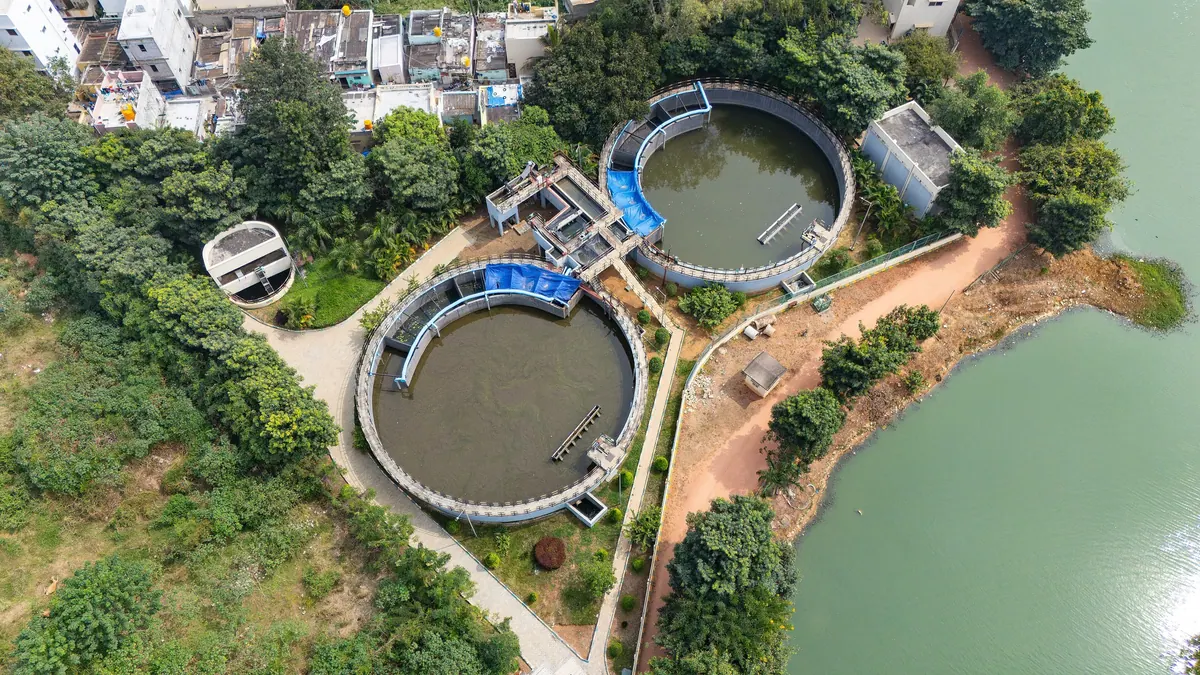

Directive (EU) 2024/3019 treats a wastewater treatment plant not only as a facility that removes pollutants, but also as an energy producer and a supplier of recovered nutrients. Below we discuss the provisions that matter for biogas from sludge. The text describes the situation as of September 2026; national rules implementing the directive may change later.
What the directive changed
Directive 91/271/EEC of 1991 set the rules for treating urban wastewater in agglomerations, and we already described the direction of its recast in connection with the position of the EU Council of October 2023. Its recast, Directive (EU) 2024/3019, updated the requirements in line with current knowledge about pollutants and with climate goals. It entered into force on 1 January 2025, and Member States must transpose it into national law by 31 July 2027. Poland is preparing implementing rules, and the exact content of the national solutions may differ from the general principles of the directive.
Energy neutrality
The largest treatment plants (agglomerations with a large population equivalent) are to aim for energy neutrality: the energy used is to equal the renewable energy generated on site or in the immediate vicinity. The final target is the year 2045, and the directive provides for intermediate stages (successive thresholds in 2030, 2035 and 2040); the exact percentage values are worth reading directly in the text rather than taking from secondary sources. Energy audits are part of the requirements.
Sewage sludge is the most important energy resource of a treatment plant. Digestion of sludge produces biogas with a methane content of usually 60–68%, and the energy from it often covers a significant part of the plant's demand; the amount depends on the wastewater, the sludge and the degree of modernisation. Reaching neutrality usually requires further reduction of consumption (aeration), co-digestion and, at some plants, photovoltaics and heat pumps.
Biogas from sludge and co-digestion
Biogas production can be increased by adding external substrates: fats from separators, food waste, organic fractions. This requires free capacity in the digesters, legal arrangements (waste status, codes) and the ability to accept an additional nitrogen load in the plant's process train, since reject water from sludge dewatering is rich in ammonia and can overload the biological stage. The broader rules of co-digestion are described in the posts on waste processing biogas plants.
Uses of biogas are a cogeneration engine, a boiler and, increasingly, upgrading to biomethane. Treatment plants have a steady gas stream throughout the year and their own heat demand, which makes them a suitable place to consider CHP. Biomethane becomes attractive if a gas grid or a fuel buyer is nearby. The choice of path, similar to that described in the article on converting a biogas plant with cogeneration into a biomethane plant, requires a heat balance.
Phosphorus and nitrogen recovery
The directive introduces or strengthens requirements for the recovery of phosphorus (and also nitrogen) from wastewater or sludge. The aim is to reduce dependence on phosphorus imports and to lower the burden on the environment. Technically, the options are: struvite precipitation from reject water, phosphorus recovery from the ash after sludge incineration and, where sludge quality permits, its use in agriculture in line with the rules on sludge application. The exact thresholds, deadlines and scope of the obligation in a given country depend on the implementation of the directive.
Micropollutants and extended producer responsibility
The directive introduces a fourth treatment stage (removal of micropollutants, including residues of pharmaceuticals and cosmetics) at larger treatment plants and at smaller ones in vulnerable areas. The cost is to be borne to a significant extent by the producers whose products end up in wastewater, under extended producer responsibility. A side effect: energy consumption will rise (ozonation, activated carbon), which further hinders energy neutrality and raises the value of every kilowatt-hour from biogas.
What this means for the operator
- Biogas from sludge ceases to be a by-product and becomes an element of an energy plan with time-bound targets.
- Investments in digestion, increasing biogas production and upgrading can be carried out together with the modernisation for the fourth stage.
- Co-digestion of biowaste requires a legal analysis and a nitrogen balance.
- National implementation may change deadlines and thresholds, so it is worth following the legislative work and consultations.
Technical details of phosphorus recovery, including the chemistry of struvite, are described in the article Phosphorus recovery from digestate and sludge; it is enough here to point out that the directive's requirements favour these technologies. The fate of sludge after the landfill ban is discussed in the post Sewage sludge after the landfill ban.
How to prepare before transposition
The operator of a treatment plant, or of a biogas plant cooperating with a treatment plant, can already take several steps today: collect data on energy consumption and biogas production from recent years, assess the free capacity of the digesters, check the condition and efficiency of the cogeneration unit, and estimate what share of demand biogas covers. On this basis the gap to energy neutrality becomes visible and can be closed in stages, starting with the measures with the shortest payback. It is also worth exploring cooperation with nearby food industry plants as suppliers of substrates for co-digestion and with farmers as recipients of products, insofar as the rules allow.
Sources
Related articles