InnovationExplainer
Phosphorus recovery from digestate and sludge: struvite, precipitated phosphates and their status as an EU fertiliser
Struvite and other precipitated phosphates allow phosphorus to be recovered from the liquid fraction of digestate. We explain the process chemistry, where it makes sense and the fertiliser status in the EU.
Other language versions: Polski, Deutsch, Español, Français, Italiano, Nederlands.
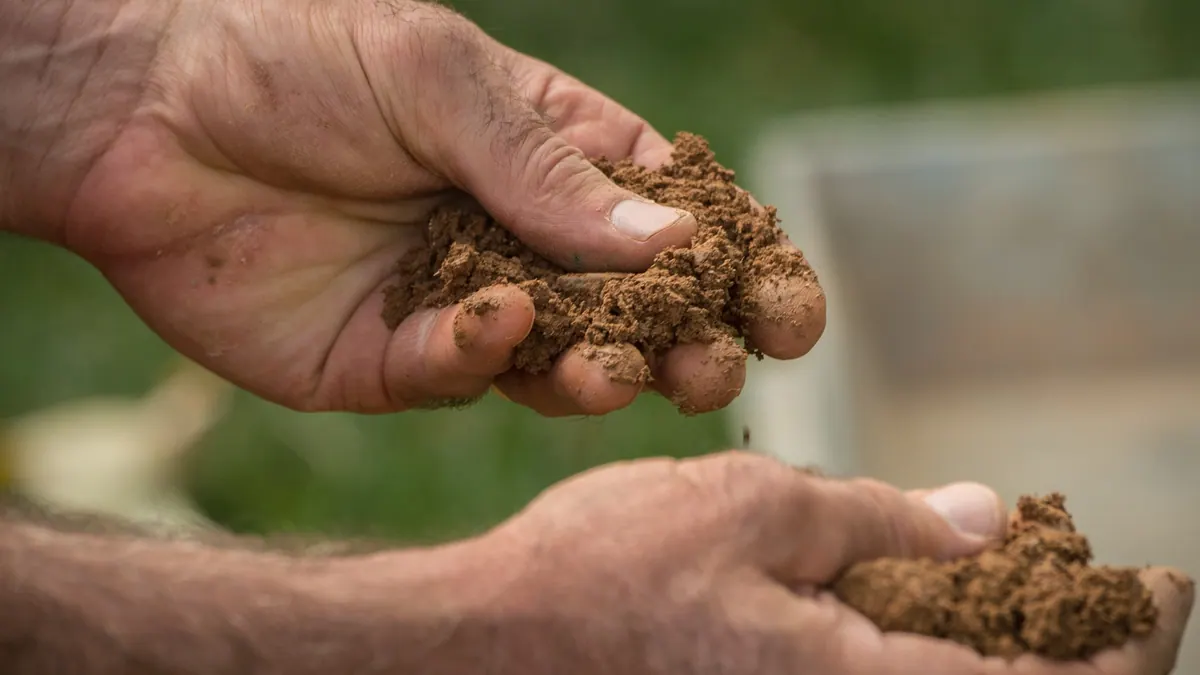

Digestate is rich in phosphorus, but typical spreading on fields means that this phosphorus is recovered only where there is a crop and the soil balance allows it. Recovering phosphorus as struvite or other phosphates is a way to separate it from the digestate mass and sell it as a concentrated fertiliser, including over longer distances. We explain how it works and where it makes sense.
Why phosphorus
Phosphorus is essential for plants and has no substitute. It is obtained mainly from phosphate rock, whose deposits are concentrated in a few countries. The European Union has classed phosphate rock, and phosphorus itself, among the critical raw materials, and a large part of its demand comes from imports. Recovery from waste and wastewater is therefore part of circular economy policy.
At a biogas plant, phosphorus is neither degraded nor lost with the gas — all of it stays in the digestate. What is bound to particles ends up mainly in the solid fraction after separation, while the liquid fraction contains part of the dissolved orthophosphates.
Struvite chemistry
Struvite is magnesium ammonium phosphate hexahydrate, MgNH₄PO₄·6H₂O. It forms when magnesium, ammonium and phosphate ions are simultaneously present in solution at concentrations exceeding the solubility product. The key variables:
- pH — precipitation usually takes place at a pH of about 8–9. The pH is raised by stripping CO₂ (aeration) or by dosing a base.
- Mg:N:P molar ratio — in digestate there is usually much more ammonium than phosphate, so the limiting factors are phosphorus and magnesium; magnesium usually has to be added (e.g. as a salt or oxide).
- calcium and alkalinity — calcium competes by forming calcium phosphates with poorer properties, and high alkalinity buffers the pH and increases base consumption.
- suspended solids and organic matter — they hinder crystal growth and contaminate the product, which is why separation is used before precipitation.
Struvite forms deposits in pipelines and heat exchangers of the digestion system if it forms uncontrollably; in recovery it is deliberately directed to a crystallisation reactor.
Where it makes sense
The best conditions are:
- digestate or sludge after digestion with a high phosphorus content and a surplus relative to the needs of land in the vicinity,
- the liquid fraction after mechanical separation, in which phosphorus is dissolved and solids have been removed,
- wastewater treatment plants with biological phosphorus removal and sludge digestion — this is where the technology is most widespread,
- areas where the cost of transporting and managing digestate is high.
For typical agricultural digestate, spread on one's own fields and those of neighbours, phosphorus recovery is often uneconomic: the cost of the reactor, magnesium and base exceeds the value of the product. It makes sense mainly when phosphorus is a balance problem rather than a resource.
Recovery efficiency
Phosphorus recovery from the liquid fraction is often quoted over a wide range — from several dozen percent to over 80% of the dissolved orthophosphates, depending on pH, magnesium dose and the presence of suspended solids. Recovery relative to the total phosphorus in the digestate is lower, because a large part of the phosphorus is in the solid fraction. This caveat matters when comparing offers: ask what basis the declared efficiency refers to.
The product as a fertiliser
Struvite is a slow-release fertiliser: phosphorus is released gradually, which limits leaching, and the nitrogen and magnesium content is an additional value. Placing it on the market in the Union requires an appropriate legal status. Regulation (EU) 2019/1009 allows fertilising products bearing the CE mark to be placed on the market, provided they consist of materials listed in the component material categories and meet quality criteria, including contaminant limits. Precipitated phosphate salts were included in a separate component material category, added later by a delegated act; the detailed criteria (including those concerning input materials and contaminants) should be checked in the current text of the act before planning an investment. Without meeting the criteria, the product may be treated as waste or digestate, with the relevant restrictions.
What it is not
Phosphorus recovery does not solve the nitrogen problem: struvite binds only a small part of the ammonium. Other technologies are used for nitrogen removal, e.g. ammonia stripping from digestate. To separate phosphorus, you first need digestate separation, and the input composition is described in the article on digestate composition. Before deciding on an investment, apply the criteria from the guide How to assess a new technology.
What to check before deciding
Before considering phosphorus recovery, do a simple balance: how much phosphorus leaves the installation each year in the digestate, what part of it goes to the liquid fraction, and whether the recipients' fields still have headroom in the fertiliser balance. If phosphorus is well managed locally, recovery usually does not pay off. If there is a surplus, compare the cost of recovery with the cost of transporting the digestate over a longer distance. Also ask who will take the product and on what quality terms, because without a buyer struvite becomes a waste problem.
Sources
Related articles