InnovationAnalysis
Black soldier fly larvae (BSF) and the biogas plant: competition or complement for biowaste
Hermetia illucens larvae yield protein, fat and frass, but accept a narrower range of substrates than a digester. We compare the two routes and how they complement each other.
Other language versions: Polski, Deutsch, Español, Français, Italiano, Nederlands.
Black soldier fly larvae (Hermetia illucens, BSF) will not replace the biogas plant, but they can take over part of the biowaste stream for which the digester is not the best recipient anyway. The larvae yield protein, fat and frass (a mixture of excrement and residues), while the digester yields biogas and digestate. So the question is not "which is better" but "which stream goes where".
How larval processing works
Young larvae are placed on a layer of substrate in containers or trays, in a hall with controlled temperature and humidity. For about two weeks they feed, reaching a mass of several dozen milligrams per individual, after which they are separated, killed, then dried or ground into meal and fat. In the literature, the reduction of fresh substrate mass usually falls within several tens of percent (often 50–80%), and the conversion of substrate into fresh larval mass is in the range of a few kilograms per kilogram. The values depend on substrate composition and conditions, and commercial claims should be treated with caution.
The temperature range favourable for development is in practice 25–35°C. Below 20°C the larvae grow slowly, and above about 35°C mortality rises. This means constant heating or cooling of the hall, and therefore energy use that must be included in the balance.
What may be fed to larvae in the EU
This is the most important restriction. Larvae reared for feed are farmed animals under EU law, and their food is subject to the rules on feed and on animal by-products (Regulations 1069/2009 and 142/2011 and the amending acts, including the 2021 amendments). In simplified terms: plant-based substrates, former foodstuffs (with restrictions on ingredients of animal origin) and selected products of animal origin (e.g. milk, eggs) are permitted, while kitchen and catering waste, carcasses and slurry remain outside the scope. The exact list of permitted materials must always be checked in the current text of the regulations and with the competent veterinary authority, because it has been amended.
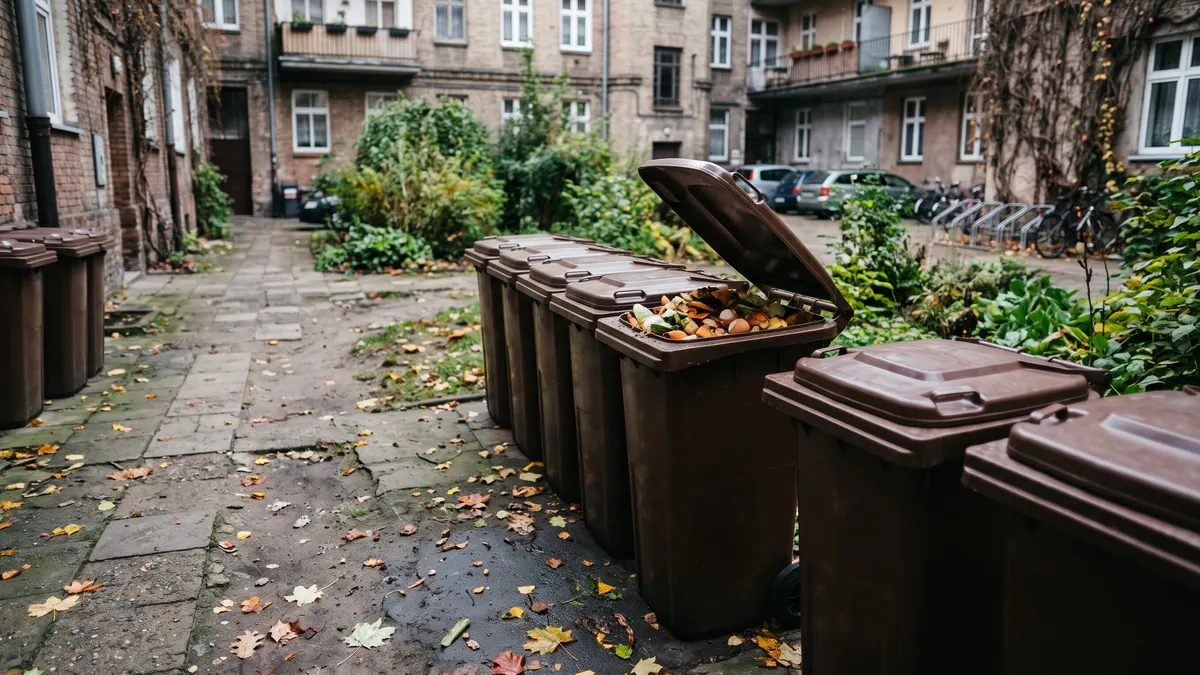
For a biogas plant this matters: the most numerous streams from households and catering, kitchen waste, are not suitable for larvae intended for feed, whereas a digester (after hygienisation where required) can accept them. The larvae will therefore more readily take over clean fractions: residues from fruit and vegetable processing, a mill, a bakery or a brewery.
Comparison with digestion
| Criterion | Methane fermentation | BSF larval processing |
|---|---|---|
| Main product | biogas (energy) | protein, fat, frass |
| Accepted substrates | wide, including kitchen waste and slurry | narrow, mainly clean plant fractions |
| Process conditions | anaerobic, 38–42°C or 50–55°C | aerobic, 25–35°C, hall |
| Processing time | tens of days | about 2 weeks |
| Viable scale | from several thousand tonnes per year | requires a stable supply of homogeneous substrate |
| Risks | stability of the biology, emissions | larval diseases, escapes, odours, buyer for the protein |
From an energy point of view, digestion converts a large part of the organic carbon into biogas, whereas the larvae retain it in biomass and release it to the atmosphere as respiratory CO₂. From a market-value point of view, larval meal achieves a higher price per tonne of dry matter than the energy contained in the same mass of substrate, but the market is young and prices are volatile.
CAPEX and scale
Larval rearing means a hall, air-conditioning systems, sorting and grinding lines, a dryer, hygiene facilities and a colony of adult insects for egg production. The investment cost per tonne of annual throughput is usually higher than for a containerised waste biogas plant, and the operational risk is greater, because biological rearing requires staff with different competences than operating a digester. Values on the order of thousands of zlotys per tonne of annual capacity appear in the literature and in industry announcements, but the spread is large and depends on the degree of automation.
Frass and residues: where the biogas plant comes back in
Frass contains nitrogen, phosphorus, potassium and organic matter, so it has fertiliser value, but as an animal by-product it is subject to processing and placing-on-the-market requirements. The rules for frass have been refined over time, so the operator should verify the current legal route before planning any sales.
This is where the complement appears. Substrate residues not eaten by the larvae, dead individuals, rejects from the line and part of the frass can go to the digester as an additional substrate with a high methane potential. The biogas plant then acts as a "second stage" of processing, and the mass balance closes better than in either technology alone.
Conclusions for the biogas plant operator
- Larvae do not compete for kitchen waste or slurry, as they cannot legally process these into feed.
- Competition appears with clean, high-energy fractions from the food industry, which are also an attractive digestion substrate. Their price at source may rise if a local rearing facility is established.
- The most sensible model is cooperation: a contract for fractions unsuitable for larvae and take-back of residues to the digester.
- Before any decision, the legal status of the planned stream must be checked and agreed with the county veterinary officer, and for your own rearing facility, with the authority responsible for feed.
Sources
Related articles