

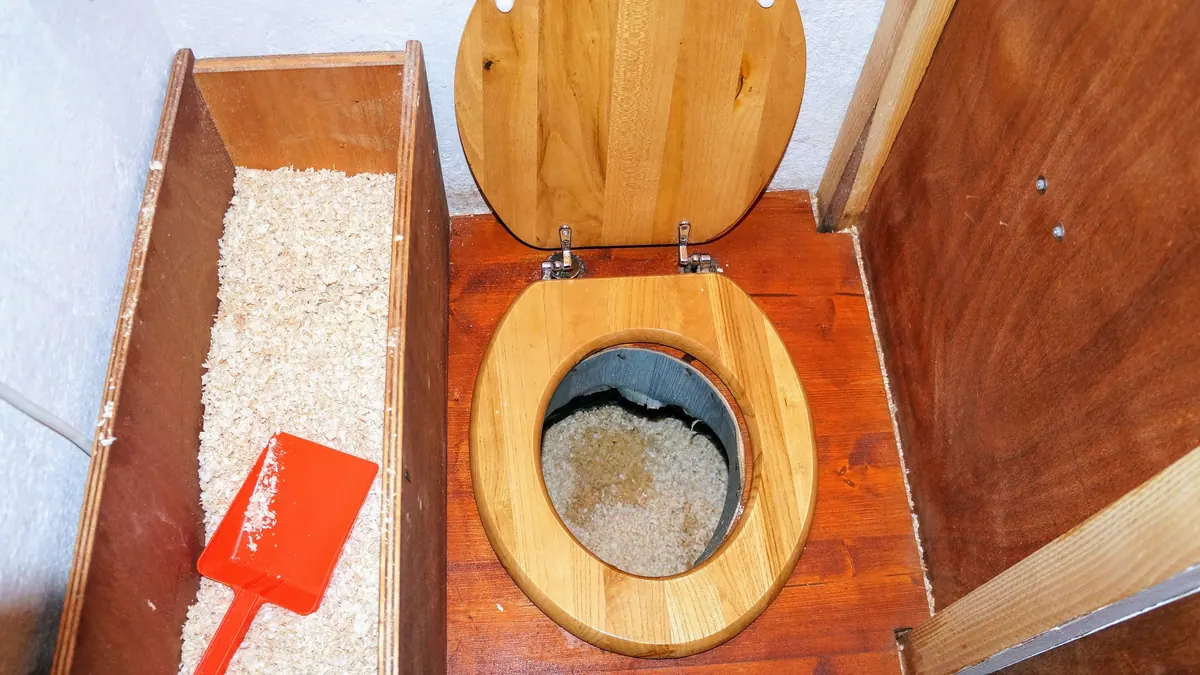
BMP testingAnimal excreta (slurry, manure, poultry litter)
Human faeces/excreta — BMP: 2 studies, weighted mean 322 m³ CH₄/t VS
Human faeces and excreta were studied in the context of sanitation in developing countries; it is a nitrogen-rich material requiring hygienisation and caution.
Photo Rene Cortin / Wikimedia Commons, licence CC BY-SA 4.0, source file; changes: cropping

- Weighted mean
- 322m³ CH₄/t VS
- Range
- 254–390m³ CH₄/t VS
- Records
- 2studies
- Publications
- 2sources
- Temperatures
- 30 °Cof the test
Methane in biogas
Medium methane content · ≈ 5.5 kWh/m³ of biogas
estimate from the substrate type The collected studies contain no measurement. The interval follows from the approximate composition (nitrogen-rich (process classification)) and the yields of compound groups according to FNR.
Rating for biogas plants
not rated — editorial rating for biogas plants
Not rated: no dry matter or volatile solids in the data. We calculate the rating when the dry matter and volatile solids of the material are known.
Add to the co-digestion calculator CSV data
BMP curves from 2 studies
Weighted mean Individual records
Dashed lines are a model curve (first-order kinetics, B(t) = B₀·(1 − e−kt)); the end point comes from the publication. All curves are model curves.
Cumulative methane production over the test [m³ CH₄/t VS]. The thick line is the weighted mean of all records (322); dots mark the end values given in the publications. Point at the chart to read values; click a legend item to hide or show a record.
Records and sources
Download CSV| Source | BMP m³ CH₄/t VS | Temperature | Sample | Curve |
|---|---|---|---|---|
| Donacho et al. (2023) DOI | 390 | — | Human feces (mean of 3 BMP experiments) | end point (model curve) |
| Osei-Owusu et al. (2024) DOI | 254 | 30 °C · mesophilic | Human excreta (HE) | end point (model curve) |
| Weighted mean | 322 | arithmetic mean 322, SD 96 | ||
Process properties
Low confidence: the description is based on general characteristics of the substrate group, not on studies of this material. Treat it as a hint to be verified.
Advantages
- Methane potential in the Substraty.pl BMP set: weighted mean 321.9 m³ CH₄/t VS (SD 96.2; 2 records, 2 sources).
- It degrades more readily than herbivore lignocellulosic excreta; it is a source of N (Rose et al. 2015).
Drawbacks and risks
- Pathogens survive mesophilic digestion: hygienisation of the digestate is necessary (Rose et al. 2015).
- Composition depends on diet and the collection system (latrines).
Co-digestion — what to combine it with, what to watch out for
- combines well
substrates: carbon-rich — e.g. Wheat straw, Maize silage (whole crop), Cereal straw (unspecified), Willow (short rotation), Cardboard and paperboard
An N-rich substrate requires a carbon feed.[1]
Dosing
No source threshold; data from sanitation, not from agricultural biogas plants. Do not dose into a feed containing ABP without agreement with the authority.
Introduce gradually, starting with a small dose and monitoring the process (e.g. FOS/TAC, pH, gas composition).
Sources of the process data
The co-digestion calculator will assess a specific mixture containing this substrate.
What it is and where it comes from
Human faeces and excreta are material from toilets, latrines and septic tanks, considered as a substrate in sanitation projects, particularly where there is no sewerage. The dataset contains several records: fresh faeces from Ethiopia (a mean of several experiments) and excreta from latrines in Ghana. In countries with sewerage these excreta go to wastewater treatment plants and pass into sludge, rather than into separate digestion.
Properties relevant to digestion
Faeces consist in large part of bacterial biomass, undigested food residues and water. They are rich in nitrogen, but degrade relatively easily compared with the lignocellulosic excreta of herbivorous animals. The composition depends on the diet. Material from latrines is usually a mixture of faeces, urine, water, paper and contaminants, and during storage it undergoes partial degradation, which reduces the potential. The main problem is pathogens (bacteria, viruses, parasite eggs), a significant proportion of which survive mesophilic digestion.
How to read the spread of results
The records come from different countries and systems: some concern fresh faeces, and some excreta from latrines after storage. The differences reflect the diet, the degree of decomposition in the latrine, dilution with water, and the presence of urine, paper, sand and other contaminants. In addition, temperature, inoculum and the substrate-to-inoculum ratio have an effect. A small number of records does not allow the results to be generalised.
In biogas plant practice
In Poland human excreta are not a substrate for agricultural biogas plants; they go to the sewerage system, and after treatment sewage sludge arises, which is digested in the digesters of treatment plants. In developing countries, biogas plants at toilets (for example institutional ones) serve sanitation and the production of gas for cooking. The digestate requires hygienisation before it is used as a fertiliser. Legal requirements depend on the country; in the European Union, sewage sludge and the regulations on its use are governed by separate legislation.
For comparison with municipal wastewater, in which faeces are strongly diluted, material from latrines is concentrated, but variable. The results from this compilation are therefore significant mainly for sanitation projects, not for installations in Europe.
Methodology in brief
BMP is the amount of methane obtained from volatile solids (VS) in a batch test, given in m³ CH₄ per tonne of VS (numerically the same as NmL CH₄/g VS in the publications) and converted to normal conditions (0 °C, 101.325 kPa). The weighted mean gives each publication a total weight of 1, split equally between its results for the substrate — a paper testing twenty varieties does not outweigh a paper with a single sample. In inter-laboratory programmes the unit is the laboratory (total weight 1), and within it the weight of a test grows with the number of bottles (replicates). Results after pretreatment (e.g. thermal, chemical, enzymatic) are shown separately and are not included in the mean.
Solid lines are curves measured in the tests. Where a publication gives only the final result, we draw a first-order kinetic model, B(t) = B₀·(1 − e−kt): only the end point comes from the publication, and the shape of the curve serves purely as visualisation — do not read the production on a particular day from it. For this substrate k = 0.393 d−1 was assumed (median of rate constants k reported in the sources and/or fitted to the mean measured curves).
The statistics describe the spread of published results — a descriptive compilation, not a meta-analysis or a guarantee of plant yield.
Bibliography
- Donacho, D.O.; Tucho, G.T.; Olani, D.D.; Kabtiyimer, H.E.; Hailu, A.B.; Wolde, A.D. (2023). Experimental evaluation of fresh human feces biogas and compost potential: Evidence for circular economy from waste streams in Ethiopia. Heliyon 9(12), e22494. DOI: 10.1016/j.heliyon.2023.e22494 DOI
- Osei-Owusu, B.A.; Arthur, R.; Baidoo, M.F.; Oduro-Kwarteng, S.; Amenaghawon, A.N. (2024). Anaerobic co-digestion of human excreta, food leftovers and kitchen residue: 1 ternary mixture design, synergistic effects and RSM approach. Heliyon 10(2), e24080. DOI: 10.1016/j.heliyon.2024.e24080 DOI
All sources of the site: bibliography.
Other substrates in the group “Animal excreta (slurry, manure, poultry litter)”

Duck slurry — BMP: 6 studies, weighted mean 395 m³ CH₄/t VS
395 m³ CH₄/t VS weighted mean from 6 studies
neutral — editorial rating for biogas plants≈55 %
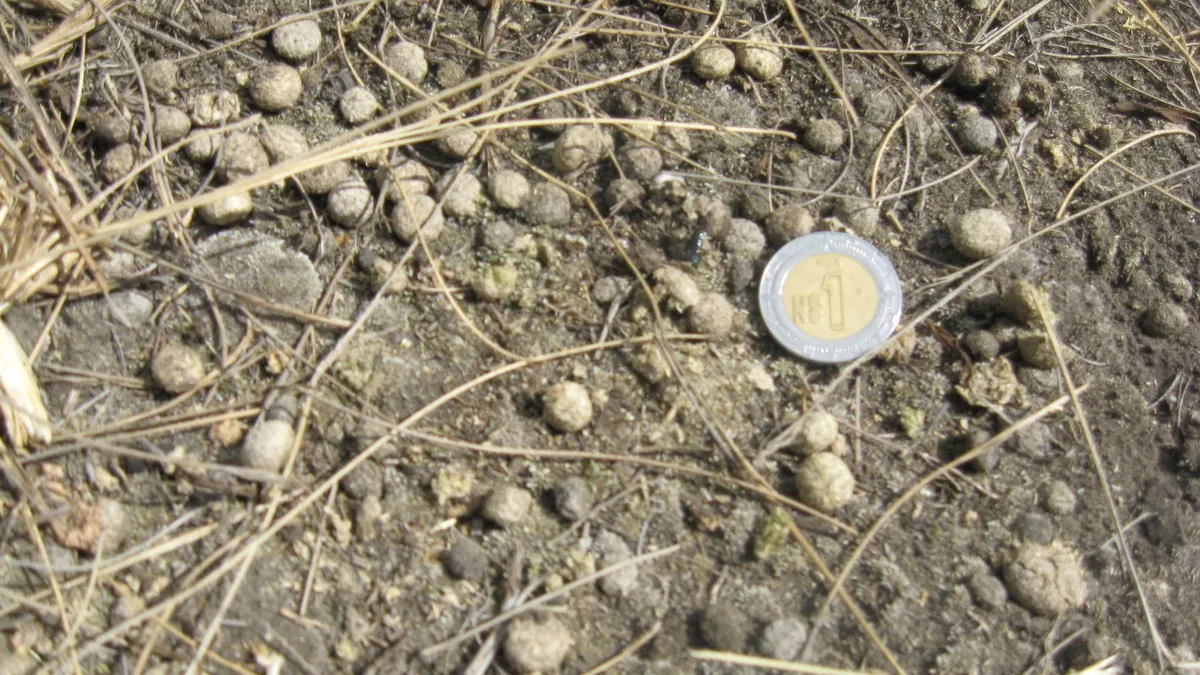
Rabbit manure — BMP: 2 studies, weighted mean 218 m³ CH₄/t VS
218 m³ CH₄/t VS weighted mean from 2 studies
neutral — editorial rating for biogas plants≈54 %
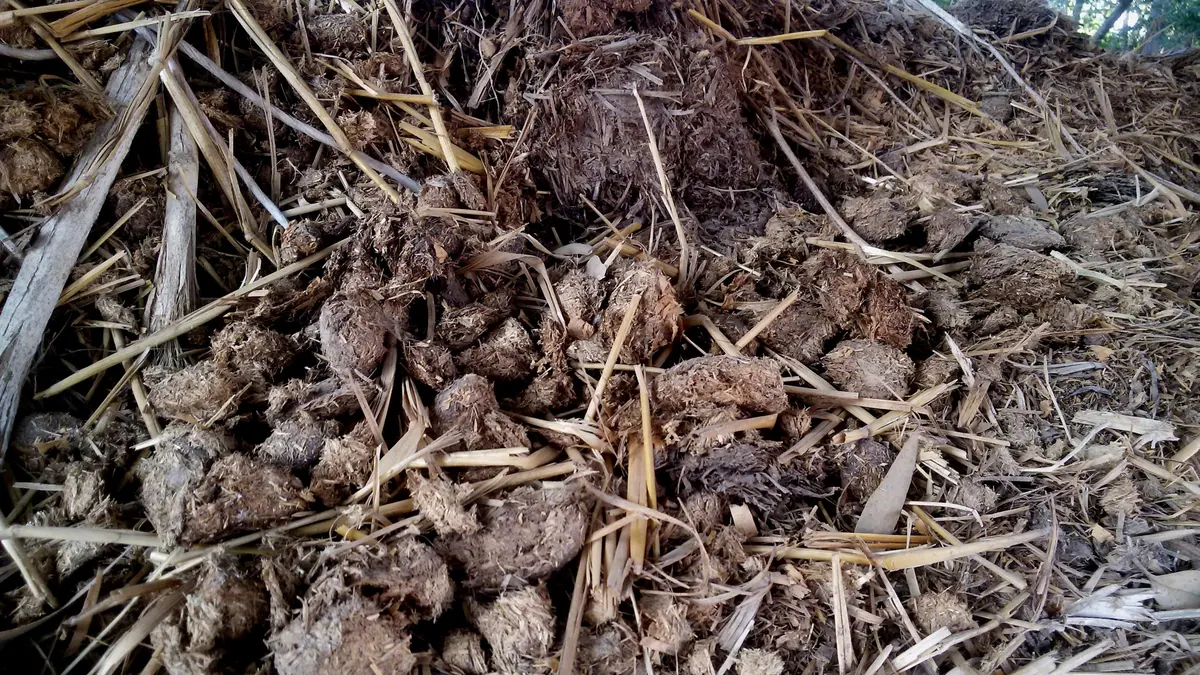
Horse manure — BMP: 36 studies, weighted mean 156 m³ CH₄/t VS
156 m³ CH₄/t VS weighted mean from 36 studies
neutral — editorial rating for biogas plants≈52 %
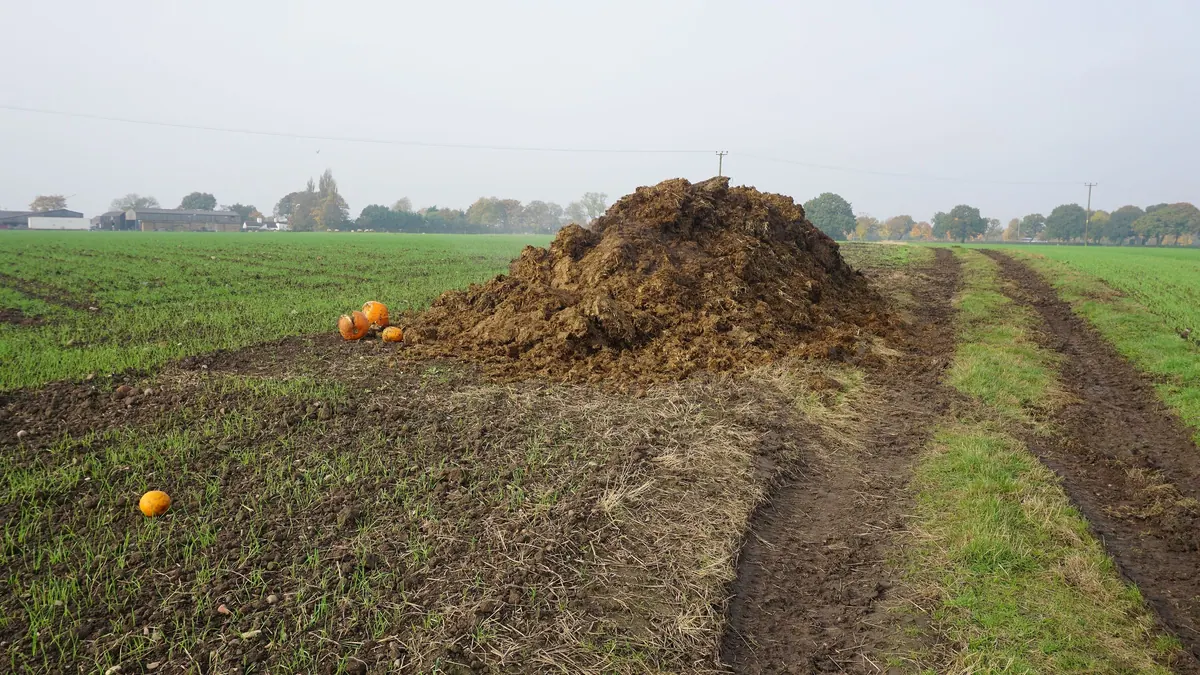
Mixed/unspecified manure — BMP: 5 studies, weighted mean 289 m³ CH₄/t VS
289 m³ CH₄/t VS weighted mean from 5 studies
good — editorial rating for biogas plants≈53 %