

BMP testingGrasses, green forage and fodder plants
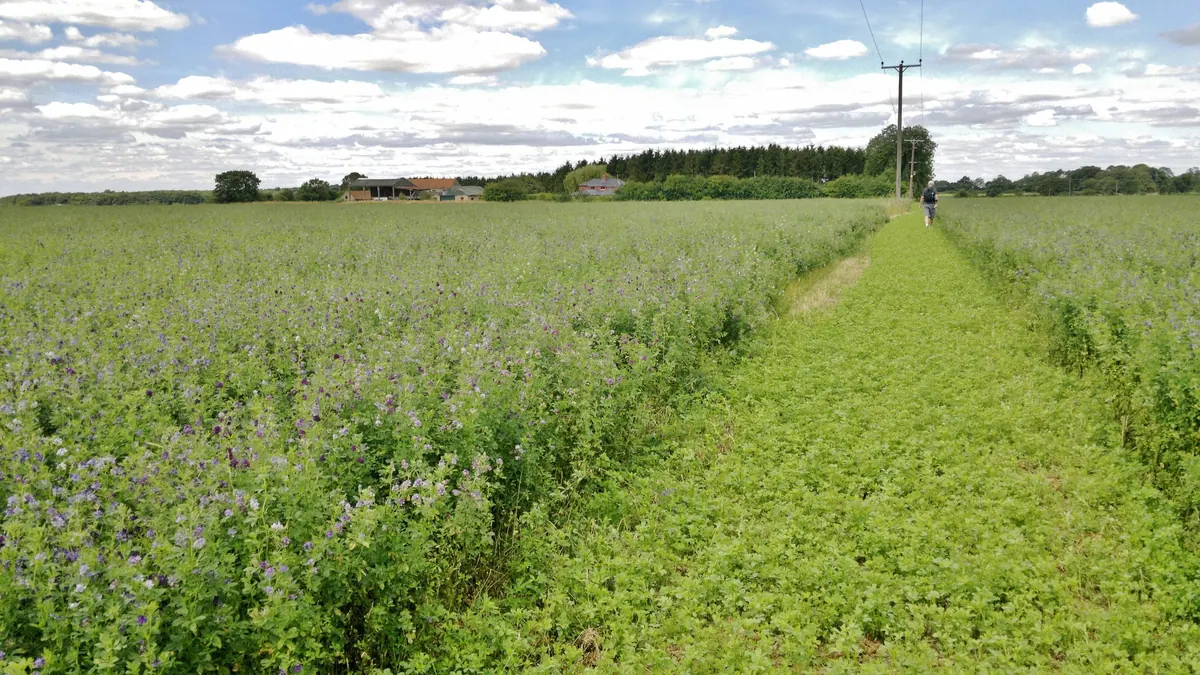
Lucerne (alfalfa) — BMP: 7 studies, weighted mean 366 m³ CH₄/t VS
Lucerne is a perennial legume with a high yield and a high protein content. As a biogas substrate it gives readily digestible biomass, but carries a risk of rising ammonia.
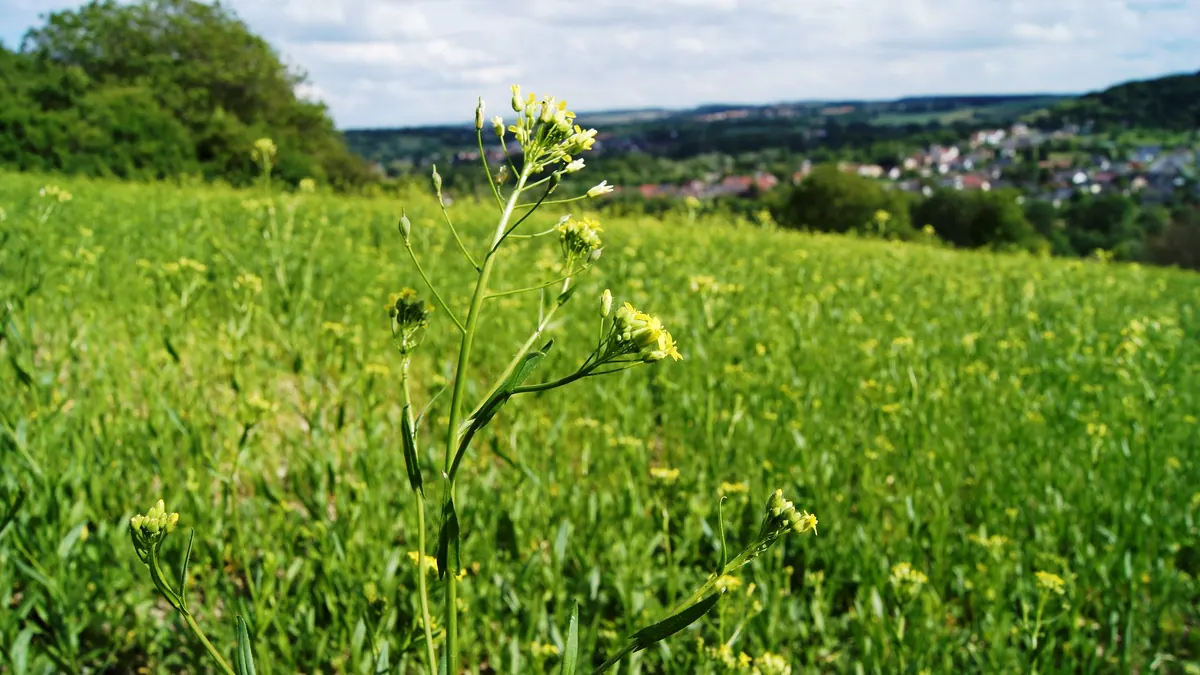
Photo Chris Morgan / Wikimedia Commons, licence CC BY-SA 2.0, source file; changes: cropping

- Weighted mean
- 366m³ CH₄/t VS
- Range
- 271–560m³ CH₄/t VS
- Records
- 7studies
- Publications
- 4sources
- Temperatures
- 37 °C, 38 °C, 40 °Cof the test
Methane in biogas
High methane content · ≈ 6.6 kWh/m³ of biogas
measured mean of 1 study BMP; in a batch test the CH₄ share tends to be higher than in a plant.
Rating for biogas plants
neutral — editorial rating for biogas plantsNo clear advantages — worth charging a fee for accepting it
Potential per tonne of fresh matter: high (85 m³ CH₄/t); process risk: protein / nitrogen. Handling costs: fibres, floating layer.
Why? Rating factors
Potential per tonne +2
- +2potential 85 m³ CH₄/t fresh matter (BMP 366 × DM 25.8 % × VS 89.9 %)
Process stability −1
- −1protein / nitrogen: risk of ammonia inhibition at higher shares
Handling and costs −0.5
- −0.5fibres, floating layer — shredding and intensive mixing
Total points: 0.5 · thresholds: ≥ 2.5 very good, ≥ 1 good, below — neutral; negative with cumulative process risk.
Add to the co-digestion calculator CSV data
BMP curves from 7 studies
Weighted mean Individual records
Dashed lines are a model curve (first-order kinetics, B(t) = B₀·(1 − e−kt)); the end point comes from the publication. All curves are model curves.
Cumulative methane production over the test [m³ CH₄/t VS]. The thick line is the weighted mean of all records (366); dots mark the end values given in the publications. Point at the chart to read values; click a legend item to hide or show a record.
Records and sources
Download CSV| Source | BMP m³ CH₄/t VS | CH₄ in biogas % vol., measured | Temperature | Sample | Curve |
|---|---|---|---|---|---|
| Amon et al. (2007) DOI | 335 | — | 38 °C · mesophilic | Lucerne | end point (model curve) |
| Pouech (b.r.) | 340 | 65.8 % | 40 °C · mesophilic | Alfalfa | end point (model curve) |
| Lallement et al. (2023) DOI | 271 | — | 38 °C · mesophilic | Alfalfa | end point (model curve) |
| Shilpi et al. (2019) · 1 DOI | 490 | — | 37 °C · mesophilic | TW alfalfa | end point (model curve) |
| Shilpi et al. (2019) · 2 DOI | 500 | — | 37 °C · mesophilic | M800 | end point (model curve) |
| Shilpi et al. (2019) · 3 DOI | 530 | — | 37 °C · mesophilic | A400 | end point (model curve) |
| Shilpi et al. (2019) · 4 DOI | 560 | — | 37 °C · mesophilic | A800 | end point (model curve) |
| Weighted mean | 366 | 65.8 % | arithmetic mean 432, SD 114 | ||
Typical composition
- Dry matter (DM)
- 25.8% (range 19.9–69)
- Volatile solids (VS)
- 89.9 % DM (range 87.1–90.9)
- Nitrogen
- 3.4 % DM
- C/N ratio
- 12.3
Median and range of the determinations reported in the publications behind this substrate's BMP records (read from: CROPGEN D4, MY-D); dry matter: 6 determinations, volatile solids: 6 determinations. C/N was calculated as the ratio of C and N content (% DM) from the same source.
Sources: Pouech, P. Fruteau, H. Bewa, H.. Agricultural crops for…; Lallement et al. (2023); Shilpi et al. (2019).
The composition of the raw material varies between batches — for plant calculations use an analysis of your own sample. The calculator inserts typical values automatically.
Process properties
Advantages
- Methane potential in the database: weighted mean 366 m³ CH₄/t VS (median 490; range 271-560; 7 records from 4 sources).
Drawbacks and risks
- Spread of results in the database: standard deviation 114 at a mean of 432 m³ CH₄/t VS (7 records from 4 sources).
- In a BMP test with lucerne and red clover (mono- and co-digestion with grass), at a high load (40 g VS/l) VFA and ammonia accumulated in the digestate, and the VS removal in mono-digestion of legumes was lower than 60% (Li et al. 2023).
Co-digestion — what to combine it with, what to watch out for
- combines well
- combines well
substrates: carbon-rich — e.g. Wheat straw, Maize silage (whole crop), Cereal straw (unspecified), Willow (short rotation), Cardboard and paperboard
Co-digestion of grass with lucerne and clover gave a higher methane yield (338 m³/t VS, 9.1% more than mono-digestion) and a significantly higher VS removal than the legumes alone (Li et al. 2023).[3]
Dosing
No source dose limits; the effect of the energy crop to manure ratio is described by Lehtomäki 2007.
Practical requirements
- Ensiling makes it possible to store seasonal biomass; properly ensiled plants (in the study maize, sorghum, forage rye, triticale) can be stored for up to a year without loss of methane production (Herrmann et al. 2011).
Sources of the process data
- Lehtomaki, A.; Huttunen, S.; Rintala, J.A. (2007) Laboratory investigations on co-digestion of energy crops and crop residues with cow manure for methane production: effect of crop to manure ratio. Resources, Conservation and Recycling
- Amon, T.; Amon, B.; Kryvoruchko, V.; Machmüller, A.; Hopfner-Sixt, K.; Bodiroza, V.; Hrbek, R.; Friedel, J.; Pötsch, E.; Wagentristl, H.; Schreiner, M.; Zollitsch, W. (2007) Methane production through anaerobic digestion of various energy crops grown in sustainable crop rotations. Bioresource Technology 98(17), 3204–3212
- Li et al. (2023). Anaerobic co-digestion of grass, alfalfa, and red clover for methane production and the kinetic analysis. BioResources 18(1)
- Pouech, P. Fruteau, H. Bewa, H. (None) Agricultural crops for biogas production on anaerobic digestion plants. Biomass for energy and industry 163-165
- Hendriks, A.T.W.M.; Zeeman, G. (2009) Pretreatments to enhance the digestibility of lignocellulosic biomass. Bioresource Technology
- Lallement, A.; Peyrelasse, C.; Lagnet, C.; Barakat, A.; Schraauwers, B.; Maunas, S.; Monlau, F. (2023) A Detailed Database of the Chemical Properties and Methane Potential of Biomasses Covering a Large Range of Common Agricultural Biogas Plant Feedstocks. Waste 1(1), 195–227
- Shilpi, S.; Lamb, D.; Bolan, N.; Seshadri, B.; Choppala, G.; Naidu, R. (2019) Waste to watt: Anaerobic digestion of wastewater irrigated biomass for energy and fertiliser production. Journal of Environmental Management 239, 73–83
- Herrmann et al. (2011). Effects of ensiling, silage additives and storage period on methane formation of biogas crops. Bioresour. Technol.
The co-digestion calculator will assess a specific mixture containing this substrate.
What it is and where it comes from
Lucerne (Medicago sativa, also known as alfalfa) is a perennial leguminous plant grown for fodder, often in the warmer regions of Europe and worldwide. It gives several cuts per season and tolerates drought well thanks to its deep root system. The dataset contains records from several studies, including an experiment in which lucerne was irrigated with tap water or with wastewater. All of them concern mesophilic conditions.
Properties relevant to digestion
Lucerne has a high content of protein and minerals, and in its young stage its biomass is readily digestible. As it matures, the share of woody stems increases, which reduces digestibility. The low C to N ratio means that lucerne complements nitrogen-poor substrates well, but at a high share the risk of ammonia release rises. Ensiling is difficult because of the high buffering capacity and small amount of sugars, so it is usually wilted to a higher dry matter content or additives are used. In a clamp, lucerne that is too wet spoils easily.
How to read the spread of results
The records in the dataset differ in material and conditions: one of the studies compares lucerne irrigated with tap water and with wastewater at different doses, while others concern samples from different stages of development and regions. To this are added the variety, the cut number, the harvest date, the form of the material (fresh, silage, dried) and the method of comminution. The inoculum, the substrate-to-inoculum ratio, the incubation time and the temperature also vary. All this means that comparing individual results has limited value.
In biogas plant practice
In biogas plants lucerne is a supplement, especially on farms that have it in their crop rotation. It is harvested at the bud stage to obtain a good compromise between yield and digestibility, and ensiled with wilting. It works well in a mixture with maize silage or straw. Ammonia must be monitored, and it should be remembered that growing lucerne is important for soil structure and fertility, which argues for including it in the crop rotation, but not necessarily for intensive harvesting solely for biogas. In installations where lucerne is a regular element of the mix, it helps to keep records of cuts and fields, because biogas production results can then be linked to a specific material and the harvest timing and ensiling method refined in subsequent seasons.
Methodology in brief
BMP is the amount of methane obtained from volatile solids (VS) in a batch test, given in m³ CH₄ per tonne of VS (numerically the same as NmL CH₄/g VS in the publications) and converted to normal conditions (0 °C, 101.325 kPa). The weighted mean gives each publication a total weight of 1, split equally between its results for the substrate — a paper testing twenty varieties does not outweigh a paper with a single sample. In inter-laboratory programmes the unit is the laboratory (total weight 1), and within it the weight of a test grows with the number of bottles (replicates). Results after pretreatment (e.g. thermal, chemical, enzymatic) are shown separately and are not included in the mean.
Solid lines are curves measured in the tests. Where a publication gives only the final result, we draw a first-order kinetic model, B(t) = B₀·(1 − e−kt): only the end point comes from the publication, and the shape of the curve serves purely as visualisation — do not read the production on a particular day from it. For this substrate k = 0.091 d−1 was assumed (no kinetic data for the group – the median of all available rate constants k (93 values) was used).
The statistics describe the spread of published results — a descriptive compilation, not a meta-analysis or a guarantee of plant yield.
Bibliography
- Amon, T.; Amon, B.; Kryvoruchko, V.; Machmüller, A.; Hopfner-Sixt, K.; Bodiroza, V.; Hrbek, R.; Friedel, J.; Pötsch, E.; Wagentristl, H.; Schreiner, M.; Zollitsch, W. (2007). Methane production through anaerobic digestion of various energy crops grown in sustainable crop rotations. Bioresource Technology 98(17), 3204–3212. DOI: 10.1016/j.biortech.2006.07.007 DOI
- Pouech, P. Fruteau, H. Bewa, H.. Agricultural crops for biogas production on anaerobic digestion plants. Biomass for energy and industry 163-165.
- Lallement, A.; Peyrelasse, C.; Lagnet, C.; Barakat, A.; Schraauwers, B.; Maunas, S.; Monlau, F. (2023). A Detailed Database of the Chemical Properties and Methane Potential of Biomasses Covering a Large Range of Common Agricultural Biogas Plant Feedstocks. Waste 1(1), 195–227. DOI: 10.3390/waste1010014 DOI
- Shilpi, S.; Lamb, D.; Bolan, N.; Seshadri, B.; Choppala, G.; Naidu, R. (2019). Waste to watt: Anaerobic digestion of wastewater irrigated biomass for energy and fertiliser production. Journal of Environmental Management 239, 73–83. DOI: 10.1016/j.jenvman.2019.02.122 DOI
All sources of the site: bibliography.
Other substrates in the group “Grasses, green forage and fodder plants”
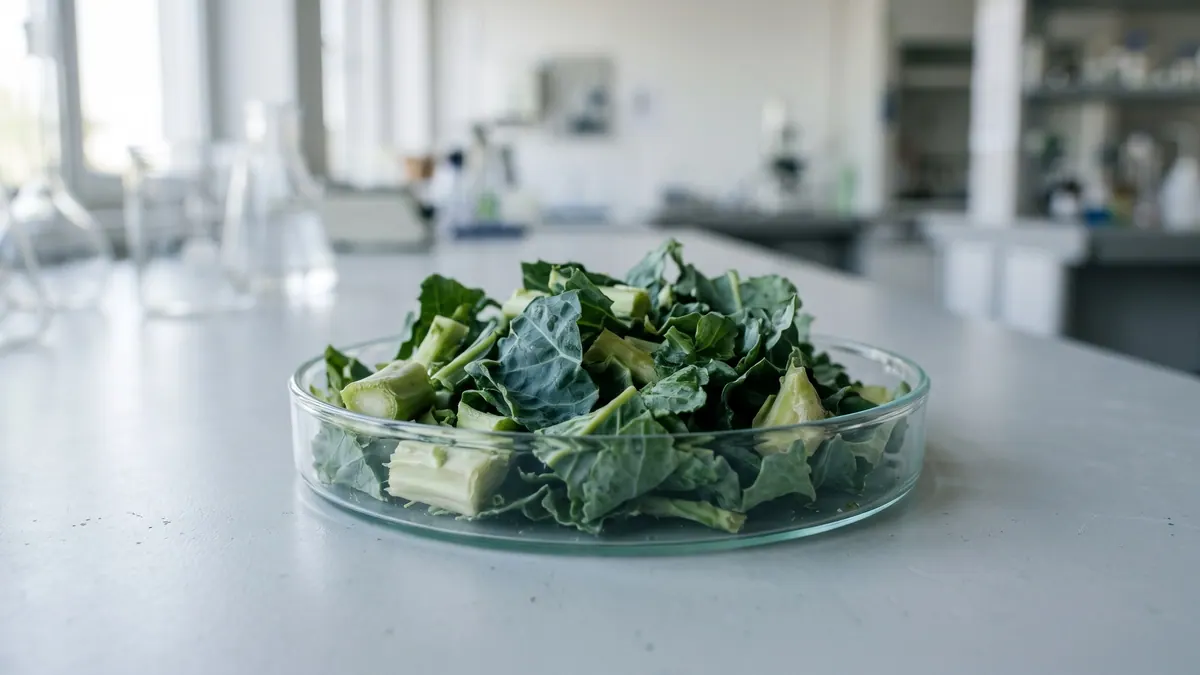
Marrow kale — BMP: 2 studies, weighted mean 315 m³ CH₄/t VS
315 m³ CH₄/t VS weighted mean from 2 studies
≈52 %
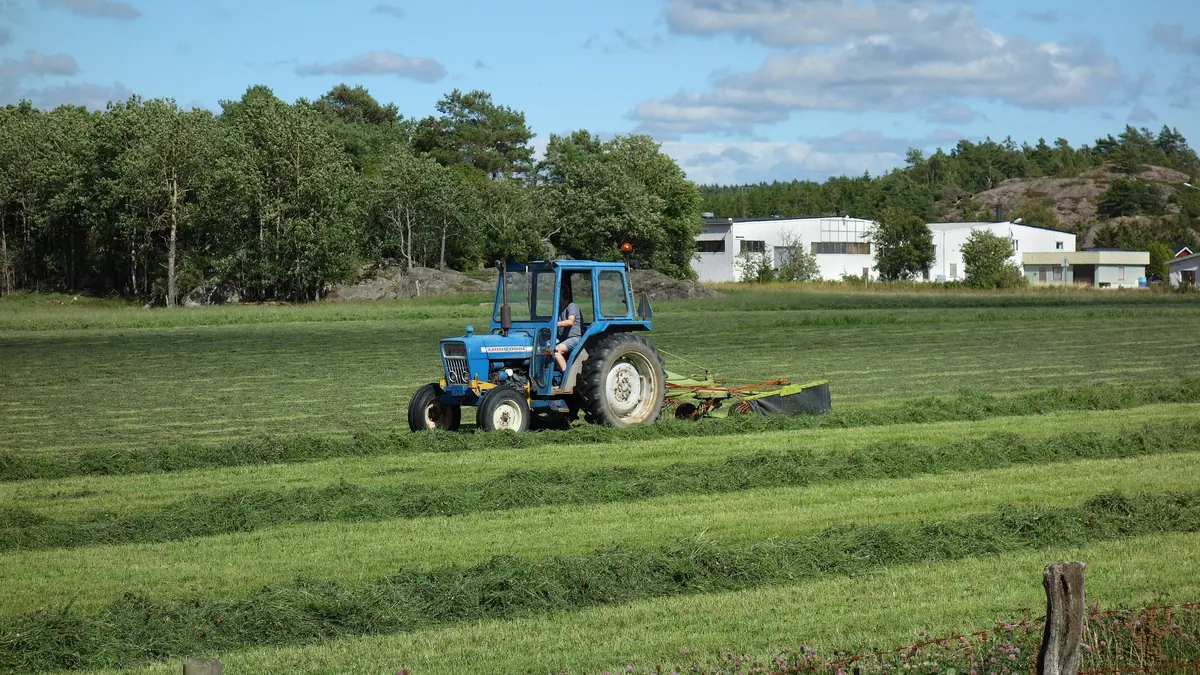
Grass (fresh and silage) — BMP: 145 studies, weighted mean 345 m³ CH₄/t VS
345 m³ CH₄/t VS weighted mean from 145 studies
good — editorial rating for biogas plants≈53 %
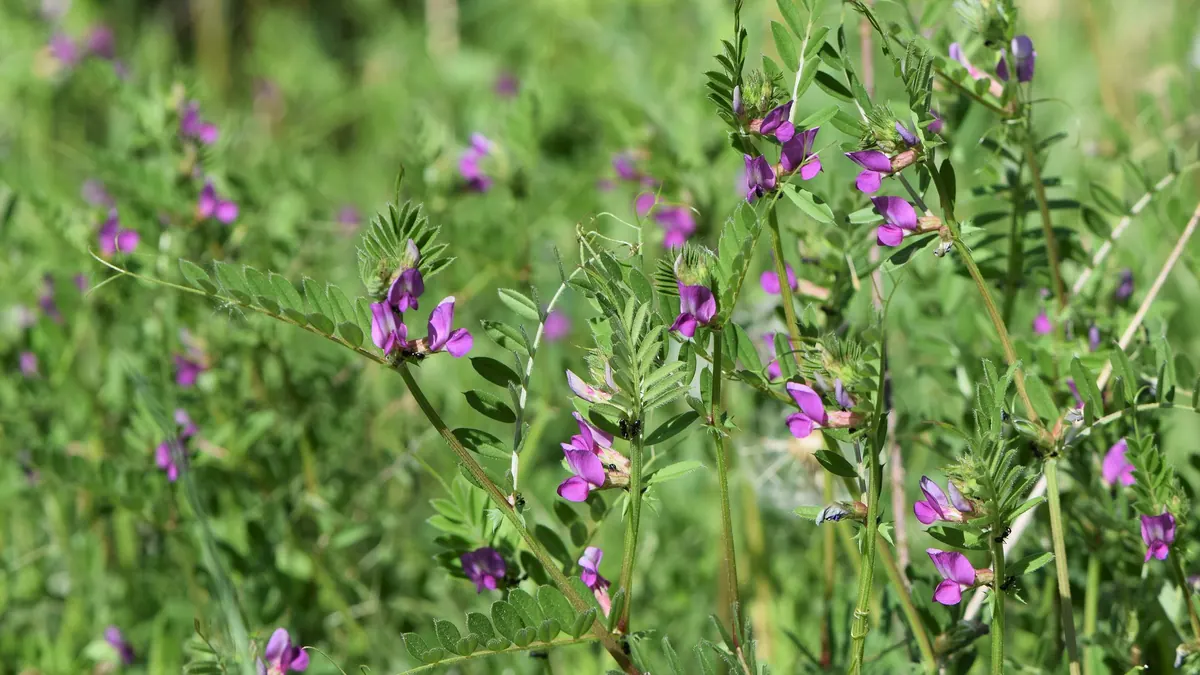
Vetch-oat mixture — BMP: 2 studies, weighted mean 405 m³ CH₄/t VS
405 m³ CH₄/t VS weighted mean from 2 studies
≈52 %
Cereal/pea and camelina mixtures — BMP: 5 studies, weighted mean 282 m³ CH₄/t VS
282 m³ CH₄/t VS weighted mean from 5 studies
good — editorial rating for biogas plants≈52 %