Tanks and membranesGuide
Purchase specification for a tank and membrane roof: what to put in the contract and how to evaluate offers
The tank and roof stay with the investor for years. We show what to put in the contract, how to set acceptance criteria and how to compare offers by life-cycle cost.
Other language versions: Polski, Deutsch, Español, Français, Italiano, Nederlands.
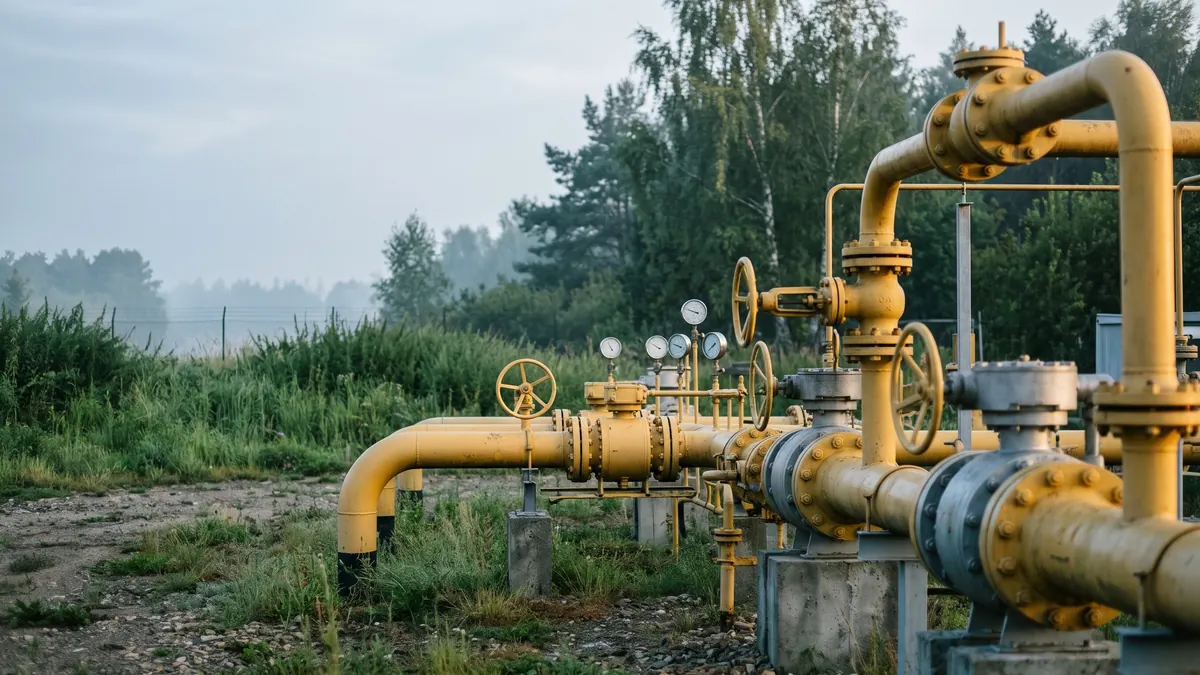
Buying a tank and membrane roof is a decision the investor will live with for a dozen or so years. Differences in tank quality become visible only after years, so it is the specification and the contract that decide whether there will be something to rely on when something goes wrong. Below are the elements worth putting in writing, and a way of comparing offers without naming specific suppliers.
Input data the purchaser must provide
A supplier can price well only what has been described. The specification should contain:
- the type and composition of the substrates and the range of dry matter content, including the presence of aggressive materials (acids, fats, hydrogen sulphide in the gas);
- the operating temperature (mesophilic or thermophilic), the gas operating pressure and the permissible overpressure values;
- the working capacity for liquid and the required gas storage capacity;
- geotechnical data and the groundwater level;
- climatic loads according to the location (wind, snow);
- requirements for explosion protection and fire regulations.
Scope of supply
A clearly defined scope prevents disputes over what was included in the price. It should be stated whether the supply includes:
- the foundation slab, walls, insulation and heating;
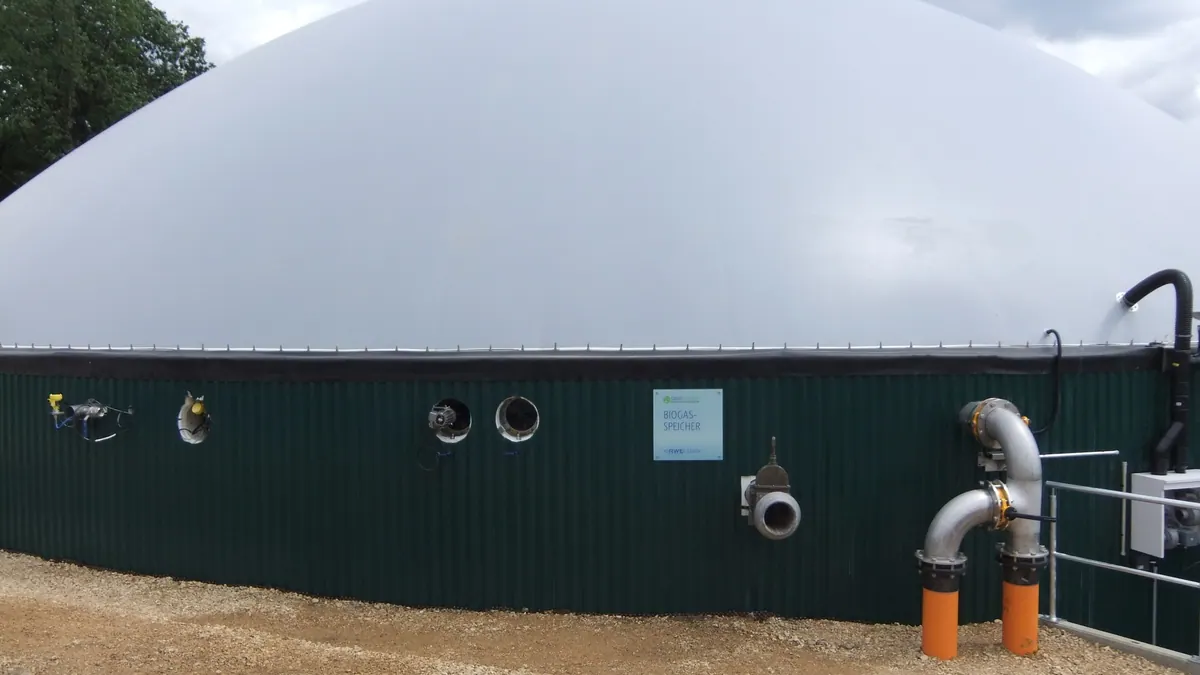
- the membrane or roof, the supporting structure, the blower and fittings;
- penetrations, agitators, manholes, sight glasses;
- overpressure and vacuum protection, gas drainage, sensors;
- installation, commissioning and training;
- as-built documentation and operating instructions.
Material documentation
For construction materials, including membranes, we require documents confirming compliance with the requirements: declarations of performance or certificates, technical data sheets, test results (tensile strength, ageing resistance, chemical resistance, behaviour at low temperature). Regulation (EU) No 305/2011 lays down harmonised conditions for the marketing of construction products and applies to those products for which a harmonised standard or a European Technical Assessment exists; for other products the basis is manufacturer data and tests. It is worth requiring a statement as to whether this regime applies to the product offered.
Tolerances, tests and acceptance criteria
The contract should specify how quality will be verified. Example provisions:
| Area | What we check | How to put it in writing |
|---|---|---|
| Geometry | level of the top of the wall, shape of the tank | permissible deviations in mm over a stated length |
| Concrete | class, cover thickness, tightness | test records according to the adopted standard (e.g. EN 206) |
| Membrane welds | continuity, strength | weld test, record, air-channel check |
| Tightness | liquid tank, gas system | water filling test, gas tightness test |
| Installations | electrical, lightning protection | measurement records |
It is good to stipulate that final acceptance takes place after the tests, and not after the completion of installation, and that the acceptance record contains a list of defects with deadlines for their removal.
Warranty on the membrane
A warranty on the membrane is usually limited in time and scope. When assessing the provisions, the following should be asked:
- from when the warranty period runs (from delivery, from installation or from acceptance);
- what operating conditions have been assumed as expected (temperature, gas composition, pressure) and what happens when they are exceeded;
- whether the warranty covers the material and the workmanship of welds, or only the material;
- which cases are excluded (mechanical damage, wind of a specified speed, the effect of hydrogen sulphide above a set concentration);
- what the procedure for submitting claims is and the service response time.
The scope of exclusions often says more about the quality of an offer than the length of the warranty, because a long warranty with numerous exclusions is worth less than a shorter one with a broad scope.
Spare parts and servicing
It is worth adding to the contract: a set of spare parts for seals, valves and the blower; availability of parts for a specified time; service response time in hours and days; rules for paid servicing after the warranty period; handover of technical documentation enabling independent operation and the commissioning of repairs from another contractor.
Comparing offers by life-cycle cost
The purchase price is only part of the cost. A hypothetical example: offer A is cheaper, but assumes a shorter service life of the membrane and higher blower energy consumption; offer B is more expensive, has a better material and lower servicing costs. When comparing, the following are summed for each offer:
- the cost of purchase and installation;
- servicing and energy costs over the period of analysis;
- the cost of replacing the membrane or components in that period;
- the risk of downtime and gas loss, expressed as an expected loss;
- the residual value at the end of the period.
The result shows whether the more expensive offer pays for itself over time. We describe the operating costs of the whole biogas plant in the article on the OPEX of an agricultural biogas plant.
What to watch out for
- Offers are hard to compare if they differ in their assumptions; they should be reduced to a common specification.
- Provisions on contractual penalties and deadlines should be linked to the real risk, which is a delay in commissioning.
- It is worth consulting the contract with a lawyer and with an independent engineer, because mistakes in this part cost more than advice.
Sources
Related articles