Cogeneration and enginesExplainer
What is a cogeneration integrator and how does it differ from an engine manufacturer?
A cogeneration integrator assembles a complete CHP unit from components and is responsible for its operation. We explain the scope of its work, the differences from the engine manufacturer and the selection criteria.
Other language versions: Polski, Deutsch, Español, Français, Italiano, Nederlands.
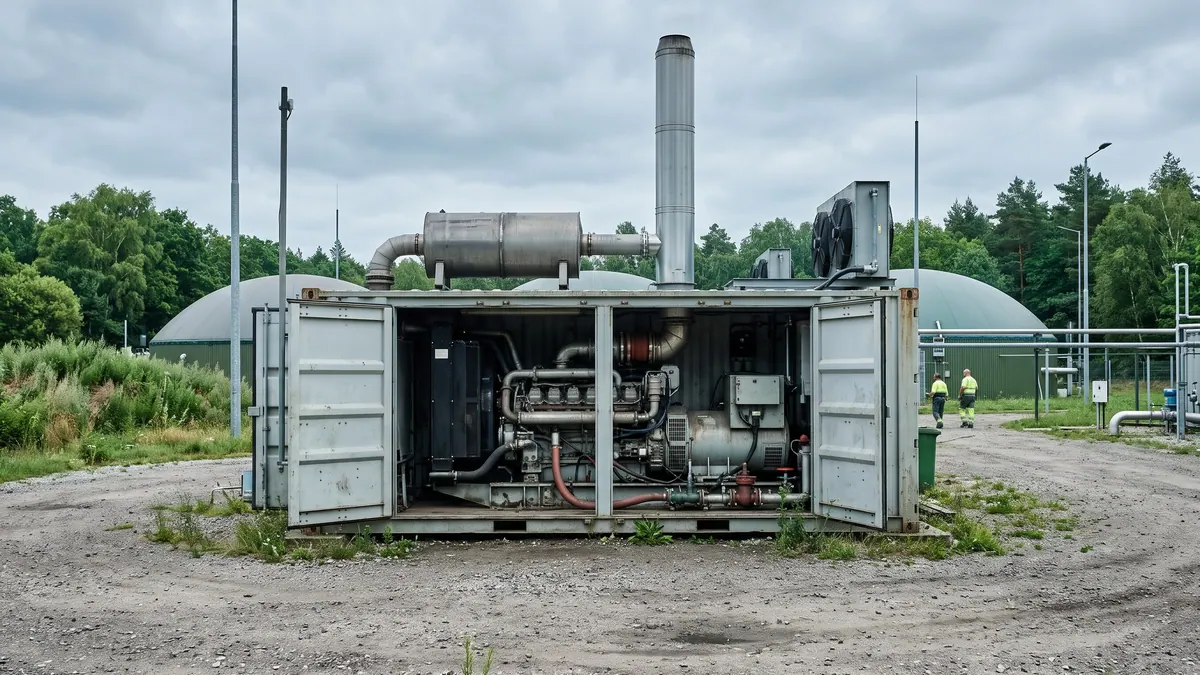
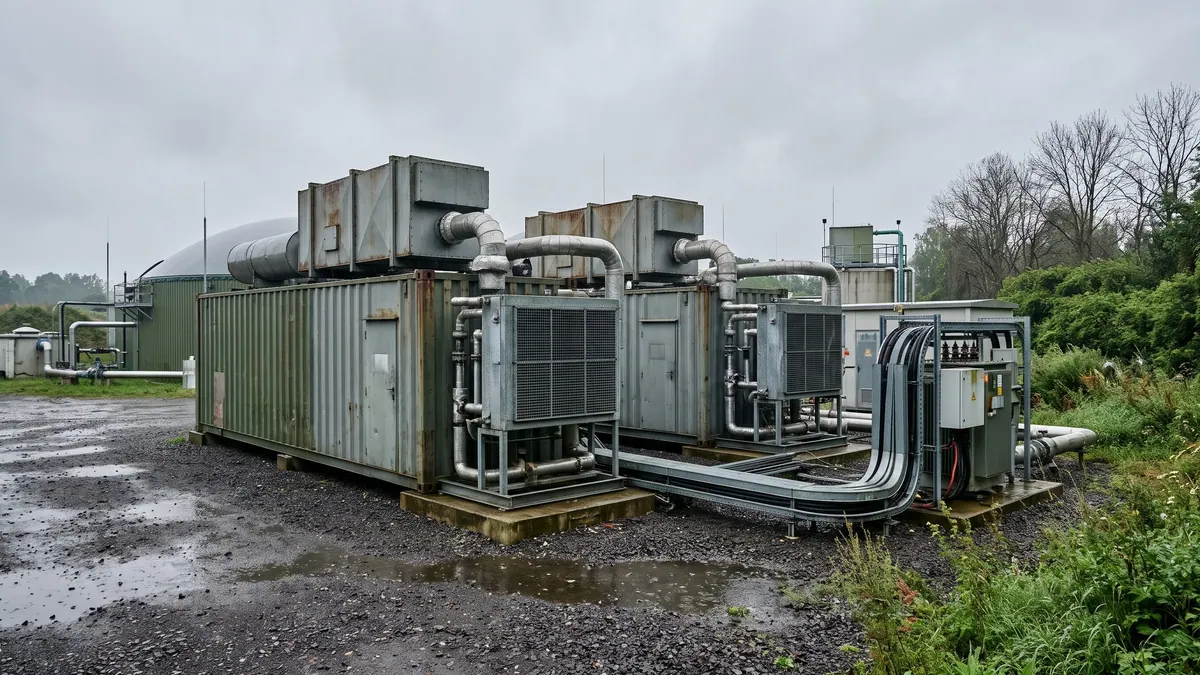
A cogeneration integrator is a company that builds a complete, working cogeneration (CHP) unit from components from different manufacturers and is responsible for its interaction with the biogas plant and the grid. It therefore supplies not only the engine but the entire system: the gas engine, generator, heat exchangers, cooling installation, exhaust system, control cabinet, protections and enclosure (most often a container). This is a different model from buying a unit directly from the engine manufacturer.
How an integrator differs from an engine manufacturer
An engine manufacturer designs and makes the engine itself and often also supplies its own complete sets. An integrator usually buys the engine (or an engine–generator set) from one or several manufacturers, and adds its value in the following areas:
- selecting components for specific conditions (biogas composition, heat requirements, site conditions),
- designing auxiliary systems (cooling, oil, air, container ventilation, exhaust system),
- developing the controls and integrating with the biogas plant system, grid protections and remote monitoring,
- installation, commissioning and documentation,
- service and parts supply.
These roles are not always separate, however: some engine manufacturers have their own integration departments, and some integrators also make components themselves. In an offer, therefore, what counts is not the name of the category but who is responsible for what.
What the integrator's scope includes
The typical scope of work is:
- Needs analysis: electrical and thermal output, gas characteristics, heat offtake profile.
- Technical design of the unit and its connections to the installation (gas, heat, electrics, exhaust gas).
- Manufacture or assembly of the container, factory tests.
- Delivery, positioning and connection on site.
- Commissioning, tuning of the controls and acceptance, including cooperation with the grid operator (see the article on NC RfG for CHP).
- Operator training and as-built documentation.
- Warranty and post-warranty service.
Advantages and risks of the integrator model
The advantage is a single entity responsible for the whole, which simplifies the warranty and communication. An integrator can tailor the solution to local conditions and offer flexibility in the choice of engine. The risks are blurred responsibility if a failure concerns the interface between components (e.g. an engine from manufacturer A, a controller from manufacturer B), dependence on a single service provider and potentially more difficult access to parts if the integrator ceases trading. The contract should therefore describe responsibility for the whole and access to documentation, control codes and spare parts.
Selection criteria
| Criterion | Checking questions |
|---|---|
| Experience with biogas | how many units run on biogas in similar conditions, what experience they have with siloxanes and H₂S |
| Scope of responsibility | who is responsible for the whole, where the engine manufacturer's warranty ends |
| Service | response time, location of the team, availability of parts, remote service |
| Documentation | diagrams, manuals, declarations of conformity, data on parameters under reference conditions |
| Grid connection | experience with operator requirements and protections |
| Cost transparency | cost of inspections, hourly service rate, parts prices |
It is also worth asking for references and visiting a working installation. Efficiency parameters should be compared under the same reference conditions, as described in the article on electrical, thermal and overall CHP efficiency. Information on operation and inspections is in the article on servicing CHP gas engines.
Documents and boundaries of responsibility
Before signing the contract, check which documents you will receive: P&ID and electrical diagrams, the operating manual, the declaration of conformity, test protocols, the spare parts list and the inspection schedule. It is also worth establishing who owns the controller software and whether an external service provider will have access to it. Write into the contract the guaranteed parameters (output, efficiency under reference conditions, availability) and how they are measured. The absence of such provisions often leads to disputes at the first serious failure.
Summary
A cogeneration integrator is a "turnkey" contractor for a CHP unit. The choice between an integrator and an engine manufacturer is not a matter of better or worse, but of the split of responsibility and the availability of service. It is worth stating clearly in the contract who is responsible for which elements, what the service response times are and how parts and documentation will be available throughout the operating life. It is also good to plan what will happen if the integrator ceases to exist: access to diagrams, programs and parts from other suppliers protects the investor from dependence on a single entity.
Sources
Related articles